Plastic Surface Colored Wallet
CN → US| HS Code | Tariff Rate | Origin | Destination | Doc |
|---|---|---|---|---|
| 3923109000 | 38.0% | CN | US | Official Doc |
| 4202322000 | 55.0% | CN | US | Official Doc |
| 4202321000 | 0.0% | CN | US | Official Doc |
| 3923900080 | 38.0% | CN | US | Official Doc |
Product Images
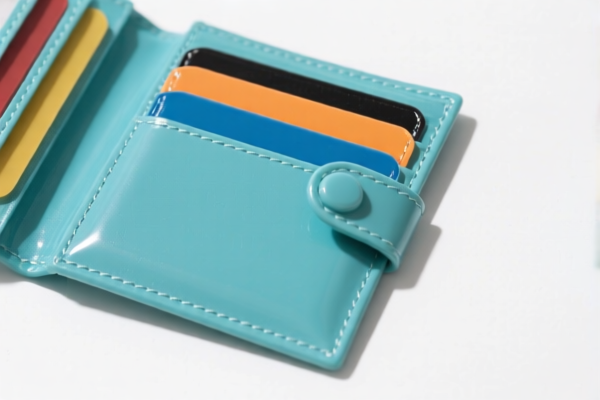
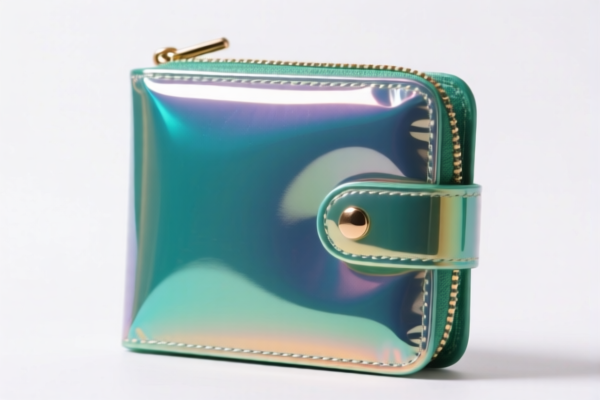
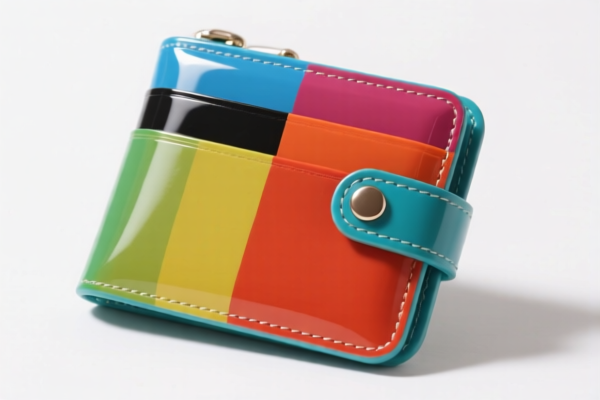
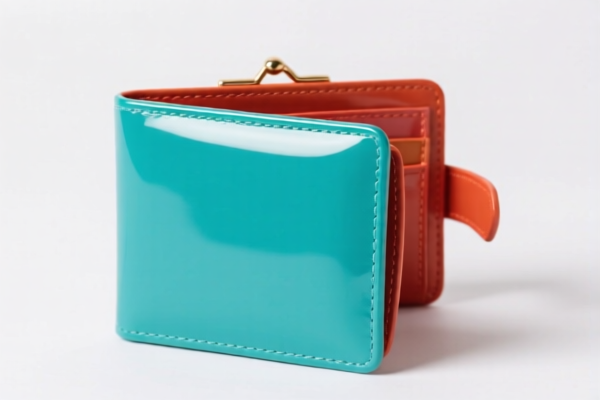
AI Analysis
👛 Wallets with Plastic Surface (Plastic Material Wallets)
🌐 HS Code Reference & Customs Clearance Guide | 2026 Latest Tariff Analysis | Professional Strategy for Plastic Wallets
📌 I. Product Definition: What is a "Plastic Surface Wallet"?
In international trade, "Plastic Surface Colored Wallets" refer to items used for carrying personal items (cards, cash, coins). The classification depends heavily on how the plastic is used and the primary material composition.
- Reinforced/Laminated Plastic: If the wallet is made of plastic that has been reinforced or laminated (layered) for durability, it falls under Chapter 42 (Articles of Leather; Travel Goods).
- Plain Plastic Packaging/Carrying: If the wallet is essentially a plastic pouch or container primarily for packaging or carrying items, it may fall under Chapter 39 (Plastics and Articles Thereof).
⚠️ Critical Distinction:
- If the item is a travel good/pouch where the plastic surface is a finished article designed to be carried in a pocket or handbag → Chapter 42 is likely applicable.
- If the item is considered a general plastic container/package without specific "travel good" characteristics → Chapter 39 is applicable.
📦 II. HS Code Classification Details (Based on Provided Data)
| HS Code | Product Description | Application Scenario | Tax Rate (Total) |
|---|---|---|---|
| 4202.32.20.00 | Wallets with outer surface of plastic sheets, carried in pocket or handbag | Standard plastic-surface wallets, fashion accessories | 55.0% |
| 4202.32.10.00 | Wallets of reinforced or laminated plastic, for personal carry | Durable, laminated plastic wallets | 12.1¢/kg + 4.6% + 35.0% |
| 3923.10.90.00 | Plastic wallets, other categories for packaging/carrying | General plastic pouches/wallets | 38.0% |
| 3923.90.00.80 | Plastic wallets, "other" catch-all category for packaging/carrying | Generic plastic carrying items not specified elsewhere | 38.0% |
🔍 Key Insight:
- Chapter 42 (4202.32.xxxx) items are generally more expensive in tariff if they are classified as specific "travel goods" rather than just plastic containers. - Chapter 39 (3923.xxxx) items often have a lower base tariff but still attract significant surcharges. - The laminated/reinforced type (4202.32.10.00) has a unique calculation method (specific duty + ad valorem).
💰 III. 2026 Latest Tariff Rate Breakdown (Including Surcharges & Policy Add-ons)
✅ Applicable Country: USA (US)
✅ Origin: China (CN)
✅ Effective Time: Current regulations (High tariff environment)
🎯 1. 4202.32.20.00 — Plastic Surface Wallet (Travel Good)
| Item | Details |
|---|---|
| Base Tariff | 20.0% |
| Section 301 Surcharge | +25.0% |
| Section 122 Surcharge | +10.0% |
| Total Tax Rate | 55.0% |
| Tax Calculation | CIF Value × 55% |
| Legal Path | Base (20%) + Sec 301 (25%) + Sec 122 (10%) |
📌 Explanation:
- This is the highest standard ad-valorem rate among the options.
- The 20% base tariff reflects the "Travel Goods" classification in Chapter 42.
- The 25% + 10% surcharges are mandatory for Chinese-origin goods under current US trade policies.
🎯 2. 4202.32.10.00 — Reinforced/Laminated Plastic Wallet
| Item | Details |
|---|---|
| Base Tariff | 12.1¢/kg + 4.6% |
| Section 301 Surcharge | +25.0% |
| Section 122 Surcharge | +10.0% |
| Total Tax Structure | Specific Duty + Ad Valorem Total ~39.6% (Variable) |
| Tax Calculation | (12.1¢/kg × Weight) + (CIF Value × 4.6%) + Sec 301 (25% of CIF?) + Sec 122 (10% of CIF?) |
⚠️ Note:
- The total effective rate is complex. The base includes a specific duty (per kg) and an ad valorem component.
- The surcharges (25% + 10%) are likely applied to the ad-valorem portion or total value, depending on CBP interpretation.
- This code is unique because it combines weight-based and value-based taxation.
🎯 3. 3923.10.90.00 & 3923.90.00.80 — Plastic Packaging/Carrying Items
| Item | Details |
|---|---|
| Base Tariff | 3.0% |
| Section 301 Surcharge | +25.0% |
| Section 122 Surcharge | +10.0% |
| Total Tax Rate | 38.0% |
| Tax Calculation | CIF Value × 38% |
| Legal Path | Base (3%) + Sec 301 (25%) + Sec 122 (10%) |
📌 Explanation:
- These codes fall under Chapter 39 (Plastics), which has a lower base tariff (3%) compared to Chapter 42 (20%).
- However, the total effective rate (38%) is still significant due to the surcharges.
-3923.10.90.00is for "Sacks, Bags, and Pouches";3923.90.00.80is the "Other" category.
🛠️ IV. Customs Clearance Practical Advice (Real-World Pitfall Avoidance)
✅ 1. Required Documentation Checklist (Non-negotiable)
| Document | Required? | Notes |
|---|---|---|
| ✅ Product Specifications | ✔️ | Must specify: Material (e.g., PVC, PE, Laminated Plastic), Dimensions, Weight. |
| ✅ Photos (Clear & Detailed) | ✔️ | Show the "Plastic Surface," any seams, lining, and closure mechanism. |
| ✅ Commercial Invoice | ✔️ | Explicitly state "Wallet" or "Plastic Pouch." Avoid vague terms like "Accessory." |
| ✅ Packing List | ✔️ | Include net/gross weight for 4202.32.10.00 (specific duty applies). |
| ✅ Material Composition Statement | ✔️ | Crucial to prove if it is "Reinforced/Laminated" (Chapter 42) or "Plain Plastic" (Chapter 39). |
✅ 2. Declaration Strategy (Key Mnemonic)
🔥 “Material Determines Chapter, Lamination Changes Tax, Surcharges Are Inevitable!”
| Scenario | Correct HS Code | Risk of Misclassification |
|---|---|---|
| Standard Plastic Wallet (Surface is plastic sheet) | 4202.32.20.00 |
Misclassifying as 3923 could lead to underpayment of base tariff (3% vs 20%). |
| Reinforced/Laminated Wallet | 4202.32.10.00 |
Must provide weight for specific duty. Risk of complex tax calculation errors. |
| Simple Plastic Pouch/Bag | 3923.10.90.00 |
Ensure it’s not designed as a "travel good" (with pockets, card slots) which would push it to Chapter 42. |
| Generic Plastic Container | 3923.90.00.80 |
Use as a fallback if it doesn’t fit other plastic packaging descriptions. |
⚠️ Warning:
- Do not declare a plastic wallet as "Textile" or "Leather" if it’s plastic. This is fraud and leads to severe penalties.
- The 301 (25%) and 122 (10%) surcharges apply to ALL Chinese-origin goods in these categories. There is no exemption for low-value shipments (de minimis rules do not apply to Section 301 goods in most cases for commercial imports).
✅ 3. Special Situations
| Situation | Recommendation |
|---|---|
| Mixed Materials | If the wallet has plastic surface but cloth lining, it is still generally classified under Chapter 42 if the plastic surface defines the character. |
| Samples | Even for samples, if commercial value is declared, tariffs apply. Do not under-invoice. |
| High-Value Laminated Wallets | For 4202.32.10.00, ensure accurate weight declaration as the specific duty (12.1¢/kg) can add up for heavy shipments. |
🌍 V. Global Market Comparison (2026 Update)
| Market | Recommended HS Code | Estimated Total Tax (China Origin) | Notes |
|---|---|---|---|
| 🇺🇸 USA | 4202.32.20.00 or 3923.xxxx |
38% – 55% | High surcharges (301 + 122). No de minimis exemption for these codes. |
| 🇨🇳 China | 4202.32.20.00 |
~10-13% | Domestic import duties are lower. No Section 301/122. |
| 🇪🇺 EU | 4202.32.00 |
~4.5% | No Section 301. VAT applies separately (19-27%). |
| 🇬🇧 UK | 4202.32.00 |
~4.5% | Post-Brexit rules. No Section 301. |
📌 Conclusion:
- USA is the most expensive market for plastic wallets due to aggressive trade policies.
- EU/UK have lower tariffs but strict VAT and compliance requirements.
- Consider supply chain diversification (e.g., manufacturing in Vietnam/Mexico) to mitigate US tariffs if volume is high.
📌 VI. Common Errors & Pitfalls (Lessons Learned)
❌ Error 1: Classifying a plastic wallet as 4202.32.20.00 but declaring it as 3923.10.90.00 to save the base tariff difference.
👉 Consequence: Customs audit, penalty, and potential seizure. The description "Plastic Surface" strongly points to Chapter 42 for travel goods.
❌ Error 2: Ignoring the specific duty for 4202.32.10.00.
👉 Consequence: Underpayment of tax if weight is not accurately reported.
❌ Error 3: Assuming "de minimis" ($800) applies.
👉 Consequence: Section 301 and 122 tariffs apply to most Chinese-origin goods, even in small shipments, depending on current CBP enforcement. Do not assume exemption.
✅ Correct Declaration Example:
"WALLET, PLASTIC SURFACE, LAMINATED, FOR PERSONAL CARRY, MATERIAL: PVC LAMINATE, ORIGIN: CHINA"
🎯 VII. Conclusion: Precision in Classification Saves Money!
🎯 Key Takeaways:
🔹 Plastic Surface = Chapter 42 (usually).
🔹 Laminated/Reinforced = Chapter 42.32.10 (Complex Tax).
🔹 Surcharges (35% total) are unavoidable for China-origin goods.
🔹 Accuracy in description prevents delays.
📌 Pro Tip:
If you are importing large volumes, consider Advance Ruling (Ruling Letter) from CBP to confirm the HS Code and duty calculation method, especially for the complex 4202.32.10.00 classification.
📣 Action Item:
📞 Consult a Customs Broker to verify if your specific wallet design fits
4202.32.20.00or4202.32.10.00.
📦 Accurate Weight & Material Details are your best defense against audits.
✨ Smart Classification, Smarter Profits!
💼 Every percentage point of tariff matters in the plastic goods trade.
Customer Reviews
About HS Code Classification
The Harmonized System (HS) is an internationally standardized nomenclature developed by the World Customs Organization (WCO) to classify traded products. Over 200 countries use the HS system as the basis for customs tariffs, trade statistics, and import/export regulations.
Each HS code follows a hierarchical structure:
- Chapter (2 digits) — Broad category of goods (e.g., Chapter 84: Machinery and Mechanical Appliances)
- Heading (4 digits) — More specific grouping within the chapter
- Subheading (6 digits) — Internationally standardized breakdown, used by all WCO member countries
- National subdivisions (8-10 digits) — Country-specific extensions for further classification, such as US HTSUS 10-digit codes
Correct HS code classification is essential for smooth customs clearance, accurate duty payment, and compliance with trade regulations. Misclassification can lead to customs delays, overpayment of duties, or penalties.
When importing from CN to US, the applicable tariff rates may include:
- Most-Favored-Nation (MFN) rate — The standard duty rate applied to WTO members
- General rate — Applied to countries without trade agreements
- Trade remedy duties — Additional tariffs such as Section 301 (anti-dumping), Section 232 (national security), or countervailing duties
The information provided on this page is for reference purposes only. For official classification, please consult with your local customs authority or a licensed customs broker.