Plastic Surface Multi functional Wallet
CN → US| HS Code | Tariff Rate | Origin | Destination | Doc |
|---|---|---|---|---|
| 3923900080 | 38.0% | CN | US | Official Doc |
| 3923109000 | 38.0% | CN | US | Official Doc |
| 4202322000 | 55.0% | CN | US | Official Doc |
| 4202321000 | 0.0% | CN | US | Official Doc |
| 3923210011 | 38.0% | CN | US | Official Doc |
Product Images
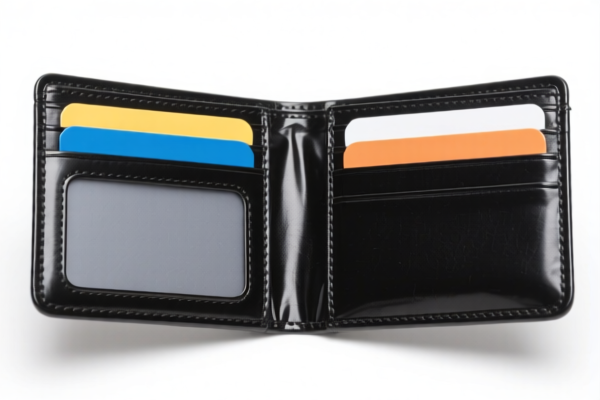
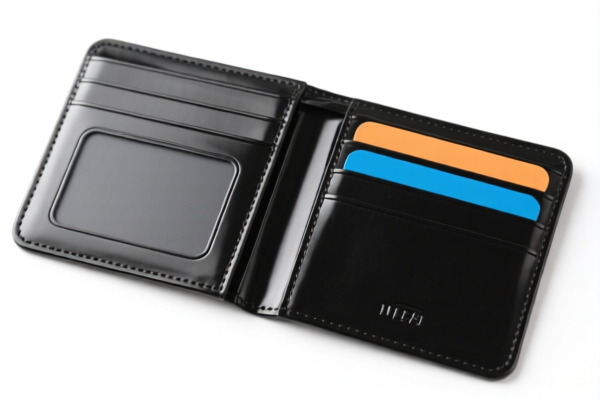
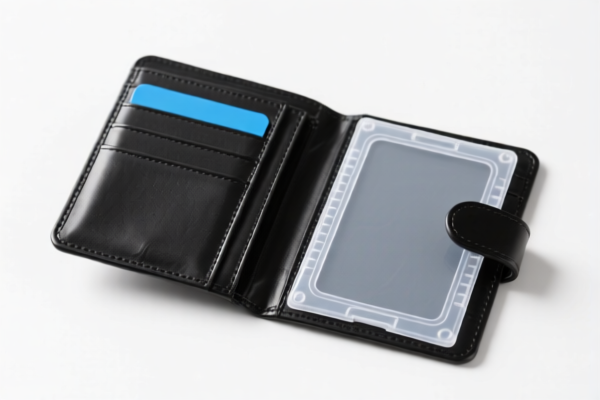
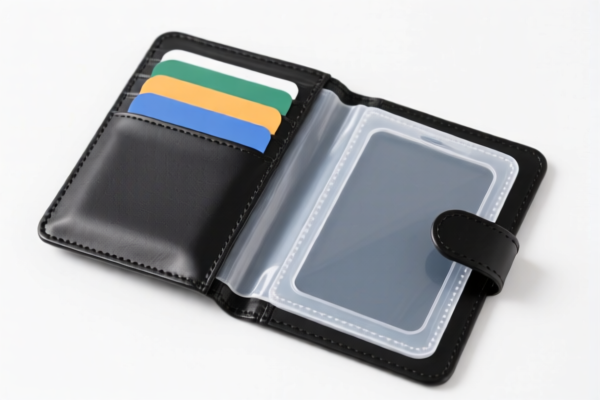
AI Analysis
👛 Plastic Surface Multi-functional Wallet (Plastic Wallet)
🌐 HS Code Reference & Customs Clearance Guide | 2026 Latest Tariff Analysis | Professional Clearance Strategy
📌 I. Product Definition & Classification: What Exactly is a "Plastic Wallet"?
A Plastic Surface Multi-functional Wallet is a portable container designed for carrying personal items such as cash, cards, and IDs. In international trade, the classification depends heavily on the material composition, structure, and primary use case.
While consumers view it simply as a "wallet," customs authorities distinguish between: 1. General Purpose Packaging/Holding Items (Chapter 39): If the item is primarily seen as a plastic bag, pouch, or general packaging material without specific structural features of a traditional wallet (like coin purses or card slots integrated into a rigid or semi-rigid plastic shell). 2. Articles of Bedding, Toilet, or Like Articles (Chapter 42): If it is specifically shaped as a wallet, purse, or case, even if made entirely of plastic (e.g., laminated plastic, plastic sheets).
⚠️ Key Distinction Point:
- If it’s a simple plastic pouch/bag used for holding items → Often falls under Chapter 39 (Plastics and articles thereof).
- If it’s a structured wallet/purse with specific compartments (card slots, bill folds) made of plastic material → Often falls under Chapter 42 (Articles of bedding, toilet, or like articles).
📦 II. HS Code Classification Details (2026 Latest Tariff Authority Comparison)
| HS Code | Product Description | Applicable Scenario | Material/Structure |
|---|---|---|---|
3923.90.00.80 |
Other plastic packaging articles, not elsewhere specified | General plastic pouches, bulk storage bags, simple plastic holders | ✅ Plastic, general packaging |
3923.10.90.00 |
Other articles for the conveyance or packing of goods | Plastic bags, sacks, containers for packing/transport | ✅ Plastic, packaging-focused |
3923.21.00.11 |
Plastic bags, pouches, and similar articles | Flexible plastic bags, multi-purpose plastic pouches | ✅ Plastic, flexible bag form |
4202.32.20.00 |
Wallets, purses, etc., of plastic sheeting | Structured wallets, coin purses with plastic exterior surfaces | ✅ Plastic sheet, structured wallet |
4202.32.10.00 |
Wallets, purses, etc., of reinforced or laminated plastic | High-durability wallets, layered plastic wallets | ✅ Laminated/Reinforced plastic |
🔍 Key Reminder:
- Chapter 39 Codes (3923.xx) are generally used when the item is viewed as a generic plastic container or bag.
- Chapter 42 Codes (4202.32) are used when the item is clearly a wallet/purse (a specific article for carrying small items), even if made of plastic.
- Misclassification Risk: Declaring a structured wallet as a "plastic bag" (3923) to avoid higher tariffs can lead to customs scrutiny if the product clearly has wallet-specific features (zippers, card slots, folding structure).
💰 III. 2026 Latest Tariff Rate Breakdown (Including Additional Duties & Policy Surcharges)
✅ Applicable Country: United States (US)
✅ Country of Origin: China (CN)
✅ Effective Date: From November 10, 2025 (and subsequent imports)
🎯 1. 3923.90.00.80 & 3923.10.90.00 & 3923.21.00.11 — Plastic Packaging/Bag Category
| Item | Content |
|---|---|
| Basic Tariff Rate | 3.0% (Ad Valorem) |
| Section 301 Additional Tariff | +25% (Under USITC Footnote 9903.88.01) |
| IEEPA Additional Tariff (Section 122) | +10% (Targeting China/HK products, effective from Nov 10, 2025) |
| Total Tariff Rate | 38.0% |
| Tax Calculation | CIF Value × 38% |
| De Minimis Eligibility | ❌ Not Eligible (deny_de_minimis applies due to Section 301 & IEEPA surcharges) |
| Legal Basis Path | IEEPA:9903.01.25 → USITC:3923.xx.xx → FOOTNOTE:301 |
📌 Explanation:
- Basic Duty (3%): Standard MFN rate for plastic articles/packaging.
- Section 301 Duty (25%): Major trade remedy tariff on Chinese plastics and manufactured goods.
- IEEPA Duty (10%): Additional surcharge under International Emergency Economic Powers Act for specific Chinese imports.
- Total 38%: This is a high tariff rate. No de minimis exemption (usually $800) applies because the additional duties are not de minimis-exempt.
🎯 2. 4202.32.20.00 — Plastic Sheet Wallets
| Item | Content |
|---|---|
| Basic Tariff Rate | 20.0% (Ad Valorem) |
| Section 301 Additional Tariff | +25% |
| IEEPA Additional Tariff (Section 122) | +10% |
| Total Tariff Rate | 55.0% |
| Tax Calculation | CIF Value × 55% |
| De Minimis Eligibility | ❌ Not Eligible |
| Legal Basis Path | IEEPA:9903.01.25 → USITC:4202.32.20.00 → FOOTNOTE:301 |
📌 Warning:
- Classifying a wallet under 4202 results in a much higher total tariff (55%) compared to packaging codes (38%).
- The higher basic duty (20% vs 3%) significantly increases the tax burden.
- Strategy: If the product can reasonably be classified as a "plastic bag/pouch" rather than a structured wallet, 3923 codes may be preferred for cost savings, provided the product description and appearance support this classification.
🎯 3. 4202.32.10.00 — Reinforced/Laminated Plastic Wallets
| Item | Content |
|---|---|
| Basic Tariff Rate | 12.1¢/kg + 4.6% (Ad Valorem) |
| Section 301 Additional Tariff | +25% (Applied to ad valorem portion) |
| IEEPA Additional Tariff (Section 122) | +10% (Applied to ad valorem portion) |
| Total Effective Rate | 12.1¢/kg + 4.6% + 35% (on ad valorem part) |
| Tax Calculation | (Weight × 12.1¢) + (CIF Value × 4.6% × 3.6) |
| De Minimis Eligibility | ❌ Not Eligible |
| Legal Basis Path | IEEPA:9903.01.25 → USITC:4202.32.10.00 → FOOTNOTE:301 |
📌 Note:
- This code has a mixed duty structure (specific + ad valorem).
- The 25% Section 301 and 10% IEEPA apply to the ad valorem portion (4.6%), not the specific duty (12.1¢/kg).
- Total Impact: The effective tax rate is complex and depends on weight vs. value. For lightweight, high-value wallets, this might be cheaper than 55% ad valorem, but more expensive than 38%.
🛠️ IV. Customs Clearance Practical Advice (Pitfall Avoidance Guide)
✅ 1. Document Preparation Checklist (All Required)
| Document | Must Provide | Description |
|---|---|---|
| ✅ Product Specifications | ✔️ | Dimensions, capacity, material type (e.g., PVC, PE, laminated plastic) |
| ✅ Product Photos (Clear) | ✔️ | Front, back, open/closed views, showing interior compartments (if any) |
| ✅ Commercial Invoice | ✔️ | Clearly state "Plastic Wallet" or "Plastic Pouch," avoid vague terms |
| ✅ Packing List | ✔️ | Quantity, weight, dimensions |
| ✅ Material Declaration | ✔️ | Confirm 100% plastic composition |
| ✅ Country of Origin | ✔️ | Required for Section 301/IEEPA assessment |
✅ 2. Declaration Strategy (Key Mantras)
🔥 “Material Defines Chapter, Structure Defines Code, Avoid Ambiguity!”
| Scenario | Recommended Declaration | Reason |
|---|---|---|
| Simple plastic pouch/bag | 3923.90.00.80 or 3923.21.00.11 |
Lower basic duty (3%); viewed as packaging |
| Structured wallet with card slots | 4202.32.20.00 |
Viewed as a "wallet"; higher duty (20% basic) |
| Laminated/rigid plastic wallet | 4202.32.10.00 |
Specific material classification |
| Vague "Plastic Holder" | ⚠️ High Risk | Customs may reclassify to highest applicable rate |
📌 Critical Tip:
- If your product is a simple plastic bag with a zipper, use3923.21.00.11(38% total).
- If it has card slots, bill folds, or a structured shape, customs may insist on4202.32.20.00(55% total).
- Do not misdeclare a wallet as a bag to save 17% in duty — this risks audits, penalties, and seizure.
✅ 3. Special Cases Handling
| Scenario | Handling Advice |
|---|---|
| OEM Custom Wallets | Provide design proofs to justify classification (e.g., is it a bag or a wallet?) |
| Mixed Material (Plastic + Fabric) | May change classification to Chapter 42 (textile-based) or 39 depending on predominant material |
| Small Quantity Samples | Still subject to 38%-55% duty; no de minimis exemption |
| Plastic Card Cases (Slim) | If not a "wallet," may fall under 3923.90.00.80; clarify as "card holder" not "wallet" |
🌍 V. Global Market Clearance Comparison (2026 Latest)
| Country/Region | Recommended HS Code | Tariff (China Origin) | Certification | Notes |
|---|---|---|---|---|
| 🇺🇸 USA | 3923.90.00.80 |
38% | None specific | High tariffs due to Section 301 & IEEPA |
| 🇨🇳 China | 3923.90.00.80 |
~6-10% | None | Lower duties, no Section 301 |
| 🇪🇺 EU | 4202.32.20.00 |
~4-6% | CE (if applicable) | No major trade wars, stable tariffs |
| 🇬🇧 UK | 4202.32.20.00 |
~4-6% | UKCA (if applicable) | Post-Brexit rules apply |
| 🇯🇵 Japan | 4202.32.20.00 |
~5-8% | PSE (if electronic) | Standard MFN rates |
📌 Conclusion:
- USA is the most challenging market due to 38%-55% tariffs.
- EU/UK/Asia offer significantly lower tariff risks for plastic wallets.
- Supply Chain Strategy: Consider diversifying production to non-China origins (e.g., Vietnam, India) to mitigate Section 301 and IEEPA surcharges.
📌 VI. Common Errors & Pitfall Guide (Lessons Learned)
❌ Error 1: Declaring a structured wallet as a "plastic bag" (3923)
👉 Consequence: Customs audit, reclassification to 4202.32.20.00, back taxes + penalties (~55% instead of 38%)
❌ Error 2: Ignoring IEEPA 10% surcharge
👉 Consequence: Underpayment of 10% on top of 301 duty → Seizure or heavy fines
❌ Error 3: Assuming de minimis ($800) applies
👉 Consequence: No de minimis exemption for Section 301/IEEPA duties → Full duty charged
❌ Error 4: Vague description "Plastic Item"
👉 Consequence: Customs assigns highest possible rate → Unnecessary cost
✅ Correct Approach:
"PVC Plastic Wallet, 5x3 inches, with 4 card slots and 1 bill compartment, Model XYZ, Made in China"
🎯 VII. Conclusion: Precise Classification Saves Money!
🎯 Remember the Mantra:
🔹 “Bag vs. Wallet? Check the structure!”
🔹 “3923 is 38%, 4202 is 55% — know the difference!”
🔹 “No de minimis for China plastic goods — pay upfront!”
📌 Pro Tip:
If your product is made in Vietnam, India, or Thailand, you may exempt Section 301 and IEEPA surcharges, reducing total tariff to ~3-6% (basic duty only).
Consider Advance Ruling with US Customs (CBP) to lock in the HS Code and avoid disputes.
📣 Immediate Action:
📞 Consult a licensed customs broker
📄 Submit product images + specifications for pre-classification
🚀 Ensure smooth clearance, minimize costs, and maximize profit!
✨ Professional clearance starts with accurate classification!
💼 Every cent counts — optimize your HS Code strategy today!
Customer Reviews
About HS Code Classification
The Harmonized System (HS) is an internationally standardized nomenclature developed by the World Customs Organization (WCO) to classify traded products. Over 200 countries use the HS system as the basis for customs tariffs, trade statistics, and import/export regulations.
Each HS code follows a hierarchical structure:
- Chapter (2 digits) — Broad category of goods (e.g., Chapter 84: Machinery and Mechanical Appliances)
- Heading (4 digits) — More specific grouping within the chapter
- Subheading (6 digits) — Internationally standardized breakdown, used by all WCO member countries
- National subdivisions (8-10 digits) — Country-specific extensions for further classification, such as US HTSUS 10-digit codes
Correct HS code classification is essential for smooth customs clearance, accurate duty payment, and compliance with trade regulations. Misclassification can lead to customs delays, overpayment of duties, or penalties.
When importing from CN to US, the applicable tariff rates may include:
- Most-Favored-Nation (MFN) rate — The standard duty rate applied to WTO members
- General rate — Applied to countries without trade agreements
- Trade remedy duties — Additional tariffs such as Section 301 (anti-dumping), Section 232 (national security), or countervailing duties
The information provided on this page is for reference purposes only. For official classification, please consult with your local customs authority or a licensed customs broker.