Plastic Synchronous Belt
CN → US| HS Code | Tariff Rate | Origin | Destination | Doc |
|---|---|---|---|---|
| 8431390010 | 35.0% | CN | US | Official Doc |
| 8431499084 | 85.0% | CN | US | Official Doc |
| 3926906010 | 39.2% | CN | US | Official Doc |
| 8483901050 | 37.8% | CN | US | Official Doc |
| 8483908080 | 37.8% | CN | US | Official Doc |
Product Images
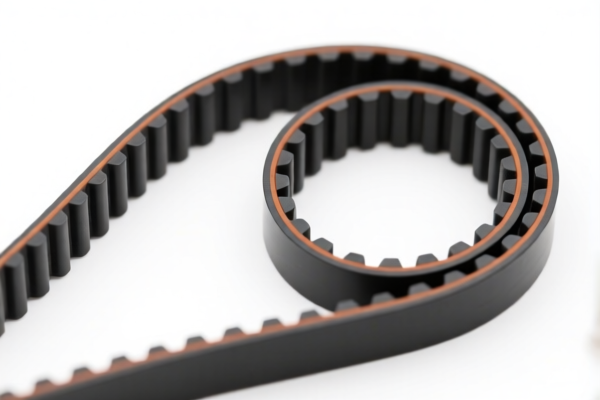
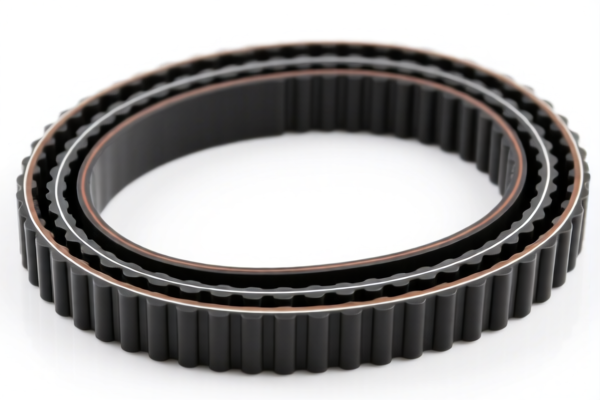
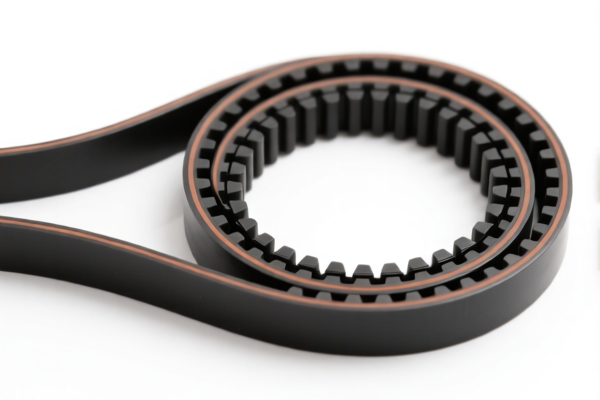
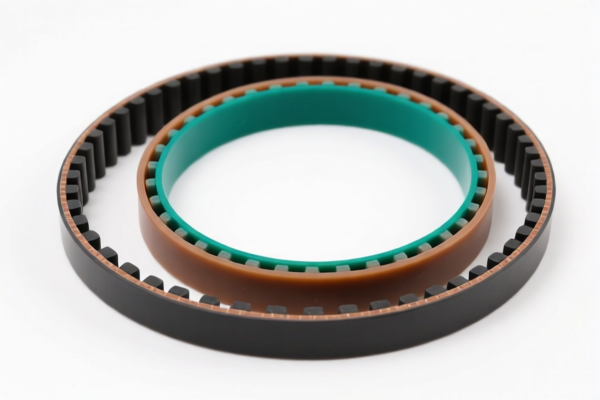
AI Analysis
🎡 Plastic Synchronous Belt (Plastic Timing Belt)
🌐 HS Code Reference & Customs Clearance Guide | 2026 Latest Tariff Analysis | Professional Clearance Strategy
📌 I. Product Definition & Classification: What Exactly is a "Plastic Synchronous Belt"?
A Plastic Synchronous Belt (often referred to as a plastic timing belt or toothed belt) is a power transmission component made primarily of polyurethane (PU), thermoplastic polyurethane (TPU), or reinforced plastic with rubber. It features internal teeth that mesh with pulleys to ensure synchronous motion without slippage.
In international trade, its classification depends heavily on its primary function and structural role: * As a Transmission Component: If it is a standard toothed belt used for power transmission (motors, engines, machinery), it generally falls under Chapter 84. * As a Conveyor Component: If it is part of a continuous conveyor system (moving goods/packages), it falls under conveyor machinery parts. * As a Finished Plastic Article: If it is viewed strictly by its material composition and form as a standalone plastic article (less common for industrial synchronous belts), it might fall under Chapter 39, though this is rare for functional mechanical parts.
⚠️ Key Distinction Point:
- Transmission vs. Conveyance: Is it driving a machine part (8483) or moving products on a line (8431)?
- Material vs. Function: Customs often prioritize the mechanical function (Ch 84/85) over the material (Ch 39) for engineered components.
📦 II. HS Code Classification Details (2026 Latest Tariff Authoritative Comparison)
Based on the provided data, here are the five potential HS Code classifications for "Plastic Synchronous Belt," along with their rationale and tax implications.
| HS Code | Product Description & Rationale | Tax Rate (Total) | Tax Breakdown Details |
|---|---|---|---|
8431.39.00.10 |
Conveyor Parts: Classified as a plastic synchronous belt used as a part of a conveyor system. | 35.0% | Base Tariff: 0.0% Add-on Tariff: 25.0% Section 301 (122 Clause): 10% |
8431.49.90.84 |
Mechanical Parts: Classified as a mechanical part, falling under "Other" categories. Note: Data mentions steel/aluminum/copper surcharge, but this is a plastic item. | 85.0% | Base Tariff: 0.0% Add-on Tariff: 25.0% Section 301 (122 Clause): 10% Additional Surcharge (Steel/Al/Cu): 50% (⚠️ Caution: Ensure product is purely plastic to avoid this 50% surcharge) |
3926.90.60.10 |
Plastic Articles: Classified based on material composition and form as a finished plastic article. | 39.2% | Base Tariff: 4.2% Add-on Tariff: 25.0% Section 301 (122 Clause): 10% |
8483.90.10.50 |
Transmission Elements: Classified as a transmission element (part of a transmission shaft, crankshaft, etc.). | 37.8% | Base Tariff: 2.8% Add-on Tariff: 25.0% Section 301 (122 Clause): 10% |
8483.90.80.80 |
Transmission Assemblies: Classified as an assembly part of a transmission apparatus. | 37.8% | Base Tariff: 2.8% Add-on Tariff: 25.0% Section 301 (122 Clause): 10% |
🔍 Critical Analysis:
- Lowest Risk/Tax:8483.90.10.50and8483.90.80.80offer the lowest total tax at 37.8%. They recognize the item as a functional mechanical transmission part.
- Moderate Tax:8431.39.00.10(35.0%) is actually the lowest numerical rate, but it restricts the usage strictly to conveyors. If the belt is used for general machinery (not conveyors), this classification is incorrect and risky.
- Highest Risk:8431.49.90.84(85.0%) includes a 50% surcharge for steel/aluminum/copper. Since the product is plastic, you must ensure the description does not trigger this metal-related surcharge clause.
- Material-Based:3926.90.60.10(39.2%) is safer than the high-risk mechanical codes but higher than the specific transmission codes. It treats the belt as a "plastic good" rather than a "machine part."
💰 III. 2026 Latest Tariff Rate Breakdown (Including Surcharges)
✅ Applicable Country: United States (US)
✅ Origin: China (CN)
✅ Effective Time: 2025/2026 (Includes subsequent imports)
🎯 1. 8431.39.00.10 – Conveyor Parts (Lowest Rate: 35%)
| Item | Content |
|---|---|
| Base Tariff | 0% (ad valorem) |
| USITC Add-on Tariff (Section 301) | +25% |
| Section 122 Clause Tariff | +10% |
| Total Rate | 35.0% |
| Tax Calculation | CIF Value × 35% |
| De Minimis Eligibility | ❌ No (High tariff items usually excluded) |
📌 Explanation:
- This is the most favorable rate if the belt is exclusively used in conveyor systems.
- The combination of 0% base + 25% Section 301 + 10% Section 122 results in a competitive 35% rate.
- Risk: Misclassifying a non-conveyor belt here can lead to customs audits and penalties.
🎯 2. 8483.90.10.50 & 8483.90.80.80 – Transmission Elements/Assemblies (Rate: 37.8%)
| Item | Content |
|---|---|
| Base Tariff | 2.8% (ad valorem) |
| USITC Add-on Tariff (Section 301) | +25% |
| Section 122 Clause Tariff | +10% |
| Total Rate | 37.8% |
| Tax Calculation | CIF Value × 37.8% |
| De Minimis Eligibility | ❌ No |
📌 Explanation:
- These codes recognize the belt as a functional mechanical part.
- The base tariff (2.8%) is slightly higher than the 0% in the conveyor code, but the total (37.8%) is very close to the conveyor rate (35%).
- Recommendation: If the belt is used for general machinery, robotics, or automation (not just conveyors), this is the most accurate and safe classification.
🎯 3. 3926.90.60.10 – Plastic Articles (Rate: 39.2%)
| Item | Content |
|---|---|
| Base Tariff | 4.2% (ad valorem) |
| USITC Add-on Tariff (Section 301) | +25% |
| Section 122 Clause Tariff | +10% |
| Total Rate | 39.2% |
| Tax Calculation | CIF Value × 39.2% |
| De Minimis Eligibility | ❌ No |
📌 Explanation:
- This classification is based on material composition (Plastic).
- It avoids the technical debate of "is it a machine part or a plastic good?" but comes with a higher base tariff.
- Useful if the belt is a simple, non-reinforced plastic item without complex mechanical engineering features.
🎯 4. 8431.49.90.84 – Other Mechanical Parts (Rate: 85%)
| Item | Content |
|---|---|
| Base Tariff | 0% |
| USITC Add-on Tariff (Section 301) | +25% |
| Section 122 Clause Tariff | +10% |
| Surcharge (Steel/Al/Cu) | +50% |
| Total Rate | 85.0% |
| Tax Calculation | CIF Value × 85% |
| De Minimis Eligibility | ❌ No |
📌 Warning:
- This code includes a 50% surcharge for steel, aluminum, and copper products.
- Since the product is Plastic, you must explicitly declare "Non-metallic" or "Plastic Composition" to avoid this penalty.
- Avoid this code unless the customs broker has confirmed the surcharge does not apply to plastic components. It is the most expensive and risky option.
🛠️ IV. Customs Clearance Practical Advice (Real-World Pitfall Avoidance Guide)
✅ 1. Required Document Checklist (Missing items = Delays)
| Document | Mandatory? | Description |
|---|---|---|
| ✅ Product Specifications | ✔️ | Detailed specs: Material (PU/TPU/Rubber), Tooth Profile (T5, T10, HTD, etc.), Width, Length. |
| ✅ Technical Diagrams | ✔️ | Show how the belt meshes with pulleys to prove it’s a "transmission/conveyor part" not a general plastic strip. |
| ✅ Product Photos | ✔️ | Clear shots of the belt, teeth, and any markings/labels. |
| ✅ Commercial Invoice | ✔️ | Must specify "Plastic Synchronous Belt" and its intended use (e.g., "For Conveyor System" or "For Power Transmission"). |
| ✅ Packing List | ✔️ | Ensure weight and dimensions match. |
| ✅ Material Declaration | ✔️ | Explicitly state "100% Plastic/Polyurethane" to avoid the 50% metal surcharge under 8431.49.90.84. |
✅ 2. Declaration Tips (Key Mantras)
🔥 "Function First, Material Second, Specify Use, Avoid Metal!"
| Scenario | Correct Declaration | Wrong Practice |
|---|---|---|
| Belt for Conveyor | HS: 8431.39.00.10Desc: "Plastic Synchronous Belt for Conveyor System" |
Declare as "Plastic Strip" → Risk of reclassification. |
| Belt for Motor/Gearbox | HS: 8483.90.10.50Desc: "Plastic Synchronous Timing Belt for Power Transmission" |
Declare as "Plastic Article" → Higher base tax (39.2% vs 37.8%). |
| Belt with Metal Inserts | Check if metal core exists. If yes, 8431.49.90.84 may trigger 50% surcharge. |
Assume "Plastic" if it has steel cords → 85% Tax! |
| General Machinery Part | HS: 8483.90.80.80Desc: "Plastic Belt for Transmission Assembly" |
Vague description "Plastic Belt" → Customs discretion. |
✅ 3. Special Situation Handling
| Situation | Handling Advice |
|---|---|
| OEM Custom Belt | Provide design drawings and customer order to prove specific mechanical function. |
| Belt Used in Multiple Applications | Classify based on primary intended use as stated in the invoice. If used for conveyors, use 8431.39.00.10. |
| Belt with Metal Reinforcement | Critical: If the belt contains steel cords, it may be classified as a "metal product" under certain rules, triggering the 50% surcharge in 8431.49.90.84. Verify material composition carefully. |
| Sample Shipment | Even for samples, declare HS Code accurately. De Minimis ($800) exemptions are often denied for high-tariff goods from China. |
🌍 V. Global Market Customs Comparison (2026 Latest)
| Country/Region | Recommended HS Code | Tariff (China Origin) | Certification Requirements | Notes |
|---|---|---|---|---|
| 🇺🇸 USA | 8483.90.10.50 / 8431.39.00.10 |
35% - 37.8% (Section 301 + 122) | None specific (General) | Avoid 8431.49.90.84 due to 50% metal surcharge risk. |
| 🇨🇳 China | 8483.90.10.50 |
5% - 8% (Import Tariff) | CCC (if applicable to end-product) | No Section 301 or 122 surcharges. |
| 🇪🇺 EU | 8483.40.90 (Rough equivalent) |
0% - 3% (Most FTA) | CE (if machinery), REACH | Check for plastic chemical compliance. |
| 🇦🇺 Australia | 8483.40.90 |
5% | RCM (if electrical components nearby) | No major surcharges. |
| 🇯🇵 Japan | 8483.40.90 |
0% - 3% | PSE (if part of electrical appliance) | No major surcharges. |
📌 Conclusion:
- USA is the most critical market due to Section 301 (25%) and Section 122 (10%) tariffs.
- Accurate classification is crucial: Choosing8483(37.8%) over8431(35%) is a small difference, but choosing8431.49.90.84(85%) is a disaster.
- Non-US Markets: Tariffs are significantly lower, focusing on standard import duties.
📌 VI. Common Mistakes & Pitfall Guide (Lessons Learned)
❌ Mistake 1: Declaring as "Plastic Strap" or "Rubber Band"
👉 Consequence: Customs may reclassify under 3926.90.60.10 (39.2%) or 8431 (35-85%), causing delays and potential penalties for misdeclaration.
❌ Mistake 2: Ignoring Metal Reinforcement
👉 Consequence: If the belt has steel cords and is declared as "Plastic," it may fall under 8431.49.90.84 with a 50% surcharge (Total 85%).
✅ Fix: Declare "Plastic Synchronous Belt with Steel Cords" if applicable, and verify if the surcharge applies to composite materials.
❌ Mistake 3: Using Vague Descriptions
👉 Consequence: "Belt" or "Timing Belt" without context leads to arbitrary classification.
✅ Fix: Use precise terms: "Plastic Synchronous Timing Belt for Conveyor Systems."
❌ Mistake 4: Assuming De Minimis Exemption
👉 Consequence: High-tariff items (35%+) from China are often excluded from the $800 de minimis rule.
✅ Fix: Always plan for full duty payment in quotes.
✅ Correct Approach:
"Plastic Synchronous Timing Belt, Polyurethane, Tooth Profile T10, Width 50mm, for Industrial Conveyor System, Model XYZ"
🎯 VII. Conclusion: Precision in Classification, Savings in Cost!
🎯 Remember the Mantra:
🔹 "Conveyor? 8431.39 (35%). Transmission? 8483.90 (37.8%). Plastic Only? 3926.90 (39.2%). Metal Mix? 8431.49 (85% - AVOID!)."
🔹 "HS Code decides your cost. A 2% difference is profit. A 50% surcharge is loss."
📌 Pro Tip:
If your plastic synchronous belt is sourced from Vietnam, Thailand, or Mexico, you may qualify for exemptions or lower tariffs under USMCA or other FTAs.
Recommend applying for an Advance Ruling from US Customs and Border Protection (CBP) to confirm the correct HS Code and avoid surprise taxes.
📣 Immediate Action:
📞 Consult a licensed customs broker + Provide technical drawings + Apply for HS Code Pre-ruling
🚀 Ensure your Plastic Synchronous Belt clears smoothly, saves costs, and maximizes profit!
✨ Professional Clearance Starts with Accurate Classification!
💼 Every cent in your tariff calculation deserves precision!
Customer Reviews
About HS Code Classification
The Harmonized System (HS) is an internationally standardized nomenclature developed by the World Customs Organization (WCO) to classify traded products. Over 200 countries use the HS system as the basis for customs tariffs, trade statistics, and import/export regulations.
Each HS code follows a hierarchical structure:
- Chapter (2 digits) — Broad category of goods (e.g., Chapter 84: Machinery and Mechanical Appliances)
- Heading (4 digits) — More specific grouping within the chapter
- Subheading (6 digits) — Internationally standardized breakdown, used by all WCO member countries
- National subdivisions (8-10 digits) — Country-specific extensions for further classification, such as US HTSUS 10-digit codes
Correct HS code classification is essential for smooth customs clearance, accurate duty payment, and compliance with trade regulations. Misclassification can lead to customs delays, overpayment of duties, or penalties.
When importing from CN to US, the applicable tariff rates may include:
- Most-Favored-Nation (MFN) rate — The standard duty rate applied to WTO members
- General rate — Applied to countries without trade agreements
- Trade remedy duties — Additional tariffs such as Section 301 (anti-dumping), Section 232 (national security), or countervailing duties
The information provided on this page is for reference purposes only. For official classification, please consult with your local customs authority or a licensed customs broker.