Plastic Table Mat
CN → US| HS Code | Tariff Rate | Origin | Destination | Doc |
|---|---|---|---|---|
| 3914006000 | 38.9% | CN | US | Official Doc |
| 3914002000 | 35.0% | CN | US | Official Doc |
| 3926909989 | 22.8% | CN | US | Official Doc |
| 3926909905 | 22.8% | CN | US | Official Doc |
| 4016990500 | 20.9% | CN | US | Official Doc |
Product Images
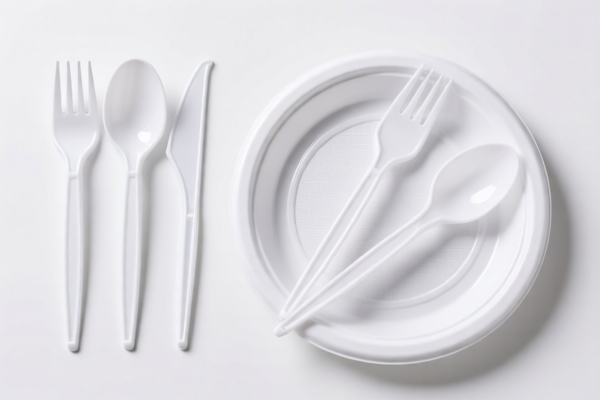
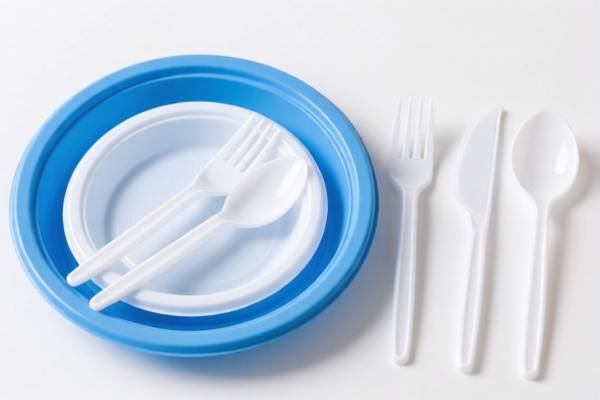
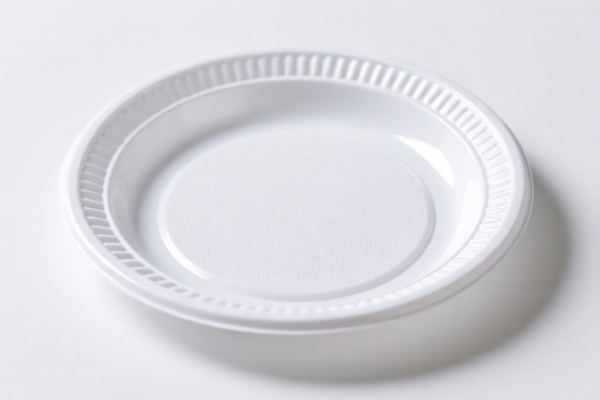
AI Analysis
🧴 Plastic Table Mat: The Ultimate Global Trade & Customs Classification Guide (2026)
🌐 HS Code Reference & Clearance Strategy | Full Tariff Breakdown | Professional Export Strategy
📌 I. Product Definition & Classification: Do You Really Know "Plastic Table Mats"?
Plastic Table Mats are versatile floor or table coverings designed to protect surfaces, provide cushioning, or offer slip resistance. In international trade, they are classified based on material composition (plastic vs. rubber) and function/structure (net-like, flat, or protective).
The key to avoiding massive tariff shocks lies in distinguishing between: * "Plastic Mats" (Chapter 39): General plastic articles, often with high "Section XI" or "Add-on" tariffs. * "Rubber/Plastic Mats" (Chapter 40): If the primary material is rubber or specific rubber/plastic blends for household use. * "Other Plastic Articles" (Chapter 39.26): For complex or non-standard shapes.
⚠️ Critical Distinction:
- If it is a pure plastic mesh/netting for industrial or packaging use → Likely 3914 or 3926.
- If it is a protective mat (e.g., for table legs or floor) made of rubber or plastic → Likely 4016.
- Material dominance matters: A mat with a rubber base and plastic top may still fall under Rubber chapters if the rubber is essential.
📦 II. HS Code Classification Matrix (Based on Your Data)
| HS Code | Product Description (Summary) | Material/Structure Logic | Total Tax Rate | Tax Components Detail |
|---|---|---|---|---|
| 3914.00.60.00 | Plastic Mats, classified based on Plastic Material & Net Shape | Plastic + Net/Mesh Structure | 38.9% | Base: 3.9% + Add-on: 25.0% + 122 Clause: 10% |
| 3914.00.20.00 | Plastic Mats, classified based on Plastic Material & Primary Form | Plastic + Primary/Unprocessed Form | 35.0% | Base: 0.0% + Add-on: 25.0% + 122 Clause: 10% |
| 3926.90.99.89 | Plastic Mats, classified as "Other Plastic Articles" | General Plastic (Non-specific) | 22.8% | Base: 5.3% + Add-on: 7.5% + 122 Clause: 10% |
| 3926.90.99.05 | Plastic Mats, classified as "All-Plastic Art. Article" | Fully Plastic Composition | 22.8% | Base: 5.3% + Add-on: 7.5% + 122 Clause: 10% |
| 4016.99.05.00 | Table Foot Mats, classified by Rubber/Plastic Material & Household Use | Rubber/Plastic Blend + Household Item | 20.9% | Base: 3.4% + Add-on: 7.5% + 122 Clause: 10% |
🔍 Key Insight:
- 3914 Codes carry the highest risk (~35-39%) due to the "25% Add-on Tariff" (likely Section 301 or specific anti-dumping duties). - 3926 Codes offer a significant saving (~22.8%) if the mat can be argued as a generic "other plastic article" rather than a "net." - 4016.99.05.00 is the sweet spot (20.9%) IF the product can be definitively classified as a "Table Foot Mat" (e.g., protecting table legs) and contains rubber or is treated as a rubber/plastic household item.
💰 III. 2026 Tariff Structure Deep Dive (Detailed Breakdown)
✅ Applicable Market: United States (US)
✅ Origin: China (CN)
✅ Effective Date: Current (2025-2026 Tariff Regime)
✅ Tax Logic: Base Rate + Section 301/Add-on + Section 122 Clause
🎯 1. 3914.00.60.00 & 3914.00.20.00 (High Risk: Net/Primary Form)
| Item | Content |
|---|---|
| Base Tariff | 0.0% – 3.9% (depending on specific shape/form) |
| Add-on Tariff | +25.0% (Standard "China Add-on" / Section 301) |
| Section 122 Clause | +10.0% (Specific "122 Clause" tariff) |
| Total Effective Rate | 35.0% – 38.9% |
| De Minimis Exemption | ❌ NO (Subject to high duty) |
| Legal Path | USITC:3914.00.60.00 → Add-on:25% → Clause 122:10% |
📌 Explanation:
- The 25% Add-on is the most damaging factor. It applies because "Plastic Mats" (especially nets) are often categorized as "Plastic Articles" subject to heavy Section 301 duties. - The 10% Section 122 is an additional layer, often targeting specific Chinese industrial products. - Result: Even if the base duty is 0%, you pay 35% minimum.
🎯 2. 3926.90.99.89 & 3926.90.99.05 (Medium Risk: Other/All-Plastic)
| Item | Content |
|---|---|
| Base Tariff | 5.3% |
| Add-on Tariff | +7.5% (Reduced "China Add-on" for "Other" articles) |
| Section 122 Clause | +10.0% |
| Total Effective Rate | 22.8% |
| De Minimis Exemption | ❌ NO |
| Legal Path | USITC:3926.90.99.89 → Add-on:7.5% → Clause 122:10% |
📌 Explanation:
- This is a strategic alternative. If your mat is not a "net" (3914) but a generic "other plastic article," the Add-on drops from 25% to 7.5%. - Savings: 15.2% lower than 3914 classification.
🎯 3. 4016.99.05.00 (Lowest Risk: Table Foot Mats)
| Item | Content |
|---|---|
| Base Tariff | 3.4% |
| Add-on Tariff | +7.5% |
| Section 122 Clause | +10.0% |
| Total Effective Rate | 20.9% |
| De Minimis Exemption | ❌ NO |
| Legal Path | USITC:4016.99.05.00 → Add-on:7.5% → Clause 122:10% |
📌 Explanation:
- BEST OPTION if the product is a Table Foot Mat (protective pad for legs). - It falls under Chapter 40 (Rubber), which often attracts lower add-on tariffs than Chapter 39 (Plastic) for household items. - Requirement: Must be explicitly a "Table Foot Mat" or "Household Protective Mat" made of rubber/plastic blend.
🛠️ IV. Clearance & Strategy: How to Save Money & Avoid Delays
✅ 1. Documentation Checklist (Non-Negotiable)
| Document | Requirement | Purpose |
|---|---|---|
| Product Spec Sheet | ✔️ Must detail material % (Plastic vs. Rubber), thickness, and structure (Net vs. Solid). | To prove if it fits 3914 (Net) or 4016 (Household/Rubber). |
| Photographs | ✔️ Clear shots of the mat, especially corners/legs/usage. | To demonstrate if it is a "Table Foot Mat" (4016) vs. "General Plastic Mat" (3914). |
| Function Statement | ✔️ Explicitly state: "Protects table legs from scratching" or "Non-slip floor mat." | Crucial for 4016.99.05.00 classification. |
| Commercial Invoice | ✔️ HS Code + "Plastic Table Mat" or "Rubber/Plastic Table Foot Mat" | Ensure name matches the HS Code logic. |
| Material Composition | ✔️ Breakdown: "100% Polypropylene" vs. "Rubber/Plastic Blend." | Determines Chapter 39 vs. Chapter 40. |
✅ 2. Classification Strategy (The "Save Money" Algorithm)
🔥 Golden Rule: "Don't declare 'Plastic Mat' if it can be a 'Table Foot Mat'!"
| Scenario | Recommended HS Code | Why? | Estimated Savings |
|---|---|---|---|
| Generic Plastic Net Mat | 3926.90.99.89 |
Avoids "Net" classification (3914). | 16%+ vs 3914.60 |
| "Table Foot" Protective Pad | 4016.99.05.00 |
Fits "Household Item" + "Rubber/Plastic". | 18%+ vs 3914.60 |
| Solid Plastic Floor Mat | 3926.90.99.05 |
"All-Plastic" generic category. | 16%+ vs 3914.20 |
| True "Plastic Net" | 3914.00.60.00 |
Last Resort (Highest duty). | ❌ Highest Cost |
⚠️ Warning:
- If you declare 3914.00.60.00 for a mat that is clearly a Table Foot Mat, you pay 38.9% instead of 20.9%.
- Difference: 18% of CIF Value. On a $10,000 shipment, that's $1,800 extra!
✅ 3. Special Scenarios & Pitfalls
| Scenario | Risk | Strategy |
|---|---|---|
| Mat with Metal Leg Tips | ❌ May be reclassified as "Other Articles" or "Metal" | Remove metal parts for shipping or declare as "Plastic/Rubber" with removable tips. |
| "Net" vs. "Solid" | ❌ Misdeclaring solid as net (3914) | Ensure "Net" structure is visible. If solid, use 3926. |
| Mixed Materials | ❌ Rubber/Plastic blend confusion | If rubber is dominant, push for 4016. If plastic is dominant, use 3926 (lower add-on than 3914). |
| Household vs. Industrial | ❌ Industrial nets (3914) have higher duties | Emphasize Household Use (Table Protection) for 4016. |
🌍 V. Global Market Comparison (2026 Tariff Snapshot)
| Market | Recommended HS Code | Effective Tariff | Key Requirement |
|---|---|---|---|
| 🇺🇸 USA | 4016.99.05.00 (Best) |
20.9% | Must prove "Table Foot" function. |
| 🇪🇺 EU | 3926.90.99 |
~0-5% + VAT | No Section 301/122 Clause. |
| 🇨🇦 Canada | 3926.90.99 |
~5% - 10% | Standard FTA if applicable. |
| 🇦🇺 Australia | 4016.99.05 |
~5% | Household item focus. |
📌 Conclusion:
- USA is the hardest market due to the 25% Add-on on 3914 and 10% Clause 122.
- Strategy: Always attempt to classify as 4016.99.05.00 (Table Foot Mat) or 3926.90.99 (Other Plastic) to avoid the 3914 "Net" tax trap.
📌 VI. Common Mistakes & How to Avoid Them
❌ Mistake 1: Calling it "Plastic Net" when it's a "Solid Mat"
👉 Consequence: 3914 (38.9%) vs 3926 (22.8%). Overpayment!
❌ Mistake 2: Ignoring the "Table Foot" function
👉 Consequence: Missed opportunity for 4016 (20.9%). Pay 18% more!
❌ Mistake 3: Vague Description "Plastic Mat"
👉 Consequence: Customs may guess 3914 (Highest Duty). Always specify "Table Foot Protective Mat".
✅ Correct Declaration:
"Plastic/Rubber Table Foot Mat, Household Use, Non-Slip, Model XYZ, 100% Synthetic Polymer/Rubber Blend."
HS Code:4016.99.05.00(Target)
🎯 VII. Final Verdict: The Smart Shipper's Playbook
🔹 Rule 1: Avoid
3914.00if possible. It carries the 25% Add-on. 🔹 Rule 2: Push for4016.99.05.00if it's a Table Foot Mat. It’s the cheapest (20.9%). 🔹 Rule 3: If not a foot mat, use3926.90.99(Other Plastic) to avoid the "Net" classification. 🔹 Rule 4: Always provide a functional description in the commercial invoice. "Table Protection" is your ticket to lower rates.
📌 Pro Tip:
If you are shipping a mix of "Plastic Nets" and "Table Foot Mats", separate the shipments or clearly label them to avoid Customs flagging the whole container for 3914 classification.
🚀 Action Plan:
1. Photograph your mats (show the "foot" or "table" usage).
2. Update your product description to "Table Foot Mat".
3. Select 4016.99.05.00 or 3926.90.99.89 on your invoice.
4. Save up to 18% in duties!
✨ Professional Customs Clearance Starts with the Right HS Code!
💼 Don't let a 18% tariff difference erase your profit margin!
Customer Reviews
About HS Code Classification
The Harmonized System (HS) is an internationally standardized nomenclature developed by the World Customs Organization (WCO) to classify traded products. Over 200 countries use the HS system as the basis for customs tariffs, trade statistics, and import/export regulations.
Each HS code follows a hierarchical structure:
- Chapter (2 digits) — Broad category of goods (e.g., Chapter 84: Machinery and Mechanical Appliances)
- Heading (4 digits) — More specific grouping within the chapter
- Subheading (6 digits) — Internationally standardized breakdown, used by all WCO member countries
- National subdivisions (8-10 digits) — Country-specific extensions for further classification, such as US HTSUS 10-digit codes
Correct HS code classification is essential for smooth customs clearance, accurate duty payment, and compliance with trade regulations. Misclassification can lead to customs delays, overpayment of duties, or penalties.
When importing from CN to US, the applicable tariff rates may include:
- Most-Favored-Nation (MFN) rate — The standard duty rate applied to WTO members
- General rate — Applied to countries without trade agreements
- Trade remedy duties — Additional tariffs such as Section 301 (anti-dumping), Section 232 (national security), or countervailing duties
The information provided on this page is for reference purposes only. For official classification, please consult with your local customs authority or a licensed customs broker.