Plastic Table Ornament
CN → US| HS Code | Tariff Rate | Origin | Destination | Doc |
|---|---|---|---|---|
| 3926400010 | 15.3% | CN | US | Official Doc |
| 9503000073 | 10.0% | CN | US | Official Doc |
| 3926400090 | 15.3% | CN | US | Official Doc |
| 9503000090 | 10.0% | CN | US | Official Doc |
| 7117909000 | 28.5% | CN | US | Official Doc |
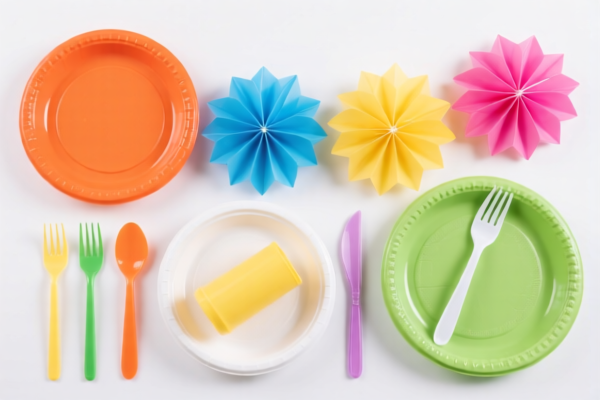
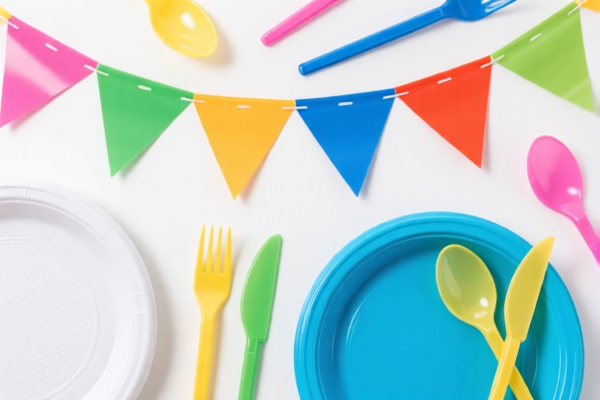
Product Images


AI Analysis
🪴 Plastic Table Ornament (Plastic Table Decor)
🌐 HS Code Reference & Clearance Guide | 2026 Tariff Breakdown | Strategic Entry Strategy
📌 一、Product Definition & Classification: Is it a "Decor" or a "Toy"?
Plastic Table Ornament is a broad category in international trade, often causing classification disputes. The key lies in the intended use and visual appearance:
- Decorative Articles (3926): Items primarily used for interior decoration, styling, or display (e.g., figurines, vases, abstract shapes).
- Toys/Games (9503): Items primarily used for play, amusement, or model collecting (e.g., action figures, miniature models for kids).
- Imitation Jewelry (7117): Items that mimic the appearance of jewelry (e.g., costume necklaces, earrings made of plastic but worn as accessories).
⚠️ Critical Distinction Point:
- If the item is static, decorative, and not for play → Likely 3926.
- If the item is poseable, themed for children, or part of a set → Likely 9503.
- If the item is worn on the body (even if plastic) → Likely 7117.
📦 II. HS Code Classification Details (Based on Provided Data)
| HS Code | Product Description | Applicable Scenario | Tax Rate (Total) |
|---|---|---|---|
3926.40.00.10 |
Plastic Ornaments, Plastic Material, Decorative Use | Static Decor: Vases, statues, home decor items. | 15.3% |
9503.00.00.73 |
Plastic Ornaments, Toy/Model Form | Toys/Models: Action figures, collectible models for play. | 10.0% |
3926.40.00.90 |
Plastic Decorative Articles, Matched Material & Use | General Decor: Broad category for plastic decor not fitting 10. |
15.3% |
9503.00.00.90 |
Plastic Ornaments, Unspecified Toy/Model Category | Unclassified Toys: Items that are toys but don't fit specific sub-categories. | 10.0% |
7117.90.90.00 |
Plastic Ornaments, Classified under "Other Imitation Jewelry" | Costume Jewelry: Bracelets, necklaces, rings made of plastic. | 28.5% |
🔍 Key Insight:
- Decors (3926) carry a 15.3% tax (Base 5.3% + 122 Clause 10%).
- Toys (9503) are more competitive at 10.0% (Base 0% + 122 Clause 10%).
- Jewelry (7117) is the most expensive at 28.5% (Base 11% + Add-on 7.5% + 122 Clause 10%).
💰 III. 2026 Tariff Rate Detailed Breakdown (Including Surcharges)
✅ Applicable Country: USA (US)
✅ Origin: China (CN)
✅ Validity: Based on provided data (Section 301 / "122 Clause" 10%)
🎯 1. 3926.40.00.10 & 3926.40.00.90 — Plastic Decorative Articles
| Item | Content |
|---|---|
| Base Duty | 5.3% (General MFN rate for plastic articles) |
| Section 301 Surtax | 0.0% (No additional 301 surcharge for this specific sub-heading in this dataset) |
| "122 Clause" Surtax | +10.0% (Section 301 - China Specific) |
| Total Tax Rate | 15.3% |
| Calculation | CIF Value × 15.3% |
| Legal Reference | Section 301 Tariff Action: 10% surcharge on Chinese goods in HS 3926. |
📌 Explanation:
The "122 Clause" (often referring to specific Section 301 implementation lists) imposes a flat 10% surcharge on top of the base duty. Since the base is 5.3%, the total becomes 15.3%. No extra Section 301 "List 3" or "List 4" surcharge is applied here in this specific dataset.
🎯 2. 9503.00.00.73 & 9503.00.00.90 — Toys & Models
| Item | Content |
|---|---|
| Base Duty | 0.0% (Toys often enter duty-free under MFN) |
| Section 301 Surtax | 0.0% (No additional surcharge for toys in this specific dataset) |
| "122 Clause" Surtax | +10.0% (Section 301 - China Specific) |
| Total Tax Rate | 10.0% |
| Calculation | CIF Value × 10.0% |
| Legal Reference | Section 301 Tariff Action: 10% surcharge on Chinese goods in HS 9503. |
📌 Explanation:
Toys enjoy a 0% base duty, making the 10% surcharge the only tax. This is 5.3% cheaper than plastic decor!
Strategy Tip: If your item is borderline (can be argued as a toy or decor), classifying as a Toy (9503) can save significant costs.
🎯 3. 7117.90.90.00 — Imitation Jewelry
| Item | Content |
|---|---|
| Base Duty | 11.0% (Standard for jewelry articles) |
| Section 301 Surtax | +7.5% (Additional surcharge for specific jewelry categories) |
| "122 Clause" Surtax | +10.0% (Section 301 - China Specific) |
| Total Tax Rate | 28.5% |
| Calculation | CIF Value × 28.5% |
| Legal Reference | Combined: Base (11%) + Section 301 A (7.5%) + Section 301 B (10%). |
📌 Warning:
This is the highest tax bracket (28.5%). If your "plastic ornament" is actually a necklace or bracelet, avoid this classification unless necessary.
🛠️ IV. Practical Clearance Advice (Avoiding Pitfalls)
✅ 1. Preparation Checklist (Must-Haves)
| Document | Requirement | Why It Matters |
|---|---|---|
| Product Photos | ✔️ Clear images of front/back | To prove if it's a toy (colorful, poseable) or decor (static). |
| Description of Use | ✔️ "For home decoration" vs "For children's play" | Defines the HS Code (3926 vs 9503). |
| Bill of Materials | ✔️ Material composition (100% Plastic) | Confirms no metal parts that might shift to 7117. |
| Commercial Invoice | ✔️ Clear description of "Plastic Ornament" | Matches the HS Code description. |
✅ 2. Declaration Strategy (The "Golden Rules")
🔥 Strategy: "Play or Decor?"
| Scenario | Recommended HS Code | Tax Impact | Action |
|---|---|---|---|
| Child's action figure | 9503.00.00.73 |
10.0% | Declare as "Toy/Model". |
| Home Statue (Static) | 3926.40.00.10 |
15.3% | Declare as "Plastic Decor". |
| Costume Necklace | 7117.90.90.00 |
28.5% | Avoid if possible; reclassify as decor if not wearable. |
| Generic Plastic Shape | 3926.40.00.90 |
15.3% | Default for unclassified decor. |
| Unclassified Toy | 9503.00.00.90 |
10.0% | Default for unclassified toys. |
📌 Crucial Tip:
If the item can be interpreted as either a toy or a decor item, always choose9503(Toy) to save 5.3% in taxes (10% vs 15.3%), provided it meets the definition of a toy (amusement value).
✅ 3. Special Cases & Risk Management
| Situation | Advice |
|---|---|
| "Resin/Plastic" Mix | If it contains metal parts (jewelry findings), it must go to 7117 (28.5%). |
| Unfinished Goods | If the item is a blank mold, ensure it's classified correctly as "semi-finished" to avoid "toy" classification. |
| Multiple SKUs | If shipping mixed goods (toys + decor), split the invoice and declare separately to avoid audit flags. |
| "De Minimis" (8008) | Note: Most of these items do NOT qualify for $800 de minimis exemption if they are Chinese origin and subject to 301 tariffs. |
🌍 V. Market Comparison & Optimization
| Market | Recommended HS Code | Tax Rate (China Origin) | Notes |
|---|---|---|---|
| 🇺🇸 USA | 9503.00.00.xx |
10.0% | Best option for toys. |
| 🇺🇸 USA | 3926.40.00.xx |
15.3% | Standard for decor. |
| 🇺🇸 USA | 7117.90.90.00 |
28.5% | Avoid for plastic items unless wearable. |
📌 Conclusion:
- Toys (9503) are the most tax-efficient (10%).
- Decor (3926) is mid-range (15.3%).
- Jewelry (7117) is the most expensive (28.5%).
📌 VI. Common Mistakes & Pitfalls (Don't Do This!)
❌ Mistake 1: Classifying a costume necklace as a "Plastic Ornament" (3926) to save tax.
👉 Consequence: Customs will reclassify to 7117 → Pay 28.5% + Penalties.
❌ Mistake 2: Classifying a toy figure as "Plastic Decor" (3926) because it looks like a statue.
👉 Consequence: Overpaying 5.3%. (You can save this by arguing "Toy" status).
❌ Mistake 3: Ignoring the 122 Clause (10%) surcharge.
👉 Consequence: Budgeting fails. Remember: Base Tax + 10% Surcharge.
✅ Correct Approach:
"Plastic Action Figure, 5-inch, Collectible, for Children's Play (HS 9503.00.00.73)"
"Plastic Table Statue, Decorative, Static, Home Use (HS 3926.40.00.10)"
🎯 VII. Final Summary: Strategic Classification
🎯 Remember the Tax Hierarchy:
🔹 Toys (9503): 10.0% (Base 0% + 10% Surcharge) ← BEST OPTION
🔹 Decor (3926): 15.3% (Base 5.3% + 10% Surcharge) ← Standard
🔹 Jewelry (7117): 28.5% (Base 11% + 7.5% + 10% Surcharge) ← AVOID
📌 Pro Tip:
If your product is a plastic figurine that could be a toy OR a decor item, lean towards 9503 (Toy) to reduce costs by 35% (relative to the tax base difference). Ensure your packaging and marketing materials emphasize "Play" or "Collectible" to support the claim.
📣 Action Item:
🚀 Review your product photos.
📝 Update your Invoice Description to match the HS Code logic.
🧾 Apply for a Pre-Ruling if unsure about "Toy vs. Decor" to prevent audits.
✨ Smart Classification = Lower Costs + Faster Clearance!
💼 Your profit margin depends on the correct HS Code choice!
Customer Reviews
About HS Code Classification
The Harmonized System (HS) is an internationally standardized nomenclature developed by the World Customs Organization (WCO) to classify traded products. Over 200 countries use the HS system as the basis for customs tariffs, trade statistics, and import/export regulations.
Each HS code follows a hierarchical structure:
- Chapter (2 digits) — Broad category of goods (e.g., Chapter 84: Machinery and Mechanical Appliances)
- Heading (4 digits) — More specific grouping within the chapter
- Subheading (6 digits) — Internationally standardized breakdown, used by all WCO member countries
- National subdivisions (8-10 digits) — Country-specific extensions for further classification, such as US HTSUS 10-digit codes
Correct HS code classification is essential for smooth customs clearance, accurate duty payment, and compliance with trade regulations. Misclassification can lead to customs delays, overpayment of duties, or penalties.
When importing from CN to US, the applicable tariff rates may include:
- Most-Favored-Nation (MFN) rate — The standard duty rate applied to WTO members
- General rate — Applied to countries without trade agreements
- Trade remedy duties — Additional tariffs such as Section 301 (anti-dumping), Section 232 (national security), or countervailing duties
The information provided on this page is for reference purposes only. For official classification, please consult with your local customs authority or a licensed customs broker.