Plastic Table Runner Decoration
CN → US| HS Code | Tariff Rate | Origin | Destination | Doc |
|---|---|---|---|---|
| 5903102010 | 35.0% | CN | US | Official Doc |
| 5903102090 | 35.0% | CN | US | Official Doc |
| 3920100000 | 39.2% | CN | US | Official Doc |
| 3920200055 | 39.2% | CN | US | Official Doc |
| 6302514000 | 23.8% | CN | US | Official Doc |
Product Images
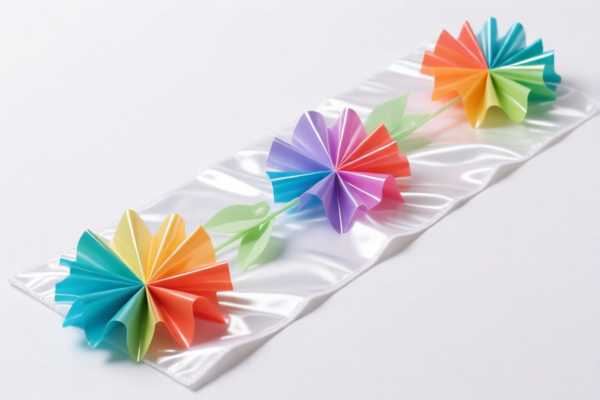

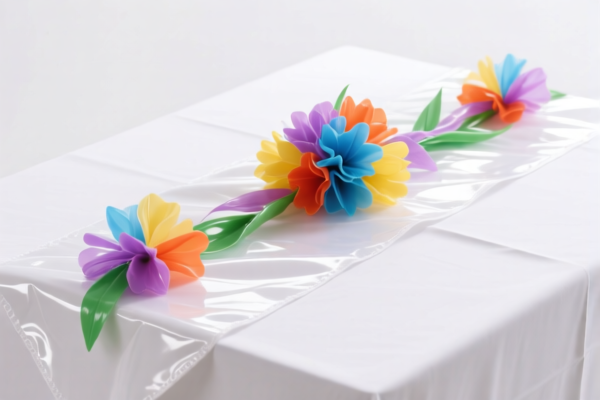
AI Analysis
🏵️ Plastic Table Runner Decoration (Plastic Table Cloth/Table Runner)
🌐 HS Code Reference & Clearance Guide | 2026 Latest Tariff Analysis | Professional Customs Strategy
📌 I. Product Definition & Classification: Do You Really Understand "Plastic Table Runners"?
A Plastic Table Runner/Cloth is a decorative or functional item used on dining tables, banquets, or events. In international trade, its classification strictly depends on its material structure and manufacturing process, not just its shape.
The key distinction lies between: * Plastic Films/Sheets (Chapter 39): Made primarily of plastics (like Polypropylene/PP or Polyethylene/PE), appearing as sheets, membranes, or strips, without being woven/textile-based. * Impregnated/Covered Textiles (Chapter 59): Made of textile fabrics (cloth) that have been impregnated, coated, covered, or laminated with plastics (like PVC or PE). * Textile Table Linens (Chapter 63): Made of textile materials (like Cotton/Polyester) for table use, potentially with plastic coatings, but classified under specific textile headings.
⚠️ Key Distinction Point:
- If the product is a solid plastic sheet/film (non-woven, no fabric backing) → Chapter 39
- If the product is a fabric base (woven/knitted) with a plastic layer → Chapter 59
- If it is a textile item specifically classified as table linen (like cotton table runners) → Chapter 63
📦 II. HS Code Classification Details (2026 Latest Tariff Authority Comparison)
| HS Code | Product Description | Application Scenario | Material/Structure |
|---|---|---|---|
3920.20.00.55 |
Table runners, Material: Polypropylene (PP), Form: Sheets/Films | Pure plastic film runners, glossy, non-textile | ✅ Pure Plastic |
5903.10.20.10 |
Table runners, Textile fabric impregnated/coated/laminated with plastics | Fabric-based with plastic coating (generic) | ✅ Textile + Plastic |
5903.10.20.90 |
Table runners, Textile fabric impregnated with PVC/other plastics | Fabric-based with PVC coating | ✅ Textile + PVC |
3920.10.00.00 |
Table runners, Material: Polyethylene (PE), Form: Sheets/Films/Coverings | Pure PE plastic sheets, clear or colored | ✅ Pure Plastic |
6302.51.40.00 |
Table runners, Textile, Cotton or other textile materials, for table use | Cotton/polyester table runners (linen category) | ✅ Textile (Linen) |
🔍 Key Reminder:
- Chapter 39 items are essentially plastic products; they do not have a fabric base. - Chapter 59 items are textiles modified with plastic; the base is fabric. - Chapter 63 items are textile table linens; often cotton or synthetic blends, classified under "table linen" rather than "coated fabric." - Misclassification between Chapter 39 and 59 is common and leads to significant tariff differences and potential penalties.
💰 III. 2026 Latest Tariff Rate Breakdown (Including Additional Taxes & Policy Surcharges)
✅ Applicable Country: United States (US)
✅ Country of Origin: China (CN)
✅ Effective Date: From November 10, 2025 (for subsequent imports)
🎯 1. 3920.20.00.55 & 3920.10.00.00 —— Plastic Table Runners (PP/PE Sheets)
| Item | Content |
|---|---|
| Base Tariff Rate | 4.2% (ad valorem) |
| Section 301 Additional Tariff | +25.0% (Trade Act of 1974, Section 301) |
| Section 122 Tariff | +10.0% (Specific China-related surcharge) |
| Total Tariff Rate | 39.2% |
| Tax Calculation | CIF Value × 39.2% |
| De Minimis Exemption Eligible? | ❌ No (deny_de_minimis) |
| Legal Basis Path | Section 301 → Section 122 → HS: 3920.20.00.55 / 3920.10.00.00 |
📌 Explanation:
- The Base Tariff of 4.2% is the standard Most-Favored-Nation (MFN) rate for plastic plates, sheets, film, etc. - The 25% Additional Tariff is imposed under US Trade Act Section 301 against Chinese goods. - The 10% Section 122 Tariff is a specific additional levy on Chinese imports. - Total of 39.2% is quite high. This category is sensitive to price fluctuations and margin pressures.
🎯 2. 5903.10.20.10 & 5903.10.20.90 —— Impregnated/Coated Textile Table Runners (PVC/PE)
| Item | Content |
|---|---|
| Base Tariff Rate | 0.0% (ad valorem) |
| Section 301 Additional Tariff | +25.0% (Trade Act of 1974, Section 301) |
| Section 122 Tariff | +10.0% (Specific China-related surcharge) |
| Total Tariff Rate | 35.0% |
| Tax Calculation | CIF Value × 35.0% |
| De Minimis Exemption Eligible? | ❌ No (deny_de_minimis) |
| Legal Basis Path | Section 301 → Section 122 → HS: 5903.10.20.10 / 5903.10.20.90 |
📌 Note:
- The Base Tariff is 0% because coated fabrics often fall under preferential or lower base rates for textiles/chemical products. - However, the 25% + 10% additional tariffs still apply, resulting in a Total of 35.0%. - This is 4.2% lower than the pure plastic sheet category (3920.xx), making it slightly more cost-effective if the product qualifies. - Critical: The product must be a textile fabric (woven/knitted) that has been impregnated/coated. A non-woven plastic sheet does not qualify for this 0% base rate.
🎯 3. 6302.51.40.00 —— Cotton/Textile Table Runners (Table Linen)
| Item | Content |
|---|---|
| Base Tariff Rate | 6.3% (ad valorem) |
| Section 301 Additional Tariff | +7.5% (Trade Act of 1974, Section 301) |
| Section 122 Tariff | +10.0% (Specific China-related surcharge) |
| Total Tariff Rate | 23.8% |
| Tax Calculation | CIF Value × 23.8% |
| De Minimis Exemption Eligible? | ❌ No (deny_de_minimis) |
| Legal Basis Path | Section 301 (Lower Rate) → Section 122 → HS: 6302.51.40.00 |
📌 Important:
- This category is for Textile Table Linens (e.g., cotton or synthetic blend table runners). - The Base Tariff is 6.3%. - The Section 301 Additional Tariff is only +7.5% (lower than the 25% for plastics/coated fabrics). - The Section 122 Tariff remains +10%. - Total of 23.8% is the lowest among the options, making it the most tax-efficient classification if the product is indeed a textile table linen. - Warning: If the product is heavily plastic-coated (making it impregnated textile), it may be reclassified to Chapter 59 (35%), so the product's primary characteristic must be clearly defined.
🛠️ IV. Clearance Practical Advice (Real-World Pitfall Avoidance Guide)
✅ 1. Required Documentation Checklist (All are Mandatory)
| Document | Required? | Description |
|---|---|---|
| ✅ Product Specifications | ✔️ | Material composition (PP, PE, PVC, Cotton %), dimensions, thickness |
| ✅ Photos (Clear) | ✔️ | Front/back views, showing texture (woven vs. smooth plastic) |
| ✅ Certificate of Origin (CO) | ✔️ | Must specify country of origin (China) to apply additional tariffs correctly |
| ✅ Commercial Invoice | ✔️ | Clearly state "Plastic Table Runner" or "Table Linen," including HS Code |
| ✅ Packing List | ✔️ | Detail quantity, weight, and package dimensions |
| ✅ Material Declaration | ✔️ | Explicitly state if the product is "100% Plastic" or "Textile with Plastic Coating" |
✅ 2. Declaration Tips (Key Mantra)
🔥 "Material Determines HS Code, Coating Determines Chapter, Name Must Be Precise!"
| Scenario | Correct Declaration | Wrong Practice |
|---|---|---|
| Pure Plastic Sheet (PP/PE) | 3920.20.00.55 / 3920.10.00.00 |
Misdeclare as "Textile" → 35% or 23.8% (Risk of Penalty) |
| Fabric with PVC Coating | 5903.10.20.10 / 5903.10.20.90 |
Misdeclare as "Plastic Sheet" → 39.2% (Overpay) |
| Cotton/Polyester Table Runner | 6302.51.40.00 |
Misdeclare as "Coated Fabric" → 35% (Overpay) |
| Non-woven Plastic (Not Fabric) | 3920.xx |
Misdeclare as "Textile" → 35% (Risk of Rejection) |
✅ 3. Special Cases Handling
| Scenario | Handling Advice |
|---|---|
| Mixed Materials | If the product has both plastic and textile components, determine the essential character. If plastic coating > 50% by weight or function, consider Chapter 59. |
| OEM Custom Products | Provide design files and material samples to prove the base material is textile or plastic. |
| Product Name "Table Runner" | The name alone is insufficient. You must specify "Plastic Table Runner" vs. "Cotton Table Runner" vs. "PVC-Coated Table Runner." |
| De Minimis (Section 321) | ❌ Not Eligible. All these HS Codes are excluded from the $800 de minimis exemption for China-origin goods. Full duties apply. |
🌍 V. Global Market Clearance Comparison (2026 Latest)
| Country/Region | Recommended HS Code | Tariff (China Origin) | Certification Requirements | Notes |
|---|---|---|---|---|
| 🇺🇸 USA | See above (39.2%/35%/23.8%) | High (See details) | None specific for customs | High additional tariffs due to trade tensions |
| 🇨🇳 China | Same HS Codes | Lower (0-6.5%) | CCC (if applicable) | No Section 301/122 tariffs |
| 🇪🇺 EU | 39.20 / 59.03 / 63.02 | 0-6.5% | REACH, RoHS | No major additional tariffs |
| 🇬🇧 UK | Same HS Codes | 0-6.5% | UKCA, REACH | Post-Brexit rules apply |
| 🇨🇦 Canada | Same HS Codes | 0-6.5% | CDISC | No major additional tariffs |
📌 Conclusion:
- The US market is significantly more expensive due to Section 301 and Section 122 tariffs. - Choosing the correct HS Code can save up to 15.4% in duties (e.g., 39.2% vs. 23.8%). - Documentation is critical to prove the material composition and avoid misclassification penalties.
📌 VI. Common Mistakes & Pitfall Guide (Lessons Learned)
❌ Mistake 1: Declaring "Plastic Table Cloth" as "Table Linen" (6302) | 👉 Consequence: If the product is plastic-coated textile, customs may reclassify to 5903 (35%) and impose penalties.
❌ Mistake 2: Declaring "PVC Coated Fabric" as "Plastic Sheet" (3920) | 👉 Consequence: Overpaying tariffs (39.2% vs. 35%), though less severe than underpayment, it indicates poor compliance.
❌ Mistake 3: Ignoring Section 122 Tariff | 👉 Consequence: Unexpected duty charges at customs, leading to delayed clearance and storage fees.
❌ Mistake 4: Assuming De Minimis Exemption Applies | 👉 Consequence: Goods held at customs, additional duties collected, and potential fines for false declaration.
✅ Correct Practice:
"Polypropylene (PP) Plastic Table Runner, 100% Plastic, 14x72 inches, Glossy Finish, Model XYZ" OR "Cotton Table Runner, 100% Cotton, Washable, Decorative, Model ABC"
🎯 VII. Conclusion: Precise Declaration Saves Money!
🎯 Remember the Mantra:
🔹 "Plastic Sheet: 39.2%, Coated Fabric: 35%, Textile Linen: 23.8%"
🔹 "HS Code Chooses the Path, Tariff Difference is Huge, Clear Declaration is Key!"
🔹 "No De Minimis for China, Plan Your Budget Accordingly!"
📌 Pro Tip:
If your supplier can provide a material composition certificate stating the product is 100% cotton or synthetic textile without plastic coating, you can safely use
6302.51.40.00for the lowest tariff.
If it is plastic-based, decide between3920(pure plastic) and5903(coated fabric) based on the primary function and structure.
📣 Immediate Action:
📞 Consult with a licensed customs broker + Provide Material Samples + Request a Pre-Ruling (Advance Ruling) from CBP
🚀 Clear the confusion, clear the goods, maximize your profit!
✨ Professional Clearance Starts with Accurate Classification!
💼 Every Dollar of Duty Saved is Pure Profit!
Customer Reviews
About HS Code Classification
The Harmonized System (HS) is an internationally standardized nomenclature developed by the World Customs Organization (WCO) to classify traded products. Over 200 countries use the HS system as the basis for customs tariffs, trade statistics, and import/export regulations.
Each HS code follows a hierarchical structure:
- Chapter (2 digits) — Broad category of goods (e.g., Chapter 84: Machinery and Mechanical Appliances)
- Heading (4 digits) — More specific grouping within the chapter
- Subheading (6 digits) — Internationally standardized breakdown, used by all WCO member countries
- National subdivisions (8-10 digits) — Country-specific extensions for further classification, such as US HTSUS 10-digit codes
Correct HS code classification is essential for smooth customs clearance, accurate duty payment, and compliance with trade regulations. Misclassification can lead to customs delays, overpayment of duties, or penalties.
When importing from CN to US, the applicable tariff rates may include:
- Most-Favored-Nation (MFN) rate — The standard duty rate applied to WTO members
- General rate — Applied to countries without trade agreements
- Trade remedy duties — Additional tariffs such as Section 301 (anti-dumping), Section 232 (national security), or countervailing duties
The information provided on this page is for reference purposes only. For official classification, please consult with your local customs authority or a licensed customs broker.