Plastic Tablecloth
CN → US| HS Code | Tariff Rate | Origin | Destination | Doc |
|---|---|---|---|---|
| 3920200055 | 39.2% | CN | US | Official Doc |
| 5903102010 | 35.0% | CN | US | Official Doc |
| 5903102090 | 35.0% | CN | US | Official Doc |
| 3920100000 | 39.2% | CN | US | Official Doc |
| 3921125000 | 41.5% | CN | US | Official Doc |
Product Images
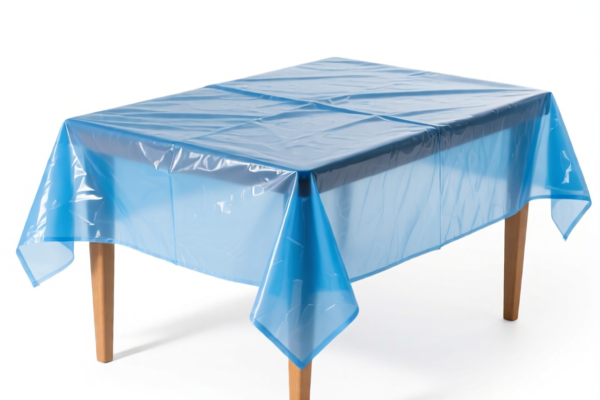

AI Analysis
🧵 Plastic Tablecloth (Vinyl, PVC, PE & Fabric-Coated)
🌐 HS Code Reference & Customs Clearance Guide | 2026 Tariff Analysis | Professional Import Strategy
📌 I. Product Definition & Classification: Do You Know What Kind of "Tablecloth" You Have?
A "Plastic Tablecloth" is a versatile household and commercial product used to protect surfaces from spills, stains, and heat. However, in international trade, it is NOT a single commodity. Its classification depends entirely on the material composition and manufacturing process (e.g., whether it is woven fabric treated with plastic or a solid plastic sheet).
The Two Main Categories:
-
Plastic-Coated Textile (Impregnated/Coated Fabric):
- Description: A fabric base (woven or non-woven) that has been treated, impregnated, or coated with plastic (e.g., PVC, PE) to make it waterproof. The textile structure remains dominant.
- Key Characteristic: You can see the fabric weave underneath the plastic layer.
- HS Codes: 5903.10.20.10 / 5903.10.20.90
-
Plastic Sheets/Films (Solid Plastic):
- Description: A product made primarily of plastic polymers (like PVC, Polyethylene, Polypropylene) formed into a sheet, film, or strip. No textile base.
- Key Characteristic: It is a solid plastic material, not a fabric.
- HS Codes: 3920.10.00.00 / 3920.20.00.55 / 3921.12.50.00
⚠️ Critical Distinction Point:
- If the product is "Fabric + Plastic Coating" → Goes to Chapter 59 (5903...).
- If the product is "Pure Plastic Sheet/Film" → Goes to Chapter 39 (3920... / 3921...).
Mistake here leads to massive customs delays or re-classification penalties!
📦 II. HS Code Classification Details (2026 Tariff Reference)
Based on the specific material and form, here is the precise mapping for Plastic Tablecloths:
| HS Code | Product Description | Material/Form | Applicable Scenario |
|---|---|---|---|
| 5903.10.20.10 | Plastic Tablecloth: Textile fabric impregnated/coated/laminated with plastic. | PVC/Plastic on Fabric | Reusable waterproof tablecloths with a cloth texture. |
| 5903.10.20.90 | Plastic Tablecloth: Textile fabric impregnated/coated with PVC or other plastics. | Other Plastics on Fabric | Clear vinyl tablecloths, patterned coated cloths. |
| 3920.10.00.00 | Plastic Tablecloth: Plates, sheets, film, foil, strips of cellulose esters/plastic. | Cellulose Esters | Specific biodegradable or cellulose-based plastic sheets. |
| 3920.20.00.55 | Plastic Tablecloth: Sheets/film of Polypropylene. | Polypropylene (PP) | Disposable PP plastic tablecloths (often crinkly feel). |
| 3921.12.50.00 | PVC Tablecloth: Sheets/film of Polyvinyl Chloride (PVC). | PVC | Most common solid PVC tablecloths (soft, clear, or colored). |
🔍 Key Reminder:
- 5903 items are "Textile Goods" (soft, fabric-like).
- 3920/3921 items are "Plastic Goods" (rigid or flexible sheets).
- Do not mix them up in your shipping invoice!
💰 III. 2026 Tariff Rate Breakdown (Detailed Tax Analysis)
✅ Applicable Market: United States (US)
✅ Origin: China (CN)
✅ Validity: 2026 Tariff Regime (Including Section 301 & Section 122)
🎯 1. Textile-Based Plastic Tablecloths (HS Code: 5903.10.20.10 / .90)
| Item | Details |
|---|---|
| Product | Plastic Tablecloth (Impregnated/Coated Fabric) |
| HS Code | 5903.10.20.10 & 5903.10.20.90 |
| Base Duty | 0.0% (Most likely MFN rate) |
| Section 301 Duty | +25.0% (Added tariff on Chinese goods) |
| Section 122 Duty | +10.0% (Specific China-related tariff clause) |
| TOTAL DUTY RATE | 35.0% |
| Tax Calculation | CIF Value × 35% |
| De Minimis? | ❌ NO (Cannot use de minimis exemption for this high rate) |
| Legal Path | Section 301 → Section 122 → 5903.10.20.x0 |
📌 Explanation:
- Even though the base tariff is 0%, the Section 301 (25%) and Section 122 (10%) add-ons are mandatory for Chinese-origin textile-based plastic goods.
- Total effective tax: 35%.
🎯 2. Pure Plastic Sheet Tablecloths (HS Code: 3920.10.00.00)
| Item | Details |
|---|---|
| Product | Plastic Tablecloth (Cellulose Esters/Other Plastic Sheet) |
| HS Code | 3920.10.00.00 |
| Base Duty | 4.2% |
| Section 301 Duty | +25.0% |
| Section 122 Duty | +10.0% |
| TOTAL DUTY RATE | 39.2% |
| Tax Calculation | CIF Value × 39.2% |
| De Minimis? | ❌ NO |
| Legal Path | Base Rate + Section 301 + Section 122 |
📌 Explanation:
- Unlike the fabric version, plastic sheets have a 4.2% base tariff.
- Add the 25% and 10% surcharges → 39.2% total.
🎯 3. Polypropylene (PP) & PVC Tablecloths (HS Code: 3920.20.00.55 / 3921.12.50.00)
| Item | Details |
|---|---|
| Product | Plastic Tablecloth (PP Sheets or PVC Sheets) |
| HS Code | 3920.20.00.55 & 3921.12.50.00 |
| Base Duty | 4.2% (for PP) / 6.5% (for PVC) |
| Section 301 Duty | +25.0% |
| Section 122 Duty | +10.0% |
| TOTAL DUTY RATE | 39.2% (PP) / 41.5% (PVC) |
| Tax Calculation | CIF Value × Rate |
| De Minimis? | ❌ NO |
| Legal Path | Base Rate + Section 301 + Section 122 |
📌 Explanation:
- PVC Tablecloths (3921.12.50.00) have a higher base tariff (6.5%) than PP, resulting in a 41.5% total rate.
- PP Tablecloths (3920.20.00.55) result in 39.2%.
- Crucial: Both are heavily taxed due to the 35% surcharge (25% + 10%).
🛠️ IV. Customs Clearance Practical Advice (Real-World Pitfalls)
✅ 1. Preparation Checklist (Non-Negotiable)
| Document | Required? | Why? |
|---|---|---|
| ✅ Product Composition Report | YES | Must specify: % of Fabric vs. % of Plastic. Crucial for 5903 vs. 3920 distinction. |
| ✅ Detailed Invoice | YES | Must clearly state "Plastic Tablecloth" AND the specific material (e.g., "PVC Coated Polyester" vs "Solid PVC Sheet"). |
| ✅ Photos of Product | YES | Show close-up of texture. Is it a woven fabric? Or a smooth plastic film? |
| ✅ Material Safety Data Sheet (MSDS) | Recommended | Helps classify the plastic type (PVC vs. PP vs. PE). |
| ✅ Packing List | YES | Prevents "Weight Discrepancy" checks. |
✅ 2. Declaration Strategy (The "Golden Rule")
🔥 Rule: "Fabric + Plastic = 5903; Pure Plastic = 3920/3921"
| Scenario | Correct HS Code | Risk of Wrong Code |
|---|---|---|
| Woven cloth painted with PVC | 5903.10.20.xx |
If declared as 3920 → Overpay tax? No, underpay! Customs will re-classify + penalty. |
| Clear thin plastic sheet | 3921.12.50.00 |
If declared as 5903 → Customs will reject as "Not Textile". |
| PP Disposable Tablecloth | 3920.20.00.55 |
High Risk: Often misclassified as 3921 or 5903. |
⚠️ Warning:
The difference between 35% and 41.5% tax is small, but the penalty for misclassification (failure to pay correct duty) is massive. Never use "Plastic Tablecloth" as a generic description. Always specify the material.
✅ 3. Special Handling Tips
- For "Clear Vinyl" (PVC):
- If it feels like a thin sheet and tears like plastic → 3921.12.50.00 (41.5% tax).
- If it feels like a cloth and the plastic is just a coating → 5903.10.20.90 (35% tax).
- Strategy: Check the "grain" of the product. If you can see a weave, it's 5903.
- For "Disposable" Tablecloths:
- Most are Polypropylene (PP) or PE. These fall under 3920 or 3921. Expect 39.2% - 41.5% tax.
- Labeling:
- Clearly label the package: "100% Polyvinyl Chloride (PVC) Sheet" OR "Polyester Fabric, PVC Coated".
🌍 V. Global Market Comparison (2026 Outlook)
| Market | Recommended HS Code | Base Duty | Surcharge (US China) | Total Tax | Note |
|---|---|---|---|---|---|
| 🇺🇸 USA | 5903.10.20.xx |
0.0% | +35.0% (25+10) | 35.0% | High tariff for textile-based. |
| 🇺🇸 USA | 3920.20.00.55 |
4.2% | +35.0% | 39.2% | High tariff for PP sheets. |
| 🇺🇸 USA | 3921.12.50.00 |
6.5% | +35.0% | 41.5% | Highest tax for solid PVC. |
| 🇪🇺 EU | 5903 |
6-10% | No Section 301 | ~10-15% | Lower taxes, no Section 122. |
| 🇨🇳 China | 5903 |
8-10% | No US Surcharges | ~8-10% | Domestic market rates. |
📌 Conclusion:
The US market is the most expensive due to the 35% combined surcharge on Chinese plastic tablecloths.
- Fabric-based (5903) is slightly cheaper (35%) than Solid PVC (41.5%).
- Strategy: If possible, consider non-China sourcing (Vietnam, Mexico) to avoid Section 301/122 tariffs.
📌 VI. Common Mistakes & Avoidance Guide (Lessons Learned)
❌ Mistake 1: Mixing Materials
Scenario: Mixing PVC sheets and PVC-coated fabric in one container but declaring only "Plastic Tablecloth".
Result: Customs seizes goods, forces split declaration, and charges penalties on the wrong code.
Fix: Separate batches by material* in your invoice.
❌ Mistake 2: "Generic" Description
Scenario: Invoice says "Tablecloth" without material detail.
Result: Customs will guess the worst-case scenario (highest tax code) or delay inspection.
Fix: Always specify "PVC Coated Polyester" or "100% PP Sheet"*.
❌ Mistake 3: Ignoring Section 122
Scenario: Assuming only 25% Section 301 tax applies.
Result: Underpaid duty by 10% → Back taxes + Interest + Fines.
Fix: Always calculate Total 35%* (or 39.2%/41.5%) for China origin.
✅ Correct Practice:
"Product: Plastic Tablecloth. Material: 65% Polyester Fabric, 35% PVC Coating. HS Code: 5903.10.20.90. Country of Origin: China. Duty: 35%."
🎯 VII. Final Verdict: Strategic Import Guide
🎯 Remember the 3 Rules:
🔹 "Fabric + Plastic = 5903 (35%)"
🔹 "Pure Plastic Sheet = 3920/3921 (39.2% - 41.5%)"
🔹 "China Origin = 35%+ Surcharges (No Exemption)"
🚀 Action Plan: 1. Identify the exact material (Woven fabric vs. Solid sheet). 2. Select the correct HS Code from the 5 options above. 3. Calculate the total duty (35%, 39.2%, or 41.5%). 4. Budget accordingly or explore non-China supply chains to save costs.
📌 Pro Tip:
If you are importing PVC Tablecloths in large quantities, consider negotiating with suppliers to pack them as "PVC Coated Fabric" (5903) rather than Solid PVC Sheets (3921) if the design allows, as the tax rate drops from 41.5% to 35% (saving 6.5% on total value). Verify with a lab test first!
📣 Take Action Now:
📞 Contact a licensed Customs Broker
📄 Prepare a "Product Composition Report"
📉 Run your cost model with 35%-41.5% tariffs included!
✨ Precision Classification = Profit Protection!
💼 Don't let a 6% tariff difference destroy your margin!
Customer Reviews
About HS Code Classification
The Harmonized System (HS) is an internationally standardized nomenclature developed by the World Customs Organization (WCO) to classify traded products. Over 200 countries use the HS system as the basis for customs tariffs, trade statistics, and import/export regulations.
Each HS code follows a hierarchical structure:
- Chapter (2 digits) — Broad category of goods (e.g., Chapter 84: Machinery and Mechanical Appliances)
- Heading (4 digits) — More specific grouping within the chapter
- Subheading (6 digits) — Internationally standardized breakdown, used by all WCO member countries
- National subdivisions (8-10 digits) — Country-specific extensions for further classification, such as US HTSUS 10-digit codes
Correct HS code classification is essential for smooth customs clearance, accurate duty payment, and compliance with trade regulations. Misclassification can lead to customs delays, overpayment of duties, or penalties.
When importing from CN to US, the applicable tariff rates may include:
- Most-Favored-Nation (MFN) rate — The standard duty rate applied to WTO members
- General rate — Applied to countries without trade agreements
- Trade remedy duties — Additional tariffs such as Section 301 (anti-dumping), Section 232 (national security), or countervailing duties
The information provided on this page is for reference purposes only. For official classification, please consult with your local customs authority or a licensed customs broker.