Plastic Threaded Pipe Fittings
CN → US| HS Code | Tariff Rate | Origin | Destination | Doc |
|---|---|---|---|---|
| 3926305000 | 22.8% | CN | US | Official Doc |
| 3926909987 | 22.8% | CN | US | Official Doc |
| 3917400050 | 40.3% | CN | US | Official Doc |
| 8481909085 | 85.0% | CN | US | Official Doc |
| 3917400095 | 40.3% | CN | US | Official Doc |
| 8481805090 | 38.0% | CN | US | Official Doc |
Product Images
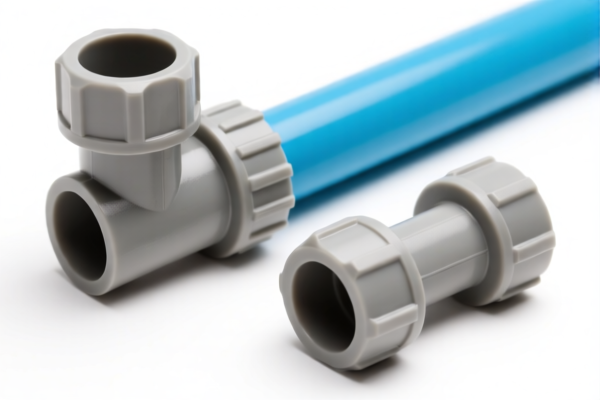
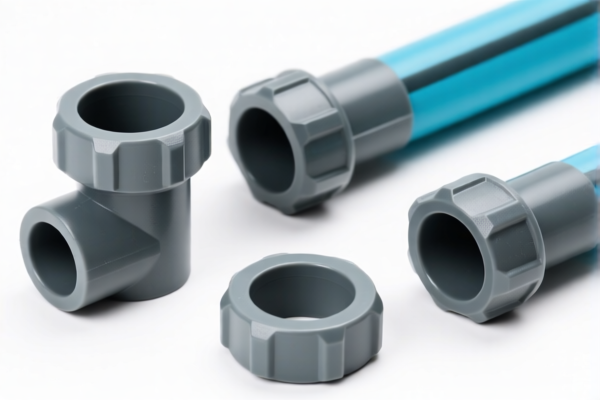
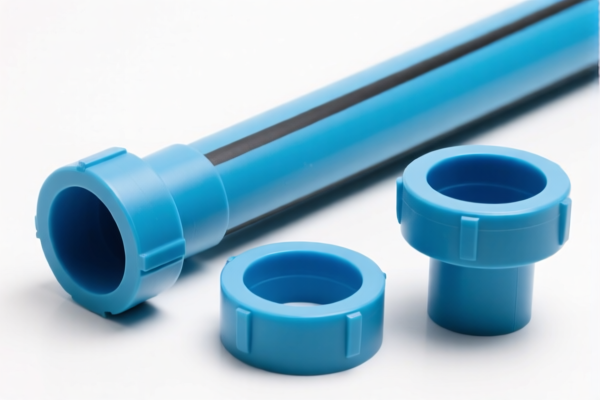
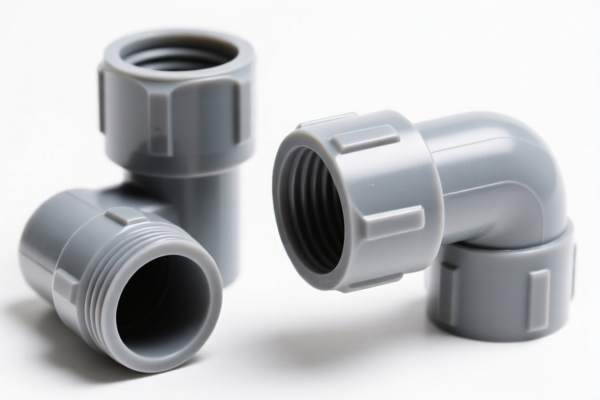
AI Analysis
🔧 Plastic Threaded Pipe Fittings: HS Code Classification & Customs Clearance Guide
🌐 HS Code Reference & Clearance Strategy | 2026 Latest Tariff Analysis | Professional Compliance Strategy
📌 I. Product Definition & Classification: Do You Truly Understand “Plastic Threaded Pipe Fittings”?
Plastic threaded pipe fittings are critical components in fluid and gas transport systems, used to connect, redirect, or control the flow of liquids and gases through plastic piping networks. In international trade, these fittings are classified based on their material, form, and functional attributes.
Key Distinctions: - Pure Plastic Fittings (No Valves): Simple connectors (elbows, tees, couplings) made entirely of plastic. - Plastic Valve Assemblies: Fittings that incorporate valve mechanisms (e.g., check valves, ball valves) made primarily of plastic. - Mixed Material Fittings: Fittings where plastic is the primary body but includes metal inserts or reinforcement (rare for this specific query, but worth noting).
⚠️ Critical Classification Point:
- If the item is a simple connector (elbow, tee, reducer) without moving parts or valves → Classify under Chapter 39 (Plastics and Articles Thereof).
- If the item functions as a valve (controls flow, has moving parts) → Classify under Chapter 84 (Machinery and Mechanical Appliances), specifically 8481 (Taps, Cocks, Valves).
- Misclassification Risk: Declaring a plastic valve as a simple pipe fitting (HS 3917) can lead to underpayment of duties and penalties, as Chapter 84 items often face higher additional tariffs.
📦 II. HS Code Classification Details (2026 Latest Tariff Alignment)
| HS Code | Product Description | Application Scenario | Material/Form | Contains Valve? |
|---|---|---|---|---|
3926.30.50.00 |
Plastic pipe fittings, threaded, internal threads | Simple connectors, elbows, tees for plumbing | Plastic, Fitting Form | ❌ No |
3926.90.99.87 |
Other plastic articles, including pipe fittings | Generic plastic connectors, non-valve components | Plastic, Fitting Form | ❌ No |
3917.40.00.50 |
Plastic pipe fittings, valves, accessories | Plastic pipe accessories, valve-like connectors | Plastic, Fitting Form | ⚠️ Borderline (if no moving parts) |
8481.90.90.85 |
Parts of taps, cocks, valves | Plastic components of a valve assembly | Plastic, Part of Valve | ✅ Yes (Valve Part) |
3917.40.00.95 |
Other plastic pipe fittings | General plastic pipe accessories | Plastic, Fitting Form | ❌ No |
8481.80.50.90 |
Other taps, cocks, and valves | Plastic ball valves, check valves, etc. | Plastic, Valve Form | ✅ Yes (Valve) |
🔍 Key Reminder:
- Simple Fittings (Elbows, Tees, Couplings) → Chapter 39 (3926or3917).
- Valves (Ball, Check, Gate) → Chapter 84 (8481).
- Parts of Valves (Plastic bodies of valves) → Chapter 84 (8481.90).
- Misclassification: Declaring a plastic ball valve as3926.30.50.00is a common error. Valves belong in 8481, not 3926.
💰 III. 2026 Latest Tariff Rate Breakdown (Including Surtaxes & Policy Add-ons)
✅ Applicable Country: United States (US)
✅ Origin: China (CN)
✅ Effective Date: November 10, 2025 (and subsequent imports)
🎯 1. 3926.30.50.00 – Plastic Pipe Fittings, Threaded (Internal Threads)
| Item | Content |
|---|---|
| Base Duty Rate | 5.3% (ad valorem) |
| Section 301 Surtax | +7.5% (China-origin) |
| Section 122 Tariff | +10% (China-origin) |
| Total Duty Rate | 22.8% |
| Calculation Method | CIF Value × 22.8% |
| De Minimis Eligibility | ❌ No (deny_de_minimis) |
| Legal Basis Path | 3926.30.50.00 → Section 301: 7.5% → Section 122: 10% |
📌 Explanation:
- Base 5.3%: Standard MFN rate for plastic fittings.
- 301 Surtax 7.5%: Additional duty under Section 301 for Chinese plastic goods.
- 122 Tariff 10%: Specific tariff under Section 122 for Chinese plastic products.
- Total 22.8%: High but manageable for simple fittings.
🎯 2. 3926.90.99.87 – Other Plastic Articles (Including Pipe Fittings)
| Item | Content |
|---|---|
| Base Duty Rate | 5.3% |
| Section 301 Surtax | +7.5% |
| Section 122 Tariff | +10% |
| Total Duty Rate | 22.8% |
| Calculation Method | CIF Value × 22.8% |
| De Minimis Eligibility | ❌ No |
| Legal Basis Path | 3926.90.99.87 → Section 301: 7.5% → Section 122: 10% |
📌 Note:
- Same tariff as3926.30.50.00.
- Used for plastic fittings not specifically listed elsewhere (e.g., complex shapes, non-standard threads).
🎯 3. 3917.40.00.50 – Plastic Pipe Fittings, Valves, Accessories
| Item | Content |
|---|---|
| Base Duty Rate | 5.3% |
| Section 301 Surtax | +25.0% |
| Section 122 Tariff | +10% |
| Total Duty Rate | 40.3% |
| Calculation Method | CIF Value × 40.3% |
| De Minimis Eligibility | ❌ No |
| Legal Basis Path | 3917.40.00.50 → Section 301: 25.0% → Section 122: 10% |
📌 Warning:
- This code is for pipe accessories that may resemble valves but are not full valves.
- The 25% Section 301 surtax is significantly higher than for3926items.
- Risk: Misclassifying a valve here to avoid8481tariffs is risky; customs may reclassify.
🎯 4. 8481.90.90.85 – Parts of Taps, Cocks, Valves (Plastic)
| Item | Content |
|---|---|
| Base Duty Rate | 0.0% |
| Section 301 Surtax | +25.0% |
| Section 122 Tariff | +10% |
| Steel/Aluminum/Copper Surcharge | +50% (if applicable, but plastic is not steel/Al/Cu) |
| Total Duty Rate | 85.0% |
| Calculation Method | CIF Value × 85.0% |
| De Minimis Eligibility | ❌ No |
| Legal Basis Path | 8481.90.90.85 → Section 301: 25.0% → Section 122: 10% |
📌 Critical Alert:
- 85.0% is extremely high. This applies to parts of valves made of plastic.
- Why so high? Plastic valve parts are often seen as components of high-tariff mechanical items.
- Avoid this code unless you are importing disassembled valve parts (not assembled valves).
🎯 5. 3917.40.00.95 – Other Plastic Pipe Fittings
| Item | Content |
|---|---|
| Base Duty Rate | 5.3% |
| Section 301 Surtax | +25.0% |
| Section 122 Tariff | +10% |
| Total Duty Rate | 40.3% |
| Calculation Method | CIF Value × 40.3% |
| De Minimis Eligibility | ❌ No |
| Legal Basis Path | 3917.40.00.95 → Section 301: 25.0% → Section 122: 10% |
📌 Note:
- Similar to3917.40.00.50, but for fittings not specifically described elsewhere.
- 40.3% total is steep. Prefer3926codes for simple fittings to reduce duty to 22.8%.
🎯 6. 8481.80.50.90 – Other Taps, Cocks, and Valves (Plastic)
| Item | Content |
|---|---|
| Base Duty Rate | 3.0% |
| Section 301 Surtax | +25.0% |
| Section 122 Tariff | +10% |
| Total Duty Rate | 38.0% |
| Calculation Method | CIF Value × 38.0% |
| De Minimis Eligibility | ❌ No |
| Legal Basis Path | 8481.80.50.90 → Section 301: 25.0% → Section 122: 10% |
📌 Note:
- For assembled plastic valves (e.g., ball valves, check valves).
- 38.0% total is lower than8481.90(parts) but higher than3926(simple fittings).
- Correct Code for Valves: If the product is a valve, this is the correct chapter.
🛠️ IV. Customs Clearance Practical Advice (Avoiding Pitfalls)
✅ 1. Required Documentation Checklist
| Document | Required | Notes |
|---|---|---|
| ✅ Product Specification Sheet | ✔️ | Include material (e.g., PVC, PP), thread type, pressure rating |
| ✅ Product Photos | ✔️ | Show fittings/valves clearly, highlight threading and any moving parts |
| ✅ Commercial Invoice | ✔️ | Accurate description: "Plastic Threaded Pipe Fitting" or "Plastic Ball Valve" |
| ✅ Packing List | ✔️ | Detail quantities, weights, and dimensions |
| ✅ Certificate of Origin (CO) | ✔️ | Required for tariff determination |
| ✅ Material Safety Data Sheet (MSDS) | ❓ | If chemicals are transported |
| ✅ Third-Party Test Reports | ❓ | ASTM, ISO, or NSF certifications if required by end-user |
✅ 2. Declaration Tips (Key Mantras)
🔥 “Simple Fitting = 3926, Valve = 8481, Parts = 8481.90 (High Tax!)”
| Scenario | Correct HS Code | Error to Avoid |
|---|---|---|
| Plastic Elbow/Tee/Coupling | 3926.30.50.00 |
❌ Declare as 8481 → 38%+ duty |
| Plastic Ball Valve | 8481.80.50.90 |
❌ Declare as 3926 → 22.8% (but risk of penalty) |
| Plastic Valve Body (Disassembled) | 8481.90.90.85 |
❌ Declare as 3926 → 22.8% (but risk of 85% retroactive) |
| Generic Plastic Connector | 3926.90.99.87 |
❌ Overly vague description |
✅ 3. Special Cases Handling
| Case | Recommendation |
|---|---|
| OEM Custom Fittings | Provide design drawings to prove simplicity (no valves) |
| Valves with Plastic Body & Metal Core | Still classified under 8481 if the core function is valve operation |
| Kit Sets (Fittings + Valve) | Declare each item separately. Do not bundle into one code |
| Pre-assembled Pipe Sections | If valves are integrated, declare as 8481 |
🌍 V. Global Market Clearance Comparison (2026 Latest)
| Country/Region | Recommended HS Code | Duty Rate (China Origin) | Certification Requirements | Notes |
|---|---|---|---|---|
| 🇺🇸 USA | 3926.30.50.00 (Fittings) |
22.8% | FCC (if electronic), no major certs | Valves: 8481 at 38-85% |
| 🇨🇳 China | 3926.30.50.00 |
5% | CCC (if applicable) | No additional surtaxes |
| 🇪🇺 EU | 3926.30.50.00 |
6.5% | CE, REACH | No Section 301/122 |
| 🇦🇺 Australia | 3926.30.50.00 |
5% | RCM | No additional surtaxes |
| 🇯🇵 Japan | 3926.30.50.00 |
0% | PSE (if applicable) | No additional surtaxes |
📌 Conclusion:
- USA is the most punitive market due to Section 301 and 122 tariffs.
- Simple plastic fittings (3926) are the most cost-effective to import into the US.
- Valves (8481) face significantly higher duties, especially if classified as parts.
📌 VI. Common Mistakes & Pitfalls (Lessons Learned)
❌ Mistake 1: Declaring a Plastic Ball Valve as 3926.30.50.00
👉 Consequence: Customs may reclassify to 8481.80.50.90 (38%) or 8481.90.90.85 (85%), plus penalties.
❌ Mistake 2: Declaring Valve Parts (disassembled) as 3926
👉 Consequence: Duty jumps from 22.8% to 85.0%, plus retroactive payments.
❌ Mistake 3: Vague Description: "Plastic Pipe Item"
👉 Consequence: Customs inspection delay, potential misclassification.
❌ Mistake 4: Ignoring Section 122 Tariff
👉 Consequence: Underpayment by 10%, leading to audits and fines.
✅ Correct Approach:
“PVC Plastic Threaded Pipe Elbow, 1/2 inch, Internal Threads, for Water Supply”
“Plastic Ball Valve, 1 inch, Brass Body with Plastic Handle, for HVAC System”
🎯 VII. Conclusion: Professional Declaration, Cost Optimization!
🎯 Remember the Mantra:
🔹 “Simple Fitting = 3926 (22.8%), Valve = 8481 (38%), Part = 8481.90 (85%)!”
🔹 “HS Code Determines Duty, Wrong Code Means Huge Loss!”
📌 Pro Tip:
If your fittings/valves are originating from Vietnam, Mexico, or Thailand, you may qualify for IEEPA exemptions or lower tariffs.
Recommendation: Apply for an Advance Ruling from US Customs to confirm the correct HS Code and avoid post-import audits.
📣 Immediate Action:
📞 Contact a Professional Customs Broker + Provide Product Photos + Apply for HS Code Advance Ruling
🚀 Ensure Smooth Clearance, Maximize Profit, Minimize Risk!
✨ Professional Clearance Starts with Accurate Classification!
💼 Every Cent Saved is a Cent Earned!
Customer Reviews
About HS Code Classification
The Harmonized System (HS) is an internationally standardized nomenclature developed by the World Customs Organization (WCO) to classify traded products. Over 200 countries use the HS system as the basis for customs tariffs, trade statistics, and import/export regulations.
Each HS code follows a hierarchical structure:
- Chapter (2 digits) — Broad category of goods (e.g., Chapter 84: Machinery and Mechanical Appliances)
- Heading (4 digits) — More specific grouping within the chapter
- Subheading (6 digits) — Internationally standardized breakdown, used by all WCO member countries
- National subdivisions (8-10 digits) — Country-specific extensions for further classification, such as US HTSUS 10-digit codes
Correct HS code classification is essential for smooth customs clearance, accurate duty payment, and compliance with trade regulations. Misclassification can lead to customs delays, overpayment of duties, or penalties.
When importing from CN to US, the applicable tariff rates may include:
- Most-Favored-Nation (MFN) rate — The standard duty rate applied to WTO members
- General rate — Applied to countries without trade agreements
- Trade remedy duties — Additional tariffs such as Section 301 (anti-dumping), Section 232 (national security), or countervailing duties
The information provided on this page is for reference purposes only. For official classification, please consult with your local customs authority or a licensed customs broker.