Plastic Toy Packaging Box
CN → US| HS Code | Tariff Rate | Origin | Destination | Doc |
|---|---|---|---|---|
| 3923900080 | 38.0% | CN | US | Official Doc |
| 3924905650 | 20.9% | CN | US | Official Doc |
| 3926909989 | 22.8% | CN | US | Official Doc |
| 3923109000 | 38.0% | CN | US | Official Doc |
| 3924104000 | 13.4% | CN | US | Official Doc |
Product Images
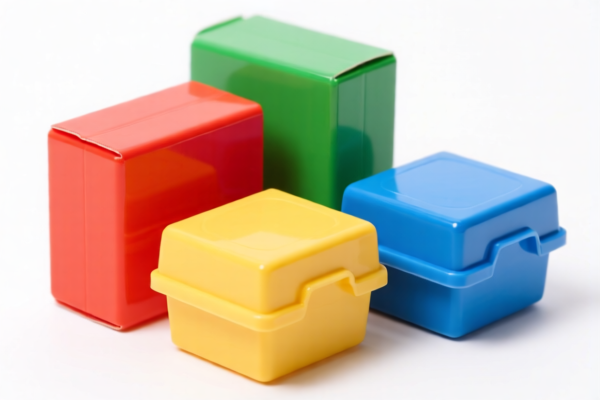
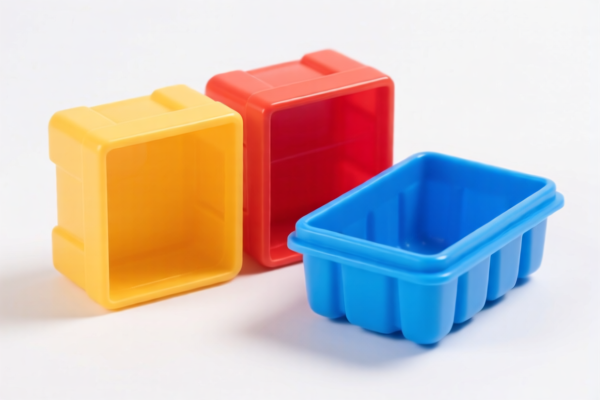
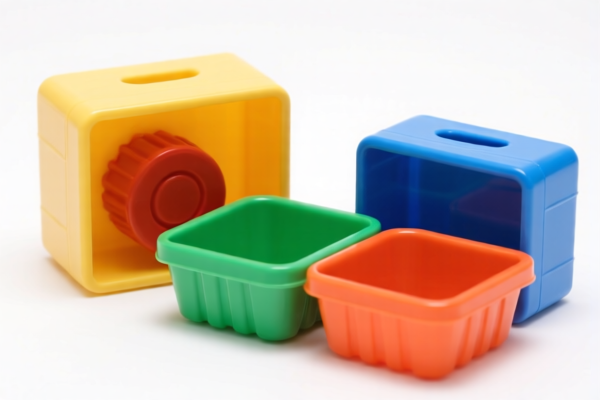
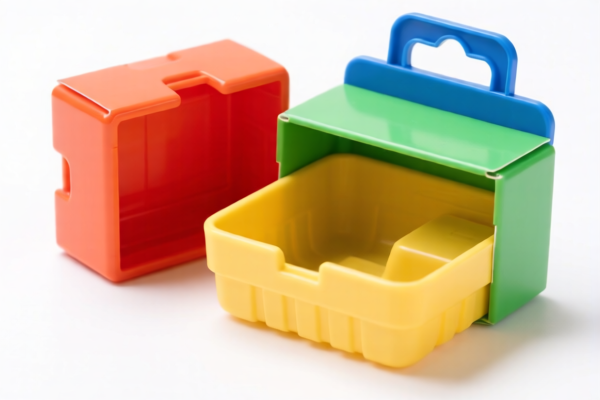
AI Analysis
🧸 Plastic Toy Packaging Box
🌐 HS Code Reference & Customs Clearance Guide | 2026 Latest Tariff Analysis | Professional-Level Strategy 📌 I. Product Definition & Classification: Do You Really Know "Plastic Toy Packaging"?
Plastic toy packaging boxes are essential components in the global toy industry, used for storing, displaying, and transporting toys. In international trade, they are often misclassified due to their dual nature: they are plastic containers but specifically designed for toys.
Correct classification depends on whether the box is considered: 1. Packaging Goods for Transport/Storage (Chapter 39): Generic plastic boxes used for logistics or bulk storage. 2. Household/Tabletop Plastic Articles (Chapter 39): Decorative or functional household organizers. 3. Miscellaneous Plastic Articles (Chapter 39): Specific items not elsewhere specified.
⚠️ Key Distinction Point: - If the box is a generic transport container (e.g., bulk storage bin for factory use) → It falls under 3923.10.90.00 / 3923.90.00.80. - If the box is a household organizer/storage box (e.g., retail display box, decorative toy bin) → It falls under 3924.10.40.00 / 3924.90.56.50. - If the box is a specialized toy accessory or doesn't fit the above → It may fall under 3926.90.99.89.
📦 II. HS Code Classification Details (2026 Latest Tariff Authority Comparison)
| HS Code | Product Description | Application Scenario | Tax Rate (US/China) |
|---|---|---|---|
3923.10.90.00 |
Plastic boxes, cases, crates, and similar articles, for the conveyance or packaging of goods | Bulk transport boxes, industrial storage, generic packaging | 38.0% |
3923.90.00.80 |
Other plastic articles for the conveyance or packaging of goods | General plastic packaging, bags, sacks, non-specific containers | 38.0% |
3924.10.40.00 |
Plastic household articles and toilet articles, including storage boxes | Household organizers, decorative toy storage bins, tabletop organizers | 13.4% |
3924.90.56.50 |
Other plastic household articles, including storage boxes | Specialty plastic household items, niche storage solutions | 20.9% |
3926.90.99.89 |
Other articles of plastic, not elsewhere specified or included | Miscellaneous plastic toy parts, unlisted packaging accessories | 22.8% |
🔍 Key Reminder: - Generic Packaging vs. Household Use: If the box is primarily for transporting goods (like a bulk bin), it is 3923. If it is for household use (like a toy organizer in a child's room), it is 3924. - Tax Impact: The difference between 38% and 13.4% is massive. Misclassification can lead to significant overpayment or underpayment (and penalties).
💰 III. 2026 Latest Tariff Rate Details (Including Surcharges & Policy Add-ons)
✅ Applicable Country: United States (US) ✅ Origin: China (CN) ✅ Effective Date: 2025 November 10 onwards (including subsequent imports)
🎯 1. 3923.10.90.00 — Plastic Boxes (Generic Packaging)
| Item | Content |
|---|---|
| Base Tariff | 3.0% |
| USITC Additional Tariff | +25.0% (Section 301) |
| IEEPA Additional Tariff | +10% (122 Clause, China-specific) |
| Total Tariff Rate | 38.0% |
| Tax Calculation | CIF Value × 38.0% |
| De Minimis Exemption | ❌ Not Eligible |
| Legal Basis Path | Base: 3923 → Section 301: 25% → IEEPA: 10% |
📌 Explanation: - This is a high-tax category. It applies to generic plastic packaging used for logistics. - The 38% rate is a combination of the base duty and two major surcharges. - Warning: Do not use this code if your product is clearly a "household organizer" to avoid overpaying. However, if it is a simple bulk box, this is the correct code.
🎯 2. 3923.90.00.80 — Other Plastic Packaging Articles
| Item | Content |
|---|---|
| Base Tariff | 3.0% |
| USITC Additional Tariff | +25.0% |
| IEEPA Additional Tariff | +10% |
| Total Tariff Rate | 38.0% |
| Tax Calculation | CIF Value × 38.0% |
| De Minimis Exemption | ❌ Not Eligible |
📌 Note: - Same tax rate as
3923.10.90.00. - Used for plastic packaging articles not specifically listed in3923.10(e.g., plastic bags, sacks, other flexible packaging).
🎯 3. 3924.10.40.00 — Plastic Household Articles (Storage Boxes)
| Item | Content |
|---|---|
| Base Tariff | 3.4% |
| USITC Additional Tariff | 0.0% |
| IEEPA Additional Tariff | +10% |
| Total Tariff Rate | 13.4% |
| Tax Calculation | CIF Value × 13.4% |
| De Minimis Exemption | ❌ Not Eligible |
| Legal Basis Path | Base: 3924.10 → IEEPA: 10% |
📌 Explanation: - Best Case Scenario for Tariffs. - If your "toy packaging box" is designed for household storage (e.g., a colorful bin for kids' toys in a bedroom), it may qualify for this lower rate. - Crucial: You must justify that it is a "household article" and not just a generic transport container.
🎯 4. 3924.90.56.50 — Other Plastic Household Articles
| Item | Content |
|---|---|
| Base Tariff | 3.4% |
| USITC Additional Tariff | +7.5% |
| IEEPA Additional Tariff | +10% |
| Total Tariff Rate | 20.9% |
| Tax Calculation | CIF Value × 20.9% |
| De Minimis Exemption | ❌ Not Eligible |
📌 Note: - Used for plastic household articles not specifically listed in
3924.10or3924.90.10. - Higher than3924.10.40.00due to the 7.5% additional tariff.
🎯 5. 3926.90.99.89 — Other Plastic Articles
| Item | Content |
|---|---|
| Base Tariff | 5.3% |
| USITC Additional Tariff | +7.5% |
| IEEPA Additional Tariff | +10% |
| Total Tariff Rate | 22.8% |
| Tax Calculation | CIF Value × 22.8% |
| De Minimis Exemption | ❌ Not Eligible |
📌 Note: - This is a "catch-all" category. - Use only if the item does not fit into packaging (3923) or household articles (3924). - Common for specialized toy accessories or unique plastic components that don't fit other definitions.
🛠️ IV. Customs Clearance Practical Advice (Avoid Pitfalls)
✅ 1. Preparation Checklist (No Exceptions)
| Document | Required | Explanation |
|---|---|---|
| ✅ Product Specification Sheet | ✔️ | Details dimensions, material (PP/PE/PS), capacity, and intended use (e.g., "toy storage" vs. "bulk shipping"). |
| ✅ Product Photos | ✔️ | Must show the box clearly. If it has handles, lids, or decorative elements, highlight them to prove "household use." |
| ✅ Commercial Invoice | ✔️ | Must accurately describe the product. Avoid vague terms like "plastic box." Use "Plastic Household Storage Box for Toys." |
| ✅ Packing List | ✔️ | Show quantity and weight. |
| ✅ Certificate of Origin (CO) | ✔️ | To prove origin as China (subject to surcharges). |
| ✅ Declaration of Intended Use | ✔️ | Critical: State clearly if the box is for "household storage" or "industrial packaging." |
✅ 2. Declaration Strategy (Key Mantras)
🔥 "Clarify Use: Household vs. Transport, Tax Rate Varies by 25%!"
| Scenario | Correct Declaration | Wrong Practice |
|---|---|---|
| Retail Toy Box (Decorative, colorful, for home) | 3924.10.40.00 |
Misdeclare as 3923 → Pay 38% instead of 13.4% |
| Bulk Transport Bin (Plain, durable, for shipping) | 3923.10.90.00 |
Misdeclare as 3924 → Risk of penalty for false declaration |
| Generic Plastic Bag/Box | 3923.90.00.80 |
Misdeclare as 3926 → Overpay duties |
| Unique Toy Accessory | 3926.90.99.89 |
Misdeclare as 3924 → Risk of reclassification |
✅ 3. Special Cases
| Case | Handling Advice |
|---|---|
| Transparent Plastic Window Box | Can be declared as 3924 if used for display/storage in homes. |
| Foldable Plastic Crate | If for home storage, 3924.10.40.00. If for warehouse logistics, 3923.10.90.00. |
| Box with Logo/Brand | Does not change classification. Focus on function. |
| Set with Toys | If the box is integral to the toy set, it may be classified with the toy (e.g., 9503). If it is packaging for shipment, classify as plastic packaging (3923/3924). |
🌍 V. Global Market Customs Comparison (2026 Latest)
| Country/Region | Recommended HS Code | Tariff Rate | Notes |
|---|---|---|---|
| 🇺🇸 USA | 3924.10.40.00 |
13.4% | Low if household; 38% if packaging. |
| 🇺🇸 USA | 3923.10.90.00 |
38.0% | High due to 301 + 122 clauses. |
| 🇨🇳 China | 3924.10.40.00 |
5% - 10% | No additional US surcharges. |
| 🇪🇺 EU | 3924.10.40.00 |
3% - 6% | No Section 301 equivalent. |
| 🇬🇧 UK | 3924.10.40.00 |
3% - 6% | Post-Brexit rules apply. |
📌 Conclusion: - The USA is the most complex market due to Section 301 and 122 Clause surcharges. - Misclassification risk is highest in the US. Always justify "household use" if aiming for the 13.4% rate.
📌 VI. Common Mistakes & Pitfalls (Lessons Learned)
❌ Mistake 1: Calling every plastic box "Packaging" → Result: Pay 38% when you could pay 13.4%. 👉 Fix: If the box is for home use, declare as "Household Storage."
❌ Mistake 2: Calling a bulk shipping bin "Household Article" → Result: Customs rejection, penalty, or back-tariff at 38%.
👉 Fix: Be honest about intended use. If it's for warehouse shipping, use 3923.
❌ Mistake 3: Ignoring the 122 Clause (IEEPA 10%) → Result: Underpayment by 10%. 👉 Fix: All China-origin plastic goods are subject to this 10% surcharge.
✅ Correct Declaration Example:
"Plastic Storage Box for Toys, Household Use, PP Material, Transparent with Lid, Model XYZ, Designed for Home Organization"
🎯 VII. Conclusion: Professional Declaration Saves Money!
🎯 Remember:
🔹 "Household Use = 13.4%, Transport Use = 38%, Difference is 24.6%!" 🔹 "Clarify Function: Storage vs. Shipping, Tariff Halved with Correct Code!"
📌 Pro Tip: If your plastic box is exported to the US, consider: 1. Designing it for Household Use: Add handles, colors, or branding to justify "Household Article" classification. 2. Pre-Ruling: Apply for an Advance Ruling from US Customs if the product is borderline. 3. Supply Chain Diversification: If tariffs are too high, consider assembly in a third country (e.g., Vietnam, Mexico) to avoid IEEPA surcharges.
📣 Take Action Now:
📞 Contact a Customs Broker + Provide Product Photos + Define Intended Use 🚀 Clear Customs Smoothly, Reduce Costs, Maximize Profits!
✨ Professional Clearance Starts with Accurate Classification! 💼 Every cent of tax savings is pure profit!
Customer Reviews
About HS Code Classification
The Harmonized System (HS) is an internationally standardized nomenclature developed by the World Customs Organization (WCO) to classify traded products. Over 200 countries use the HS system as the basis for customs tariffs, trade statistics, and import/export regulations.
Each HS code follows a hierarchical structure:
- Chapter (2 digits) — Broad category of goods (e.g., Chapter 84: Machinery and Mechanical Appliances)
- Heading (4 digits) — More specific grouping within the chapter
- Subheading (6 digits) — Internationally standardized breakdown, used by all WCO member countries
- National subdivisions (8-10 digits) — Country-specific extensions for further classification, such as US HTSUS 10-digit codes
Correct HS code classification is essential for smooth customs clearance, accurate duty payment, and compliance with trade regulations. Misclassification can lead to customs delays, overpayment of duties, or penalties.
When importing from CN to US, the applicable tariff rates may include:
- Most-Favored-Nation (MFN) rate — The standard duty rate applied to WTO members
- General rate — Applied to countries without trade agreements
- Trade remedy duties — Additional tariffs such as Section 301 (anti-dumping), Section 232 (national security), or countervailing duties
The information provided on this page is for reference purposes only. For official classification, please consult with your local customs authority or a licensed customs broker.