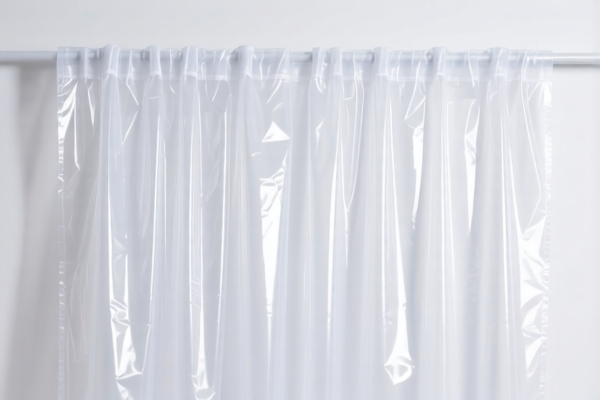
Plastic Transparent Curtain
CN → US| HS Code | Tariff Rate | Origin | Destination | Doc |
|---|---|---|---|---|
| 3926909950 | 22.8% | CN | US | Official Doc |
| 3926909989 | 22.8% | CN | US | Official Doc |
| 3920511000 | 41.0% | CN | US | Official Doc |
| 3920991000 | 41.0% | CN | US | Official Doc |
| 9004900090 | 20.0% | CN | US | Official Doc |
Product Images



AI Analysis
🛍️ Plastic Transparent Curtain (Visqueen / PE Sheet)
🌐 HS Code Reference & Customs Clearance Guide | 2026 Latest Tariff Analysis | Professional Clearance Strategy
📌 I. Product Definition & Classification: Do You Really Know "Plastic Transparent Curtain"?
A "Plastic Transparent Curtain" is a versatile industrial and commercial product. In international trade, its classification depends entirely on its physical form (sheet vs. curtain) and functional purpose (protection vs. construction). It is primarily classified under Chapter 39 (Plastics and Articles Thereof).
1. Finished Curtain/Visor (3926 Category):
If the product is a finished "curtain," "visor," or "screen" (often used in warehouses, cold stores, or as door replacements), it falls under the "bottom-line" category for plastic articles.
2. Raw Sheet/Film (3920 Category):
If the product is sold as a roll of sheeting, membrane, or film (even if intended to be cut into curtains later), it is classified as plastic plates, sheets, or film. This is common for construction site hoarding or agricultural greenhouse films.
⚠️ Key Distinction Point:
- If it is a finished article with edges sealed or hung → 3926.90 (Plastic Articles)
- If it is a raw material (roll/sheet) without specific finished shape → 3920.51/99 (Plastic Sheets/Films)
- If it is strictly for personal eye protection (e.g., safety goggles/face shields) → 9004.90 (Optical Appliances)
📦 II. HS Code Classification Details (2026 Latest Tariff Authority对照)
| HS Code | Product Description | Application Scenario | Key Characteristic |
|---|---|---|---|
3926.90.99.50 |
Other plastic articles, specifically visors/curtains | Warehouse dividers, cold storage doors, insect screens | ✅ Finished Article (Curtain/Visor) |
3926.90.99.89 |
Other plastic articles, not elsewhere specified | General purpose plastic products, non-standard shapes | ✅ Finished Article (General Plastic Product) |
3920.51.10.00 |
Plastic plates, sheets, film (non-foam, non-reinforced) | Construction site barriers, agricultural film, raw rolls | ✅ Raw Material (Sheet/Film Form) |
3920.99.10.00 |
Other plastic plates, sheets, film (including laminated) | Protective gear made from laminated plastic sheets, multi-layer curtains | ✅ Composite/Laminated Sheet |
9004.90.00.90 |
Other glasses, goggles, and similar articles | Safety face shields, protective visors for industrial use | ✅ Safety Equipment (Optical/Protective) |
🔍 Critical Reminder:
- 3926.90 codes are for finished goods. If your curtain is sewn, heat-sealed, or has grommets for hanging, use this.
- 3920.51/99 codes are for rolls/sheets. If you sell it by the roll to be cut later, use this.
- 9004.90 is only for personal protective equipment (PPE) like safety visors. Do not use this for industrial room dividers.
💰 III. 2026 Latest Tariff Rate Breakdown (Including Additional Taxes & Policy Add-ons)
✅ Applicable Country: United States (US)
✅ Origin: China (CN)
✅ Effective Time: Post-2025 (Includes subsequent imports)
🎯 1. 3926.90.99.50 & 3926.90.99.89 — Plastic Curtains/Visors (Finished Articles)
| Item | Content |
|---|---|
| Base Duty Rate | 5.3% (Ad Valorem) |
| Section 301 Additional Duty | 7.5% |
| Section 122 Duty (China Specific) | 10% |
| Total Tariff Rate | 22.8% |
| Tax Calculation | CIF Value × 22.8% |
| De Minimis Exemption | ❌ Not Applicable (Subject to strict scrutiny) |
| Legal Basis Path | HTS:3926.90.99 → Section 301: Footnote 3 → Section 122: China-Specific |
📌 Explanation:
- These HS codes fall under "Other Plastic Articles." They are not exempt from additional duties.
- The 22.8% rate is a combined total of the base US tariff, the Section 301 tariff, and the Section 122 tariff (which targets specific Chinese imports).
- This is a moderate-high tariff. Planning for cost efficiency is essential.
🎯 2. 3920.51.10.00 & 3920.99.10.00 — Plastic Sheets/Films (Raw Materials)
| Item | Content |
|---|---|
| Base Duty Rate | 6.0% |
| Section 301 Additional Duty | 25.0% |
| Section 122 Duty (China Specific) | 10% |
| Total Tariff Rate | 41.0% |
| Tax Calculation | CIF Value × 41.0% |
| De Minimis Exemption | ❌ Not Applicable |
| Legal Basis Path | HTS:3920.51/99 → Section 301: Footnote 4 → Section 122: China-Specific |
📌 Warning:
- If you classify transparent curtains as sheets/films (3920), the tariff skyrockets to 41.0%.
- Why? Section 301 imposes a 25% additional duty on plastic sheets/films from China.
- Strategy: If the product is a finished curtain, insist on 3926.90 (22.8%) rather than 3920 (41.0%). Misclassification can lead to huge cost differences!
🎯 3. 9004.90.00.90 — Protective Visors/Goggles
| Item | Content |
|---|---|
| Base Duty Rate | 2.5% |
| Section 301 Additional Duty | 7.5% |
| Section 122 Duty (China Specific) | 10% |
| Total Tariff Rate | 20.0% |
| Tax Calculation | CIF Value × 20.0% |
| De Minimis Exemption | ❌ Not Applicable |
| Legal Basis Path | HTS:9004.90.00 → Section 301: Footnote 3 → Section 122: China-Specific |
📌 Note:
- This code is only for personal protective equipment (PPE) like face shields or safety goggles.
- If you label a warehouse curtain as a "face shield," customs will reject it.
- However, if you sell industrial safety visors, this offers the lowest rate (20%) among the options.
🛠️ IV. Customs Clearance Practical Advice (Real-World Pitfall Guide)
✅ 1. Required Documents Checklist (Non-Negotiable)
| Document | Must Provide | Description |
|---|---|---|
| ✅ Product Specification Sheet | ✔️ | Material (PE/PVC/PP), Thickness (mm/mil), Width, Length |
| ✅ Product Photos | ✔️ | Show the item as shipped (rolled or hanging). Must clearly show if it’s a roll or a finished curtain. |
| ✅ Commercial Invoice | ✔️ | Clearly state: "Plastic Transparent Curtain" OR "Plastic Sheeting Roll". Do NOT use vague terms like "Plastic Sheet" if it’s a finished curtain. |
| ✅ Packing List | ✔️ | Net/Gross weight, dimensions. |
| ✅ Material Safety Data Sheet (MSDS) | ✔️ | If applicable (especially for PVC). |
| ✅ Labeling | ✔️ | "Made in China" label is mandatory. |
✅ 2. Classification Strategy (Key Mnemonic)
🔥 "Finish is 3926, Raw is 3920, PPE is 9004. Wrong Code = 41% Tax!"
| Scenario | Correct HS Code | Wrong Code | Consequence |
|---|---|---|---|
| Finished Curtain (with grommets/sealed edges) | 3926.90.99.50 |
3920.51.10.00 |
Tax Jump from 22.8% to 41.0% |
| Roll of Plastic Film (raw material) | 3920.51.10.00 |
3926.90.99.50 |
Under-declaration Risk (If customs sees it's not a finished good) |
| Safety Face Shield (industrial PPE) | 9004.90.00.90 |
3926.90.99.50 |
Missed Opportunity (Save 2.8% vs 3926) |
| Construction Hoarding (large plastic sheet) | 3920.51.10.00 |
3926.90.99.50 |
Overpayment (41% vs 22.8%) |
✅ 3. Special Situation Handling
| Situation | Handling Advice |
|---|---|
| Mixed Shipment | If sending both rolls and finished curtains, declare separately. Do not lump them into one line item. |
| Thickness Dispute | Customs may verify thickness. Ensure your invoice states "Thickness: XX mil" clearly. Thin films (<0.5mm) might fall under different sub-categories. |
| Origin Marking | Ensure "Made in China" is on the product or immediate packaging. Failure to mark can lead to detention. |
| Anti-Dumping | While no specific AD/CVD for generic PE curtains, Section 301 and 122 are active. Ensure your supplier is not on any Entity List. |
🌍 V. Global Market Comparison (2026 Latest)
| Country/Region | Recommended HS Code | Duty Rate | Certification | Notes |
|---|---|---|---|---|
| 🇺🇸 USA | 3926.90.99.50 (Finished) |
22.8% | None specific | High Section 122 duty. Use 3920 only if raw. |
| 🇨🇳 China | 3926.90.99.50 |
5.0% | None | Export from China. Low base duty. |
| 🇪🇺 EU | 3926.90.99.90 |
6.5% | REACH | No Section 301/122 equivalents. |
| 🇬🇧 UK | 3926.90.99.90 |
6.5% | UKCA | Post-Brexit rules apply. |
| 🇨🇦 Canada | 3926.90.99.90 |
6.0% | None | CUSMA benefits if qualifying. |
📌 Conclusion:
- The US market is the most expensive due to Section 301 and Section 122 tariffs.
- Classification is critical: Using3920for a finished curtain in the US increases duty by ~18% compared to3926.
- Always prioritize the finished article classification if possible to reduce duty burden.
📌 VI. Common Mistakes & Pitfall Guide (Blood & Tears Lessons)
❌ Mistake 1: Calling a "Roll of Plastic Film" a "Curtain" to get 22.8% tax
👉 Consequence: Customs inspects and finds it’s a raw roll → Reclassification to 41% + Penalty.
👉 Rule: If it’s not finished (no grommets, not sealed as a curtain), declare as sheet/film (3920).
❌ Mistake 2: Calling a "Warehouse Divider" a "Face Shield" to get 20% tax
👉 Consequence: Customs rejects it as misdeclared PPE → Seizure or Delay.
👉 Rule: Only use 9004 for actual eye/face protection worn by humans.
❌ Mistake 3: Ignoring "Section 122" for China-origin goods
👉 Consequence: Underestimating costs. The 10% Section 122 duty is mandatory for many plastic goods from China.
👉 Rule: Always include the 10% in your cost calculation for US imports from China.
❌ Mistake 4: Vague Description: "Plastic Product"
👉 Consequence: Customs assigns the highest possible duty rate manually.
👉 Rule: Always describe as "Plastic Transparent Curtain, PE Material, 10mil Thickness."
✅ Correct Approach:
"Plastic Transparent Curtain, Polyethylene (PE), 10mil Thick, Heat-Sealed Edges, with Brass Grommets, Model XYZ, Made in China."
🎯 VII. Conclusion: Precise Classification Saves Money!
🎯 Remember Mnemonic:
🔹 "Finished Curtain = 3926 (22.8%)”
🔹 "Raw Roll = 3920 (41.0%)”
🔹 "Safety Visor = 9004 (20.0%)”
🔹 "Misclassification = 41% Pain!”
📌 Pro Tip:
- If your product is 10mil or thicker, it’s more likely to be considered a sheet (3920) by some customs officers. Ensure it is clearly a curtain (finished form) to qualify for 3926.
- Pre-ruling: For large shipments, consider applying for a CBP Pre-Ruling to lock in the 3926.90.99.50 classification and avoid future disputes.
📣 Immediate Action:
📞 Contact Customs Broker: Provide photos of the finished product (not just the roll).
📄 Invoice Wording: Use "Plastic Curtain" not "Plastic Sheet" if it’s finished.
🚀 Cost Optimization: Aim for 22.8% duty by ensuring proper finished-goods classification.
✨ Professional Clearance Starts with Accurate Classification!
💼 Every Percent of Duty Saved is Pure Profit!
Customer Reviews
About HS Code Classification
The Harmonized System (HS) is an internationally standardized nomenclature developed by the World Customs Organization (WCO) to classify traded products. Over 200 countries use the HS system as the basis for customs tariffs, trade statistics, and import/export regulations.
Each HS code follows a hierarchical structure:
- Chapter (2 digits) — Broad category of goods (e.g., Chapter 84: Machinery and Mechanical Appliances)
- Heading (4 digits) — More specific grouping within the chapter
- Subheading (6 digits) — Internationally standardized breakdown, used by all WCO member countries
- National subdivisions (8-10 digits) — Country-specific extensions for further classification, such as US HTSUS 10-digit codes
Correct HS code classification is essential for smooth customs clearance, accurate duty payment, and compliance with trade regulations. Misclassification can lead to customs delays, overpayment of duties, or penalties.
When importing from CN to US, the applicable tariff rates may include:
- Most-Favored-Nation (MFN) rate — The standard duty rate applied to WTO members
- General rate — Applied to countries without trade agreements
- Trade remedy duties — Additional tariffs such as Section 301 (anti-dumping), Section 232 (national security), or countervailing duties
The information provided on this page is for reference purposes only. For official classification, please consult with your local customs authority or a licensed customs broker.