Plastic Vacuum Pipe Fittings
CN → US| HS Code | Tariff Rate | Origin | Destination | Doc |
|---|---|---|---|---|
| 3917400010 | 40.3% | CN | US | Official Doc |
| 3926909987 | 22.8% | CN | US | Official Doc |
| 3917400095 | 40.3% | CN | US | Official Doc |
| 3926909989 | 22.8% | CN | US | Official Doc |
| 8481909040 | 35.0% | CN | US | Official Doc |
Product Images
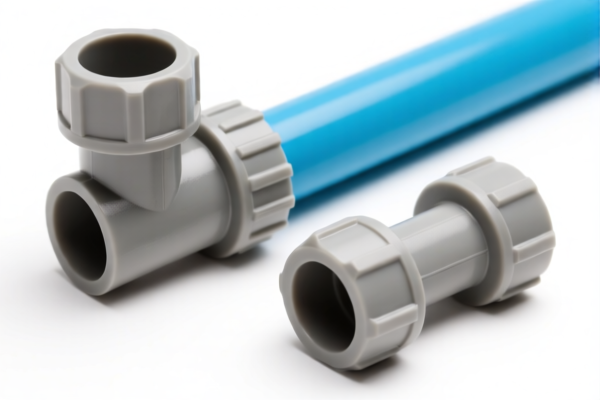
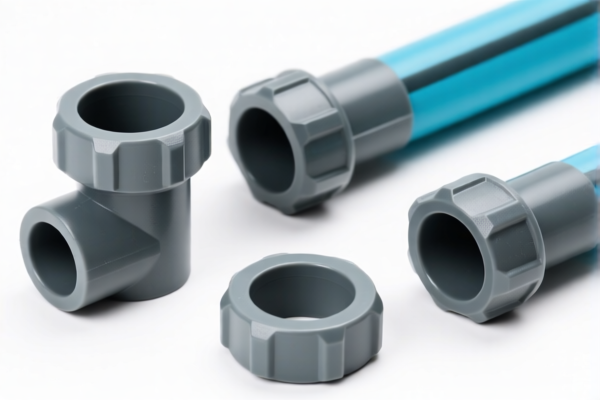
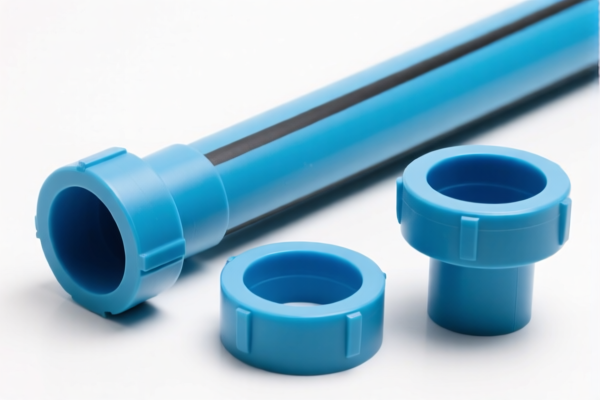
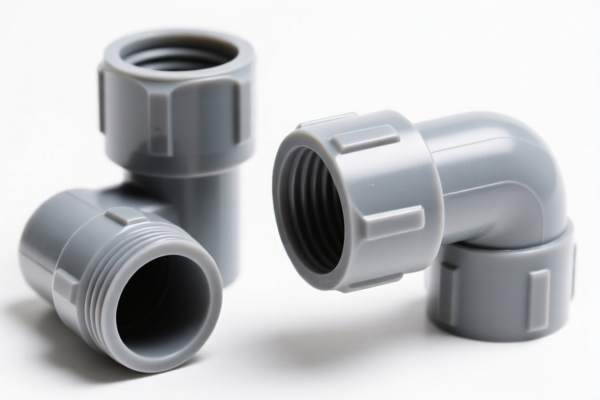
AI Analysis
🔧 Plastic Vacuum Pipe Fittings (Vacuum Hose Connectors)
🌐 HS Code Reference & Customs Clearance Guide | 2026 Latest Tariff Analysis | Professional-Level Clearance Strategy
📌 I. Product Definition & Classification: What Exactly Are "Plastic Vacuum Pipe Fittings"?
Plastic vacuum pipe fittings are critical components in fluid dynamics systems, primarily used for oil, air, or vacuum line connections. In international trade, their classification depends heavily on their specific form and intended function. They are not a single monolithic category but are split between "Parts of Tubes" and "General Plastic Articles."
Key Distinction Logic: * Is it a specific accessory for tubes/pipes? → Falls under Chapter 3917 (Tubes, Pipes, and Hoses). * Is it a general plastic part/fixture with no specific tubing designation? → Falls under Chapter 3926 (Other Articles of Plastics). * Is it a mechanical part of a valve/manifold system? → May fall under Chapter 8481 (Taps, Cocks, and Valves).
⚠️ Critical Differentiator:
- If the item is explicitly a connector/coupling for hoses/tubes → 3917.40
- If it is a generic plastic bracket/fastener or lacks specific tubing designation → 3926.90
- If it is a internal component of a valve assembly → 8481.90
📦 II. HS Code Classification Details (2026 Latest Tariff Authority对照)
| HS Code | Product Description | Application Scenario | Total Tax Rate (China→US) | Tax Breakdown |
|---|---|---|---|---|
3917.40.00.10 |
Plastic Hose Fittings (Plastic, Form: Fittings, Use: Oil Line Accessories) |
Specific oil hose connectors, automotive vacuum lines | 40.3% | Base: 5.3% + Sec 301: 25.0% + 122 Clause: 10% |
3917.40.00.95 |
Plastic Tube Fittings (Plastic, Form: Pipe Accessories, Use: Line Accessories) |
General plastic pipe/tube connectors, industrial vacuum lines | 40.3% | Base: 5.3% + Sec 301: 25.0% + 122 Clause: 10% |
3926.90.99.87 |
Plastic Hose Fittings (Catch-All) (Plastic, Form: Spare Parts, Use: Catch-all Category) |
Generic plastic fittings where specific "tube/pipe" nature is ambiguous or broad | 22.8% | Base: 5.3% + Sec 301: 7.5% + 122 Clause: 10% |
3926.90.99.89 |
Plastic Pipe Parts (Plastic, Form: Parts, Use: Other Plastic Articles) |
General plastic parts not specifically identified as tube/pipe accessories | 22.8% | Base: 5.3% + Sec 301: 7.5% + 122 Clause: 10% |
8481.90.90.40 |
Parts of Tube Fittings/Valves (Plastic, Form: Tube Device Parts, Use: Other Parts) |
Internal plastic components of valves, manifolds, or complex tube devices | 35.0% | Base: 0.0% + Sec 301: 25.0% + 122 Clause: 10% |
🔍 Key Insight:
- 3917 vs. 3926: If the product is clearly a connector (joining two tubes), 3917 is more accurate but attracts higher tariffs (40.3%). If it can be argued as a "general plastic part" (e.g., a bracket or non-standard adapter), 3926 applies (22.8%). - 8481 Exception: Only applicable if the plastic part is an integral component of a valve or tap mechanism, not just a simple connector.
💰 III. 2026 Latest Tariff Rate Detail (Including Surcharges & Policy Add-ons)
✅ Applicable Country: United States (US)
✅ Country of Origin: China (CN)
✅ Effective Time: Current (Includes subsequent imports)
🎯 1. 3917.40.00.10 & 3917.40.00.95 —— Plastic Tube/Hose Fittings (High Tariff Path)
| Item | Detail |
|---|---|
| Base Tariff | 5.3% (Ad Valorem) |
| Section 301 Surcharge | +25.0% (From USITC Footnote, China-specific) |
| 122 Clause Surcharge | +10.0% (Targeting China products) |
| Total Effective Rate | 40.3% |
| Tax Calculation | CIF Value × 40.3% |
| De Minimis Eligibility | ❌ No (High value, subject to full scrutiny) |
| Legal Basis Path | Section 301 → 122 Clause → HS:3917.40 |
📌 Explanation:
- These codes fall under "Tubes, Pipes, and Hoses".
- The 25% Section 301 tariff is standard for most plastic goods from China.
- The 10% "122 Clause" is an additional punitive tariff layer.
- Total 40.3% is a significant cost driver.
🎯 2. 3926.90.99.87 & 3926.90.99.89 —— General Plastic Parts/Accessories (Lower Tariff Path)
| Item | Detail |
|---|---|
| Base Tariff | 5.3% (Ad Valorem) |
| Section 301 Surcharge | +7.5% (Reduced rate for certain "other" plastic articles) |
| 122 Clause Surcharge | +10.0% |
| Total Effective Rate | 22.8% |
| Tax Calculation | CIF Value × 22.8% |
| De Minimis Eligibility | ❌ No (Must declare formally) |
| Legal Basis Path | Section 301 (Reduced) → 122 Clause → HS:3926.90 |
📌 Explanation:
- These codes fall under "Other Articles of Plastics".
- The Section 301 rate is significantly lower (7.5%) compared to 25%.
- Strategic Advantage: If your product can be legally classified here instead of 3917, you save 17.5% in tariffs.
- Risk: Requires strong justification that the item is not a specific "tube fitting" under 3917.
🎯 3. 8481.90.90.40 —— Parts of Valves/Tube Devices (Middle Ground)
| Item | Detail |
|---|---|
| Base Tariff | 0.0% |
| Section 301 Surcharge | +25.0% |
| 122 Clause Surcharge | +10.0% |
| Total Effective Rate | 35.0% |
| Tax Calculation | CIF Value × 35.0% |
| De Minimis Eligibility | ❌ No |
| Legal Basis Path | Section 301 → 122 Clause → HS:8481.90 |
📌 Explanation:
- Only for parts of valves, taps, or complex fluid control devices.
- Simple hose connectors do NOT qualify here.
- Higher than 3926 but lower than 3917.
🛠️ IV. Customs Clearance Practical Advice (Real-World Pitfall Guide)
✅ 1. Documentation Checklist (Non-Negotiable)
| Document | Must Provide? | Purpose |
|---|---|---|
| ✅ Product Specifications | ✔️ | Define material (e.g., PP, PVC, Nylon), pressure rating, size. |
| ✅ Technical Drawing | ✔️ | Show if it’s a simple connector (3917) or a complex part (8481). |
| ✅ Product Photos | ✔️ | Clear images of the item, including any branding/model numbers. |
| ✅ Commercial Invoice | ✔️ | Must accurately describe the item. Use precise terminology. |
| ✅ Packing List | ✔️ | Ensure quantities match invoice. |
| ✅ Origin Certificate | ✔️ | Confirm China origin to apply correct Section 301 rates. |
✅ 2. Naming & Declaration Strategy (The "Tax Optimization" Mantra)
🔥 “Be Specific but Strategic: Is it a 'Tube Accessory' or a 'Plastic Part'?”
| Scenario | Recommended Declaration | Avoid |
|---|---|---|
| Standard Hose Connector | Plastic Hose Fitting for Oil Lines |
Vague: "Plastic Part" → Risk of Re-classification to 3917 (40.3%) |
| Generic Plastic Bracket/Clip | Plastic Accessory for Tubing System |
Vague: "Tube Fitting" → Risk of Re-classification to 3917 |
| Internal Valve Component | Plastic Part for Fluid Control Valve |
Vague: "Hose Connector" → Risk of Re-classification to 3917 |
| Ambiguous Small Part | Plastic Component for Industrial Tubing |
Vague: "Pipe" → Risk of Audit |
⚠️ Warning:
- Do NOT mislabel a3917item as3926to save tax. US Customs (CBP) conducts strict audits. If the item is clearly a hose connector, they will force the higher 40.3% rate + penalties.
- Use3926.90.99.87/89ONLY if the product is a generic plastic part that supports the tube but is not a direct fluid connector (e.g., a clamp, bracket, or non-standard adapter).
✅ 3. Special Cases & Handling
| Case | Handling Suggestion |
|---|---|
| OEM Custom Fittings | Provide customer design specs. If custom-designed for a specific valve, consider 8481.90.90.40. |
| Mixed Shipments | Separate 3917 (40.3%) from 3926 (22.8%) in packing list. Mixed declarations cause delays. |
| High-Pressure Vacuum Lines | Clearly state "Vacuum Rated" in description. Avoid "Gas Line" if not certified. |
| Automotive Parts | If used in cars, ensure it meets DOT standards. Misclassification can lead to seizure. |
🌍 V. Global Market Comparison (2026 Snapshot)
| Country/Region | Recommended HS Code | Tariff (China) | Certification | Note |
|---|---|---|---|---|
| 🇺🇸 USA | 3917.40.00.10 or 3926.90.99.87 |
40.3% or 22.8% | None specific | Highest duty burden |
| 🇨🇳 China | 3917.40.00.10 |
5.3% | None | No surcharges |
| 🇪🇺 EU | 3917.21.00 |
3.5% | REACH/RoHS | Lower duties, strict chemical compliance |
| 🇯🇵 Japan | 3917.21.00 |
5.0% | JIS | Moderate duties |
📌 Conclusion:
- The US market is uniquely expensive due to Section 301 and 122 Clause surcharges.
- Optimization is Key: Trying to fit into3926(22.8%) instead of3917(40.3%) can save 17.5%. However, this must be done with accurate product characterization.
📌 VI. Common Mistakes & Pitfalls (Lessons Learned)
❌ Mistake 1: Calling all plastic tube parts "Hose Fittings"
👉 Result: All taxed at 40.3%.
👉 Fix: If it’s a bracket/clamp, declare as "Plastic Accessory" (3926).
❌ Mistake 2: Ignoring the 122 Clause
👉 Result: Underestimating total cost by 10%.
👉 Fix: Always add 10% to Section 301 + Base Rate for China origin.
❌ Mistake 3: Using "Valve Parts" for simple connectors
👉 Result: Rejected by Customs for inaccurate description.
👉 Fix: Only use 8481 if it’s an internal component of a valve mechanism.
✅ Correct Approach:
"Plastic Hose Connector, PP Material, 1/4 inch, for Vacuum Line Applications, Model XYZ"
🎯 VII. Conclusion: Precision in Classification Saves Money!
🎯 Remember This Mantra:
🔹 "Connectors are 3917 (40.3%), Generic Parts are 3926 (22.8%). Don't lie, but clarify!"
🔹 "122 Clause adds 10%, Section 301 adds 7.5% or 25%. Know your path!"
📌 Pro Tip:
If your plastic vacuum fittings are made in Vietnam, Thailand, or Mexico, they may qualify for lower Section 301 rates or FTA benefits.
Recommendation: Conduct an Advance Ruling with US CBP if your product type is ambiguous between 3917 and 3926.
📣 Immediate Action:
📞 Consult a licensed customs broker.
📸 Provide detailed photos and specs.
🚀 Optimize your HS Code today to maximize profit margins!
✨ Professional Clearance Starts with Accurate Classification!
💼 Every Percent Saved is Pure Profit!
Customer Reviews
About HS Code Classification
The Harmonized System (HS) is an internationally standardized nomenclature developed by the World Customs Organization (WCO) to classify traded products. Over 200 countries use the HS system as the basis for customs tariffs, trade statistics, and import/export regulations.
Each HS code follows a hierarchical structure:
- Chapter (2 digits) — Broad category of goods (e.g., Chapter 84: Machinery and Mechanical Appliances)
- Heading (4 digits) — More specific grouping within the chapter
- Subheading (6 digits) — Internationally standardized breakdown, used by all WCO member countries
- National subdivisions (8-10 digits) — Country-specific extensions for further classification, such as US HTSUS 10-digit codes
Correct HS code classification is essential for smooth customs clearance, accurate duty payment, and compliance with trade regulations. Misclassification can lead to customs delays, overpayment of duties, or penalties.
When importing from CN to US, the applicable tariff rates may include:
- Most-Favored-Nation (MFN) rate — The standard duty rate applied to WTO members
- General rate — Applied to countries without trade agreements
- Trade remedy duties — Additional tariffs such as Section 301 (anti-dumping), Section 232 (national security), or countervailing duties
The information provided on this page is for reference purposes only. For official classification, please consult with your local customs authority or a licensed customs broker.