Plastic Valve
CN → US| HS Code | Tariff Rate | Origin | Destination | Doc |
|---|---|---|---|---|
| 3917400050 | 40.3% | CN | US | Official Doc |
| 3917400095 | 40.3% | CN | US | Official Doc |
| 8481909085 | 85.0% | CN | US | Official Doc |
| 8481805090 | 38.0% | CN | US | Official Doc |
| 3926301000 | 24.0% | CN | US | Official Doc |
Product Images
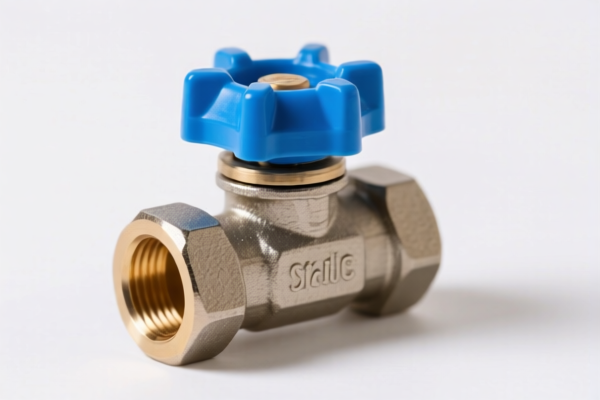
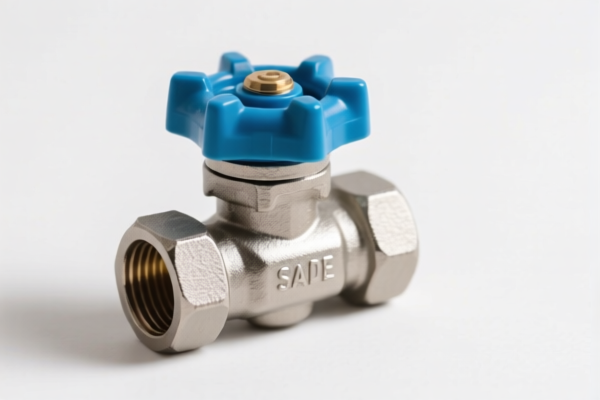
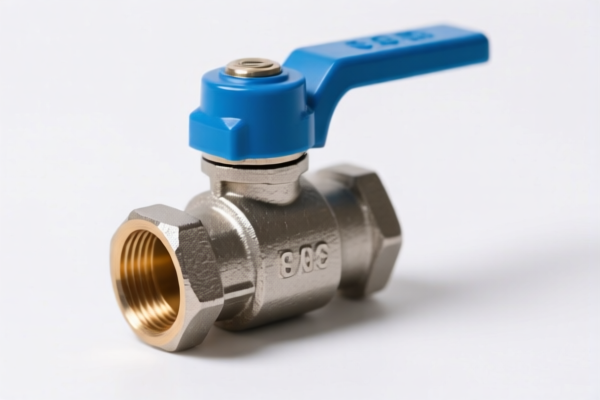
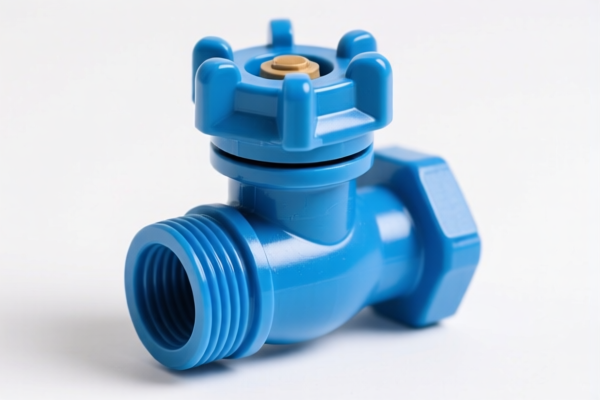
AI Analysis
💧 Plastic Valves (Industrial & Commercial Flow Control)
🌐 HS Code Classification & Customs Clearance Guide | 2026 Tariff Analysis | Strategic Import Strategy
📌 I. Product Definition & Classification: Are You Importing a "Pipe Fitting" or a "Valve"?
Plastic valves are critical components for regulating fluid flow in plumbing, chemical processing, and industrial systems. In international trade, the classification hinges entirely on structural identity and functional intent:
- Plastic Pipe Fittings (3917/3926): Components that connect, branch, or terminate pipes (e.g., elbows, tees, reducers). Even if a product is shaped like a valve, if it is primarily classified as a pipe accessory under Chapter 39, it falls here.
- Mechanical Valves (8481): Devices specifically designed to control, regulate, or stop flow using mechanical parts (spindles, balls, discs), even if made of plastic. These are classified under Chapter 84 as "Taps, cocks, valves and similar appliances."
- Valve Accessories (3926): Simple plastic handles, knobs, or covers that do not function as the flow-control mechanism itself.
⚠️ Critical Distinction Point:
- If the item is primarily a pipe connector with minimal flow control features → Chapter 39 (3917/3926)
- If the item is a dedicated flow-control device with a distinct operating mechanism (ball, gate, globe) → Chapter 84 (8481)
- If the item is just a handle/knob → Chapter 39 (3926)
📦 II. HS Code Classification Matrix (2026 Latest Tariff Data)
Based on the provided dataset, here are the five precise classifications for "Plastic Valves" and their associated tax implications.
| HS Code | Product Description | Key Classification Logic | Primary Use Case |
|---|---|---|---|
| 3917.40.00.50 | Plastic Pipe Fittings (Valve Type) | Classified as a pipe fitting due to material (plastic) and form (fitting). | Simple plastic connectors that resemble valves but fit under pipe accessory definitions. |
| 3917.40.00.95 | Other Plastic Pipe Fittings | Falls under other plastic pipe fittings. Recognized as a valve form within plastic pipe accessories. | Generic plastic valve-like fittings not specifically listed elsewhere in 3917.40.50. |
| 8481.90.90.85 | Plastic Valve Parts | Classified as a part/accessory to a mechanical valve. Name includes "Valve," but treated as a component. | Non-mechanical plastic valve bodies or incomplete valve units intended for assembly. |
| 8481.80.50.90 | Plastic Valves (Complete) | Classified as a complete valve under Chapter 84. Recognized as "Other valves" made of plastic. | Standard Plastic Valves (Ball, Gate, Butterfly) with distinct flow-control function. |
| 3926.30.10.00 | Plastic Valve Handles/Knobs | Classified as handles and knobs. Material is plastic, form is a user interface. | Only the handle/knob of a valve, not the valve itself. |
🔍 Key Insight:
- 8481.80.50.90 is typically the correct classification for standard, functional plastic valves because they are mechanical appliances.
- 3917.40.00 codes apply when the item is deemed a "pipe fitting" rather than a standalone "valve" under legal definitions.
- 3926.30.10.00 is NOT for the valve itself, but only for the plastic handle attached to it. Misclassifying a full valve as a "handle" is a high-risk error.
💰 III. 2026 Tariff Rate Breakdown (Detailed Tax Analysis)
✅ Origin: China (CN)
✅ Destination: United States (US)
✅ Effective Date: 2025–2026 Period
🎯 1. 3917.40.00.50 & 3917.40.00.95 — Plastic Pipe Fittings
| Item | Details |
|---|---|
| Base Tariff | 5.3% |
| Section 301 Tariff | +25.0% |
| 122 Clause Tariff | +10.0% |
| Total Effective Rate | 40.3% |
| Calculation | (CIF Value × 5.3%) + (CIF Value × 25%) + (CIF Value × 10%) |
| De Minimis Exemption | ❌ NOT APPLICABLE |
| Legal Basis | Standard HTS 3917.40 + Section 301 Footnotes + IEEPA 122 Clause |
📌 Analysis:
- These codes carry a 40.3% effective tax rate.
- While slightly lower than the 85% rate for "parts," they are still subject to significant punitive tariffs.
- Strategy: If your product can legitimately be classified as a "pipe fitting" rather than a "valve," this may be the most cost-effective route, provided the physical description matches "fitting" criteria.
🎯 2. 8481.90.90.85 — Plastic Valve Parts
| Item | Details |
|---|---|
| Base Tariff | 0.0% |
| Section 301 Tariff | +25.0% |
| 122 Clause Tariff | +10.0% |
| Steel/Aluminum/Copper Add-on | +50.0% (Note: Applies to metal components, not plastic) |
| Total Effective Rate (Plastic) | 35.0% |
| Total Effective Rate (Metal Parts) | 85.0% |
| Calculation | (CIF Value × 0%) + (CIF Value × 25%) + (CIF Value × 10%) |
| De Minimis Exemption | ❌ NOT APPLICABLE |
| Legal Basis | HTS 8481.90 + Section 301 + IEEPA 122 Clause |
📌 Analysis:
- CRITICAL WARNING: The dataset lists 85.0% total tax for this code. This suggests that if the part contains steel, aluminum, or copper components, the 50% add-on applies, pushing the total to 85%.
- For 100% plastic parts, the rate is 35.0% (0% base + 25% + 10%).
- Risk: If your "valve part" has metal inserts, you are hit with the 85% rate. Pure plastic parts benefit from the lower base rate.
🎯 3. 8481.80.50.90 — Plastic Valves (Complete)
| Item | Details |
|---|---|
| Base Tariff | 3.0% |
| Section 301 Tariff | +25.0% |
| 122 Clause Tariff | +10.0% |
| Total Effective Rate | 38.0% |
| Calculation | (CIF Value × 3%) + (CIF Value × 25%) + (CIF Value × 10%) |
| De Minimis Exemption | ❌ NOT APPLICABLE |
| Legal Basis | HTS 8481.80 + Section 301 + IEEPA 122 Clause |
📌 Analysis:
- This is the standard classification for functional plastic valves.
- The rate is 38.0%, which is competitive compared to the 40.3% for pipe fittings.
- Recommendation: This is the most accurate classification for true valves. It avoids the "part" trap of 8481.90 (which risks the 85% rate if metal is involved).
🎯 4. 3926.30.10.00 — Plastic Valve Handles
| Item | Details |
|---|---|
| Base Tariff | 6.5% |
| Section 301 Tariff | +7.5% |
| 122 Clause Tariff | +10.0% |
| Total Effective Rate | 24.0% |
| Calculation | (CIF Value × 6.5%) + (CIF Value × 7.5%) + (CIF Value × 10%) |
| De Minimis Exemption | ❌ NOT APPLICABLE |
| Legal Basis | HTS 3926.30 + Section 301 + IEEPA 122 Clause |
📌 Analysis:
- Lowest Tax Rate: 24.0%.
- BUT: This ONLY applies if you are importing handles/knobs only, not the valve.
- Compliance Risk: Never classify a complete valve as a "handle" to save taxes. This is customs fraud. Only use this code for spare parts that are purely handles.
🛠️ IV. Customs Clearance Strategy & Practical Advice
✅ 1. Documentation Checklist (Mandatory)
| Document | Requirement | Why It Matters |
|---|---|---|
| Product Specification Sheet | ✔️ Must detail: Material (100% Plastic? Composite?), Diameter, Pressure Rating, Type (Ball/Gate) | Determines if it’s a "Valve" (8481) or "Fitting" (3917). |
| Technical Diagrams | ✔️ Include cross-sections showing internal mechanisms (e.g., ball, disc, spindle) | Proves mechanical function → supports 8481 classification. |
| Commercial Invoice | ✔️ Use precise terminology: "Plastic Ball Valve," not just "Plastic Fitting" | Mismatches between description and HS Code trigger audits. |
| Photos (Labeled) | ✔️ Clear images of the valve body, handle, and connections | Visual proof of "valve" vs. "pipe connector." |
| Bill of Lading | ✔️ Must match invoice quantity and weight | Standard requirement. |
✅ 2. Classification Strategy (How to Choose)
🔥 "Function Over Form: Is it a Valve or a Fitting?"
| Scenario | Recommended HS Code | Tax Rate | Reasoning |
|---|---|---|---|
| Complete Plastic Ball Valve | 8481.80.50.90 |
38.0% | It is a mechanical valve. Accurate and relatively low risk. |
| Plastic Pipe Connector (Elbow/Tee) | 3917.40.00.50 |
40.3% | It is a fitting. Higher tax, but correct classification. |
| Valve Handle Only (Spare Part) | 3926.30.10.00 |
24.0% | Lowest tax. Use ONLY if no valve body is included. |
| Valve Body (No Mechanism) | 8481.90.90.85 |
35.0% (if 100% plastic) | Treat as a part. Avoid if it functions as a valve. |
| Valve with Metal Springs/Seats | 8481.90.90.85 |
85.0% | AVOID. Metal components trigger the 50% add-on. |
✅ 3. Risk Mitigation & "Gotchas"
| Risk Factor | Explanation | Mitigation Strategy |
|---|---|---|
| The "85% Trap" | Code 8481.90.90.85 has a 50% add-on for steel/aluminum/copper. |
If your valve has any metal parts (threads, springs, seats), DO NOT use this code unless you accept 85% tax. Consider if 3917 or 8481.80 is more appropriate based on function. |
| Misclassification as "Handle" | Using 3926.30.10.00 for a full valve to pay 24% tax. |
Customs uses X-ray and physical inspections. If they see a full valve, they will reclassify and penalize. Never misdeclare. |
| "Fitting" vs. "Valve" Ambiguity | Some plastic valves are marketed as "accessories." | Provide technical data sheets that emphasize flow control function to support 8481.80.50.90 (38%) over 3917.40.00 (40.3%). |
| 122 Clause Impact | The 10% additional tariff applies to all listed codes. | Ensure your landed cost calculation includes this 10% regardless of HS Code choice. |
🌍 V. Global Market Comparison (2026)
| Country/Region | Preferred HS Code | Est. Tariff (China Origin) | Key Requirements |
|---|---|---|---|
| 🇺🇸 USA | 8481.80.50.90 |
38.0% | FCC/UL (if electrical), No phthalates (if plumbing) |
| 🇨🇳 China | 8481.80.50.90 |
3.0% | CCC Certification (if applicable), GB Standards |
| 🇪🇺 EU | 8481.80.50.90 |
0% (if certified) | CE Marking, RoHS, REACH Compliance |
| 🇬🇧 UK | 8481.80.50.90 |
0% | UKCA Marking, CE Transition |
📌 Conclusion:
- The US market is the most expensive for plastic valves due to Section 301 and 122 Clause tariffs (38-40.3%).
- EU/UK offer 0% tariff advantages if compliance standards (CE/UKCA) are met.
- China domestic is the cheapest (3.0%).
📌 VI. Common Errors & Pitfalls (Lessons Learned)
❌ Error 1: Classifying a complete plastic ball valve as a "Plastic Fitting" (3917.40.00.50).
👉 Consequence: While the tax rate is similar (40.3% vs 38%), if Customs determines it’s a valve, they may seize goods for misdeclaration.
👉 Fix: Use 8481.80.50.90 for true valves.
❌ Error 2: Classifying a valve with metal inserts as 8481.90.90.85 and expecting 35% tax.
👉 Consequence: The 50% metal add-on applies, resulting in 85% total tax.
👉 Fix: If the product contains steel/aluminum/copper, recalculate landed cost with 85% tax, or redesign to be 100% plastic.
❌ Error 3: Shipping valve handles as "Valves" to pay 38% tax.
👉 Consequence: Wasted tax. You overpaid by 14%.
👉 Fix: If shipping only handles, use 3926.30.10.00 (24%).
✅ Correct Declaration Example:
"Plastic Ball Valve, 2-inch, PP Material, for Water Control, Model PV-200, No Metal Components"
HS Code:8481.80.50.90
Tax: 38.0%
🎯 VII. Final Recommendations
🎯 Action Plan:
1. Audit Your Product: Does it contain metal? If yes, avoid 8481.90.90.85 unless you want 85% tax.
2. Define Function: Is it a flow controller (Valve) or a connector (Fitting)?
- Flow Controller → 8481.80.50.90 (38%)
- Connector → 3917.40.00.50 (40.3%)
- Handle Only → 3926.30.10.00 (24%)
3. Document Thoroughly: Provide technical sheets proving the material composition and function.
4. Calculate Landed Cost: Include the 10% 122 Clause and 25% Section 301 in all pricing models.
📌 Pro Tip:
If your plastic valve contains ANY steel, aluminum, or copper parts (e.g., threaded inserts, springs), and you cannot redesign it to be 100% plastic, consider the 85% tax liability of 8481.90.90.85. Alternatively, explore if the product can be classified under 8481.80.50.90 (38%) by emphasizing the plastic body's primary function and arguing that metal parts are minor accessories (subject to legal advice).
📣 Immediate Next Steps:
📞 Consult a licensed customs broker for a Pre-Ruling on your specific valve design.
📦 Ensure your BOM (Bill of Materials) clearly lists all components to avoid metal-add-on surprises.
🚀 Optimize for 38% by ensuring 100% plastic composition for valves.
✨ Precision Classification Saves Money!
💼 Don't let a 47% tax difference destroy your margin!
Customer Reviews
About HS Code Classification
The Harmonized System (HS) is an internationally standardized nomenclature developed by the World Customs Organization (WCO) to classify traded products. Over 200 countries use the HS system as the basis for customs tariffs, trade statistics, and import/export regulations.
Each HS code follows a hierarchical structure:
- Chapter (2 digits) — Broad category of goods (e.g., Chapter 84: Machinery and Mechanical Appliances)
- Heading (4 digits) — More specific grouping within the chapter
- Subheading (6 digits) — Internationally standardized breakdown, used by all WCO member countries
- National subdivisions (8-10 digits) — Country-specific extensions for further classification, such as US HTSUS 10-digit codes
Correct HS code classification is essential for smooth customs clearance, accurate duty payment, and compliance with trade regulations. Misclassification can lead to customs delays, overpayment of duties, or penalties.
When importing from CN to US, the applicable tariff rates may include:
- Most-Favored-Nation (MFN) rate — The standard duty rate applied to WTO members
- General rate — Applied to countries without trade agreements
- Trade remedy duties — Additional tariffs such as Section 301 (anti-dumping), Section 232 (national security), or countervailing duties
The information provided on this page is for reference purposes only. For official classification, please consult with your local customs authority or a licensed customs broker.