Plastic Venetian Blinds
CN → US| HS Code | Tariff Rate | Origin | Destination | Doc |
|---|---|---|---|---|
| 3916200020 | 40.8% | CN | US | Official Doc |
| 3925305000 | 22.8% | CN | US | Official Doc |
| 3925301000 | 20.8% | CN | US | Official Doc |
| 3926305000 | 22.8% | CN | US | Official Doc |
| 3926909989 | 22.8% | CN | US | Official Doc |
Product Images
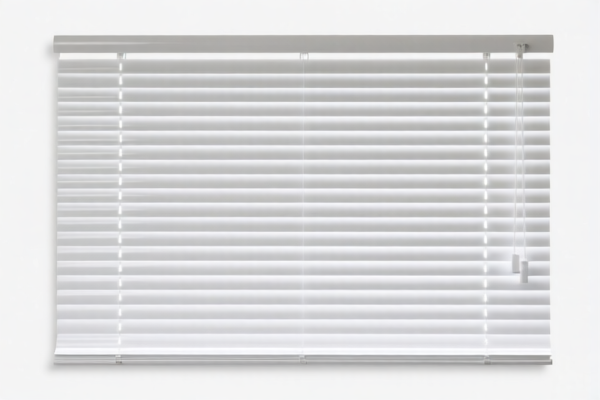
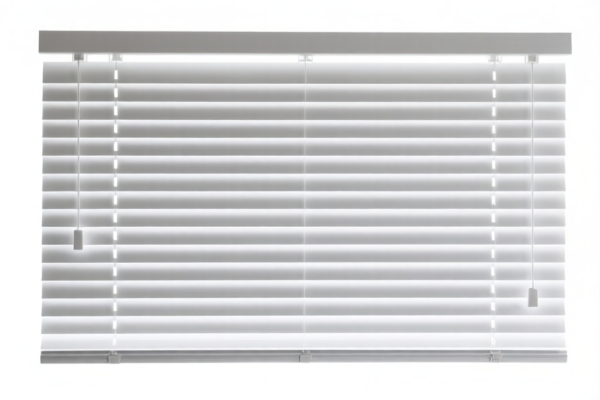
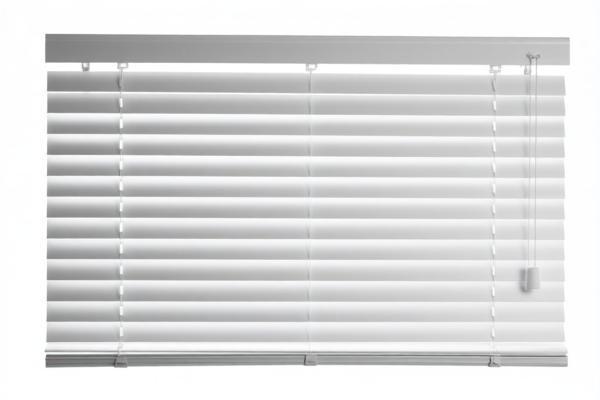
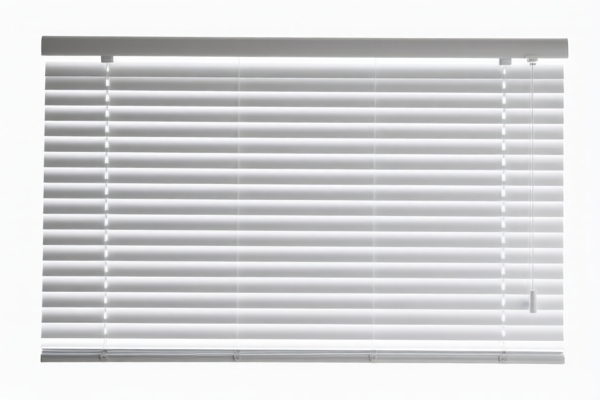
AI Analysis
🪟 Plastic Venetian Blinds (Polymer Window Coverings)
🌐 HS Code Reference & Customs Clearance Guide | 2026 Latest Tariff Analysis | Professional Compliance Strategy
📌 I. Product Definition & Classification: What Exactly Are "Plastic Venetian Blinds"?
Plastic Venetian Blinds are window coverings made primarily from polymer materials (typically PVC, ABS, or PP). In international trade, their classification is highly contentious because they straddle the line between "building fixtures" and "general plastic articles."
Key Classification Dilemma:
1. Building Accessories vs. General Plastic Articles:
- If viewed as a component of the building envelope (integrated into window frames), they may fall under Chapter 39 (Section XI) specific to building parts.
- If viewed as a generic manufactured plastic item, they fall under Chapter 39 (Section XVII) as other plastic articles.
2. Profile Extrusions vs. Finished Assemblies:
- Are the slats considered "profiles" (3916) or "finished blinds" (3925/3926)?
⚠️ Critical Distinction:
- Misclassification Risk: Labeling as a simple "plastic sheet" or "profile" when it's a finished assembly leads to massive duty penalties.
- Origin Impact: These goods are heavily targeted by Section 301 (25%), Section 232 (Steel/Aluminum - not applicable here but contextually relevant for trade wars), and Section 122 retaliatory tariffs.
📦 II. HS Code Classification Details (2026 Latest Tariff Alignment)
Based on the provided dataset, here are the 5 specific HS Codes applicable to Plastic Venetian Blinds, ranked by typical compliance logic and tax efficiency.
| HS Code | Product Description (Summary) | Classification Logic | Total Tax Rate |
|---|---|---|---|
3925.30.10.00 |
Plastic Venetian Blinds, classified as plastic building accessories | Best Fit: Direct match for "Plastic Building Accessories." Describes the item's form and use precisely. | 20.8% |
3925.30.50.00 |
Plastic Venetian Blinds, classified as plastic building accessories | Good Fit: Also "Plastic Building Accessories" but with a slightly higher base duty rate. | 22.8% |
3926.30.50.00 |
Plastic Venetian Blinds, classified as "Other Plastic Articles" (window components) | Alternative: Classified as window fittings/connectors under general plastic goods. | 22.8% |
3926.90.99.89 |
Plastic Venetian Blinds, classified as "Other Plastic Articles" | Generic: Used when no specific "blind" code exists. Broadest category for plastic goods. | 22.8% |
3916.20.00.20 |
Plastic Venetian Blinds, classified as PVC Profile Extrusions | Aggressive/Risky: Views the slats as raw "profiles" rather than finished blinds. Highest risk, highest tax. | 40.8% |
🔍 Key Insight:
-3925.30.10.00is the most competitive code (20.8% total) because it explicitly recognizes the item as a "plastic building accessory" with a lower base duty (3.3%).
-3916.20.00.20is the most dangerous (40.8% total) due to the "Section 122" tariff stacking on top of higher base duties.
💰 III. 2026 Tariff Rate Breakdown (Including Additional Duties)
✅ Applicable Country: United States (US)
✅ Origin: China (CN)
✅ Effective Time: Post-2025 Trade Policy Updates
🎯 1. 3925.30.10.00 – The "Optimal" Classification
Plastic Building Accessories (Venetian Blinds)
| Item | Detail |
|---|---|
| Base Duty | 3.3% (Ad Valorem) |
| Section 301 Tariff | +7.5% (Standard 301 rate for certain plastic products) |
| Section 122 Tariff | +10% (Retaliatory tariff on specific Chinese goods) |
| Total Tax Rate | 20.8% |
| Calculation | CIF Value × 20.8% |
| De Minimis Exemption | ❌ Not Eligible |
📌 Explanation:
- This code benefits from the lowest base duty (3.3%) among all options.
- The "Section 122" tariff applies regardless of the sub-heading, so the goal is to minimize the base rate.
- Why choose this? It is technically accurate (blinds are building accessories) and the cheapest.
🎯 2. 3925.30.50.00 – Standard Building Accessory
Plastic Building Accessories (Other)
| Item | Detail |
|---|---|
| Base Duty | 5.3% |
| Section 301 Tariff | +7.5% |
| Section 122 Tariff | +10% |
| Total Tax Rate | 22.8% |
| Calculation | CIF Value × 22.8% |
| De Minimis Exemption | ❌ Not Eligible |
📌 Note:
- Slightly higher base duty than3925.30.10.00.
- Use this if customs rejects3925.30.10.00due to lack of specific product listing in that sub-code.
🎯 3. 3926.30.50.00 – General Plastic Articles (Fittings)
Other Plastic Articles (Window Components)
| Item | Detail |
|---|---|
| Base Duty | 5.3% |
| Section 301 Tariff | +7.5% |
| Section 122 Tariff | +10% |
| Total Tax Rate | 22.8% |
| Calculation | CIF Value × 22.8% |
📌 Note:
- Classified under Chapter 39, Section XVII (General Articles).
- Often used if the "blinds" are considered loose components rather than installed fixtures.
🎯 4. 3926.90.99.89 – Catch-All Plastic Articles
Other Articles of Plastics
| Item | Detail |
|---|---|
| Base Duty | 5.3% |
| Section 301 Tariff | +7.5% |
| Section 122 Tariff | +10% |
| Total Tax Rate | 22.8% |
| Calculation | CIF Value × 22.8% |
📌 Note:
- Broadest category. Least descriptive.
- High risk of customs audit because "Other" is vague.
🎯 5. 3916.20.00.20 – PVC Profile Extrusions
Plastic Profiles (PVC-based)
| Item | Detail |
|---|---|
| Base Duty | 5.8% |
| Section 301 Tariff | +25.0% (Higher rate for specific polymer profiles) |
| Section 122 Tariff | +10% |
| Total Tax Rate | 40.8% |
| Calculation | CIF Value × 40.8% |
| De Minimis Exemption | ❌ Not Eligible |
📌 Warning:
- AVOID THIS CODE if possible.
- The Section 301 rate jumps to 25%, and the base duty is higher.
- Only use if you are shipping unformed PVC strips meant to be cut/finished by the importer, not ready-to-install blinds.
🛠️ IV. Customs Clearance Practical Advice (Pro Tips)
✅ 1. Essential Documentation Checklist
| Document | Required | Purpose |
|---|---|---|
| ✅ Commercial Invoice | ✔️ | Must state: "Plastic Venetian Blinds, PVC, Finished Goods, HS Code 3925.30.10.00" |
| ✅ Product Specifications | ✔️ | Include: Material (PVC/ABS), Slat Width (e.g., 25mm/50mm), Color, Weight per sqm |
| ✅ Photos of Finished Product | ✔️ | Show the assembly: headrail, slats, ladder strings, wand/control. Prove it’s a "blind," not raw plastic. |
| ✅ Bill of Lading / Air Waybill | ✔️ | Consistent description with invoice. |
| ✅ Country of Origin Certificate | ✔️ | Critical for proving Chinese origin (triggers Section 301/122). |
✅ 2. Declaration Strategy (The "Golden Rule")
🔥 "Describe the Finished Product, Not the Raw Material!"
| Scenario | Correct Declaration | Risk |
|---|---|---|
| Ready-to-Install Blinds | 3925.30.10.00 – "Plastic Venetian Blinds" |
✅ Low Tax (20.8%) |
| Loose PVC Slats (Unassembled) | 3916.20.00.20 – "PVC Profiles" |
❌ High Tax (40.8%) + Audit Risk |
| Blinds with Wooden Headrails | Mixed Material? → Likely 3925 or 4414 |
⚠️ Complex – Seek Advance Ruling |
| Motorized Blinds | Add "Electric" to description → Potential HTS change | ⚠️ Higher scrutiny |
✅ 3. Critical Customs Pitfalls
| Pitfall | Consequence | Solution |
|---|---|---|
| Declaring as "Plastic Sheets" | Rejected by CBP. Misclassification penalty. | Always use "Venetian Blinds" or "Window Coverings." |
| Ignoring Section 122 | Unexpected 10% charge at customs. | Budget for the full 20.8%–40.8% in cost modeling. |
| OEM/White Label Products | Customs may dispute origin. | Ensure supplier provides clear chain of custody. |
| Kit vs. Assembly | If shipped as a "Kit," is it "unfinished"? | If it requires significant assembly, risk reclassification. |
🌍 V. Global Market Comparison (2026)
| Market | Recommended HS Code | Est. Duty (China Origin) | Notes |
|---|---|---|---|
| 🇺🇸 USA | 3925.30.10.00 |
20.8% | Heavy tariffs. Use this code to minimize base rate. |
| 🇨🇳 China | 3925.30.10.00 |
5.3% | Import duty only. No 301/122. |
| 🇪🇺 EU | 3925.30.00 |
0% - 3% | Generally low. No Section 122. |
| 🇬🇧 UK | 3925.30.00 |
0% - 3% | Post-Brexit tariffs favorable for plastics. |
| 🇨🇦 Canada | 3925.30.00 |
0% | FTA benefits may apply. |
📌 Conclusion:
- The US is the most expensive market due to Section 301 and 122 tariffs.
- China Origin products face a ~17.5% penalty on top of base duties in the US.
- Strategy: Consider sourcing from Vietnam, Thailand, or Mexico if possible to avoid Section 301/122 entirely.
📌 VI. Common Errors & How to Avoid Them
❌ Error 1: Using 3916.20.00.20 for finished blinds.
👉 Result: 40.8% tax instead of 20.8%. Loss of $20 per $100 of value.
✅ Fix: Prove the item is a finished good with photos and specs.
❌ Error 2: Failing to declare "Plastic" material.
👉 Result: Customs classifies as "Wood" or "Metal" by default if ambiguous.
✅ Fix: Explicitly state "PVC Plastic Venetian Blinds" on invoice.
❌ Error 3: Ignoring Section 122.
👉 Result: Surprise 10% charge.
✅ Fix: Include 10% in all margin calculations for US imports.
🎯 VII. Final Recommendation: Professional Clearance Strategy
🎯 Action Plan:
1. Primary Code: Use 3925.30.10.00 (20.8% Total Duty).
2. Backup Code: 3925.30.50.00 (22.8% Total Duty) if 3925.30.10.00 is rejected.
3. Avoid: 3916.20.00.20 (40.8% Total Duty) unless shipping raw profiles.
4. Documentation: Always include high-res photos showing the headrail, slats, and control mechanism together.
💡 Pro Tip:
If volume is high, apply for an Advance Ruling (CBP Ruling) from US Customs to lock in3925.30.10.00for your specific product design. This prevents future disputes and potential back-taxes.
📣 Immediate Step:
📞 Engage a Licensed Customs Broker
📄 Prepare Product Samples & Technical Specs
🚀 Optimize Your Supply Chain to consider non-China origins for the US market to mitigate tariff risks.
✨ Smart Classification = Significant Savings!
💼 Don’t let classification errors eat your margin!
Customer Reviews
About HS Code Classification
The Harmonized System (HS) is an internationally standardized nomenclature developed by the World Customs Organization (WCO) to classify traded products. Over 200 countries use the HS system as the basis for customs tariffs, trade statistics, and import/export regulations.
Each HS code follows a hierarchical structure:
- Chapter (2 digits) — Broad category of goods (e.g., Chapter 84: Machinery and Mechanical Appliances)
- Heading (4 digits) — More specific grouping within the chapter
- Subheading (6 digits) — Internationally standardized breakdown, used by all WCO member countries
- National subdivisions (8-10 digits) — Country-specific extensions for further classification, such as US HTSUS 10-digit codes
Correct HS code classification is essential for smooth customs clearance, accurate duty payment, and compliance with trade regulations. Misclassification can lead to customs delays, overpayment of duties, or penalties.
When importing from CN to US, the applicable tariff rates may include:
- Most-Favored-Nation (MFN) rate — The standard duty rate applied to WTO members
- General rate — Applied to countries without trade agreements
- Trade remedy duties — Additional tariffs such as Section 301 (anti-dumping), Section 232 (national security), or countervailing duties
The information provided on this page is for reference purposes only. For official classification, please consult with your local customs authority or a licensed customs broker.