Plastic Venetian Blinds White
CN → US| HS Code | Tariff Rate | Origin | Destination | Doc |
|---|---|---|---|---|
| 3916200020 | 40.8% | CN | US | Official Doc |
| 3925305000 | 22.8% | CN | US | Official Doc |
| 3925301000 | 20.8% | CN | US | Official Doc |
| 3926305000 | 22.8% | CN | US | Official Doc |
| 3926909989 | 22.8% | CN | US | Official Doc |
Product Images
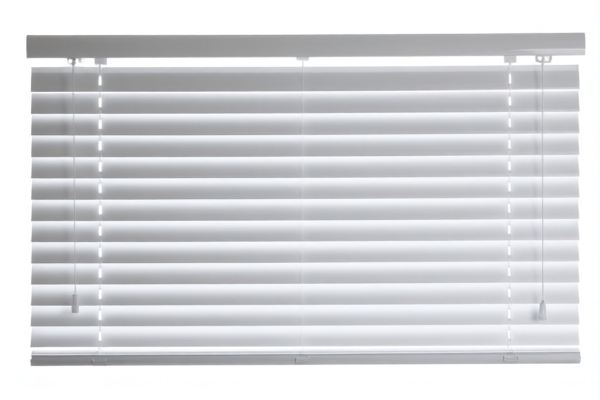
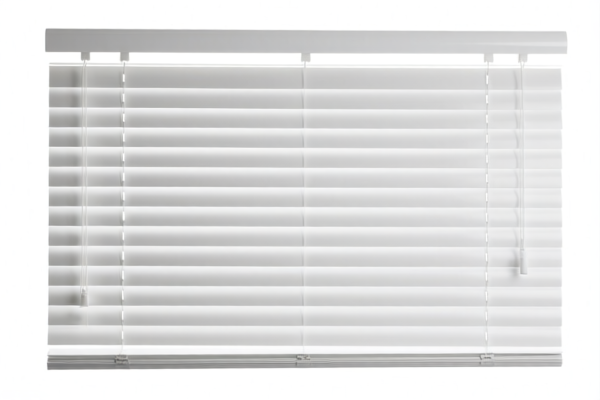
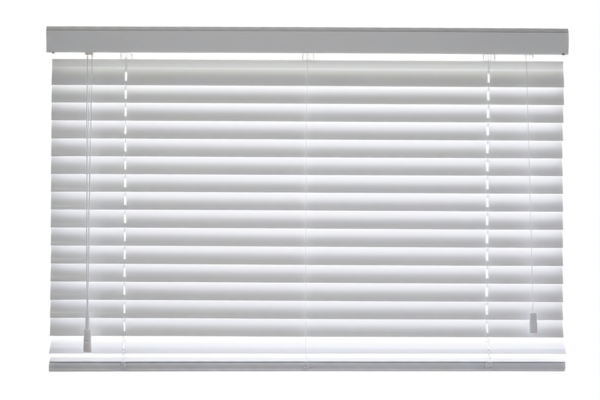
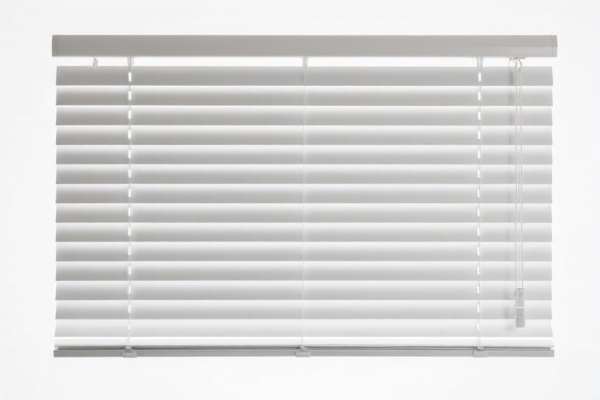
AI Analysis
🪟 Plastic Venetian Blinds (White)
🌐 HS Code Reference & Customs Clearance Guide | 2026 Latest Tariff Analysis | Professional Compliance Strategy
📌 I. Product Definition & Classification: Do You Really Understand "Plastic Venetian Blinds"?
Plastic Venetian Blinds are essential architectural accessories used for window shading, light control, and privacy. In international trade, their classification depends heavily on their structural integration and intended use as part of the building or as a standalone textile-like curtain.
Architectural Component (Hard Plastic Profiles): Rigid plastic slats, headrails, and mounting hardware designed specifically for window frames.
Standalone Blind/Curtain (Flexible/Assembly): The assembled product, including cords, tapes, and slats, treated as a general plastic article or window covering.
⚠️ Key Distinction Point:
- If the product is defined by its material profile (PVC extrusions) intended for window construction → Classified under 3916 or 3925.
- If the product is defined by its function as a finished blind/curtain assembly → Classified under 3926.
📦 II. HS Code Classification Details (2026 Latest Tariff Authority Comparison)
| HS Code | Product Description | Application Scenario | Tax Rate |
|---|---|---|---|
3916.20.00.20 |
Plastic window blind profiles, PVC-based, for window use | Raw profiles or kits where the primary value is the PVC polymer profile used in window construction | 40.8% |
3925.30.50.00 |
Plastic architectural accessories, specifically Venetian blinds | Classified as "Plastic Architectural Accessories" | 22.8% |
3925.30.10.00 |
Plastic architectural accessories, Venetian blinds (Consistent with classification explanations) | Most accurate fit for "Plastic Architectural Accessories" with precise match | 20.8% |
3926.30.50.00 |
Plastic articles, specifically window fittings/components | Classified under "Other Plastic Articles" as window components | 22.8% |
3926.90.99.89 |
Other Plastic Articles, Venetian Blind Curtains (Catch-all) | Classified as "Other Plastic Articles" or "Curtains" | 22.8% |
🔍 Key Reminder:
- High Tax Risk: Code3916.20.00.20carries a 40.8% total tax due to specific "Vinyl Polymer Profile" definitions. Avoid this unless the product is strictly raw profiles.
- Optimal Choice: Code3925.30.10.00offers the lowest total tax (20.8%) and is described as "fully consistent with classification explanations" for plastic Venetian blinds.
- Standard Alternatives: Codes3925.30.50.00,3926.30.50.00, and3926.90.99.89all carry a 22.8% total tax. These are acceptable if3925.30.10.00is not available in your specific tariff schedule interpretation.
💰 III. 2026 Latest Tariff Rate Breakdown (Including Surtaxes & Policy Add-ons)
✅ Applicable Country: United States (US)
✅ Origin: China (CN)
✅ Effective Date: From November 10, 2025 (including subsequent imports)
🎯 1. 3916.20.00.20 —— Plastic Window Blind Profiles (High Risk)
| Item | Content |
|---|---|
| Base Tariff | 5.8% |
| Section 301 Surtax | +25.0% |
| Section 122 Tariff | +10.0% |
| Total Tariff | 40.8% |
| Calculation | CIF Value × 40.8% |
| De Minimis Exemption | ❌ Not Eligible (deny_de_minimis) |
| Legal Basis Path | Base Rate → Section 301 (Footnote 9903.88.01) → Section 122 (IEEPA) |
📌 Explanation:
- The 25% Section 301 tariff applies to most Chinese-made plastic products.
- The 10% Section 122 tariff is an additional levy under the International Emergency Economic Powers Act (IEEPA) for specific categories.
- Total 40.8% is extremely high. This code is only justified if the product is strictly PVC window profiles and not a finished blind assembly.
🎯 2. 3925.30.50.00 & 3926.30.50.00 & 3926.90.99.89 —— Standard Plastic Blinds (Recommended Range)
| Item | Content |
|---|---|
| Base Tariff | 5.3% |
| Section 301 Surtax | +7.5% |
| Section 122 Tariff | +10.0% |
| Total Tariff | 22.8% |
| Calculation | CIF Value × 22.8% |
| De Minimis Exemption | ❌ Not Eligible (deny_de_minimis) |
| Legal Basis Path | Base Rate → Section 301 → Section 122 (IEEPA) |
📌 Note:
- These codes represent the standard classification for finished plastic Venetian blinds or architectural accessories.
- The 7.5% Section 301 surtax is lower than the 25% applied to profiles, making these codes more cost-effective.
- Section 122 (10%) is consistently applied to these plastic goods.
🎯 3. 3925.30.10.00 —— Optimal Classification for Plastic Venetian Blinds (Best Value)
| Item | Content |
|---|---|
| Base Tariff | 3.3% |
| Section 301 Surtax | +7.5% |
| Section 122 Tariff | +10.0% |
| Total Tariff | 20.8% |
| Calculation | CIF Value × 20.8% |
| De Minimis Exemption | ❌ Not Eligible (deny_de_minimis) |
| Legal Basis Path | Base Rate → Section 301 → Section 122 (IEEPA) |
📌 Advantage:
- This code has the lowest base tariff (3.3%) among all options.
- It is explicitly described as "consistent with classification explanations" for plastic Venetian blinds.
- Total 20.8% is the most competitive rate for compliant importers.
🛠️ IV. Customs Clearance Practical Advice (Real-World Pitfall Avoidance)
✅ 1. Required Documentation Checklist (Non-negotiable)
| Document | Required | Explanation |
|---|---|---|
| ✅ Product Specification Sheet | ✔️ | Material composition (100% PVC/Plastic), slat width, headrail type |
| ✅ Product Photos (Labeled) | ✔️ | Clear images of slats, cords, tilt wands, and mounting brackets |
| ✅ Commercial Invoice | ✔️ | Must state: "Plastic Venetian Blinds, Window Covering, PVC Material" |
| ✅ Packing List | ✔️ | Detail quantity per carton, total gross weight |
| ✅ Certificate of Origin (CO) | ✔️ | Proof of Chinese origin for tariff calculation |
| ✅ Third-Party Test Report | ✔️ | Fire retardancy (if claimed), environmental compliance (RoHS/REACH) |
✅ 2. Declaration Strategy (Key Mantras)
🔥 "Material First, Function Second, Code Specific, Tax Lower!"
| Situation | Correct Declaration | Wrong Practice |
|---|---|---|
| Finished Venetian Blinds | 3925.30.10.00 (Best) or 3925.30.50.00 / 3926.xxxx |
Misdeclaring as 3916.20.00.20 → 40.8% Tax |
| Plastic Profile Kits (Unassembled) | 3916.20.00.20 (If strictly profiles) |
Using 3925 for raw profiles → Potential misclassification |
| Mixed Plastics + Fabric | Check if primarily plastic | If fabric is dominant, may fall under different chapter (not in this data) |
| "Curtain" vs "Blind" | Use "Venetian Blind" in description | "Curtain" may trigger 3926.90.99.89 (22.8%) if not precise |
✅ 3. Special Cases Handling
| Situation | Handling Advice |
|---|---|
| White Color Claim | Ensure "White" is not a separate HTSUS sub-heading. It is a cosmetic feature, not a classifier. |
| Electric Motorized Blinds | If motorized, parts may fall under 8501 (motors) or 8537 (control panels). The plastic parts may still be 3925/3926, but structure changes. Consult specialist. |
| Aluminum-Plastic Composite | If slats have aluminum coating, classification may shift to 7610 or 7616. High Risk. |
| Sample Shipments | Even samples are subject to the same tariffs. De Minimis (Section 321) does not apply to China-origin plastic blinds. |
🌍 V. Global Market Customs Comparison (2026 Latest)
| Country/Region | Recommended HS Code | Tariff Rate (China Origin) | Certification Requirements | Remarks |
|---|---|---|---|---|
| 🇺🇸 USA | 3925.30.10.00 |
20.8% | FDA/Prop 65 (if contact), CPSIA (if child-safe) | Highest scrutiny on Section 122/301 |
| 🇨🇳 China | 3925.30.10.00 |
~3-5% (Import) | CCC (if applicable) | Low barrier for entry |
| 🇪🇺 EU | 3925.90.90 |
0-6% (Depending on detail) | CE Mark, REACH Compliance | No Section 301 equivalent |
| 🇬🇧 UK | 3925.90.90 |
0-6% | UKCA Mark | Post-Brexit rules apply |
| 🇦🇺 Australia | 3925.90.90 |
5% | Standards AS/NZS | No major surtaxes |
📌 Conclusion:
- The USA is the only major market with heavy Section 301 (7.5%) and Section 122 (10%) surtaxes on these plastic goods.
- China-origin plastic blinds face a 20.8%-40.8% tariff burden in the US.
- Optimization through correct HS Code selection (3925.30.10.00) is critical for profitability.
📌 VI. Common Errors & Pitfall Guide (Lessons from Blood and Tears)
❌ Error 1: Misclassifying finished blinds as "Plastic Profiles" (3916)
👉 Consequence: Tax jumps from 20.8% to 40.8% → Doubling costs!
❌ Error 2: Vague Description "Plastic Window Parts"
👉 Consequence: Customs may default to the highest available code or issue a Request for Evidence (RFE) → Delays + Storage Fees
❌ Error 3: Ignoring Section 122 Tariff
👉 Consequence: Underpayment of the 10% Surtax → Penalties + Interest
❌ Error 4: Assuming De Minimis Applies
👉 Consequence: Package Seized! Section 321 exemption does not apply to China-origin plastic blinds.
✅ Correct Practice:
"Plastic Venetian Blinds, 2.5-inch White Slat, PVC Material, Complete with Headrail and Operating Cord, for Residential Window Use, Made in China"
🎯 VII. Conclusion: Precise Classification Saves Money!
🎯 Remember the Mantra:
🔹 "Profiles are 40.8%, Blinds are 20.8%. Choose wisely!"
🔹 "Section 122 is 10%, Section 301 is 7.5%. Total 20.8% is the target!"
🔹 "No De Minimis for China. Declare Fully."
📌 Tips:
- If your plastic blinds are co-extruded with other materials, consult a customs broker to ensure they are not classified as "mixed materials" which might change the rate.
- Consider applying for a Binding Tariff Ruling from US Customs and Border Protection (CBP) if you are importing large volumes. This provides legal certainty for your HS Code choice.
📣 Take Action Now:
📞 Engage a licensed customs broker + Provide Product Photos + Verify HS Code
3925.30.10.00
🚀 Ensure your plastic blinds clear customs smoothly, minimize tariffs, and maximize profit!
✨ Professional Clearance Starts with Accurate Classification!
💼 Every Cent Saved is a Cent Earned!
Customer Reviews
About HS Code Classification
The Harmonized System (HS) is an internationally standardized nomenclature developed by the World Customs Organization (WCO) to classify traded products. Over 200 countries use the HS system as the basis for customs tariffs, trade statistics, and import/export regulations.
Each HS code follows a hierarchical structure:
- Chapter (2 digits) — Broad category of goods (e.g., Chapter 84: Machinery and Mechanical Appliances)
- Heading (4 digits) — More specific grouping within the chapter
- Subheading (6 digits) — Internationally standardized breakdown, used by all WCO member countries
- National subdivisions (8-10 digits) — Country-specific extensions for further classification, such as US HTSUS 10-digit codes
Correct HS code classification is essential for smooth customs clearance, accurate duty payment, and compliance with trade regulations. Misclassification can lead to customs delays, overpayment of duties, or penalties.
When importing from CN to US, the applicable tariff rates may include:
- Most-Favored-Nation (MFN) rate — The standard duty rate applied to WTO members
- General rate — Applied to countries without trade agreements
- Trade remedy duties — Additional tariffs such as Section 301 (anti-dumping), Section 232 (national security), or countervailing duties
The information provided on this page is for reference purposes only. For official classification, please consult with your local customs authority or a licensed customs broker.