Plastic Venetian Honeycomb Blinds
CN → US| HS Code | Tariff Rate | Origin | Destination | Doc |
|---|---|---|---|---|
| 5903902500 | 42.5% | CN | US | Official Doc |
| 5903102500 | 42.5% | CN | US | Official Doc |
| 3926909989 | 22.8% | CN | US | Official Doc |
| 6304930000 | 22.8% | CN | US | Official Doc |
| 5903102090 | 35.0% | CN | US | Official Doc |
Product Images
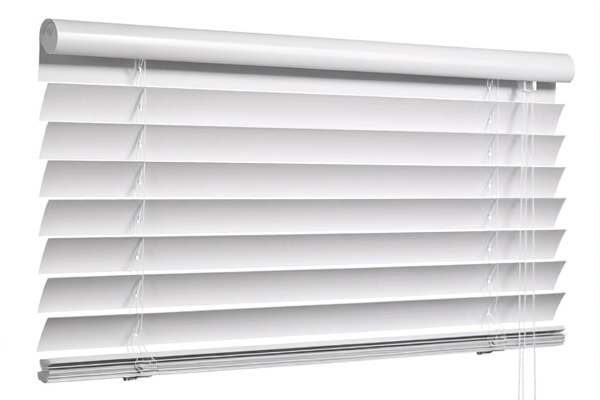
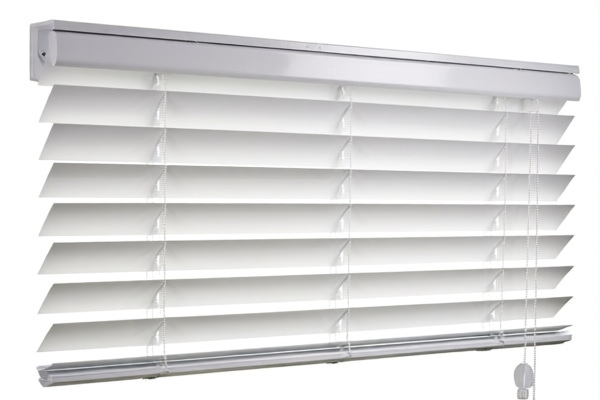


AI Analysis
🏠 Plastic Venetian Honeycomb Blinds (Plastic Roller Honeycomb Shades)
🌐 HS Code Reference & Customs Clearance Guide | 2026 Latest Tariff Analysis | Professional Compliance Strategy
📌 Part 1: Product Definition & Classification – Do You Really Know "Honeycomb Blinds"?
Plastic Venetian Honeycomb Blinds are window coverings that combine the light-filtering structure of honeycomb shades with the durability and moisture resistance of plastic materials. In international trade, their classification depends heavily on material composition, structural form, and processing method.
There is no single "correct" HS Code. Instead, there are multiple potential classifications based on how the product is defined:
- Functional Fabric Classification: Treated as a specific functional textile/fabric category if it fits specific technical criteria under Chapter 59.
- PVC/Plastic Coating Classification: Treated as textile materials impregnated, coated, or covered with plastic (e.g., PVC) under Chapter 59.
- General Plastic Article: Treated as a generic plastic product if it doesn't fit textile definitions, classified under Chapter 39.
- Furnishing Article: Treated as a made-up furnishing article (like curtains/blinds) made of synthetic fibers under Chapter 63.
⚠️ Key Distinction Point:
- If the product is essentially a plastic-coated textile fabric formed into a blind → Chapter 59.
- If it is a rigid or semi-rigid plastic assembly not primarily defined as fabric → Chapter 39.
- If it is a sewn textile product (even if plastic-coated) used as furnishing → Chapter 63.
📦 Part 2: HS Code Classification Details (2026 Latest Tariff Authoritative Comparison)
| HS Code | Product Description | Applicable Scenario | Material/Structure Key |
|---|---|---|---|
5903.90.25.00 |
Plastic Roller Honeycomb Blinds; Non-5902 specific functional fabric category | Blinds classified as specific functional fabrics not elsewhere specified in 5902 | ✅ Plastic-based functional fabric |
5903.10.25.00 |
Plastic Roller Honeycomb Blinds; PVC material; Impregnated/coated/laminated textile form | Blinds where textile base is heavily coated with PVC | ✅ PVC-coated textile |
3926.90.99.89 |
Plastic Roller Honeycomb Blinds; Plastic material; Generic "Other" plastic articles | Blinds classified as generic plastic goods, not textiles | ✅ Pure Plastic Article |
6304.93.00.00 |
Plastic Roller Honeycomb Blinds; Synthetic Fiber Material; Furnishing Use | Blinds treated as made-up furnishing articles (curtains/blinds) | ✅ Textile/Fiber Furnishing |
5903.10.20.90 |
Plastic Shower Curtain (Alternative Classification); Plastic; Impregnated/coated textile/film | Note: Included in data for comparison, often confused with blinds due to similar material | ✅ Plastic-coated Film/Textile |
🔍 Key Reminder:
-5903.10.25.00and5903.90.25.00carry the highest tax burden due to being classified under specific functional PVC/plastic fabrics subject to additional trade remedies. -3926.90.99.89and6304.93.00.00are significantly cheaper but require strong evidence that the product is not a "fabric" under Chapter 59 or 60 definitions. - Misclassification can lead to 25% tax difference.
💰 Part 3: 2026 Latest Tariff Rate Breakdown (Including Surcharges & Policy Add-ons)
✅ Applicable Country: United States (US)
✅ Origin: China (CN)
✅ Effective Date: 2025 onwards (Includes subsequent imports)
🎯 1. 5903.90.25.00 & 5903.10.25.00 – High Tax Category (Functional Fabric / PVC-Coated Textile)
| Item | Content |
|---|---|
| Base Tariff | 7.5% (ad valorem) |
| Section 301 Surcharge | +25.0% (Additional Tariff) |
| Section 122 Tariff | +10.0% (122 Clause Tariff) |
| Total Tax Rate | 42.5% |
| Tax Calculation | CIF Value × 42.5% |
| De Minimis Eligibility | ❌ Not Eligible (High risk of audit/rejection under $800 threshold) |
| Legal Basis Path | 301:9903.01.25 → 122:9903.10 → USITC:5903.xxxx.xx |
📌 Explanation:
- These codes are targeted by Section 301 (30% of imports from China, currently adjusted to effective 25%+ depending on specific sub-heading rulings) and Section 122 (10% on imports deemed to threaten domestic industry). - Total 42.5% is extremely high. This classification applies if customs determines the blind is a "plastic-coated textile fabric" (Chapter 59).
🎯 2. 3926.90.99.89 & 6304.93.00.00 – Low Tax Category (Plastic Article / Furnishing)
| Item | Content |
|---|---|
| Base Tariff | 5.3% (ad valorem) |
| Section 301 Surcharge | +7.5% (Reduced Additional Tariff) |
| Section 122 Tariff | +10.0% (122 Clause Tariff) |
| Total Tax Rate | 22.8% |
| Tax Calculation | CIF Value × 22.8% |
| De Minimis Eligibility | ❌ Not Eligible (Still subject to high tariffs) |
| Legal Basis Path | 301:9903.01.24 → 122:9903.10 → USITC:3926/6304 |
📌 Explanation:
- Total 22.8% is significantly lower than the 42.5% bracket. - This classification applies if the product is argued to be a generic plastic article (3926) or a furnishing article (6304) rather than a technical fabric. - Crucial: You must provide technical data proving it lacks the "textile fabric" characteristics or is primarily a "plastic assembly."
🎯 3. 5903.10.20.90 – Comparison Case (Plastic Shower Curtain)
| Item | Content |
|---|---|
| Base Tariff | 0.0% |
| Section 301 Surcharge | +25.0% |
| Section 122 Tariff | +10.0% |
| Total Tax Rate | 35.0% |
| Tax Calculation | CIF Value × 35.0% |
📌 Note: This code is included for reference. While cheaper than
5903.10.25.00, it is still subject to heavy surcharges. It is often used for shower curtains, not blinds, so using it for blinds may lead to classification disputes.
🛠️ Part 4: Customs Clearance Practical Advice (Avoiding Pitfalls)
✅ 1. Required Documentation Checklist
| Document | Mandatory | Description |
|---|---|---|
| ✅ Product Specification Sheet | ✔️ | Must detail: Material (PVC? PET? PP?), Coating Weight, Structure (Honeycomb/Roller), Dimensions. |
| ✅ Technical Data Sheet | ✔️ | Prove if it is a "Textile Fabric" (Chapter 59) or "Plastic Article" (Chapter 39). |
| ✅ Product Photos | ✔️ | Clear images of the cross-section (honeycomb structure), label, and usage. |
| ✅ Commercial Invoice | ✔️ | Describe product accurately: e.g., "Plastic Honeycomb Shade, PVC-coated Polyester Fabric." |
| ✅ Packing List | ✔️ | Show quantity, weight, and packaging details. |
✅ 2. Classification Strategy (Critical Tips)
🔥 "Material Defines Code, Structure Defines Function, Documentation Defines Success!"
| Scenario | Recommended HS Code | Reason |
|---|---|---|
| PVC-coated Polyester Fabric, folded into blinds | 5903.10.25.00 / 5903.90.25.00 |
Customs will likely view this as plastic-coated textile. High tax (42.5%). |
| Solid Plastic/Rigid Plastic Blinds | 3926.90.99.89 |
If it's not a fabric, it's a plastic article. Lower tax (22.8%). |
| Sewn Textile Blind (Non-coated) | 6304.93.00.00 |
If it's a made-up furnishing article. Lower tax (22.8%). |
| Importing as "Shower Curtain" | 5903.10.20.90 |
High Risk! Misdeclaration. Penalties + Back Taxes. |
📌 Warning:
- Do NOT declare plastic blinds as5903.10.20.90(Shower Curtain) to save tax. Customs cross-references product names and images. This is fraud. - The difference between 42.5% and 22.8% is 19.7%. For a $100,000 shipment, this is $19,700. Proper classification is critical.
✅ 3. Special Handling Cases
| Case | Handling Advice |
|---|---|
| Mixed Materials | If the blind has a fabric base with plastic coating, it usually falls under Chapter 59. If it's entirely plastic films laminated, it may fall under Chapter 39. Provide material breakdown. |
| OEM Custom Products | Provide design specs to prove the primary material. If the plastic layer is >50% by weight, argue for Chapter 39. |
| Pre-Ruling Application | Highly recommended! Submit a request to CBP for a Pre-Ruling on the HS Code. This legally binds the customs officer to your classification. |
🌍 Part 5: Global Market Comparison (2026 Latest)
| Country/Region | Recommended HS Code | Tariff Rate | Certification | Notes |
|---|---|---|---|---|
| 🇺🇸 USA | 5903.10.25.00 or 3926.90.99.89 |
22.8% – 42.5% | None specific | High tariffs due to 301 & 122. Classification is key. |
| 🇨🇳 China | 5903.10.25.00 |
7.5% | CCC (if applicable) | No additional surcharges. |
| 🇪🇺 EU | 5903.10.25.00 |
6.5% | CE | No 122/301 equivalent. |
| 🇦🇺 Australia | 5903.10.25.00 |
5% | RC Mark | Low tariff. |
| 🇯🇵 Japan | 5903.10.25.00 |
6.0% | PSE | Low tariff. |
📌 Conclusion:
- The US market is the most expensive due to political trade tariffs. - Classification optimization is the only legal way to reduce costs in the US. - Consider supply chain diversification (e.g., shipping from Vietnam) if volume is high, as some codes may have different duty treatments (verify current IEEPA exemptions).
📌 Part 6: Common Mistakes & Pitfalls (Lessons Learned)
❌ Mistake 1: Declaring "Plastic Blinds" under 6304.93.00.00 without proof of being a "furnishing article."
👉 Consequence: Customs reclassifies to 5903.10.25.00 → Back taxes + Interest + Penalties.
❌ Mistake 2: Ignoring Section 122 Tariff.
👉 Consequence: Even if base tariff is low, missing the 10% 122 surcharge leads to underpayment.
❌ Mistake 3: Using "Shower Curtain" description for Honeycomb Blinds.
👉 Consequence: Fraudulent misdeclaration. CBP audits are common for window treatments. Seizure risk!
✅ Correct Approach:
"Honeycomb Roller Shade, PVC-Coated Polyester Fabric, Plastic Coating Weight: XX g/m², For Window Covering"
- Submit material composition to justify Chapter 59 vs 39. - Apply for Pre-Ruling if uncertain.
🎯 Part 7: Conclusion: Precision in Classification Saves Money!
🎯 Remember the Rule:
🔹 "Coated Textile = 5903 (42.5%)"
🔹 "Plastic Article/Furnishing = 3926/6304 (22.8%)"
🔹 "Misdeclaration = Audit + Penalty!"
📌 Pro Tip:
If you are importing large volumes, consider applying for an Exclusion under Section 301 if applicable, or use Bonded Warehouses to defer duty payments. Always consult with a licensed customs broker for your specific product design.
📣 Action Required:
📞 Engage a Customs Broker
📄 Prepare Technical Data Sheets
🚀 Secure Pre-Ruling from CBP
Ensure your plastic blinds clear customs smoothly and profitably!
✨ Professional Clearance Starts with Accurate Classification!
💼 Every Percent Matters in International Trade!
Customer Reviews
About HS Code Classification
The Harmonized System (HS) is an internationally standardized nomenclature developed by the World Customs Organization (WCO) to classify traded products. Over 200 countries use the HS system as the basis for customs tariffs, trade statistics, and import/export regulations.
Each HS code follows a hierarchical structure:
- Chapter (2 digits) — Broad category of goods (e.g., Chapter 84: Machinery and Mechanical Appliances)
- Heading (4 digits) — More specific grouping within the chapter
- Subheading (6 digits) — Internationally standardized breakdown, used by all WCO member countries
- National subdivisions (8-10 digits) — Country-specific extensions for further classification, such as US HTSUS 10-digit codes
Correct HS code classification is essential for smooth customs clearance, accurate duty payment, and compliance with trade regulations. Misclassification can lead to customs delays, overpayment of duties, or penalties.
When importing from CN to US, the applicable tariff rates may include:
- Most-Favored-Nation (MFN) rate — The standard duty rate applied to WTO members
- General rate — Applied to countries without trade agreements
- Trade remedy duties — Additional tariffs such as Section 301 (anti-dumping), Section 232 (national security), or countervailing duties
The information provided on this page is for reference purposes only. For official classification, please consult with your local customs authority or a licensed customs broker.