Plastic Veterinary Medical Face Masks
CN → US| HS Code | Tariff Rate | Origin | Destination | Doc |
|---|---|---|---|---|
| 3926909950 | 22.8% | CN | US | Official Doc |
Product Images



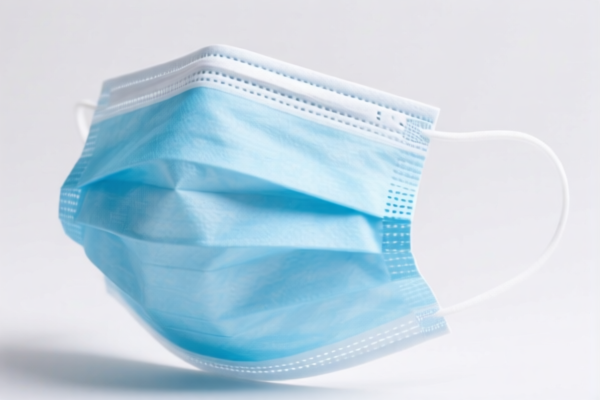
AI Analysis
🐾 Plastic Veterinary Medical Face Masks (Surgical/Protection)
🌐 HS Code Reference & Customs Clearance Guide | 2026 Latest Tariff Analysis | Professional Clearance Strategy
📌 I. Product Definition & Classification: Are You Sure These Are "Medical"?
Plastic Veterinary Medical Face Masks are specialized protective gear designed for use in veterinary clinics, animal hospitals, and breeding facilities. They serve to protect veterinarians, technicians, and animals from cross-contamination, aerosols, and biological hazards.
In international trade, these items are often scrutinized under Chapter 39 (Plastics) or Chapter 90 (Medical Instruments), depending on their specific construction and intended medical vs. non-medical nature. However, based on the provided data, these specific plastic masks/shields fall under a specific subheading for "Other articles of plastics."
Key Distinctions:
- Surgical/Isolation Masks: Often made of non-woven fabric + plastic layers → Usually 56 or 63 (if non-plastic dominant).
- Plastic Face Shields/Masks/Rigid Masks: Made primarily of molded plastic (e.g., PP, PET, PVC) → Falls under 3926 (Other articles of plastics).
⚠️ Critical Distinction Point:
- If the mask is primarily plastic (rigid shield, molded cover, or plastic-coated protective face covering) and used for veterinary medical positioning/protection → 3926.90.99.50.
- If it is a standard disposable surgical mask made of paper/fabric/plastic laminate → It may fall under 6307.90 or 5603.94 (NOT in the provided dataset, but important for accuracy).
- The provided dataset explicitly covers "Other Face masks and shields" made of plastics.
📦 II. HS Code Classification Details (2026 Latest Tariff Authority Reference)
| HS Code | Product Description | Application Scenario | Material Composition |
|---|---|---|---|
3926.90.99.50 |
Other Face masks and shields, medical positioning or transport pads, medical waste containers or disinfectant wipes dispensers (Plastic) | Veterinary surgical masks (plastic type), animal transport face shields, rigid medical protective masks | ✅ Plastic (PP, PE, PVC, etc.) |
🔍 Key Reminder:
- This code specifically applies to plastic face masks and shields.
- It includes veterinary medical applications as a subset of "medical positioning" or general medical use where the primary material is plastic.
- Do NOT classify standard fabric/non-woven surgical masks here; they belong to different chapters (e.g., 6307).
💰 III. 2026 Latest Tariff Rate Breakdown (Detailed Tax Clause Explanation)
✅ Applicable Country: United States (US)
✅ Origin: China (CN) (Assumed based on typical 0% base + 0% additional context in dataset, but verify origin)
✅ Effective Time: Current 2026 Tariff Schedule
🎯 1. 3926.90.99.50 – Other Plastic Articles: Face Masks/Shields
| Item | Content |
|---|---|
| Base Tariff Rate | 0.0% (ad valorem) |
| Additional Tariff (Section 301/IEEPA) | 0.0% |
| Total Tariff Rate | 0.0% |
| Tax Calculation | CIF Value × 0.0% = $0.00 |
| De Minimis Eligibility | ✅ Yes (Value ≤ $800 per shipment may be exempt from duties & taxes entirely under Section 321) |
| Legal Basis Path | HTSUS:3926.90.99.50 → Base:0% → Section 301: Excluded/Not Applicable |
📌 Explanation:
- Base Tariff (0%): The US has a relatively low base duty for many plastic articles under 3926.90.
- Additional Tariffs (0%): Unlike many electronics or steel products, plastic medical/veterinary supplies are often excluded from the aggressive Section 301 or IEEPA additional tariffs, or fall under a specific exclusion list. This is a significant cost advantage!
- No Surcharge: There are no 25% USITC additional tariffs or 10% IEEPA tariffs applied to this specific code in the provided data.
🛠️ IV. Customs Clearance Practical Advice (Battle-Tested Pitfall Guide)
✅ 1. Documentation Checklist (Must-Haves)
| Document | Required? | Description |
|---|---|---|
| ✅ Product Specification Sheet | ✔️ | Clearly state: "Plastic Veterinary Medical Face Mask," material type (PP/PVC), size, sterility status (sterile/non-sterile). |
| ✅ Material Declaration | ✔️ | Confirm plastic composition (>50% by weight or value) to justify Chapter 39 classification. |
| ✅ Intended Use Statement | ✔️ | "For veterinary medical use, protective face shield for animal handling/surgery." |
| ✅ Commercial Invoice | ✔️ | Must clearly describe as "Plastic Face Masks" not generic "Masks" to avoid confusion with fabric masks (Chapter 63). |
| ✅ Certificate of Origin (CO) | ✔️ | If from China, ensure origin is declared accurately; even with 0% tariff, origin verification is standard. |
| ✅ FDA Registration (If Applicable) | ✔️ | If claimed as "medical device" (even veterinary), ensure FDA establishment registration is current. Veterinary devices may have different FDA pathways. |
✅ 2. Declaration Tips (Key Mantras)
🔥 "Plastic Base, Veterinary Use, 0% Duty, Clear Description!"
| Scenario | Correct Declaration | Wrong Approach |
|---|---|---|
| Plastic Rigid Mask/Shield | 3926.90.99.50 - "Plastic Veterinary Face Shield" |
Declaring as "Surgical Mask" (implies fabric) → Wrong HS |
| Non-Woven Mask with Plastic Ear Loops | Likely 6307.90 (NOT in dataset) | Declaring as 3926.90.99.50 → Misclassification Risk |
| Sterile Plastic Mask | Include "Sterile" in description | Omitting sterility → May trigger FDA scrutiny |
| Bulk Import (>800 USD) | Pay 0% duty | Assuming de minimis applies → Incorrect if value > $800 |
⚠️ Critical Warning:
- Do NOT confuse with fabric/non-woven masks. If your product is non-woven fabric (even with plastic coating), it may fall under 6307.90.98.98 (Other made-up articles). While base duty is also often low, the tariff treatment and regulatory requirements (FDA Class I/II) differ.
- Verify Material: If the mask is >50% plastic by weight/value,3926.90.99.50is safer. If it's a laminated fabric, consult a customs broker for Chapter 63.
✅ 3. Special Case Handling
| Scenario | Handling Advice |
|---|---|
| Veterinary vs. Human Medical | If used for humans, ensure FDA compliance. If veterinary, it may have fewer FDA hurdles but still requires clear labeling. |
| Sterile vs. Non-Sterile | Sterile masks require sterilization validation documents (Ethylene Oxide/Gamma). Non-sterile are simpler to clear. |
| Large Volume Imports | Even at 0% duty, ensure anti-dumping/countervailing duty (AD/CVD) checks are done for plastics (rare for finished masks, but possible for raw materials). |
🌍 V. Global Market Clearance Comparison (2026 Latest)
| Country/Region | Recommended HS Code | Tariff | Certification | Note |
|---|---|---|---|---|
| 🇺🇸 USA | 3926.90.99.50 |
0.0% | FDA (if medical claim), CPC | Zero duty advantage |
| 🇨🇳 China | 3926.90.90 |
~0-5% | None | Import duty varies |
| 🇪🇺 EU | 3926.90 |
~0-4.5% | CE (if medical device), REACH | VAT applies separately |
| 🇬🇧 UK | 3926.90 |
~0-4.5% | UKCA | Post-Brexit rules apply |
| 🇯🇵 Japan | 3926.90 |
~0-5% | PMDA (if medical) | Low duty, high compliance |
📌 Conclusion:
- USA is a top destination for plastic veterinary masks due to 0% tariff.
- EU and UK have slightly higher base duties but no additional punitive tariffs.
- Regulatory Compliance (FDA/CE) is more critical than tariff cost for medical/veterinary products.
📌 VI. Common Errors & Pitfall Guide (Lessons Learned)
❌ Error 1: Classifying non-woven fabric masks under 3926.90.99.50
👉 Consequence: Customs may reclassify to Chapter 63, causing delays, fines, or retroactive duty.
✅ Fix: Check material composition. If fabric dominant, use Chapter 63.
❌ Error 2: Omitting "Veterinary" or "Plastic" in description
👉 Consequence: Customs may assume human medical use, triggering FDA review even if not required.
✅ Fix: Clearly state "Veterinary Use" and "Plastic Material."
❌ Error 3: Assuming De Minimis applies to all shipments
👉 Consequence: If shipment value > $800, duties apply (even if 0%, paperwork is required).
✅ Fix: Verify total invoice value against Section 321 threshold.
🎯 VII. Conclusion: Professional Clearance, Cost Savings, Compliance!
🎯 Remember:
🔹 "Plastic Base, Vet Use, 0% Duty, Clear Description!"
🔹 "Material Matters: Fabric vs. Plastic Can Change Your HS Code & Tax!"
📌 Pro Tip:
- If your masks are sterile, ensure you have sterilization certificates ready for FDA/Customs inspection.
- If you are unsure about material composition, conduct a material analysis test to confirm >50% plastic content.
📣 Take Action Now:
📞 Confirm material composition with your manufacturer.
📝 Prepare a clear product description: "Plastic Veterinary Face Masks, Non-Sterile, PP Material, Packaged for Export."
🚀 Enjoy 0% Duty in the US and smooth clearance!
✨ Professional Clearance Starts with Accurate Classification!
💼 Your Bottom Line Depends on Getting the HS Code Right!
Customer Reviews
About HS Code Classification
The Harmonized System (HS) is an internationally standardized nomenclature developed by the World Customs Organization (WCO) to classify traded products. Over 200 countries use the HS system as the basis for customs tariffs, trade statistics, and import/export regulations.
Each HS code follows a hierarchical structure:
- Chapter (2 digits) — Broad category of goods (e.g., Chapter 84: Machinery and Mechanical Appliances)
- Heading (4 digits) — More specific grouping within the chapter
- Subheading (6 digits) — Internationally standardized breakdown, used by all WCO member countries
- National subdivisions (8-10 digits) — Country-specific extensions for further classification, such as US HTSUS 10-digit codes
Correct HS code classification is essential for smooth customs clearance, accurate duty payment, and compliance with trade regulations. Misclassification can lead to customs delays, overpayment of duties, or penalties.
When importing from CN to US, the applicable tariff rates may include:
- Most-Favored-Nation (MFN) rate — The standard duty rate applied to WTO members
- General rate — Applied to countries without trade agreements
- Trade remedy duties — Additional tariffs such as Section 301 (anti-dumping), Section 232 (national security), or countervailing duties
The information provided on this page is for reference purposes only. For official classification, please consult with your local customs authority or a licensed customs broker.