Plastic Wall Decor Panel
CN → US| HS Code | Tariff Rate | Origin | Destination | Doc |
|---|---|---|---|---|
| 3926904800 | 13.4% | CN | US | Official Doc |
| 3926909989 | 22.8% | CN | US | Official Doc |
| 3921190090 | 41.5% | CN | US | Official Doc |
| 3919905060 | 40.8% | CN | US | Official Doc |
| 3919905040 | 40.8% | CN | US | Official Doc |
Product Images
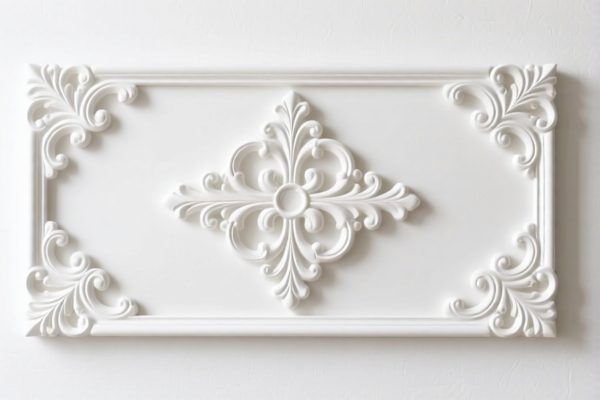
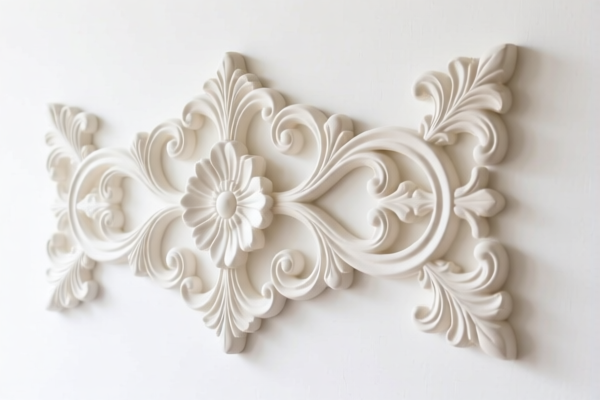

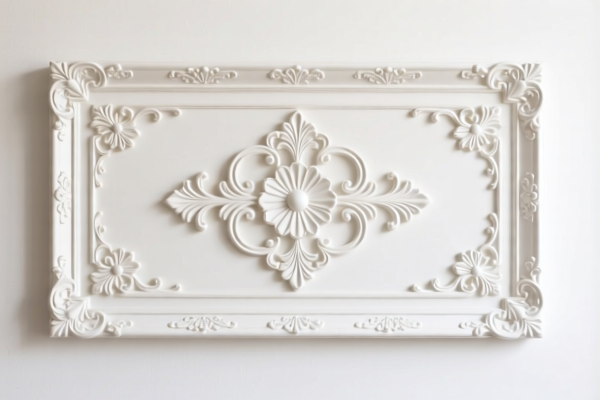
AI Analysis
🎨 Plastic Wall Decor Panels (塑料墙贴/装饰板)
🌐 HS Code Reference & Customs Clearance Guide | 2026 Latest Tariff Analysis | Professional Strategy for US Imports
📌 I. Product Definition & Classification: What Exactly is a "Plastic Wall Panel"?
Plastic wall decor panels, often referred to as "wall stickers," "adhesive wall panels," or "decorative films," are versatile interior design materials. In international trade, their classification hinges on three critical factors: 1. Physical Form: Is it a rigid plate, a flexible film, or a self-adhesive sheet? 2. Function: Is it purely structural (flooring/wall covering) or purely decorative? 3. Composition: What is the base polymer? (Usually PVC, PE, or PP).
⚠️ Critical Distinction:
- If the product is a rigid, thick panel used for structural wall covering → Likely 3926.90 or 3921.19.
- If the product is a self-adhesive sheet/film (like a sticker or tape) → Likely 3919.90.
- Misclassification leads to massive tariff differences (from 13.4% to 41.5%).
📦 II. HS Code Classification Matrix (2026 Latest Tariff Reference)
Based on the provided data, here is the detailed breakdown of potential HS Codes and their associated tax implications for US imports from China.
| HS Code | Product Description | Physical Form | Key Characteristics | Total Tax Rate (US/CN) |
|---|---|---|---|---|
3926.90.48.00 |
Other plastic articles | General塑料制品 | Broad category, non-specific form | 13.4% |
3926.90.99.89 |
Other plastic articles (Decorative) | Decorative articles | General decorative use, non-specific | 22.8% |
3921.19.00.90 |
Plastic plates, sheets, film | Rigid/Film/Plate | Plate/sheet/film/strip/belt attributes | 41.5% |
3919.90.50.60 |
Self-adhesive plates/sheets | Self-adhesive Tape/Film | Flat shape, self-adhesive properties | 40.8% |
3919.90.50.40 |
Self-adhesive articles | Self-adhesive Flat Item | Self-adhesive, flat shape | 40.8% |
3921.90.40.90 |
Other plastic plates/sheets | Film/Sheet | Other plastic plate/sheet/film characteristics | 39.2% |
🔍 Key Insight:
- The lowest tariff (13.4%) applies to the broad category3926.90.48.00.
- The highest tariff (41.5%) applies to3921.19.00.90, often triggered if customs classifies the product as a "plastic plate/film" rather than a "decorative article."
- Self-adhesive products (3919) are heavily taxed (~40.8%) due to Section 301 duties.
💰 III. 2026 Tariff Rate Breakdown (Detailed Tax Clauses)
✅ Applicable Country: United States (US)
✅ Origin: China (CN)
✅ Effective Date: Post-2025 trade regulations (including Section 301 & IEEPA)
🎯 1. 3926.90.48.00 – Other Plastic Articles (Most Favorable)
| Item | Details |
|---|---|
| Base Duty Rate | 3.4% |
| Additional Duty (Section 301) | 0.0% |
| 122 Clause Tariff | 10.0% |
| Total Tax Rate | 13.4% |
| Tax Calculation | CIF Value × 13.4% |
| De Minimis Eligibility | ❌ Not Eligible (Section 301 goods are excluded from de minimis) |
| Legal Basis | USITC Subheading 3926.90.48 + 122 Clause |
📌 Explanation:
- This is the most cost-effective classification if your product can be broadly defined as an "other plastic article."
- The 122 Clause adds a flat 10% tariff, which is significantly lower than the Section 301 rates applied to other plastic categories.
🎯 2. 3926.90.99.89 – Other Plastic Articles (Decorative)
| Item | Details |
|---|---|
| Base Duty Rate | 5.3% |
| Additional Duty (Section 301) | 7.5% |
| 122 Clause Tariff | 10.0% |
| Total Tax Rate | 22.8% |
| Tax Calculation | CIF Value × 22.8% |
| De Minimis Eligibility | ❌ Not Eligible |
| Legal Basis | USITC Subheading 3926.90.99 + Section 301 Footnote |
📌 Explanation:
- A mid-range option. If your product is explicitly marketed as "decorative" but doesn't fit the rigid plate/film definition, this code may apply.
- Higher base rate (5.3%) than 3926.90.48, but lower additional duties than the3919and3921categories.
🎯 3. 3921.19.00.90 – Plastic Plates, Sheets, Film (Highest Risk)
| Item | Details |
|---|---|
| Base Duty Rate | 6.5% |
| Additional Duty (Section 301) | 25.0% |
| 122 Clause Tariff | 10.0% |
| Total Tax Rate | 41.5% |
| Tax Calculation | CIF Value × 41.5% |
| De Minimis Eligibility | ❌ Not Eligible |
| Legal Basis | USITC Subheading 3921.19 + Section 301 (25%) |
⚠️ Warning:
- This is the highest tax burden.
- Customs will apply this if they view your "wall panel" as a plastic plate, sheet, or film used for flooring or wall covering.
- Avoid this classification unless your product is strictly a non-adhesive, rigid plastic sheet.
🎯 4. 3919.90.50.60 & 3919.90.50.40 – Self-Adhesive Plates/Sheets
| Item | Details |
|---|---|
| Base Duty Rate | 5.8% |
| Additional Duty (Section 301) | 25.0% |
| 122 Clause Tariff | 10.0% |
| Total Tax Rate | 40.8% |
| Tax Calculation | CIF Value × 40.8% |
| De Minimis Eligibility | ❌ Not Eligible |
| Legal Basis | USITC Subheading 3919.90 + Section 301 (25%) |
📌 Explanation:
- If your product has an adhesive backing (like a sticker), it falls under HS 3919.
- The 25% Section 301 duty makes this category extremely expensive.
- Sub-harmonics.50.60(tape/film) and.50.40(flat self-adhesive items) share the same high rate.
🎯 5. 3921.90.40.90 – Other Plastic Plates, Sheets
| Item | Details |
|---|---|
| Base Duty Rate | 4.2% |
| Additional Duty (Section 301) | 25.0% |
| 122 Clause Tariff | 10.0% |
| Total Tax Rate | 39.2% |
| Tax Calculation | CIF Value × 39.2% |
| De Minimis Eligibility | ❌ Not Eligible |
| Legal Basis | USITC Subheading 3921.90 + Section 301 (25%) |
📌 Explanation:
- Similar to3921.19, but for "other" plastic plates/sheets.
- Still subject to the heavy 25% Section 301 duty.
🛠️ IV. Customs Clearance Practical Advice (Avoiding Pitfalls)
✅ 1. Document Preparation Checklist
| Document | Required? | Notes |
|---|---|---|
| ✅ Product Specification Sheet | ✔️ | Must detail material (e.g., PVC, PE), dimensions, thickness, and adhesive type. |
| ✅ Photos of Product | ✔️ | Show front, back (adhesive side), and installed view. Clearly show if it's rigid or flexible. |
| ✅ Commercial Invoice | ✔️ | Describe product as "Decorative Wall Panel, Plastic, Non-Structural" to support 3926 classification. |
| ✅ Packing List | ✔️ | List quantity, weight, and packaging type. |
| ✅ Material Safety Data Sheet (MSDS) | ✔️ | Required for plastic products to confirm no hazardous chemicals. |
| ✅ Original Labeling | ✔️ | Ensure "Made in China" is clearly marked. |
✅ 2. Classification Strategy: How to Lower Tariffs?
🔥 "Shape & Function Define Tariff!"
| Strategy | Recommended HS Code | Tax Benefit |
|---|---|---|
| Argue as "Decorative Article" | 3926.90.48.00 |
Lowest (13.4%). Emphasize it's for decoration, not structural wall covering. |
| Argue as "General Plastic Item" | 3926.90.99.89 |
Medium (22.8%). If 3926.90.48 is rejected. |
| Avoid "Adhesive" Classification | ⚠️ Avoid 3919 |
High (40.8%). If your product is peel-and-stick, customs will likely apply this. Consider non-adhesive mounting methods. |
| Avoid "Plate/Film" Classification | ⚠️ Avoid 3921 |
Very High (39-41.5%). Do not describe as "plastic sheet for wall covering." |
✅ 3. Key Definitions for Customs Officers
- Plastic Wall Panel (3926): A finished decorative item, often pre-cut, possibly with backing, but primarily valued for its aesthetic design.
- Plastic Sheet/Film (3921/3919): A raw material form, typically rolled or in large sheets, where the value is in the material, not the design.
💡 Pro Tip:
If your product is pre-cut with a specific pattern, logo, or 3D design, emphasize this in your invoice. This supports classification under 3926 (Finished Articles) rather than 3921 (Plates/Sheets).
🌍 V. Global Market Comparison (2026)
| Market | Recommended HS Code | Est. Total Duty (CN Origin) | Notes |
|---|---|---|---|
| 🇺🇸 USA | 3926.90.48.00 |
13.4% | Best option via 122 Clause. Avoid 3919/3921. |
| 🇨🇳 China | 3926.90.48.00 |
5-6% | No Section 301. Standard import duty. |
| 🇪🇺 EU | 3926.90.99 |
6.5% | No 122/Section 301 equivalent. Standard EU duty. |
| 🇬🇧 UK | 3926.90.99 |
6.5% | Post-Brexit standard duty. |
📌 Conclusion:
The US market is the most challenging due to Section 301 and 122 Clause tariffs.
Strategic Goal: Aim for3926.90.48.00(13.4%) by positioning the product as a "decorative plastic article" rather than a "plastic sheet" or "adhesive tape."
📌 VI. Common Errors & Pitfalls (Learn from Others' Mistakes)
❌ Error 1: Describing the product as "PVC Wall Film"
👉 Result: Customs classifies as 3921.19.00.90 → 41.5% Tax.
👉 Fix: Use "Decorative Wall Panel" or "Wall Sticker."
❌ Error 2: Ignoring the Adhesive Backing
👉 Result: Customs classifies as 3919.90.50.60 → 40.8% Tax.
👉 Fix: If possible, market as "peel-and-stick decorative panel" but argue it's a finished decorative article. If mandatory adhesive, expect higher tax.
❌ Error 3: Using Generic "Plastic Sheet" Description
👉 Result: Customs uses fallback code 3921.90.40.90 → 39.2% Tax.
👉 Fix: Provide detailed photos showing the product is a finished decorative item, not a raw material.
✅ Correct Declaration Example:
"Decorative Plastic Wall Panel, PVC Material, Pre-cut Design, Self-Adhesive Backing, For Interior Wall Decoration. Model: WDP-2026. Origin: China."
🎯 VII. Conclusion: Professional Declaration Saves Money
🎯 Key Takeaway:
🔹 "Decorative Article" (13.4%) vs. "Adhesive Sheet" (40.8%) = 27.4% Difference!
🔹 Always choose3926.90.48.00if your product can be reasonably classified as a finished decorative item.
🔹 Avoid3919and3921unless your product is clearly a raw material (roll of film/tape).
📌 Action Item:
📞 Consult with a Customs Broker: Provide photos and samples to get a Binding Ruling if shipment value is high.
🚀 Optimize Packaging: Ensure invoices and packaging clearly state "Decorative" to support the lower tariff classification.
✨ Professional Clearance, Start with Accurate Classification!
💼 Every Percent of Tariff is a Percent of Profit!
Customer Reviews
About HS Code Classification
The Harmonized System (HS) is an internationally standardized nomenclature developed by the World Customs Organization (WCO) to classify traded products. Over 200 countries use the HS system as the basis for customs tariffs, trade statistics, and import/export regulations.
Each HS code follows a hierarchical structure:
- Chapter (2 digits) — Broad category of goods (e.g., Chapter 84: Machinery and Mechanical Appliances)
- Heading (4 digits) — More specific grouping within the chapter
- Subheading (6 digits) — Internationally standardized breakdown, used by all WCO member countries
- National subdivisions (8-10 digits) — Country-specific extensions for further classification, such as US HTSUS 10-digit codes
Correct HS code classification is essential for smooth customs clearance, accurate duty payment, and compliance with trade regulations. Misclassification can lead to customs delays, overpayment of duties, or penalties.
When importing from CN to US, the applicable tariff rates may include:
- Most-Favored-Nation (MFN) rate — The standard duty rate applied to WTO members
- General rate — Applied to countries without trade agreements
- Trade remedy duties — Additional tariffs such as Section 301 (anti-dumping), Section 232 (national security), or countervailing duties
The information provided on this page is for reference purposes only. For official classification, please consult with your local customs authority or a licensed customs broker.