Plastic Wall Decor Strip Textile
CN → US| HS Code | Tariff Rate | Origin | Destination | Doc |
|---|---|---|---|---|
| 5911900040 | 38.8% | CN | US | Official Doc |
| 5911900080 | 38.8% | CN | US | Official Doc |
| 3918104050 | 40.3% | CN | US | Official Doc |
| 3921902900 | 39.4% | CN | US | Official Doc |
| 5903102500 | 42.5% | CN | US | Official Doc |
Product Images
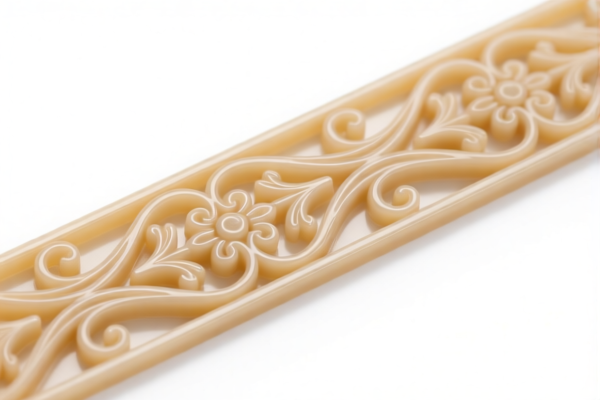
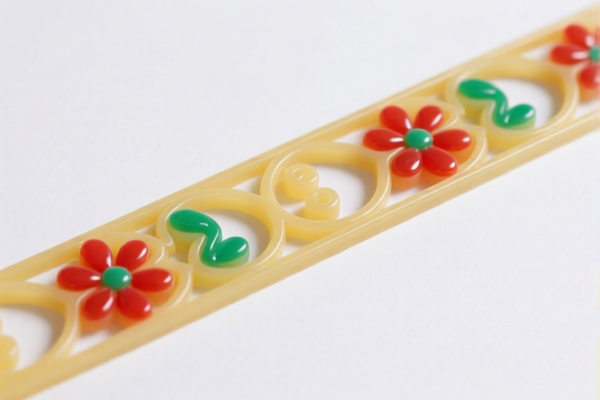
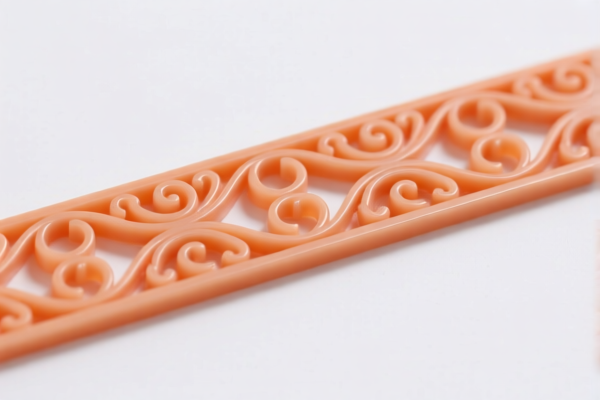
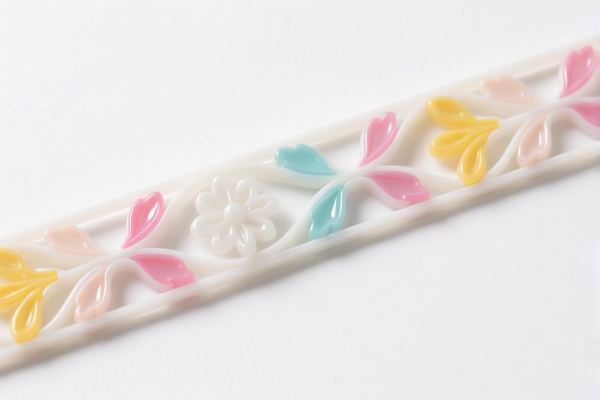
AI Analysis
🏠 Plastic Wall Decor Strip with Textile Support
🌐 HS Code Reference & Customs Clearance Guide | 2026 Latest Tariff Analysis | Professional Clearance Strategy
📌 I. Product Definition & Classification: What Exactly Is It?
Plastic Wall Decor Strips (with Textile/Support) are decorative architectural elements used for interior wall enhancement, often featuring a plastic core or surface with textile backing or support structures. In international trade, classification hinges on whether the textile nature or the plastic nature dominates the product’s essential character.
Key Distinction Points: - If the textile fabric is impregnated/coated with plastic and forms the primary structure → Classified under Textile Chapters (59xx). - If the plastic material forms the main body, with textile only as minor reinforcement → Classified under Plastic Chapters (39xx).
⚠️ Critical Note:
- Products described as "plastic wall strips" but containing textile supports must be carefully evaluated. The primary material and manufacturing process determine the correct HS Code. - Misclassification can lead to significant tariff differences (from 38.8% to 42.5%).
📦 II. HS Code Classification Details (2026 Latest Tariff Reference)
Based on the provided data, here are the five possible HS Codes and their justifications:
| HS Code | Product Description & Justification | Total Tax Rate | Tax Breakdown |
|---|---|---|---|
5911.90.00.40 |
Plastic wall strips classified as textile lines. Matches woven-like product morphology; classified under textiles based on fabric structure matching. | 38.8% | Base Tariff: 3.8% Add-on Tariff: 25.0% Section 122 Tariff: 10% |
5911.90.00.80 |
Explicitly labeled as textile material. Fits technical textile product attributes; reasonably inferred under other textile categories. | 38.8% | Base Tariff: 3.8% Add-on Tariff: 25.0% Section 122 Tariff: 10% |
3918.10.40.50 |
Plastic material matches wall decor usage. Textile support not clearly woven; classified under other base material categories. | 40.3% | Base Tariff: 5.3% Add-on Tariff: 25.0% Section 122 Tariff: 10% |
3921.90.29.00 |
Plastic material match. Morphology fits plate/film/foil/strip category; falls under other reasonable plastic categories. | 39.4% | Base Tariff: 4.4% Add-on Tariff: 25.0% Section 122 Tariff: 10% |
5903.10.25.00 |
Plastic corresponds to PVC material. Textile-supported wall decor fits the morphology and use of textile fabrics impregnated/coated with plastics. | 42.5% | Base Tariff: 7.5% Add-on Tariff: 25.0% Section 122 Tariff: 10% |
🔍 Key Observation:
- The lowest total tax rate is 38.8% (5911.90.00.40/5911.90.00.80). - The highest total tax rate is 42.5% (5903.10.25.00). - All codes include a 25% Add-on Tariff and a 10% Section 122 Tariff, indicating these are likely imports from China to the US under current trade restrictions.
💰 III. 2026 Latest Tariff Rate Explanation (Including Surtaxes & Policy Add-ons)
✅ Applicable Country: United States (US)
✅ Country of Origin: China (CN)
✅ Effective Date: Current regulations apply (Section 301 & Section 122 tariffs)
🎯 1. 5911.90.00.40 & 5911.90.00.80 – Textile-Based Classification (Lowest Tax: 38.8%)
| Item | Detail |
|---|---|
| Base Tariff | 3.8% |
| Add-on Tariff (Section 301) | +25.0% |
| Section 122 Tariff | +10.0% |
| Total Tax Rate | 38.8% |
| Tax Calculation | CIF Value × 38.8% |
| De Minimis Exemption | ❌ Not Eligible (Deny de minimis) |
| Legal Basis | Textile category under HTSUS 5911, subject to Section 301 and 122 surcharges. |
📌 Explanation:
- These codes classify the product as a textile article, which has a lower base tariff (3.8%) compared to plastic-based codes. - Despite the textile classification, the 25% Section 301 and 10% Section 122 surcharges still apply due to Chinese origin. - Advantage: This is the most cost-effective classification if the product can be reasonably argued as textile-based.
🎯 2. 3918.10.40.50 – Plastic Wall Decor (Tax: 40.3%)
| Item | Detail |
|---|---|
| Base Tariff | 5.3% |
| Add-on Tariff (Section 301) | +25.0% |
| Section 122 Tariff | +10.0% |
| Total Tax Rate | 40.3% |
| Tax Calculation | CIF Value × 40.3% |
| De Minimis Exemption | ❌ Not Eligible |
| Legal Basis | Plastic products under HTSUS 3918, subject to Section 301 and 122 surcharges. |
📌 Explanation:
- This code is chosen if the plastic component is dominant, but the textile support is not clearly woven. - Slightly higher tax than textile codes due to a higher base tariff (5.3% vs. 3.8%).
🎯 3. 3921.90.29.00 – Plastic Plates/Films/Strips (Tax: 39.4%)
| Item | Detail |
|---|---|
| Base Tariff | 4.4% |
| Add-on Tariff (Section 301) | +25.0% |
| Section 122 Tariff | +10.0% |
| Total Tax Rate | 39.4% |
| Tax Calculation | CIF Value × 39.4% |
| De Minimis Exemption | ❌ Not Eligible |
| Legal Basis | Plastic articles under HTSUS 3921, subject to Section 301 and 122 surcharges. |
📌 Explanation:
- Suitable if the product is primarily a plastic strip/film with minor textile reinforcement. - Base tariff is 4.4%, making it slightly cheaper than3918but more expensive than textile codes.
🎯 4. 5903.10.25.00 – PVC-Impregnated Textile (Highest Tax: 42.5%)
| Item | Detail |
|---|---|
| Base Tariff | 7.5% |
| Add-on Tariff (Section 301) | +25.0% |
| Section 122 Tariff | +10.0% |
| Total Tax Rate | 42.5% |
| Tax Calculation | CIF Value × 42.5% |
| De Minimis Exemption | ❌ Not Eligible |
| Legal Basis | Textile fabrics impregnated with PVC under HTSUS 5903, subject to Section 301 and 122 surcharges. |
📌 Explanation:
- This code applies if the product is explicitly PVC-impregnated textile. - Highest base tariff (7.5%) results in the highest total tax rate. - Avoid this classification if possible, as it increases costs by 3.7% compared to the lowest option.
🛠️ IV. Customs Clearance Practical Advice (Avoid Pitfalls)
✅ 1. Required Documentation (All Must Be Provided)
| Document | Required | Purpose |
|---|---|---|
| ✅ Product Specification Sheet | ✔️ | Details materials, dimensions, manufacturing process |
| ✅ Material Composition Analysis | ✔️ | Confirms % of plastic vs. textile |
| ✅ Product Photos (with Labels) | ✔️ | Shows texture, structure, and labeling |
| ✅ Commercial Invoice | ✔️ | Clearly states "Plastic Wall Decor Strip with Textile Support" |
| ✅ Packing List | ✔️ | Indicates packaging and contents |
| ✅ Origin Certificate | ✔️ | Proves Chinese origin (triggers surcharges) |
✅ 2. Declaration Strategy (Key Rules)
🔥 "Know Your Main Material, Avoid Over-Taxation!"
| Scenario | Recommended HS Code | Mistake to Avoid |
|---|---|---|
| Textile dominates (fabric woven, plastic coating) | 5911.90.00.40 or 5911.90.00.80 |
Misdeclare as plastic → Tax jumps to 39.4%-42.5% |
| Plastic dominates (hard plastic with textile backing) | 3918.10.40.50 or 3921.90.29.00 |
Misdeclare as textile → Risk of audit & penalties |
| PVC-impregnated textile | 5903.10.25.00 |
Unnecessary high tax; only use if explicitly PVC-textile |
| Mixed/Unspecified | Request Advance Ruling | Guessing → Potential misclassification fines |
📌 Tip:
- If the product is soft and flexible with a fabric-like surface, argue for textile classification (5911) to save 1.5%-3.7% in taxes. - If the product is rigid plastic with only minor textile reinforcement, use plastic codes (3918or3921).
✅ 3. Special Cases
| Scenario | Handling Advice |
|---|---|
| OEM Custom Products | Provide design specs and material breakdown to support classification |
| Multiple Materials | Declare the primary material that gives the product its essential character |
| Sample Imports | Use Section 321 De Minimis only if value < $800 and not subject to surcharges (but these codes deny de minimis) |
| Disputes with Customs | Provide expert opinion or manufacturer declaration on material dominance |
🌍 V. Global Market Comparison (2026 Latest)
| Country/Region | Recommended HS Code | Total Tax Rate | Certification | Remarks |
|---|---|---|---|---|
| 🇺🇸 USA | 5911.90.00.40 (Preferred) |
38.8% | No special certs | Lowest tax if textile-based |
| 🇪🇺 EU | 3921.90.29.00 |
~5-10% | CE, RoHS | No Section 301/122 surcharges |
| 🇨🇳 China | 5911.90.00.80 |
~5-10% | CCC (if applicable) | No surcharges for domestic trade |
| 🇬🇧 UK | 5911.90.00.40 |
~5-10% | UKCA | Post-Brexit rules apply |
📌 Conclusion:
- The US market imposes high surcharges (35% total add-ons) on Chinese-origin goods, making accurate classification critical. - Textile classification (5911) is the most tax-efficient for US imports. - For non-US markets, tariffs are significantly lower; focus on compliance (CE, RoHS, etc.).
📌 VI. Common Mistakes & Pitfalls (Lessons Learned)
❌ Mistake 1: Declaring plastic wall strips as generic "wall decor"
👉 Consequence: Incorrect HS code → Audit, back taxes, delays.
❌ Mistake 2: Ignoring the textile support and declaring as pure plastic
👉 Consequence: If textile is dominant, misclassification → Potential penalties.
❌ Mistake 3: Not providing material composition in documentation
👉 Consequence: Customs cannot verify classification → Hold shipment for inspection.
❌ Mistake 4: Assuming de minimis exemption applies
👉 Consequence: These codes are excluded from de minimis → Full tax applies even for small shipments.
✅ Correct Approach:
"Plastic Wall Decor Strip with Textile Backing, PVC-Coated Fabric Support, Interior Wall Molding, Model XYZ, Material: 60% Plastic, 40% Textile"
🎯 VII. Conclusion: Precision Saves Money
🎯 Remember the Rule:
🔹 "Textile Dominant? Use 5911 (38.8%). Plastic Dominant? Use 3918/3921 (39.4%-40.3%). Avoid 5903 (42.5%) unless PVC-textile."
🔹 "Classification Dictates Cost: A 3.7% Difference Can Save Thousands!"
📌 Pro Tip:
If your product can be reasonably classified as textile-based, choose 5911.90.00.40 or 5911.90.00.80 to minimize tax liability.
Consider applying for an Advance Ruling (Binding Tariff Information) to ensure compliance and avoid future disputes.
📣 Immediate Action:
📞 Consult a licensed customs broker + Provide material specs + Request HS Code Pre-Ruling
🚀 Ensure smooth clearance, accurate taxation, and profitable exports!
✨ Professional clearance starts with precise classification!
💼 Every percentage point counts in global trade!
Customer Reviews
About HS Code Classification
The Harmonized System (HS) is an internationally standardized nomenclature developed by the World Customs Organization (WCO) to classify traded products. Over 200 countries use the HS system as the basis for customs tariffs, trade statistics, and import/export regulations.
Each HS code follows a hierarchical structure:
- Chapter (2 digits) — Broad category of goods (e.g., Chapter 84: Machinery and Mechanical Appliances)
- Heading (4 digits) — More specific grouping within the chapter
- Subheading (6 digits) — Internationally standardized breakdown, used by all WCO member countries
- National subdivisions (8-10 digits) — Country-specific extensions for further classification, such as US HTSUS 10-digit codes
Correct HS code classification is essential for smooth customs clearance, accurate duty payment, and compliance with trade regulations. Misclassification can lead to customs delays, overpayment of duties, or penalties.
When importing from CN to US, the applicable tariff rates may include:
- Most-Favored-Nation (MFN) rate — The standard duty rate applied to WTO members
- General rate — Applied to countries without trade agreements
- Trade remedy duties — Additional tariffs such as Section 301 (anti-dumping), Section 232 (national security), or countervailing duties
The information provided on this page is for reference purposes only. For official classification, please consult with your local customs authority or a licensed customs broker.