Plastic Wall Decorative Film Non Woven Base
CN → US| HS Code | Tariff Rate | Origin | Destination | Doc |
|---|---|---|---|---|
| 5903102090 | 35.0% | CN | US | Official Doc |
| 4814200000 | 17.5% | CN | US | Official Doc |
| 4814900200 | 17.5% | CN | US | Official Doc |
| 3921901500 | 41.5% | CN | US | Official Doc |
Product Images
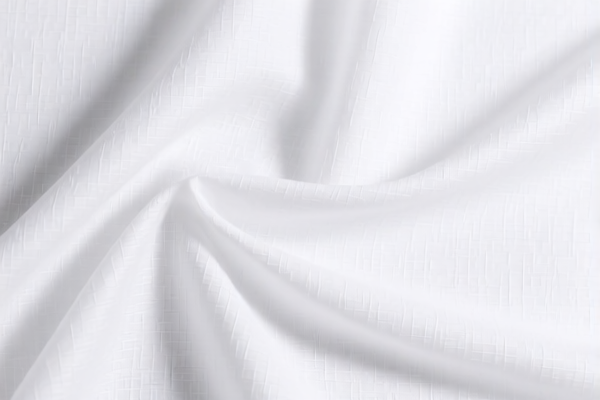
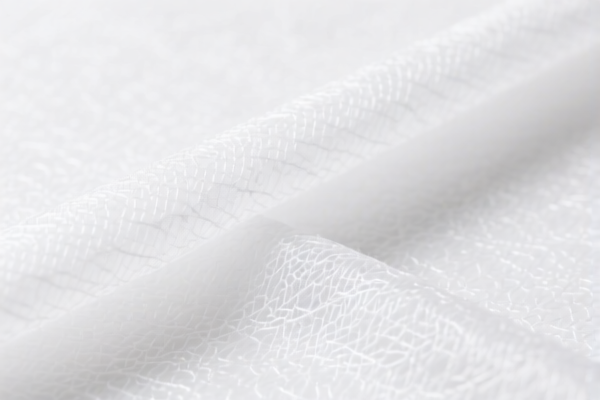
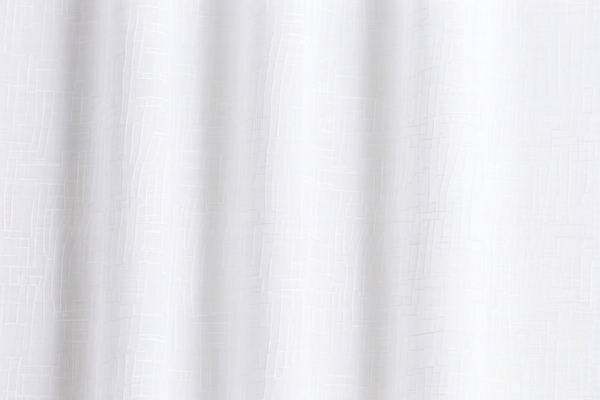
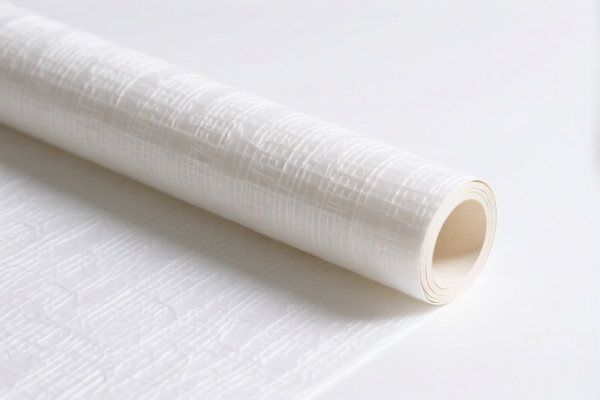
AI Analysis
🏠 Wall Decorative Film (Non-Woven Base with Plastic Coating)
🌐 HS Code Reference & Customs Clearance Guide | 2026 Latest Tariff Analysis | Professional Clearance Strategy
📌 I. Product Definition & Classification: Do You Really Understand "Plastic Wall Decorative Film"?
Plastic Wall Decorative Film (Non-Woven Base) is a composite building material used primarily for interior wall decoration. It consists of a non-woven fabric base (providing strength and flexibility) coated, impregnated, or laminated with a plastic layer (providing water resistance, printability, and durability).
In international trade, the classification depends heavily on whether the customs authority views it as a textile product (due to the fabric base) or a paper/plastic product (due to the surface treatment or overall composition). This distinction significantly impacts the tariff burden.
⚠️ Key Classification Conflict:
- Textile Approach: If the non-woven fabric is the essential character, it falls under Chapter 59 (Impregnated/Covered Textile Fabrics).
- Paper/Decorative Approach: If treated as a wall covering made of paper with plastic coating, it falls under Chapter 48 (Paper Products).
- Plastic Product Approach: If viewed primarily as a plastic sheet with textile reinforcement, it falls under Chapter 39 (Plastics).
📦 II. HS Code Classification Details (2026 Latest Tariff Authority Comparison)
| HS Code | Product Description | Applicable Scenario | Core Reasoning |
|---|---|---|---|
5903.10.20.90 |
Other textile fabrics impregnated, coated, covered or laminated with plastics (Non-woven base) | Standard wall decor films where the non-woven fabric provides structural integrity | ✅ Textile Focus: Defined as "Other plastic-coated textile fabrics." The non-woven base is the essential component. |
4814.20.00.00 |
Wallpaper and similar wall coverings, whether or not printed, of paper coated with plastics | Decorative films treated strictly as "wall coverings" with a plastic-coated paper/non-woven substrate | ✅ Decorative Focus: Classified as wallpaper/wall covering. The plastic coating defines the surface. |
4814.90.02.00 |
Other wall coverings of paper (incl. non-woven) | Generic wall coverings not specifically listed in 4814.20 | ✅ Generic Focus: Used when the specific "paper coated with plastics" definition doesn't fully align, but still viewed as paper-based wall decor. |
3921.90.15.00 |
Other plates, sheets, film, foil and strip, of plastics, with support of textile materials | Films where the plastic layer is dominant or the textile is merely a backing | ❌ Plastic Focus: Least likely for standard wall decor unless it's a heavy-duty industrial plastic film with minimal textile content. |
🔍 Critical Distinction:
-5903.10.20.90is often the most accurate for non-woven base films because non-woven fabric is a textile. However, it carries the highest tariff due to trade restrictions. -4814.20.00.00is the common "Wallpaper" classification, offering a lower tariff burden but requires the product to be definitively categorized as "wallpaper" rather than a general textile fabric. -3921.90.15.00applies if the product is more akin to a plastic sheet with fabric reinforcement, not primarily for aesthetic wall covering.
💰 III. 2026 Latest Tariff Rate Details (Including Additional Taxes & Policy Surcharges)
✅ Applicable Country: United States (US)
✅ Country of Origin: China (CN)
✅ Effective Date: November 10, 2025 (and subsequent imports)
🎯 1. 5903.10.20.90 —— Plastic-Coated Textile Fabrics (Non-Woven Base)
| Item | Content |
|---|---|
| Base Tariff | 0% (ad valorem) |
| Section 301 (USITC) Additional Tariff | +25.0% (Under USITC Footnote 9903.88.01) |
| IEEPA Additional Tariff | +10% (Targeting China/HK products, effective Nov 10, 2025) |
| Total Effective Rate | 35.0% |
| Tax Calculation | CIF Value × 35% |
| De Minimis Exemption Eligible? | ❌ No (deny_de_minimis applies) |
| Legal Basis Path | IEEPA:9903.01.25 → USITC:5903.10.20.90 → FOOTNOTE:9903.88.01 |
📌 Explanation:
- The 25% Section 301 tariff is applied because non-woven textile products are often included in the targeted list. - The 10% IEEPA tariff is an additional layer on top of Section 301 for Chinese-origin goods. - Total 35% is a significant cost driver. Misclassifying this as a lower-tariff paper product can lead to severe penalties if challenged.
🎯 2. 4814.20.00.00 —— Paper Coated with Plastics (Wall Covering)
| Item | Content |
|---|---|
| Base Tariff | 0% (ad valorem) |
| Section 301 (USITC) Additional Tariff | +7.5% (Reduced rate under certain HTS subheadings or specific exclusions) |
| IEEPA Additional Tariff | +10% (Targeting China/HK products) |
| Total Effective Rate | 17.5% |
| Tax Calculation | CIF Value × 17.5% |
| De Minimis Exemption Eligible? | ❌ No (deny_de_minimis applies) |
| Legal Basis Path | IEEPA:9903.01.24 → USITC:4814.20.00.00 → FOOTNOTE:9903.88.01 |
📌 Note:
- This classification is cost-effective compared to the textile route (17.5% vs. 35.0%). - However, it requires strong evidence that the product is primarily a wall covering made of paper/non-woven, not a general-purpose textile fabric. - The 7.5% Section 301 rate suggests this item may fall under a specific exclusion or a lower-priority list compared to general textiles.
🎯 3. 4814.90.02.00 —— Other Wall Coverings of Paper
| Item | Content |
|---|---|
| Base Tariff | 0% (ad valorem) |
| Section 301 (USITC) Additional Tariff | +7.5% |
| IEEPA Additional Tariff | +10% |
| Total Effective Rate | 17.5% |
| Tax Calculation | CIF Value × 17.5% |
| De Minimis Exemption Eligible? | ❌ No (deny_de_minimis applies) |
| Legal Basis Path | IEEPA:9903.01.24 → USITC:4814.90.02.00 → FOOTNOTE:9903.88.01 |
📌 Note:
- Same tariff as4814.20.00.00.
- Used when the product doesn't strictly meet the "paper coated with plastics" definition but is still accepted as a paper-based wall covering.
- Risk of reclassification to5903.10.20.90exists if the textile component is deemed dominant.
🎯 4. 3921.90.15.00 —— Plastic Plate/Sheet with Textile Support
| Item | Content |
|---|---|
| Base Tariff | 6.5% (ad valorem) |
| Section 301 (USITC) Additional Tariff | +25.0% |
| IEEPA Additional Tariff | +10% |
| Total Effective Rate | 41.5% |
| Tax Calculation | CIF Value × 41.5% |
| De Minimis Exemption Eligible? | ❌ No (deny_de_minimis applies) |
| Legal Basis Path | IEEPA:9903.01.25 → USITC:3921.90.15.00 → FOOTNOTE:9903.88.01 |
📌 Warning:
- This is the highest tariff category (41.5%).
- It applies only if the product is fundamentally a plastic sheet with minimal textile function.
- For "wall decorative film," this classification is highly unfavorable and rarely justified unless the plastic layer is overwhelmingly dominant and not primarily for decoration.
🛠️ IV. Customs Clearance Practical Advice (Battle-Tested Pitfall Avoidance)
✅ 1. Required Documentation Checklist (Non-Negotiable)
| Document | Must Provide | Explanation |
|---|---|---|
| ✅ Product Specification Sheet | ✔️ | Must detail: Non-woven base weight, Plastic coating type (PVC/PE/etc.), Thickness, Width. |
| ✅ Product Photographs | ✔️ | Clear images showing the non-woven texture and the plastic surface finish. |
| ✅ Material Composition Statement | ✔️ | Explicitly state the percentage of non-woven fabric vs. plastic coating to support HS Code choice. |
| ✅ Commercial Invoice | ✔️ | Description must match HS Code reasoning (e.g., "Wallpaper" vs. "Textile Fabric"). |
| ✅ Packing List | ✔️ | Standard export packaging details. |
| ✅ Proof of Origin (CO) | ✔️ | If claiming preferential rates in other markets (not US in this case). |
✅ 2. Declaration Strategy (Key Rules of Thumb)
🔥 “Character Determines Code: Textile Base = 5903, Wall Covering = 4814!”
| Scenario | Correct Declaration | Incorrect Action |
|---|---|---|
| Non-woven fabric is strong, plastic is thin coating | 5903.10.20.90 |
Misdeclare as 4814 → Risk of penalty if textile dominates. |
| Product is marketed/sold as "Wallpaper" or "Wall Decal" | 4814.20.00.00 |
Misdeclare as 3921 → 41.5% tax hit for no reason. |
| Heavy-duty plastic sheet with fabric backing (industrial use) | 3921.90.15.00 |
Misdeclare as 5903 → If it’s not for decoration/textile use, this is correct, but high tax. |
| Mixed Packaging (Film + Adhesive) | Declare Film Only | Don’t split adhesive unless it’s a separate product. |
✅ 3. Special Case Handling
| Situation | Handling Advice |
|---|---|
| OEM Custom Designs | Provide design specs to prove "wall covering" intent, supporting 4814 classification. |
| Non-Woven vs. Woven | Emphasize Non-Woven nature. Woven fabrics are more strictly controlled under textiles; non-woven has more flexibility in Chapter 48 if treated as wallpaper. |
| Small Sample Shipments | Even samples are subject to full tariffs. Do not use "De Minimis" loophole; it is explicitly denied. |
| US-China Trade War Uncertainty | Consider Advance Rulings from CBP to lock in the HS Code and tax rate before shipment. |
🌍 V. Global Market Clearance Comparison (2026 Latest)
| Country/Region | Recommended HS Code | Tariff Rate | Certification Requirements | Notes |
|---|---|---|---|---|
| 🇺🇸 USA | 4814.20.00.00 (Preferred) |
17.5% | None specific | 5903 is 35%, 3921 is 41.5%. Avoid 5903 if possible. |
| 🇨🇳 China | 4814.20.00.00 |
5% | None | No additional tariffs. |
| 🇪🇺 EU | 4814.20.00.00 |
6.5% | CE (if applicable) | Lower rates, no Section 301/IEEPA. |
| 🇬🇧 UK | 4814.20.00.00 |
6.5% | UKCA (if applicable) | Post-Brexit rules align closely with EU for this item. |
| 🇦🇺 Australia | 4814.20.00.00 |
5% | None | No additional surcharges. |
📌 Conclusion:
- The US market is the most expensive due to Section 301 and IEEPA tariffs.
- Misclassification is the biggest risk: Declaring5903(35%) when4814(17.5%) is applicable doubles your tax.
- However, declaring4814when5903is legally required can lead to audits and fines.
- Recommendation: If the non-woven base is clearly the structural component,5903is safer. If the product is distinctly a "wallpaper," fight for4814.
📌 VI. Common Errors & Pitfall Guide (Blood & Tears Lessons)
❌ Error 1: Declaring "Wall Decorative Film" as 4814 without proving it's a wall covering.
👉 Consequence: CBP reclassifies to 5903.10.20.90 → Back taxes + Interest + Penalty!
❌ Error 2: Using the "De Minimis" exception for small parcels.
👉 Consequence: Denied entry. The law explicitly denies de minimis for these HS codes.
❌ Error 3: Ignoring the "Non-Woven" specification.
👉 Consequence: If the base is woven, 5903 is almost mandatory. Non-woven allows for 4814 debate.
❌ Error 4: Not providing material breakdown.
👉 Consequence: CBP defaults to the highest duty rate or holds shipment for clarification.
✅ Correct Approach:
"Non-Woven Wallpaper, PVC Coated, Width 53cm, Roll Packaged, Model XYZ, For Interior Wall Decoration"
🎯 VII. Conclusion: Precision is Profit
🎯 Remember This Mantra:
🔹 "Textile Base = 35%, Paper Wall = 17.5%, Plastic Sheet = 41.5%. Choose Wisely!"
🔹 "No De Minimis. No Exceptions. Full Tax on Every Parcel!"
📌 Pro Tip:
If you are shipping from China to the US, consult a customs broker before bulk shipment. Request an Advance Ruling if your product is borderline between 5903 and 4814. The $100 filing fee is cheaper than the 17.5% tax difference on a container load.
📣 Immediate Action:
📞 Contact a licensed customs broker
📄 Prepare Material Composition & Product Photos
🚀 Get Pre-Ruling to Avoid Surprise 35% Bills!
✨ Professional Clearance Starts with Accurate Classification!
💼 Every Percent Saved is Profit Gained!
Customer Reviews
About HS Code Classification
The Harmonized System (HS) is an internationally standardized nomenclature developed by the World Customs Organization (WCO) to classify traded products. Over 200 countries use the HS system as the basis for customs tariffs, trade statistics, and import/export regulations.
Each HS code follows a hierarchical structure:
- Chapter (2 digits) — Broad category of goods (e.g., Chapter 84: Machinery and Mechanical Appliances)
- Heading (4 digits) — More specific grouping within the chapter
- Subheading (6 digits) — Internationally standardized breakdown, used by all WCO member countries
- National subdivisions (8-10 digits) — Country-specific extensions for further classification, such as US HTSUS 10-digit codes
Correct HS code classification is essential for smooth customs clearance, accurate duty payment, and compliance with trade regulations. Misclassification can lead to customs delays, overpayment of duties, or penalties.
When importing from CN to US, the applicable tariff rates may include:
- Most-Favored-Nation (MFN) rate — The standard duty rate applied to WTO members
- General rate — Applied to countries without trade agreements
- Trade remedy duties — Additional tariffs such as Section 301 (anti-dumping), Section 232 (national security), or countervailing duties
The information provided on this page is for reference purposes only. For official classification, please consult with your local customs authority or a licensed customs broker.