Plastic Wall Fireproof Material (Textile)
CN → US| HS Code | Tariff Rate | Origin | Destination | Doc |
|---|---|---|---|---|
| 3921131100 | 39.2% | CN | US | Official Doc |
| 3921121100 | 39.2% | CN | US | Official Doc |
| 3925900000 | 40.3% | CN | US | Official Doc |
| 3925305000 | 22.8% | CN | US | Official Doc |
| 3921131100 | 39.2% | CN | US | Official Doc |
Product Images
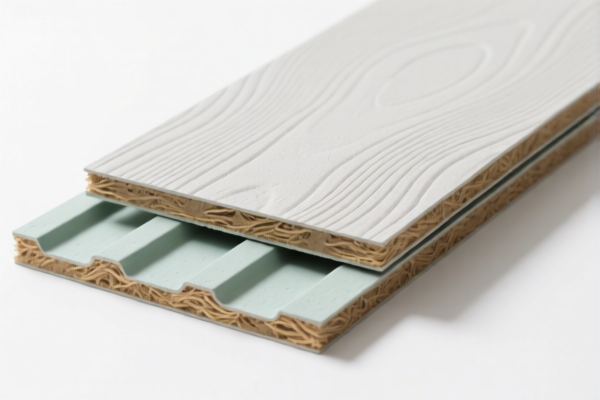
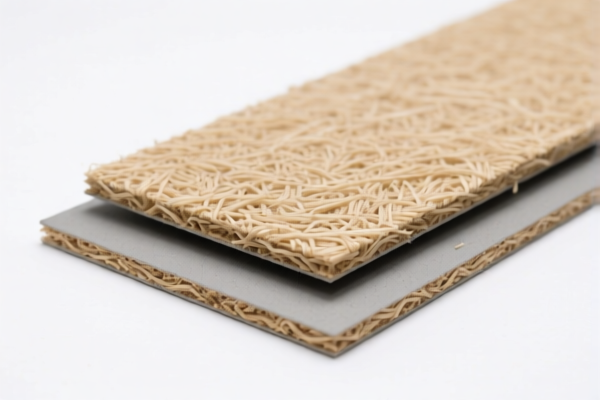
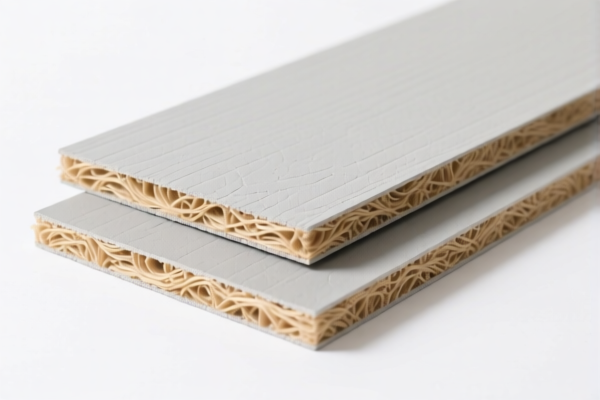
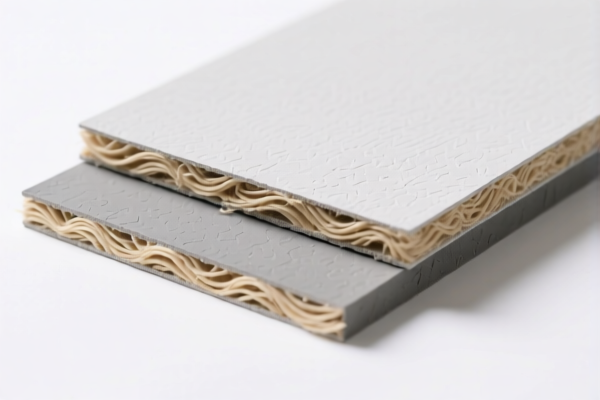
AI Analysis
🧱 Plastic Wall Fireproof Material (Textile Composite)
🌐 HS Code Reference & Customs Clearance Guide | 2026 Latest Tariff Analysis | Professional Clearance Strategy
📌 I. Product Definition & Classification: Do You Really Understand "Fireproof Plastic-Textile Composite"?
Plastic wall fireproof materials with textile components are widely used in interior decoration, acoustic insulation, and fire safety construction. In international trade, these products are classified based on their material composition, plastic weight ratio, and functional purpose.
⚠️ Key Distinction:
- If the product is a composite board/film where plastic accounts for >70% by weight, it falls under 3921.13.11.00 or 3921.12.11.00.
- If it is a plastic-based architectural component (e.g., panels, sheets) without textile dominance, it may fall under 3925.90.00.00.
- If it functions as an attachment (e.g., curtains, blinds), it may fall under 3925.30.50.00.
📦 II. HS Code Classification Details (2026 Latest Tariff Authority Comparison)
| HS Code | Product Description | Application Scenario | Key Characteristics |
|---|---|---|---|
3921.13.11.00 |
Plastic and textile composite board/film, plastic weight >70%, suitable for acoustic/fireproof materials | Interior wall fireproof/acoustic panels | Composite structure, high plastic content |
3921.12.11.00 |
PVC plastic and textile composite board/film, for acoustic or fireproof building uses | Architectural fireproof/acoustic applications | PVC-based, specialized building use |
3925.90.00.00 |
Plastic architectural components, for wall fireproof/acoustic decoration, no material conflict | General plastic wall panels, decorative fireproof sheets | Pure plastic, architectural use |
3925.30.50.00 |
Plastic architectural accessories, e.g., fireproof curtains or shading curtains, suitable for wall fireproof materials | Fireproof curtains, sunshade curtains | Functional accessory, not main wall panel |
3921.13.11.00 |
Plastic and textile composite foam or board, conforms to fireproof material morphology | Fireproof foam boards, composite panels | Foam structure, fireproof certification |
🔍 Important Reminder:
- Products with plastic weight >70% and textile reinforcement must be declared under 3921 series.
- If the product is a curtain or blind, declare under 3925.30.50.00.
- If it is a solid panel without textile dominance, consider 3925.90.00.00.
💰 III. 2026 Latest Tariff Rate Details (Including Additional Taxes, Policy Surcharges)
✅ Applicable Country: United States (US)
✅ Country of Origin: China (CN)
✅ Effective Date: From November 10, 2025 (including subsequent imports)
🎯 1. 3921.13.11.00 —— Plastic and Textile Composite Board/Film (Plastic >70%)
| Item | Content |
|---|---|
| Base Tariff | 4.2% (ad valorem) |
| USITC Additional Tax | +25% (from USITC Footnote under Section 301) |
| IEEPA Additional Tax | +10% (for China/HK products, from Nov 10, 2025) |
| Total Tariff | 39.2% |
| Tax Calculation | CIF Value × 39.2% |
| De Minimis Exemption | ❌ Not Available (deny_de_minimis) |
| Legal Basis Path | IEEPA:9903.01.25 → IEEPA:9903.01.24 → USITC:3921.13.11.00 → FOOTNOTE:301 |
📌 Explanation:
- The 25% USITC tax comes from Section 301 of the U.S. Trade Act;
- The 10% IEEPA tax is the additional tariff on Chinese products under the International Emergency Economic Powers Act;
- Total 39.2%, considered a high tariff, must be anticipated in advance!
🎯 2. 3921.12.11.00 —— PVC Plastic and Textile Composite Board/Film
| Item | Content |
|---|---|
| Base Tariff | 4.2% |
| USITC Additional Tax | +25% |
| IEEPA Additional Tax | +10% |
| Total Tariff | 39.2% |
| Tax Calculation | CIF × 39.2% |
| De Minimis Exemption | ❌ Not Available |
| Legal Basis Path | IEEPA:9903.01.25 → IEEPA:9903.01.24 → USITC:3921.12.11.00 → FOOTNOTE:301 |
📌 Note:
- Same as above, both composite types with PVC or general plastic and textile fall under the same high-tariff bracket.
- Even if labeled as "acoustic panel" or "fireproof sheet," if it meets the composite criteria, the 39.2% rate applies.
🎯 3. 3925.90.00.00 —— Plastic Architectural Components (No Material Conflict)
| Item | Content |
|---|---|
| Base Tariff | 5.3% |
| USITC Additional Tax | +25% |
| IEEPA Additional Tax | +10% |
| Total Tariff | 40.3% |
| Tax Calculation | CIF × 40.3% |
| De Minimis Exemption | ❌ Not Available |
| Legal Basis Path | IEEPA:9903.01.25 → IEEPA:9903.01.24 → USITC:3925.90.00.00 → FOOTNOTE:301 |
📌 Note:
- This code applies to pure plastic architectural panels without textile dominance.
- Slightly higher total rate (40.3%) due to higher base tariff (5.3% vs 4.2%).
🎯 4. 3925.30.50.00 —— Plastic Architectural Accessories (Curtains/Blinds)
| Item | Content |
|---|---|
| Base Tariff | 5.3% |
| USITC Additional Tax | +7.5% |
| IEEPA Additional Tax | +10% |
| Total Tariff | 22.8% |
| Tax Calculation | CIF × 22.8% |
| De Minimis Exemption | ❌ Not Available |
| Legal Basis Path | IEEPA:9903.01.25 → IEEPA:9903.01.24 → USITC:3925.30.50.00 → FOOTNOTE:301 |
📌 Note:
- If the product is clearly a curtain, blind, or shading device, it qualifies for a lower additional tax (7.5%).
- Total 22.8% is significantly lower than composite panels (39.2–40.3%).
- Strategic Tip: If your product can be classified as a "curtain" rather than a "panel," you can save ~16.4% in tariffs.
🛠️ IV. Customs Clearance Practical Advice (实战避坑指南)
✅ 1. Required Documents Checklist (All Mandatory)
| Document | Mandatory | Description |
|---|---|---|
| ✅ Product Specification Sheet | ✔️ | Dimensions, weight, plastic/textile ratio, fireproof rating |
| ✅ Material Composition Report | ✔️ | Confirms plastic weight % and textile type |
| ✅ Product Photos (with label) | ✔️ | Clear view of model, brand, fireproof certification |
| ✅ Third-Party Test Report | ✔️ | UL, ASTM E84, or equivalent fireproof/acoustic certification |
| ✅ Commercial Invoice | ✔️ | Must specify "Plastic-Textile Composite Fireproof Panel" |
| ✅ Certificate of Origin (CO) | ✔️ | If not China-origin, may qualify for reduced rates |
| ✅ Packing List | ✔️ | Show整机 vs accessory relationship, avoid split declaration |
✅ 2. Declaration Tips (Key Mantra)
🔥 "Composite Panels: 39.2%, Curtains: 22.8%, Pure Plastic: 40.3%!"
| Scenario | Correct Declaration | Wrong Practice |
|---|---|---|
| Composite board (plastic >70% + textile) | 3921.13.11.00 / 3921.12.11.00 |
Declare as "plastic sheet" → 40.3% |
| Plastic-only wall panel | 3925.90.00.00 |
Declare as "composite" → 39.2% (lower, but risky if audited) |
| Fireproof curtain/blind | 3925.30.50.00 |
Declare as "panel" → 39.2% (miss 22.8% opportunity) |
| Foam composite board | 3921.13.11.00 |
Declare as "accessory" → 22.8% (incorrect, will be rejected) |
✅ 3. Special Cases Handling
| Scenario | Handling Advice |
|---|---|
| OEM Custom Fireproof Panels | Provide customer order + design drawing to avoid "non-standard" classification |
| Product with Multiple Layers | Declare as composite if plastic >70%; otherwise, consider pure plastic classification |
| Fireproof Curtain with Plastic Coating | Declare as 3925.30.50.00 if functional as curtain, not panel |
| Product Used in Medical/Hospital | If specialized, may apply for "non-commercial use" exemption with proof |
| Product for Military/Aerospace | Apply for "special purpose" declaration, possible rate reduction, consult in advance |
🌍 V. Global Market Clearance Comparison (2026 Latest)
| Country/Region | Recommended HS Code | Tariff | Certification Requirements | Remarks |
|---|---|---|---|---|
| 🇺🇸 USA | 3921.13.11.00 / 3921.12.11.00 |
39.2% (China) | UL, ASTM E84 | High tariff, plan ahead |
| 🇨🇳 China | 3921.13.11.00 |
5% | CCC, GB8624 | No additional taxes |
| 🇪🇺 EU | 3921.13.11.00 |
6.5% (if CE) | CE, EN13501-1 | No additional taxes |
| 🇦🇺 Australia | 3921.13.11.00 |
5% | RCM | No additional taxes |
| 🇯🇵 Japan | 3921.13.11.00 |
6% | JIS | No additional taxes |
📌 Conclusion:
- USA imposes the highest total tariffs on Chinese-sourced fireproof composite materials;
- China, EU, Australia, and Japan have no additional surcharges;
- For US market, consider supply chain adjustment (e.g., Vietnam, Mexico) to mitigate 39.2% tariff impact.
📌 VI. Common Errors & Pitfalls (Lessons Learned)
❌ Error 1: Declaring "composite panel" as "plastic sheet" to avoid textile classification
👉 Consequence: Customs audit reveals textile content → 25% USITC tax applies + penalties!
❌ Error 2: Declaring "curtain" as "panel"
👉 Consequence: Pay 39.2% instead of 22.8% → Overpayment by 16.4%!
❌ Error 3: No material composition report provided
👉 Consequence: Customs cannot verify plastic % → Delay or return!
❌ Error 4: Using "Fireproof Material" as generic description
👉 Consequence: Ambiguous classification → High audit risk
✅ Correct Practice:
"PVC-Textile Composite Fireproof Panel, Plastic Weight 75%, ASTM E84 Class A, Model XYZ, UL Certified"
🎯 VII. Conclusion: Professional Declaration Saves Time, Money, and Stress!
🎯 Remember the Mantra:
🔹 "Composite Panel: 39.2%, Curtain: 22.8%, Pure Plastic: 40.3%!"
🔹 "HS Code Determines Life, Tariff Difference 16%, Declaration Error Costs Thousands!"
📌 Pro Tip:
If your product is originally from Vietnam, Mexico, Thailand, or Malaysia, you may apply for IEEPA Exemption, reducing tariffs to 0%–5%.
Recommend applying for an Advance Ruling before shipment to avoid clearance risks.
📣 Take Action Now:
📞 Contact a Professional Customs Broker + Provide Product Photos + Apply for HS Code Advance Ruling
🚀 Ensure Your Fireproof Materials Clear Customs Smoothly, Export Efficiently, and Maximize Profits!
✨ Professional Clearance Starts with Accurate Classification!
💼 Every Cent of Your Cost Deserves Precise Calculation!
Customer Reviews
About HS Code Classification
The Harmonized System (HS) is an internationally standardized nomenclature developed by the World Customs Organization (WCO) to classify traded products. Over 200 countries use the HS system as the basis for customs tariffs, trade statistics, and import/export regulations.
Each HS code follows a hierarchical structure:
- Chapter (2 digits) — Broad category of goods (e.g., Chapter 84: Machinery and Mechanical Appliances)
- Heading (4 digits) — More specific grouping within the chapter
- Subheading (6 digits) — Internationally standardized breakdown, used by all WCO member countries
- National subdivisions (8-10 digits) — Country-specific extensions for further classification, such as US HTSUS 10-digit codes
Correct HS code classification is essential for smooth customs clearance, accurate duty payment, and compliance with trade regulations. Misclassification can lead to customs delays, overpayment of duties, or penalties.
When importing from CN to US, the applicable tariff rates may include:
- Most-Favored-Nation (MFN) rate — The standard duty rate applied to WTO members
- General rate — Applied to countries without trade agreements
- Trade remedy duties — Additional tariffs such as Section 301 (anti-dumping), Section 232 (national security), or countervailing duties
The information provided on this page is for reference purposes only. For official classification, please consult with your local customs authority or a licensed customs broker.