Plastic Wall Fireproof Material Textile
CN → US| HS Code | Tariff Rate | Origin | Destination | Doc |
|---|---|---|---|---|
| 5903102010 | 35.0% | CN | US | Official Doc |
| 6307909891 | 24.5% | CN | US | Official Doc |
| 5903102090 | 35.0% | CN | US | Official Doc |
| 3925200091 | 22.8% | CN | US | Official Doc |
| 3925900000 | 40.3% | CN | US | Official Doc |
Product Images


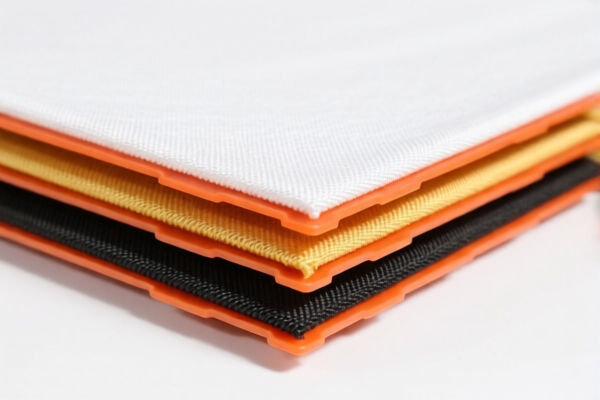
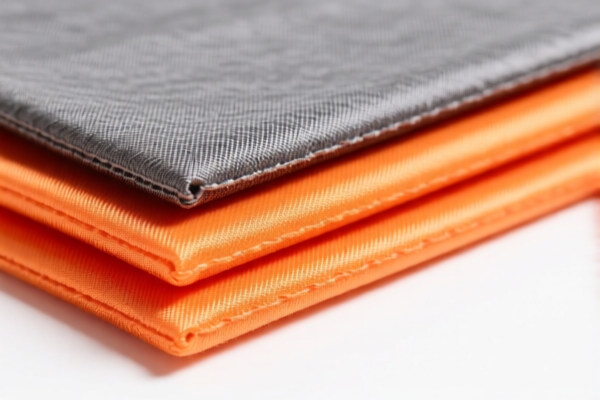
AI Analysis
🧱 Plastic Wall Fireproof Insulation Material (Textile)
🌐 HS Code Reference & Customs Clearance Guide | 2026 Latest Tariff Analysis | Professional Clearance Strategy
📌 1. Product Definition: What is "Plastic Wall Fireproof Material (Textile)"?
This product refers to wall insulation or decorative materials used for soundproofing and fireproofing. In international trade, the classification depends heavily on the primary material composition and physical form.
There is a critical distinction between: * Textile-based products: Fabrics impregnated, coated, covered, or laminated with plastics (e.g., plastic-coated fabric rolls/sheets used as wall cladding). * Plastic-based products: Rigid or semi-rigid plastic wall panels/decorations (e.g., PVC wall panels).
⚠️ Key Classification Point:
- If the product is a flexible textile/fabric with a plastic coating/impregnation →归入 Heading 59
- If the product is a rigid/plastic wall decoration (even if fireproof) → 归入 Heading 39
📦 2. HS Code Classification Details (2026 Latest Tariff Authority Comparison)
| HS Code | Product Description | Applicable Scenario | Primary Material |
|---|---|---|---|
5903.10.20.10 |
Textile fabrics impregnated/coated with plastics; specifically for wall insulation/decoration | Plastic-coated textile rolls/sheets for soundproofing walls | ✅ Plastic-coated Textile |
5903.10.20.90 |
Other textile fabrics impregnated, coated, covered or laminated with plastics | Other plastic-impregnated textiles for wall use | ✅ Plastic-impregnated Textile |
6307.90.98.91 |
Other made-up textile articles; specifically for wall insulation/decoration | Finished textile wall coverings/insulation products | ✅ Made-up Textile |
3925.20.00.91 |
Plastic wall decorations; specifically fireproof wall ornaments | Rigid plastic wall panels/cladding for decoration | ✅ Plastic Wall Decoration |
3925.90.00.00 |
Other builders' ware of plastics | Other plastic wall products not specified elsewhere | ✅ Plastic Wall Product |
🔍 Key Reminder:
- Products falling under 5903 are treated as textile articles coated with plastic.
- Products falling under 3925 are treated as plastic building materials.
- Misclassification can lead to significant tariff differences (e.g., 22.8% vs 35.0%).
💰 3. 2026 Latest Tariff Rate Details (Including Additional Taxes, Policy Add-ons)
✅ Applicable Country: United States (US)
✅ Origin: China (CN)
✅ Effective Time: 2025/2026 (Includes subsequent imports)
🎯 1. 5903.10.20.10 —— Plastic Wall Insulation Material (Textile)
| Item | Content |
|---|---|
| Base Tariff | 0.0% |
| Section 301 Additional Tariff | +25.0% |
| Section 122 Tariff | +10.0% |
| Total Tax Rate | 35.0% |
| Tax Calculation | CIF Value × 35.0% |
| De Minimis Eligibility | ❌ Not Eligible |
| Legal Basis Path | Base: 0% → 301: 25% → 122: 10% |
📌 Explanation:
- This code is for textile fabrics coated/impregnated with plastic.
- Although the base tariff is 0%, the Section 301 (25%) and Section 122 (10%) tariffs apply, resulting in a high total rate of 35%.
🎯 2. 5903.10.20.90 —— Other Plastic-impregnated Textile Wall Materials
| Item | Content |
|---|---|
| Base Tariff | 0.0% |
| Section 301 Additional Tariff | +25.0% |
| Section 122 Tariff | +10.0% |
| Total Tax Rate | 35.0% |
| Tax Calculation | CIF Value × 35.0% |
| De Minimis Eligibility | ❌ Not Eligible |
| Legal Basis Path | Base: 0% → 301: 25% → 122: 10% |
📌 Note:
- Similar to5903.10.20.10, this applies to other plastic-impregnated textiles.
- Total rate is 35%.
🎯 3. 6307.90.98.91 —— Other Made-up Textile Articles (Wall Insulation)
| Item | Content |
|---|---|
| Base Tariff | 7.0% |
| Section 301 Additional Tariff | +7.5% |
| Section 122 Tariff | +10.0% |
| Total Tax Rate | 24.5% |
| Tax Calculation | CIF Value × 24.5% |
| De Minimis Eligibility | ❌ Not Eligible |
| Legal Basis Path | Base: 7% → 301: 7.5% → 122: 10% |
📌 Note:
- This code is for finished textile products (not just coated fabric).
- The total rate is 24.5%, which is lower than the 35% for plastic-coated textiles.
- Strategy: If the product is a finished insulated textile panel, try to classify under6307if possible.
🎯 4. 3925.20.00.91 —— Fireproof Plastic Wall Decorations
| Item | Content |
|---|---|
| Base Tariff | 5.3% |
| Section 301 Additional Tariff | +7.5% |
| Section 122 Tariff | +10.0% |
| Total Tax Rate | 22.8% |
| Tax Calculation | CIF Value × 22.8% |
| De Minimis Eligibility | ❌ Not Eligible |
| Legal Basis Path | Base: 5.3% → 301: 7.5% → 122: 10% |
📌 Explanation:
- This code is for plastic wall decorations (e.g., PVC wall panels).
- The total rate is 22.8%, the lowest among the listed codes.
- Strategy: If the product is a rigid plastic panel, use this code.
🎯 5. 3925.90.00.00 —— Other Builders' Ware of Plastics
| Item | Content |
|---|---|
| Base Tariff | 5.3% |
| Section 301 Additional Tariff | +25.0% |
| Section 122 Tariff | +10.0% |
| Total Tax Rate | 40.3% |
| Tax Calculation | CIF Value × 40.3% |
| De Minimis Eligibility | ❌ Not Eligible |
| Legal Basis Path | Base: 5.3% → 301: 25% → 122: 10% |
📌 Note:
- This is a "catch-all" for plastic building materials.
- The total rate is 40.3%, the highest among the listed codes.
- Avoid unless no other specific plastic code applies.
🛠️ 4. Customs Clearance Practical Advice (Real-world Pitfall Avoidance Guide)
✅ 1. Preparation Checklist (Missing items are not allowed)
| Material | Must Provide | Explanation |
|---|---|---|
| ✅ Product Specification Sheet | ✔️ | Dimensions, material composition (plastic %, textile %), fireproof rating |
| ✅ Product Photos (including label) | ✔️ | Clear view of texture (textile vs. rigid plastic) |
| ✅ Fireproof Test Report | ✔️ | UL, ASTM, or equivalent certification |
| ✅ Commercial Invoice | ✔️ | Clearly state "Plastic-coated Textile" or "Plastic Wall Panel" |
| ✅ Packing List | ✔️ | Detail contents to avoid mixed classification |
✅ 2. Declaration Tips (Key Mantra)
🔥 "Fabric is Coated (5903/6307), Rigid is Plastic (3925); Choose wisely, save half!"
| Scenario | Correct Declaration | Wrong Practice |
|---|---|---|
| Plastic-coated fabric roll | 5903.10.20.10 |
Misdeclared as plastic panel → 22.8% or 40.3% |
| Finished textile insulation panel | 6307.90.98.91 |
Misdeclared as coated fabric → 35.0% |
| Rigid PVC wall panel | 3925.20.00.91 |
Misdeclared as textile → 35.0% |
| General plastic wall product | 3925.90.00.00 |
Use only if no specific code fits → 40.3% |
✅ 3. Special Situation Handling
| Situation | Handling Advice |
|---|---|
| OEM Custom Wall Panels | Provide customer orders + design drawings to avoid "non-standard" classification |
| Mixed Materials | If primarily textile, use 5903/6307; if primarily plastic, use 3925 |
| Fireproof Certification | Provide test reports to support "fireproof" description, but it doesn't change HS Code |
| Importing from Vietnam/Mexico | Check for IEEPA exemptions; some codes may have lower rates if origin is not China |
🌍 5. Global Main Market Clearance Comparison (2026 Latest)
| Country/Region | Recommended HS Code | Tariff | Certification Requirements | Notes |
|---|---|---|---|---|
| 🇺🇸 USA | 3925.20.00.91 (Plastic) |
22.8% | UL, ASTM | 5903 is 35.0% |
| 🇨🇳 China | 3925.20.00.91 |
5% | CCC, RoHS | No additional tariffs |
| 🇪🇺 EU | 3925.20.00.91 |
0% (if CE) | CE, REACH | No additional tariffs |
| 🇦🇺 Australia | 3925.20.00.91 |
5% | RCM | No additional tariffs |
| 🇯🇵 Japan | 3925.20.00.91 |
0% | PSE | No additional tariffs |
📌 Conclusion:
- USA has the highest additional tariffs for Chinese-origin products.
- Plastic wall panels (3925.20.00.91) are the most cost-effective (22.8%) if the product is rigid.
- Textile-based products (5903) are more expensive (35.0%) due to higher Section 301 rates.
📌 6. Common Mistakes & Pitfall Avoidance Guide (Lessons Learned)
❌ Mistake 1: Declaring a rigid plastic panel as "textile"
👉 Consequence: Tax rate jumps from 22.8% to 35.0% → Overpayment + Audit Risk
❌ Mistake 2: Declaring a plastic-coated fabric as "plastic wall panel"
👉 Consequence: Tax rate may drop to 22.8%, but if customs determines it's textile, penalties + back taxes apply
❌ Mistake 3: Ignoring the "Section 122" tariff
👉 Consequence: All listed codes include 10% Section 122 tariff; failing to account for it leads to underpayment
✅ Correct Approach:
"Plastic-coated Textile Wall Covering, Fireproof, Model XYZ, UL Certified" (for 5903/6307)
"PVC Wall Panel, Fireproof, Model XYZ, UL Certified" (for 3925)
🎯 7. Conclusion: Professional Declaration, Save Time, Reduce Costs!
🎯 Remember the Mantra:
🔹 "Fabric is Coated (5903/6307), Rigid is Plastic (3925)"
🔹 "Textile: 35%, Finished Textile: 24.5%, Plastic Panel: 22.8%, Catch-all: 40.3%"
🔹 "HS Code determines life; tariff difference is critical; one step wrong, thousands lost!"
📌 Tips:
- If your product is originated from Vietnam, Mexico, Thailand, or Malaysia, you may apply for IEEPA exemptions, reducing rates to 0%~5%.
- Recommend applying for Advance Ruling to avoid clearance risks.
📣 Immediate Action:
📞 Contact professional customs brokers + Provide product images + Apply for HS Code Advance Ruling
🚀 Let your plastic wall material clear smoothly, export efficiently, and double profits!
✨ Professional Clearance Starts with Accurate Classification!
💼 Every cent of your cost deserves to be precisely calculated!
Customer Reviews
About HS Code Classification
The Harmonized System (HS) is an internationally standardized nomenclature developed by the World Customs Organization (WCO) to classify traded products. Over 200 countries use the HS system as the basis for customs tariffs, trade statistics, and import/export regulations.
Each HS code follows a hierarchical structure:
- Chapter (2 digits) — Broad category of goods (e.g., Chapter 84: Machinery and Mechanical Appliances)
- Heading (4 digits) — More specific grouping within the chapter
- Subheading (6 digits) — Internationally standardized breakdown, used by all WCO member countries
- National subdivisions (8-10 digits) — Country-specific extensions for further classification, such as US HTSUS 10-digit codes
Correct HS code classification is essential for smooth customs clearance, accurate duty payment, and compliance with trade regulations. Misclassification can lead to customs delays, overpayment of duties, or penalties.
When importing from CN to US, the applicable tariff rates may include:
- Most-Favored-Nation (MFN) rate — The standard duty rate applied to WTO members
- General rate — Applied to countries without trade agreements
- Trade remedy duties — Additional tariffs such as Section 301 (anti-dumping), Section 232 (national security), or countervailing duties
The information provided on this page is for reference purposes only. For official classification, please consult with your local customs authority or a licensed customs broker.