Plastic Wall Molding
CN → US| HS Code | Tariff Rate | Origin | Destination | Doc |
|---|---|---|---|---|
| 5911900040 | 38.8% | CN | US | Official Doc |
| 5911900080 | 38.8% | CN | US | Official Doc |
| 3921904090 | 39.2% | CN | US | Official Doc |
| 3919905040 | 40.8% | CN | US | Official Doc |
| 3919905060 | 40.8% | CN | US | Official Doc |
Product Images
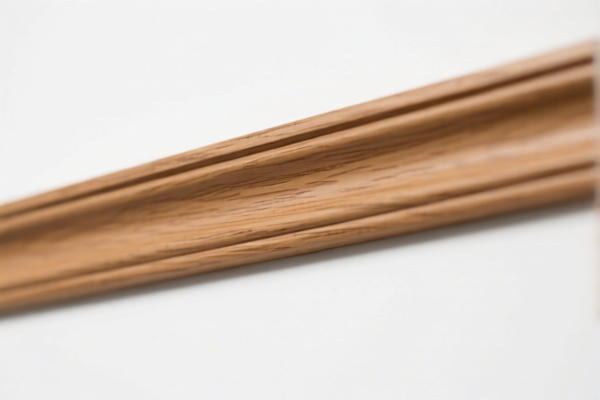
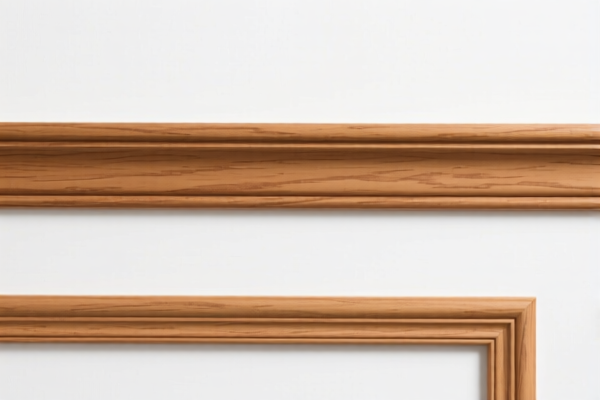
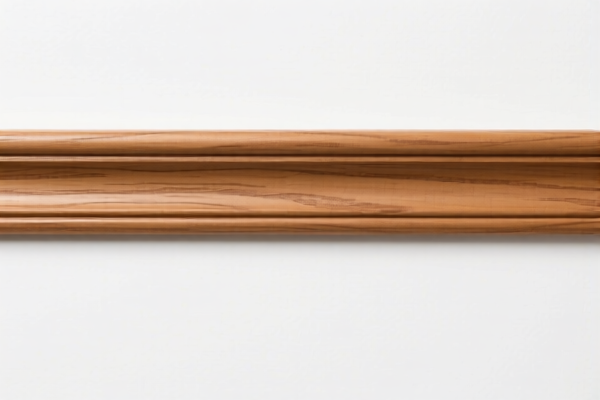
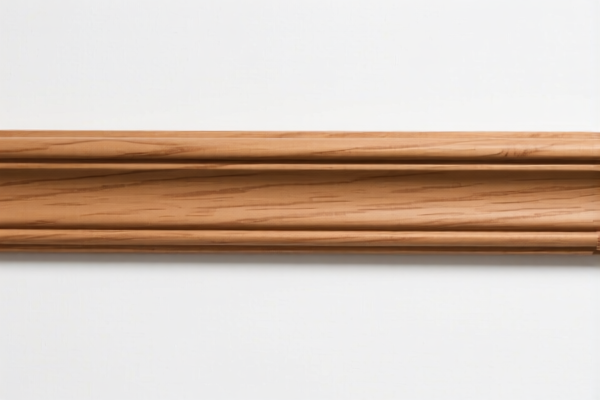
AI Analysis
🧱 Plastic Wall Molding (Decorative Trim & Wall Stickers)
🌐 HS Code Reference & Customs Clearance Guide | 2026 Latest Tariff Analysis | Professional Clearance Strategy
📌 I. Product Definition & Classification: What is "Plastic Wall Molding"?
"Plastic Wall Molding" is a broad term covering decorative items used to cover joints, edges, or beautify walls. In international trade, the classification depends strictly on Material (Plastic vs. Textile-like) and Form (Stiff Profile vs. Self-adhesive Sheet).
1. Textile-Like Profiles (Hypothesis: "Textile" Classification) If the product is described as "textile-like" or has a woven texture mimicking fabric, it may be classified under Chapter 59 (Technical Textiles). This is a rare but specific scenario for decorative trims.
2. Plastic Profiles/Sheets (Standard Classification) If the product is standard PVC/PP/PE: * Stiff/Profiled Shapes: Classified under Chapter 39 as plastic plates, sheets, or other flat shapes. * Self-Adhesive Wall Stickers (Peel-and-Stick): Classified as self-adhesive plastic sheets/tapes.
⚠️ Critical Distinction:
- If it is a rigid, non-adhesive profile used for coving/cornice → 3921.90.40.90
- If it is a self-adhesive film/sticker → 3919.90.50.60
- If it is misclassified as "Textile" but is actually plastic → High Risk of Re-classification & Penalty
📦 II. HS Code Classification Details (2026 Latest Tariff Authority Comparison)
| HS Code | Product Description | Key Characteristics | Total Tax Rate* |
|---|---|---|---|
5911.90.00.40 |
Textile-like plastic wall lines (Woven structure) | Deemed as "Textile articles and similar products"; has woven appearance | 38.8% |
5911.90.00.80 |
Plastic wall lines explicitly marked as "Textile Material" | Deemed as "Technical textile products"; must have textile property | 38.8% |
3921.90.40.90 |
Plastic wall stickers/trim (Plastic material, Film/Sheet form) | Other plastic plates, sheets, film, foil, and strip; non-adhesive or generic plastic sheet | 39.2% |
3919.90.50.40 |
Plastic wall stickers (Flat shape, Self-adhesive inferred) | Self-adhesive plates, sheets, film, foil, strip, and other flat shapes | 40.8% |
3919.90.50.60 |
Plastic wall stickers (Self-adhesive, Flat shape) | Self-adhesive plastic films/sheets/strip; matches "flat shape with adhesive" perfectly | 40.8% |
🔍 Key Insight:
- The difference between 3921 (Generic Plastic Sheet) and 3919 (Self-Adhesive) is Adhesiveness. If it sticks on its own, it must be 3919. - The 5911 codes are highly risky for "Plastic" items. Only use if the product is genuinely a textile blend or woven mesh. If it is solid plastic, using 5911 may lead to customs audits for misdeclaration.
💰 III. 2026 Latest Tariff Rate Breakdown (Including Surcharges & Policy Add-ons)
✅ Applicable Country: United States (US)
✅ Origin: China (CN)
✅ Effective Date: From November 10, 2025 (and subsequent imports)
🎯 1. 5911.90.00.40 & 5911.90.00.80 —— Textile-Like/Textile Plastic Trims
| Item | Content |
|---|---|
| Base Tariff | 3.8% (Ad Valorem) |
| Section 301 Surcharge | +25.0% (Additional Duty) |
| Section 122 Surcharge | +10.0% (IEEPA-based surcharge on Chinese goods) |
| Total Rate | 38.8% |
| Calculation | CIF Value × 38.8% |
| De Minimis Exemption | ❌ Not Eligible (High total rate denies de minimis benefits) |
| Legal Basis Path | Section 301: 8514.91.00.00 → Section 122: IEEPA → USITC: 5911 |
📌 Explanation:
- Even though these are "textile-like," they are still subject to the 25% Section 301 tariff because the base chapter (59) is not excluded. - The 10% Section 122 is applied on top, bringing the total to 38.8%. - Risk: If customs determines the item is NOT textile but plastic, it will be reclassified to Chapter 39 with potentially higher or different rates, plus penalties.
🎯 2. 3921.90.40.90 —— Plastic Wall Trim (Non-Self-Adhesive Sheet/Plate)
| Item | Content |
|---|---|
| Base Tariff | 4.2% (Ad Valorem) |
| Section 301 Surcharge | +25.0% |
| Section 122 Surcharge | +10.0% |
| Total Rate | 39.2% |
| Calculation | CIF Value × 39.2% |
| De Minimis Exemption | ❌ Not Eligible |
| Legal Basis Path | Section 301: 3921.90.40.90 → Section 122: IEEPA |
📌 Explanation:
- This is the standard rate for "Other plastic plates, sheets, film, etc." - The base rate (4.2%) is slightly higher than textile-like classifications, but the surcharges are the same. - Use this if the molding is rigid and NOT self-adhesive (e.g., glued with external adhesive).
🎯 3. 3919.90.50.40 & 3919.90.50.60 —— Self-Adhesive Plastic Wall Stickers
| Item | Content |
|---|---|
| Base Tariff | 5.8% (Ad Valorem) |
| Section 301 Surcharge | +25.0% |
| Section 122 Surcharge | +10.0% |
| Total Rate | 40.8% |
| Calculation | CIF Value × 40.8% |
| De Minimis Exemption | ❌ Not Eligible |
| Legal Basis Path | Section 301: 3919.90.50.60 → Section 122: IEEPA |
📌 Explanation:
- Highest Total Rate (40.8%). - The base tariff (5.8%) is higher because "Self-adhesive" items are considered more finished/consumer-ready. - Crucial: If your product has adhesive backing (peel-and-stick), you MUST use 3919. Using 3921 (non-adhesive) for adhesive products is a common error that leads to delays.
🛠️ IV. Customs Clearance Practical Advice (Battle-Tested Pitfall Guide)
✅ 1. Required Documentation Checklist (Non-Negotiable)
| Document | Mandatory | Note |
|---|---|---|
| ✅ Product Specification Sheet | ✔️ | Must clearly state: Material (PVC/PP/PE vs. Fabric), Form (Roll/Sheet/Profile), and Adhesive Type (Self-adhesive vs. Non-adhesive). |
| ✅ Product Photos | ✔️ | Show the backing. If adhesive is visible or mentioned, it goes to 3919. If it looks like a rigid trim, it goes to 3921. |
| ✅ Commercial Invoice | ✔️ | Describe as "Plastic Wall Decorative Trim" or "Self-Adhesive PVC Wall Sticker". Avoid vague terms like "Textile Trim" unless it is genuinely textile. |
| ✅ Packing List | ✔️ | Weight and dimensions must match the cargo. |
| ✅ Material Declaration | ✔️ | Confirm no wood content (to avoid ISPM 15) and confirm plastic composition. |
✅ 2. Declaration Tips (Key Mantra)
🔥 “Adhesive decides the Chapter, Material decides the Sub-heading, Accuracy prevents Penalties!”
| Scenario | Correct HS Code | Wrong Action | Consequence |
|---|---|---|---|
| Rigid Plastic Molding (Glued with separate adhesive) | 3921.90.40.90 (39.2%) |
Declare as 3919 (Adhesive) |
Over-declaration? Possible, but less risky than under-declaration. |
| Peel-and-Stick Wall Sticker | 3919.90.50.60 (40.8%) |
Declare as 3921 (Non-adhesive) |
Under-declaration (if base rate was lower, but here 3921 is cheaper, so risk is getting caught for misclassifying finished goods). Customs may reclassify and penalize. |
| Woven/Fabric-Looking Trim | 5911.90.00.40 (38.8%) |
Declare as 3921 |
Risk of rejection if it lacks true textile structure. |
| True Textile Trim | 5911.90.00.80 (38.8%) |
Declare as 3919 |
High penalty for declaring plastic textile as plastic sheet. |
✅ 3. Special Considerations
| Situation | Handling Advice |
|---|---|
| Mixed Materials | If the wall molding has a plastic backing but a fabric face, consult the "Essential Character" rule. Usually, if it's >50% plastic by value/weight, 3921 or 3919 is safer unless the fabric is the primary function. |
| "Textile" Description in Listing | If your supplier calls it "Textile Wall Molding" but it's PVC, do not use HS 5911 unless it actually has a woven structure. Customs officers check physical properties. If it's solid plastic, they will reject 5911. |
| Small Packages (De Minimis) | Even if shipped via USPS/UPS under $800, the 40.8% tax applies and no exemption is granted. Budget for this cost! |
🌍 V. Global Market Customs Comparison (2026 Latest)
| Country/Region | Recommended HS Code | Tariff Rate | Certification Req. | Note |
|---|---|---|---|---|
| 🇺🇸 USA | 3919.90.50.60 (Adhesive) |
40.8% (Total) | None specific for plastic | High tariff due to Sec 301 + 122. |
| 🇺🇸 USA | 3921.90.40.90 (Non-Adhesive) |
39.2% (Total) | None | Slightly lower, but only for non-adhesive. |
| 🇪🇺 EU | 3919.90.90 |
0% (Most) | REACH (Chemicals) | No Section 301/122 surcharges. |
| 🇨🇳 China | 3919.90.90 |
~5-10% | CCC (if applicable) | Lower base tariff. |
| 🇨🇦 Canada | 3919.90.90 |
0% (CUSMA eligible) | None | Free trade if Canadian/Mexican origin. |
📌 Conclusion:
- USA is the most expensive market for these goods due to dual surcharges (25% + 10%). - Accuracy is Key: Misclassifying adhesive products as non-adhesive (to save 1.6%) is risky and can lead to seizure. - Textile Codes are Niche: Only use 5911 if the product is genuinely woven/textile. For standard PVC trims, stick to 39xx.
📌 VI. Common Errors & Pitfall Guide (Lessons Learned)
❌ Error 1: Calling "PVC Wall Stickers" "Textile Wall Molding" to look cheaper.
👉 Consequence: Customs inspects, finds no woven texture, reclassifies to 3919/3921, adds penalties and interest.
❌ Error 2: Using 3921.90.40.90 for Self-Adhesive rolls.
👉 Consequence: Under-declaration of base duty (4.2% vs 5.8%). Customs may audit and demand back taxes.
❌ Error 3: Ignoring the 10% Section 122 surcharge.
👉 Consequence: Unexpected costs at border. Total cost is Base + 25% + 10%, not just Base + 25%.
❌ Error 4: Vague Description: "Home Decor".
👉 Consequence: Customs assigns their own code, likely the highest possible, causing delays.
✅ Correct Practice:
"Self-Adhesive PVC Decorative Wall Sticker, Roll, 30cm x 5m, Peel-and-Stick" → HS 3919.90.50.60
"Rigid PVC Wall Profile Molding, Non-Adhesive" → HS 3921.90.40.90
🎯 VII. Conclusion: Precision in Classification Saves Money!
🎯 Remember the Mantra:
🔹 "Adhesive? Go to 3919. Rigid? Go to 3921. Textile? Go to 5911."
🔹 "US Tariff is 40%, plan your margin. Don't guess, classify right!"
📌 Pro Tip:
If you are shipping small quantities to the US, remember that De Minimis ($800) does NOT apply to goods subject to Section 301 and 122 duties. You must pay the ~40% tax regardless of shipment size. Consider consolidating shipments or exploring duty drawback programs if applicable.
📣 Immediate Action:
📞 Verify if your product has adhesive backing.
📸 Take clear photos of the material cross-section and backing.
🚀 Declare accurately to avoid seizure, storage fees, and 40%+ tax surprises!
✨ Professional Clearance, Started with Precise Classification!
💼 Your Profit Margin Deserves Accurate Duty Calculation!
Customer Reviews
About HS Code Classification
The Harmonized System (HS) is an internationally standardized nomenclature developed by the World Customs Organization (WCO) to classify traded products. Over 200 countries use the HS system as the basis for customs tariffs, trade statistics, and import/export regulations.
Each HS code follows a hierarchical structure:
- Chapter (2 digits) — Broad category of goods (e.g., Chapter 84: Machinery and Mechanical Appliances)
- Heading (4 digits) — More specific grouping within the chapter
- Subheading (6 digits) — Internationally standardized breakdown, used by all WCO member countries
- National subdivisions (8-10 digits) — Country-specific extensions for further classification, such as US HTSUS 10-digit codes
Correct HS code classification is essential for smooth customs clearance, accurate duty payment, and compliance with trade regulations. Misclassification can lead to customs delays, overpayment of duties, or penalties.
When importing from CN to US, the applicable tariff rates may include:
- Most-Favored-Nation (MFN) rate — The standard duty rate applied to WTO members
- General rate — Applied to countries without trade agreements
- Trade remedy duties — Additional tariffs such as Section 301 (anti-dumping), Section 232 (national security), or countervailing duties
The information provided on this page is for reference purposes only. For official classification, please consult with your local customs authority or a licensed customs broker.