Plastic Wall Sound Insulation Material
CN → US| HS Code | Tariff Rate | Origin | Destination | Doc |
|---|---|---|---|---|
| 5903102090 | 35.0% | CN | US | Official Doc |
| 6307909891 | 24.5% | CN | US | Official Doc |
| 6307908500 | 23.3% | CN | US | Official Doc |
| 5903102010 | 35.0% | CN | US | Official Doc |
| 3925900000 | 40.3% | CN | US | Official Doc |
Product Images
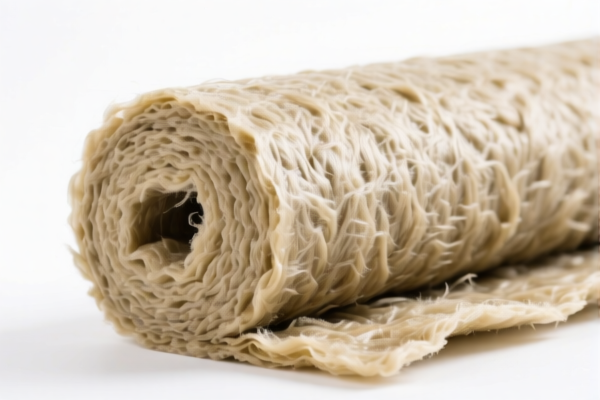
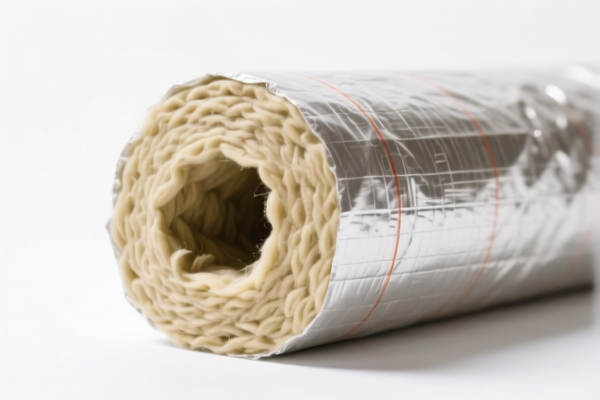
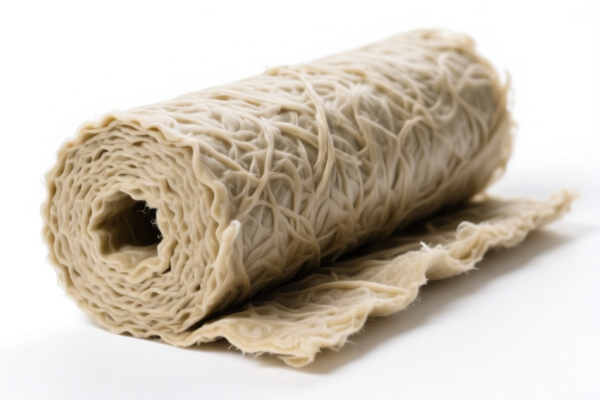
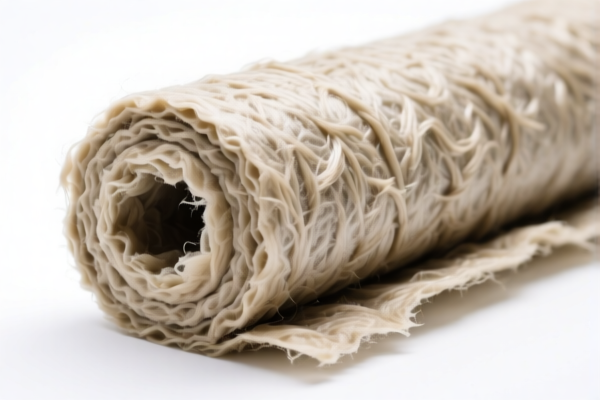
AI Analysis
🧱 Plastic Wall Sound Insulation Material (Textile/Panel)
🌐 HS Code Reference & Customs Clearance Guide | 2026 Latest Tariff Analysis | Strategic Classification for Textile & Plastic Building Materials
📌 I. Product Definition & Classification: Are You Classifying Your Acoustic Panels Correctly?
Plastic Wall Sound Insulation Materials are complex hybrid products often combining plastic polymers with textile structures to achieve acoustic damping. In international trade, the classification hinges on two critical factors: 1. Material Composition: Is the primary structure textile (fabric) impregnated with plastic, or is it a solid plastic component? 2. Form Factor: Is it a flexible textile sheet/fabric or a rigid architectural fixture?
⚠️ Key Classification Distinctions:
- If the product is a textile fabric impregnated, coated, covered, or laminated with plastic (even if used for insulation) → It falls under Chapter 59 (Impregnated Textiles). - If the product is a finished textile article (e.g., cut panels, assembled acoustic tiles) not primarily defined by the impregnation process but by its final form → It falls under Chapter 63 (Other Made-up Textile Articles). - If the product is a rigid plastic component for buildings (e.g., plastic acoustic ceiling tiles/wall panels) → It falls under Chapter 39 (Plastics and Articles Thereof).
📦 II. HS Code Classification Details (2026 Latest Tariff Authority Mapping)
Based on the provided data, here are the specific HS Codes and their logical deductions:
| HS Code | Product Description | Classification Logic | Primary Material/Form |
|---|---|---|---|
5903.10.20.90 |
Plastic Wall Sound Insulation Material (Textile) | Matches "Textile Fabrics Impregnated, Coated, Covered or Laminated with Plastic". The textile base is dominant. | Plastic-Coated Textile |
5903.10.20.10 |
Plastic Wall Sound Insulation Material (Textile) | Similar to above; fits "Textile Material" inferred as plastic-impregnated/flocked fabric. | Plastic-Processed Textile |
6307.90.98.91 |
Plastic Wall Sound Insulation Material (Textile) | Classified as a "Made-up Textile Article". Fits the logic of "Other Articles" under textile finishes. | Textile Finished Product |
6307.90.85.00 |
Plastic Wall Sound Insulation Material (Textile) | A "Catch-all" for other textile articles where material and use match, with no obvious form conflict. | General Textile Article |
3925.90.00.00 |
Plastic Sound Absorbing Ceiling/Wall Panel | Classified as a "Plastic Building Component". Assumes rigid plastic form rather than flexible textile. | Plastic Construction Part |
🔍 Critical Note:
- Textile vs. Plastic: If the item is a soft roll or sheet of fabric, it must go to Chapter 59 or 63. Misclassifying a textile product as a plastic component (3925) will lead to customs rejection or reclassification penalties. - Finish vs. Base: Chapter 59 (5903) applies if the plastic treatment is the defining characteristic. Chapter 63 (6307) applies if it is a finished assembly (like a quilted acoustic panel) where the textile nature is primary.
💰 III. 2026 Latest Tariff Rate Breakdown (Including Surcharges & Policy Add-ons)
✅ Applicable Country: USA (US)
✅ Origin: China (CN)
✅ Effective Time: Post-November 2025 (Current Trade Environment)
🎯 1. 5903.10.20.90 & 5903.10.20.10 —— Impregnated Plastic Textiles (Highest Risk)
| Item | Detail |
|---|---|
| Base Tariff | 0.0% |
| USITC Surtax (301 Sec) | +25.0% |
| IEEPA Surtax (Section 122/301 Add-on) | +10.0% |
| Total Effective Rate | 35.0% |
| Calculation Basis | CIF Value × 35% |
| De Minimis Exemption? | ❌ NO (Denied for these HTSUs under current trade rules) |
| Legal Basis Path | USITC:5903.10.20 → FOOTNOTE:301.88 → IEEPA:9903.01 |
📌 Explanation:
- These codes attract the highest combined surtax. The 25% is from the standard Section 301 list. - The additional 10% reflects newer policy add-ons (often referenced as "122 clauses" or specific IEEPA executive orders targeting Chinese imports). - Total 35% is a significant cost driver. Ensure your margin analysis accounts for this.
🎯 2. 6307.90.98.91 —— Made-up Textile Articles (Standard)
| Item | Detail |
|---|---|
| Base Tariff | 7.0% |
| USITC Surtax (301 Sec) | +7.5% |
| IEEPA Surtax | +10.0% |
| Total Effective Rate | 24.5% |
| Calculation Basis | CIF Value × 24.5% |
| De Minimis Exemption? | ❌ NO |
| Legal Basis Path | USITC:6307.90 → FOOTNOTE:301 → IEEPA:9903 |
📌 Explanation:
- This code has a higher base tariff (7%) but a lower surtax (7.5%) compared to Chapter 59. - The total rate (24.5%) is significantly lower than the 35% for impregnated textiles. - Strategy: If your product can be argued as a "made-up article" (e.g., cut and sewn acoustic panels) rather than just "impregnated fabric," this classification may save you ~10.5% in duties.
🎯 3. 6307.90.85.00 —— Other Textile Articles (Catch-all)
| Item | Detail |
|---|---|
| Base Tariff | 5.8% |
| USITC Surtax (301 Sec) | +7.5% |
| IEEPA Surtax | +10.0% |
| Total Effective Rate | 23.3% |
| Calculation Basis | CIF Value × 23.3% |
| De Minimis Exemption? | ❌ NO |
| Legal Basis Path | USITC:6307.90 → FOOTNOTE:301 → IEEPA:9903 |
📌 Explanation:
- This is the lowest total tax rate (23.3%) among the textile options. - It applies under a "fallback" rule where the material and use match, but there is no strict form conflict. - Caution: Customs may challenge this if the product clearly fits the specific "impregnated textile" definition in Chapter 59. Use only if the product's structure is truly ambiguous.
🎯 4. 3925.90.00.00 —— Plastic Building Components (Rigid)
| Item | Detail |
|---|---|
| Base Tariff | 5.3% |
| USITC Surtax (301 Sec) | +25.0% |
| IEEPA Surtax | +10.0% |
| Total Effective Rate | 40.3% |
| Calculation Basis | CIF Value × 40.3% |
| De Minimis Exemption? | ❌ NO |
| Legal Basis Path | USITC:3925.90 → FOOTNOTE:301 → IEEPA:9903 |
📌 Explanation:
- Although the base tariff is low (5.3%), the 25% Section 301 surtax pushes the total to 40.3%. - This is the most expensive option. - Risk: Do not use this code unless the product is a rigid plastic panel (e.g., PVC acoustic tile). If it's flexible/textile-based, this is a misclassification error that can lead to fines.
🛠️ IV. Customs Clearance Operational Advice (Practical Pitfall Avoidance)
✅ 1. Documentation Checklist (Non-Negotiable)
| Document | Required? | Purpose |
|---|---|---|
| ✅ Product Specifications | ✔️ | Must detail: Material composition (e.g., "Polyester fabric laminated with PVC"), thickness, density, and acoustic NRC rating. |
| ✅ Technical Drawings/Photos | ✔️ | Crucial: Show cross-section. Is it a flexible roll? Or a rigid tile? This determines Chapter 59/63 vs. 39. |
| ✅ Commercial Invoice | ✔️ | Description must be precise: "Plastic-Impregnated Textile Acoustic Panel" vs. "Plastic Wall Panel". Avoid vague terms like "Sound Proofing". |
| ✅ Certificate of Origin (CO) | ✔️ | To confirm Chinese origin and apply correct surtaxes. |
| ✅ Third-Party Test Report | ✔️ | Fire retardancy (UL 94), acoustic performance (ASTM E84), and material composition analysis. |
| ✅ Packing List | ✔️ | Ensure no loose components that could be interpreted as separate goods. |
✅ 2. Declaration Strategy (Key Mnemonics)
🔥 "Flexible is Textile (Ch59/63), Rigid is Plastic (Ch39). Don't Mix!"
| Scenario | Correct Classification | Common Mistake | Consequence |
|---|---|---|---|
| Flexible Acoustic Fabric/Roll | 5903.10.20.xx or 6307.90.xx |
Declaring as 3925 (Plastic) |
❌ Misclassification. High penalty risk. |
| Rigid Plastic Acoustic Tile | 3925.90.00.00 |
Declaring as 5903 (Textile) |
❌ High tax (40.3%) + potential fine. |
| Cut & Sewn Acoustic Panels | 6307.90.98.91 (Best Rate: 24.5%) |
Declaring as 5903 (Rate: 35%) |
❌ Overpaying ~10.5% in duties. |
✅ 3. Special Circumstances
| Situation | Handling Advice |
|---|---|
| Hybrid Products | If the product has a plastic core and textile covering, argue for 5903 (Textile-based) if the textile is the primary consumer-facing feature. |
| Sample Imports | Even samples are subject to full duties. Do not use "Gift" or "Sample" to bypass the 35-40% tariff. |
| Pre-Ruling | Highly Recommended: For large shipments, apply for an Advance Ruling from CBP. Provide samples and technical specs to lock in the HS Code (preferably 6307.90 for lower rates). |
| Section 301 Exclusions | Check if your specific product code is eligible for any temporary exclusions (though most plastic/textile building materials are currently excluded from relief). |
🌍 V. Global Market Comparison (2026 Context)
| Market | Recommended HS Code | Est. Total Duty (CN Origin) | Key Requirement |
|---|---|---|---|
| 🇺🇸 USA | 5903.10.20 or 6307.90 |
23.3% – 40.3% | Detailed material breakdown; IEEPA compliance. |
| 🇨🇳 China | 5903 or 6307 |
~7% - 10% | Standard import declaration. |
| 🇪🇺 EU | 5903 or 6307 |
~6.5% (MFN) | REACH compliance (plastics), CE marking (if electrical). |
| 🇬🇧 UK | 5903 or 6307 |
~6.5% (MFN) | UKCA marking, post-Brexit declarations. |
📌 Conclusion:
- The USA remains the highest-cost market due to the叠加 (stacking) of Base Tariffs + 301 Surtax + IEEPA Add-ons. - Strategic Tip: If your product can be manufactured as a finished textile article (cut, sewn, quilted) rather than just raw impregnated fabric, aim for6307.90. The savings of ~10-12% (24.5% vs 35%) are substantial for high-volume shipments.
📌 VI. Common Errors & Pitfalls (Blood & Tears Lessons)
❌ Mistake 1: Classifying a flexible textile acoustic panel as 3925 (Plastic)
👉 Result: Not only is it a misclassification, but if caught, you face re-classification to 5903/6307 + back duties. If declared as 3925, you might pay 40.3%, but if the correct code is 6307 (24.5%), you are overpaying. If the correct code is 5903 (35%), you are still overpaying compared to the optimal 24.5% path. More importantly, customs will flag the discrepancy in material form.
❌ Mistake 2: Ignoring the "Impregnated" Definition
👉 Result: Declaring 6307 for a product that is clearly unprocessed impregnated fabric (5903). Customs may reject the 6307 classification because the product hasn't been "made up" into an article.
❌ Mistake 3: Vague Descriptions ("Sound Insulator")
👉 Result: CBP assigns the highest default duty rate or flags for manual examination, causing delays and storage fees.
✅ Best Practice:
Description: "Acoustic Wall Panel, Polyester Textile Fabric Laminated with PVC Foam Core, Cut to Size, for Interior Sound Dampening."
HS Code:6307.90.98.91(If treated as made-up article) or5903.10.20.90(If treated as impregnated fabric).
Justification: Provide material composition sheets and photos showing the layered structure.
🎯 VII. Conclusion: Precision in Classification Saves Thousands
🎯 Remember the Golden Rule:
🔹 "Textile Base + Plastic Coating = Chapter 59/63"
🔹 "Rigid Plastic Component = Chapter 39"
🔹 "Made-up Article (Sewn/Cut) = Lower Tax Rate (6307)"
🔹 "Raw Impregnated Fabric = Higher Tax Rate (5903)"
📌 Action Item:
1. Analyze your product form: Is it a roll (Chapter 59) or a finished panel (Chapter 63)?
2. Request an Advance Ruling from CBP if shipping large volumes.
3. Optimize for 6307.90.98.91 if possible to achieve the 24.5% rate instead of 35%.
📣 Pro Tip:
Engage a licensed customs broker to review your Bill of Lading and Commercial Invoice descriptions before filing. A single word change from "Panel" to "Fabric" can shift your duty liability by 10-15%.
✨ Accurate Classification is the First Step to Profitable Global Trade! 💼
Customer Reviews
About HS Code Classification
The Harmonized System (HS) is an internationally standardized nomenclature developed by the World Customs Organization (WCO) to classify traded products. Over 200 countries use the HS system as the basis for customs tariffs, trade statistics, and import/export regulations.
Each HS code follows a hierarchical structure:
- Chapter (2 digits) — Broad category of goods (e.g., Chapter 84: Machinery and Mechanical Appliances)
- Heading (4 digits) — More specific grouping within the chapter
- Subheading (6 digits) — Internationally standardized breakdown, used by all WCO member countries
- National subdivisions (8-10 digits) — Country-specific extensions for further classification, such as US HTSUS 10-digit codes
Correct HS code classification is essential for smooth customs clearance, accurate duty payment, and compliance with trade regulations. Misclassification can lead to customs delays, overpayment of duties, or penalties.
When importing from CN to US, the applicable tariff rates may include:
- Most-Favored-Nation (MFN) rate — The standard duty rate applied to WTO members
- General rate — Applied to countries without trade agreements
- Trade remedy duties — Additional tariffs such as Section 301 (anti-dumping), Section 232 (national security), or countervailing duties
The information provided on this page is for reference purposes only. For official classification, please consult with your local customs authority or a licensed customs broker.