Plastic Water Tank
CN → US| HS Code | Tariff Rate | Origin | Destination | Doc |
|---|---|---|---|---|
| 3926909989 | 22.8% | CN | US | Official Doc |
| 3926901000 | 20.9% | CN | US | Official Doc |
| 3922900000 | 41.3% | CN | US | Official Doc |
| 3922100000 | 23.8% | CN | US | Official Doc |
| 3924905650 | 20.9% | CN | US | Official Doc |
Product Images

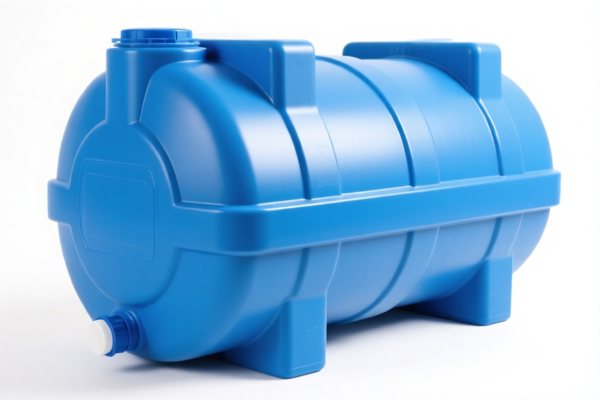

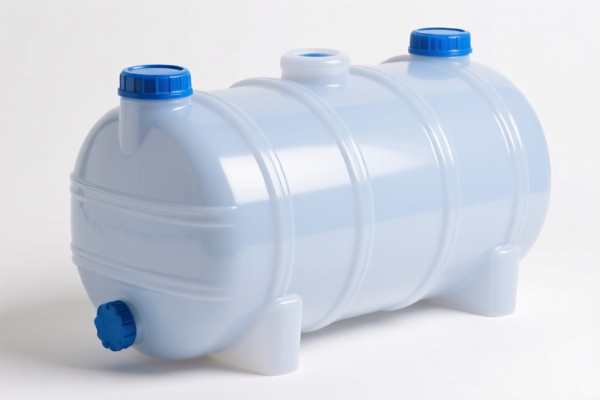
AI Analysis
🛢️ Plastic Water Tank: HS Code Classification & Duty Breakdown | 2026 US Import Guide
🌐 Customs Classification & Tariff Analysis | Precision Declaration Strategy
📌 I. Product Definition & Classification Logic
The "Plastic Water Tank" is a broad category that often leads to classification errors due to its varying end-uses and shapes. In international trade, the intended use and physical form determine the correct HS Code. It is not a "one-size-fits-all" category.
The data provided highlights four distinct classification paths based on specific attributes:
- General Purpose Containers: Generic plastic tanks that do not fit into specialized sanitary or large-scale industrial buckets.
- Large Capacity Storage: Tanks explicitly designed as water storage vessels (jugs, drums).
- Sanitary/Plumbing Fixtures: Tanks specifically designed for toilets (flush tanks).
- Household Accessories: Small tanks or racks (e.g., water bottle racks) considered household items.
⚠️ Critical Distinction:
- If the tank is for toilet flushing, it falls under Sanitary Ware (Ch. 3922).
- If the tank is for general water storage (e.g., rainwater, livestock, home reserve), it falls under General Plastic Articles (Ch. 3926).
- Misclassification can lead to massive duty differences (from ~20% to >40%).
📦 II. HS Code Classification Details (Based on Provided Data)
| HS Code | Summary & Logic | Key Characteristics |
|---|---|---|
| 3926.90.99.89 | Other Plastic Articles: The "catch-all" category. | Generic plastic containers; not specifically described elsewhere (e.g., not a toilet tank, not a specific bucket type). |
| 3926.90.10.00 | Plastic Water Tanks/Drums: Large capacity storage. | Specifically identified as "Water Tanks" (Xushui), logical extension of buckets/drums for large-volume storage. |
| 3922.90.00.00 | Other Sanitary Articles: Toilet flush tanks. | Plastic Sanitary Ware. Specifically for toilets (WC cisterns). High duty due to "Section 301" tariffs. |
| 3922.10.00.00 | Sanitary Ware: Sinks/Washbasins (including tanks). | Plastic tanks categorized under sink/washbasin logic (less common for standalone tanks, but possible if part of a vanity unit). |
| 3924.90.56.50 | Household Articles: Water bottle racks/supports. | Small plastic items for holding water bottles, classified as general household goods rather than bulk storage. |
💰 III. 2026 US Tariff Rate Detailed Analysis
✅ Applicable Country: United States (US)
✅ Origin: China (CN) (Inferred from 122 Clause and high duties)
✅ Effective Date: Current regulations (Section 301 / 122 Clauses)
🎯 1. 3926.90.99.89 – Generic Plastic Containers
The "Fallback" Option
| Item | Detail |
|---|---|
| Base Duty | 5.3% |
| Section 301 Surcharge | 7.5% |
| Section 122 Surcharge | 10% |
| Total Tariff Rate | 22.8% |
| Tax Calculation | CIF Value × 22.8% |
| De Minimis Exemption | ❌ Not Eligible (High duty rate excludes low-value shipments from Section 321 relief in many strict interpretations, or simply too high for de minimis logic). |
📌 Explanation:
This is the standard "Other Plastic Articles" classification. It applies if the tank doesn't fit neatly into "Sanitary" or specific "Bucket/Drum" definitions. The total burden of ~23% is significant but manageable for general goods.
🎯 2. 3926.90.10.00 – Plastic Water Tanks (Large Capacity)
The "Specific Use" Option for Storage
| Item | Detail |
|---|---|
| Base Duty | 3.4% |
| Section 301 Surcharge | 7.5% |
| Section 122 Surcharge | 10% |
| Total Tariff Rate | 20.9% |
| Tax Calculation | CIF Value × 20.9% |
| De Minimis Exemption | ❌ Not Eligible |
📌 Explanation:
This code offers the lowest total tariff (20.9%) among the main storage options. It is the best classification for large-volume water storage tanks (e.g., 500L+ industrial/home reserves). It leverages a lower base duty (3.4%) compared to the generic code.
🎯 3. 3922.90.00.00 – Plastic Sanitary Articles (Toilet Tanks)
The "High Risk" Category
| Item | Detail |
|---|---|
| Base Duty | 6.3% |
| Section 301 Surcharge | 25.0% |
| Section 122 Surcharge | 10% |
| Total Tariff Rate | 41.3% |
| Tax Calculation | CIF Value × 41.3% |
| De Minimis Exemption | ❌ Not Eligible |
📌 CRITICAL WARNING:
- The Section 301 Surcharge is 25% (standard for many Ch. 3922 items), not 7.5%.
- This results in a very high total duty of 41.3%.
- Only use this code if the product is exclusively a toilet flush tank (cistern). Using this for general water tanks is a compliance violation.
🎯 4. 3922.10.00.00 – Sanitary Ware (Sinks/Washbasins)
The "Niche" Option
| Item | Detail |
|---|---|
| Base Duty | 6.3% |
| Section 301 Surcharge | 7.5% |
| Section 122 Surcharge | 10% |
| Total Tariff Rate | 23.8% |
| Tax Calculation | CIF Value × 23.8% |
| De Minimis Exemption | ❌ Not Eligible |
📌 Explanation:
While still under Ch. 3922 (Sanitary), this specific subheading has a lower surcharge (7.5%) compared to 3922.90. However, it is only applicable if the tank is integrated with or classified alongside sinks/washbasins. Rare for standalone water tanks.
🎯 5. 3924.90.56.50 – Household Articles (Water Bottle Racks)
The "Small Item" Option
| Item | Detail |
|---|---|
| Base Duty | 3.4% |
| Section 301 Surcharge | 7.5% |
| Section 122 Surcharge | 10% |
| Total Tariff Rate | 20.9% |
| Tax Calculation | CIF Value × 20.9% |
| De Minimis Exemption | ❌ Not Eligible |
📌 Explanation:
This applies only if the "tank" is actually a rack or holder for water bottles, not a container itself. If it holds water as a container, this is incorrect. Correct for accessories only.
🛠️ IV. Customs Clearance Practical Advice
✅ 1. Preparation Checklist (Must-Haves)
| Document | Required | Reason |
|---|---|---|
| ✅ Product Photos | ✔️ | To prove it is a tank (storage) vs. sanitary fixture (toilet). |
| ✅ Technical Specifications | ✔️ | Volume, material (PP/PE), intended use statement. |
| ✅ Intended Use Declaration | ✔️ | Critical: Explicitly state "For Water Storage Only" or "For Toilet Flush System." |
| ✅ Material Certificate | ✔️ | To confirm it is plastic (HS Ch. 39). |
| ✅ Commercial Invoice | ✔️ | Must match the HS Code description exactly. |
✅ 2. Classification Strategy (Key Tips)
🔥 “Use Determines Code: Sanitary vs. Storage”
| Scenario | Recommended HS Code | Total Duty | Why? |
|---|---|---|---|
| Large Water Tank (Home/Industrial Storage) | 3926.90.10.00 | 20.9% | Lowest duty for actual water containers. |
| General Plastic Container (No specific form) | 3926.90.99.89 | 22.8% | Safe fallback if "Tank" definition is ambiguous. |
| Toilet Flush Tank (Cistern) | 3922.90.00.00 | 41.3% | Mandatory for sanitary use, despite high duty. |
| Water Bottle Rack (Accessory) | 3924.90.56.50 | 20.9% | Only if it's a rack, not a tank. |
✅ 3. Risk Management & Pitfalls
| Pitfall | Consequence | Solution |
|---|---|---|
| Mislabeling Toilet Tanks as General Tanks | Penalty for Fraud | Be honest. If it's for toilets, it's 3922.90.00.00 (41.3%). Do not try to hide it under 3926.90 to save 18%. CBP will catch it. |
| Mislabeling General Tanks as Toilet Tanks | Undervaluation Penalty | If you declare a 200L storage tank as a toilet tank, you pay 41.3% instead of 20.9%. Unnecessary cost. |
| Ignoring Section 122 | Unexpected Costs | The 10% surcharge applies to most Chinese plastics. Factor it into your pricing model. |
| De Minimis Misunderstanding | Seizure | With duties >20%, these shipments do not qualify for Section 321 (de minimis) relief in standard practice. Prepare for full entry. |
🌍 V. Market Comparison (US Focus)
| Market | Recommended HS Code | Est. Duty Rate | Notes |
|---|---|---|---|
| 🇺🇸 USA | 3926.90.10.00 | 20.9% | Best balance for water tanks. |
| 🇨🇳 China (Export) | N/A | Varies | Export duties are minimal, but focus on import side. |
| 🇪🇺 EU | 3926.90 | ~4.5% | Lower base duties, but high VAT (19-27%). |
| 🇬🇧 UK | 3926.90 | ~4.5% | Post-Brexit tariffs apply. |
📌 Conclusion:
- For US Importers, the Plastic Water Tank (3926.90.10.00) at 20.9% is the most cost-effective and compliant classification for storage purposes.
- Avoid 3922.90.00.00 unless it is a toilet part, due to the 41.3% burden.
📌 VI. Final Recommendations
- Define Purpose Clearly: In your commercial invoice, write:
> "Plastic Water Storage Tank, PP Material, 500L Capacity, For Water Storage Only. NOT Sanitary Ware." - Submit Pre-Ruling: If shipping large volumes, submit an API Pre-Ruling request to CBP for certainty.
- Audit Your Supplier: Ensure the supplier’s declaration matches your intended use. If they label it "Toilet Cistern" but you use it for water storage, it creates a discrepancy.
🎯 Summary Mnemonic:
🔹 "Tank for Water? Use 3926.90.10 (20.9%).
🔹 "Toilet Tank? Use 3922.90 (41.3%).
🔹 "Generic Box? Use 3926.99 (22.8%).
🔹 "Don't Mix! Duty Difference is Huge!"
✨ Professional Customs Clearance Starts with Precise Classification!
💼 Optimize Your Landed Cost by Choosing the Right HS Code!
Customer Reviews
About HS Code Classification
The Harmonized System (HS) is an internationally standardized nomenclature developed by the World Customs Organization (WCO) to classify traded products. Over 200 countries use the HS system as the basis for customs tariffs, trade statistics, and import/export regulations.
Each HS code follows a hierarchical structure:
- Chapter (2 digits) — Broad category of goods (e.g., Chapter 84: Machinery and Mechanical Appliances)
- Heading (4 digits) — More specific grouping within the chapter
- Subheading (6 digits) — Internationally standardized breakdown, used by all WCO member countries
- National subdivisions (8-10 digits) — Country-specific extensions for further classification, such as US HTSUS 10-digit codes
Correct HS code classification is essential for smooth customs clearance, accurate duty payment, and compliance with trade regulations. Misclassification can lead to customs delays, overpayment of duties, or penalties.
When importing from CN to US, the applicable tariff rates may include:
- Most-Favored-Nation (MFN) rate — The standard duty rate applied to WTO members
- General rate — Applied to countries without trade agreements
- Trade remedy duties — Additional tariffs such as Section 301 (anti-dumping), Section 232 (national security), or countervailing duties
The information provided on this page is for reference purposes only. For official classification, please consult with your local customs authority or a licensed customs broker.