Plastic Welding Machine
CN → US| HS Code | Tariff Rate | Origin | Destination | Doc |
|---|---|---|---|---|
| 8515800080 | 35.0% | CN | US | Official Doc |
| 8515800040 | 35.0% | CN | US | Official Doc |
| 8479820080 | 35.0% | CN | US | Official Doc |
| 8479896500 | 20.3% | CN | US | Official Doc |
Product Images
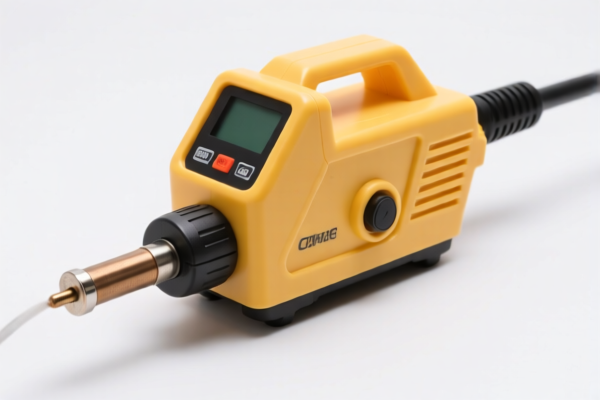
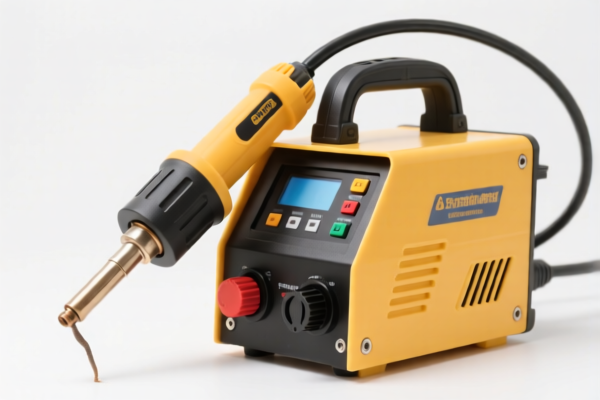


AI Analysis
⚡ Plastic Welding Machine (Industrial & Commercial)
🌐 HS Code Reference & Customs Clearance Guide | 2026 Latest Tariff Analysis | Professional Clearance Strategy
📌 Part 1: Product Definition & Classification: What is a "Plastic Welding Machine"?
A Plastic Welding Machine is a specialized industrial device used to join thermoplastic materials. It operates by generating heat (via ultrasound, hot gas, or resistance) to melt the plastic surfaces, which are then pressed together to form a bond. In international trade, these machines are primarily classified under Chapter 84 (Nuclear reactors, boilers, machinery and mechanical appliances; parts thereof) or Chapter 85 (Electrical machinery and equipment), depending on their specific operating principle and functional focus.
⚠️ Key Classification Distinction:
- If the machine is defined primarily as a welding appliance (generating thermal/electric energy for joining), it falls under Heading 8515.
- If the machine is defined as a general mechanical apparatus with independent functionality that doesn't fit a specific "welding" definition in Chapter 85, it may fall under Heading 8479.
📦 Part 2: HS Code Classification Details (2026 Latest Tariff Authority Comparison)
Based on the provided data, there are four potential HS Codes for Plastic Welding Machines. The choice depends on how customs authorities interpret the "primary function" and "material compatibility."
| HS Code | Product Description | Summary & Logic | Total Tax Rate |
|---|---|---|---|
| 8515.80.00.80 | Welding machinery, apparatus and equipment: Other | Classified as a generic welding device. Uses "Other" as a catch-all category. No conflict with material/usage. | 35.0% |
| 8515.80.00.40 | Welding machinery, apparatus and equipment: Other | Specific match for plastic welding. Usage aligns with ultrasonic welding machines; plastic material is within common application scope. | 35.0% |
| 8479.82.00.80 | Machines and mechanical appliances: Machines having individual functions, not specified or included elsewhere in this chapter | Classified as a mechanical appliance. Function is welding, but categorized under general machinery rather than electrical welding equipment. | 35.0% |
| 8479.89.65.00 | Machines and mechanical appliances: Other machines and mechanical appliances having individual functions | Classified as a "Other具有独立功能的机械器具" (Other machinery with independent functions). Catch-all for machinery not covered in 8479.82. | 20.3% |
🔍 Critical Insight:
- Codes 8515.80.00.80 & 8515.80.00.40 are functionally identical in tax treatment but differ slightly in descriptive specificity. Both carry the highest tax burden.
- Code 8479.82.00.80 is a broader mechanical classification, also carrying 35%.
- Code 8479.89.65.00 is the most tax-efficient option at 20.3%, positioning the machine as a general-purpose independent mechanical appliance rather than a dedicated welding tool.
💰 Part 3: 2026 Latest Tariff Rate Breakdown (Including Surtaxes & Policy Add-ons)
✅ Applicable Country: United States (US)
✅ Country of Origin: China (CN)
✅ Effective Date: Ongoing (Includes subsequent imports post-2025 adjustments)
🎯 1. HS Code 8515.80.00.80 & 8515.80.00.40 — Welding Machinery (The "High Tax" Route)
These codes treat the plastic welding machine as standard welding equipment, triggering all applicable surcharges.
| Item | Detail |
|---|---|
| Base Tariff (MFN) | 0.0% |
| Section 301 Surtax | +25.0% (USITC Footnote applicable to welding equipment) |
| IEEPA 122 Clause Surcharge | +10.0% (Specific policy surcharge for Chinese origin) |
| Total Effective Rate | 35.0% |
| Tax Calculation | CIF Value × 35% |
| De Minimis Exemption | ❌ Not Eligible (Denied) |
| Legal Basis Path | USITC:8515.80.00.80 → Section 301: 25% → IEEPA: 122 Clause: 10% |
📌 Explanation:
- The 25% Section 301 tax is standard for many industrial machinery items from China.
- The 10% IEEPA 122 Clause tax is an additional penalty applied specifically to this category under recent trade policies.
- Total 35% significantly impacts profit margins.
🎯 2. HS Code 8479.82.00.80 — Mechanical Appliances (General Machinery)
| Item | Detail |
|---|---|
| Base Tariff (MFN) | 0.0% |
| Section 301 Surtax | +25.0% |
| IEEPA 122 Clause Surcharge | +10.0% |
| Total Effective Rate | 35.0% |
| Tax Calculation | CIF Value × 35% |
| Legal Basis | Same as above, but applied under Chapter 84 machinery provisions. |
⚠️ Note: Even though it is classified under "Machinery" (8479), it still attracts the same high surcharges as welding equipment (8515) in this dataset.
🎯 3. HS Code 8479.89.65.00 — Other Independent Machinery (The "Optimized" Route)
This code offers a significant tax advantage by reclassifying the machine as a general-purpose mechanical device rather than dedicated welding equipment.
| Item | Detail |
|---|---|
| Base Tariff (MFN) | 2.8% |
| Section 301 Surtax | +7.5% |
| IEEPA 122 Clause Surcharge | +10.0% |
| Total Effective Rate | 20.3% |
| Tax Calculation | CIF Value × 20.3% |
| Legal Basis | USITC:8479.89.65.00 → Section 301: 7.5% → IEEPA: 122 Clause: 10% |
📌 Explanation:
- Base Tariff: Unlike welding equipment (0% base), this general machinery category has a 2.8% base rate.
- Section 301 Surtax: Significantly lower at 7.5% (vs. 25% for welding machines). This is the key differentiator.
- IEEPA Surcharge: Still 10%.
- Total Savings: 14.7% lower than the 8515/8479.82 options.
- Strategy: This classification relies on arguing that the machine's primary function is "mechanical operation" rather than "welding," which may require specific product descriptions and technical documentation to support.
🛠️ Part 4: Customs Clearance Practical Advice (Battle-Tested Pitfall Guide)
✅ 1. Document Checklist (Non-negotiable)
| Document | Required? | Purpose |
|---|---|---|
| ✅ Product Specification Sheet | ✔️ | Must detail power type, welding method (ultrasonic, hot air, etc.), and max plastic thickness. |
| ✅ Technical Manual/Operation Guide | ✔️ | To prove functionality. If the manual emphasizes "welding," customs may lean toward 8515. If it emphasizes "mechanical processing," 8479.89.65.00 may be stronger. |
| ✅ Product Photos (Clear Label) | ✔️ | Show model number, brand, and input/output specs. |
| ✅ Commercial Invoice | ✔️ | Must match HS Code description precisely. Avoid vague terms like "Plastic Tool." Use "Plastic Welding Machine" or "Industrial Mechanical Joining Apparatus." |
| ✅ Certificate of Origin (CO) | ✔️ | Essential for calculating origin-based surcharges. |
✅ 2. Declaration Strategy (Key Mnemonic)
🔥 "Be Specific, Be Strategic: Welding = High Tax, Machine = Lower Tax!"
| Scenario | Recommended HS Code | Why? | Risk |
|---|---|---|---|
| Standard Ultrasonic Welder | 8515.80.00.40 |
Direct match to "welding." High compliance certainty, but 35% tax. | Low risk of audit, but high cost. |
| Generic Mechanical Plastic Joiner | 8479.89.65.00 |
Argues for "general machinery." 20.3% tax. | Higher audit risk. Requires strong technical justification that it is not a "welding machine" under Ch. 85. |
| Mixed Equipment | 8479.82.00.80 |
Middle ground. Still 35% tax. | Avoid unless necessary. |
📌 Pro Tip:
- If you choose 8479.89.65.00, ensure your commercial invoice and marketing materials do not exclusively use the word "Welder." Use terms like "Plastic Fabrication Machine" or "Thermal Bonding Apparatus."
- However, be prepared for customs to reclassify if they deem the primary function to be welding.
✅ 3. Special Considerations
| Situation | Advice |
|---|---|
| OEM/Custom Machines | Provide detailed engineering drawings showing the mechanical drive system to support the "8479" classification. |
| Ultrasonic vs. Hot Air | Ultrasonic is more likely to be seen as "welding" (8515). Hot air or vibration welding might have a stronger case for "mechanical" (8479). |
| Pre-Ruling (Advance Ruling) | Highly Recommended. If targeting 8479.89.65.00, apply for an Advance Ruling from USCBP to lock in the 20.3% rate and avoid post-entry adjustments. |
🌍 Part 5: Global Market Clearance Comparison (2026 Overview)
| Country/Region | Recommended HS Code | Est. Tariff (China Origin) | Key Certifications | Notes |
|---|---|---|---|---|
| 🇺🇸 USA | 8479.89.65.00 |
20.3% | UL, CE (if applicable) | Best Option: Lower Surtax. Avoid 8515 unless necessary. |
| 🇺🇸 USA | 8515.80.00.40 |
35.0% | UL, CE | High cost. Only use if product is undeniably a "welder." |
| 🇨🇳 China | 8479.89.65.00 / 8515.80.00 |
~7-15% (Import) | CCC (if applicable) | No Section 301/IEEPA surcharges. Lower risk. |
| 🇪🇺 EU | 8479.89.65.00 |
4-7% | CE, RoHS | Generally lower tariffs for machinery. No punitive surcharges. |
📌 Conclusion:
- USA: The 14.7% tax difference between 8515 (35%) and 8479.89.65.00 (20.3%) is substantial. Strategic classification is key.
- Other Markets: Generally more favorable for machinery imports.
📌 Part 6: Common Mistakes & Pitfalls (Blood-Led Lessons)
❌ Mistake 1: Using "Plastic Welder" on the invoice for 8479.89.65.00.
👉 Consequence: Customs will flag the discrepancy, leading to reclassification to 8515.80.00.40 → Back taxes of 14.7% + penalties!
❌ Mistake 2: Ignoring the IEEPA 122 Clause.
👉 Consequence: All four codes in this dataset include a 10% IEEPA surcharge. Failure to declare origin correctly or claiming exemption where none exists leads to seizures.
❌ Mistake 3: Assuming "Base Tax 0%" means "No Tax."
👉 Consequence: Under 8515/8479.82, the base is 0%, but Surtaxes (25% + 10%) apply. Total is 35%. Never confuse base rate with effective rate.
✅ Correct Approach:
"Industrial Plastic Bonding Machine, Model XYZ, Uses Hot Plate Technology, for PVC/PE Materials."
(Avoid "Welder" if targeting 8479.89.65.00.)
🎯 Part 7: Conclusion: Precision in Classification Saves Millions!
🎯 Remember the Golden Rule:
🔹 "Welding Name = 35% Tax; Mechanical Name = 20.3% Tax (Maybe!)"
🔹 "Check the Surtax: 25% is the Killer, 7.5% is the Friend."
🔹 "IEEPA 10% Applies to All: Don't Forget It!"
📌 Pro Tip:
If your profit margins are thin, apply for a Pre-Ruling for 8479.89.65.00. The cost of legal/preparation is far less than 14.7% on every shipment.
For 8515.80.00.40, ensure you have UL Certification for US safety compliance, as customs often cross-reference safety standards with classification.
📣 Immediate Action:
📞 Consult a Customs Broker: Discuss the "Welding vs. Machinery" argument.
📝 Prepare Technical Docs: Highlight mechanical components, not just heating elements.
🚀 Optimize Your Landed Cost: A 14.7% saving is not just tax avoidance; it's pure profit protection.
✨ Professional Clearance Starts with Precise Classification!
💼 Every Cent Counted, Every Tax Minimized!
Customer Reviews
About HS Code Classification
The Harmonized System (HS) is an internationally standardized nomenclature developed by the World Customs Organization (WCO) to classify traded products. Over 200 countries use the HS system as the basis for customs tariffs, trade statistics, and import/export regulations.
Each HS code follows a hierarchical structure:
- Chapter (2 digits) — Broad category of goods (e.g., Chapter 84: Machinery and Mechanical Appliances)
- Heading (4 digits) — More specific grouping within the chapter
- Subheading (6 digits) — Internationally standardized breakdown, used by all WCO member countries
- National subdivisions (8-10 digits) — Country-specific extensions for further classification, such as US HTSUS 10-digit codes
Correct HS code classification is essential for smooth customs clearance, accurate duty payment, and compliance with trade regulations. Misclassification can lead to customs delays, overpayment of duties, or penalties.
When importing from CN to US, the applicable tariff rates may include:
- Most-Favored-Nation (MFN) rate — The standard duty rate applied to WTO members
- General rate — Applied to countries without trade agreements
- Trade remedy duties — Additional tariffs such as Section 301 (anti-dumping), Section 232 (national security), or countervailing duties
The information provided on this page is for reference purposes only. For official classification, please consult with your local customs authority or a licensed customs broker.