Plastic Winding Disks
CN → US| HS Code | Tariff Rate | Origin | Destination | Doc |
|---|---|---|---|---|
| 3926909989 | 22.8% | CN | US | Official Doc |
| 3926908300 | 40.3% | CN | US | Official Doc |
| 8479810000 | 35.0% | CN | US | Official Doc |
| 8479909596 | 85.0% | CN | US | Official Doc |
| 8504909642 | 35.0% | CN | US | Official Doc |
Product Images
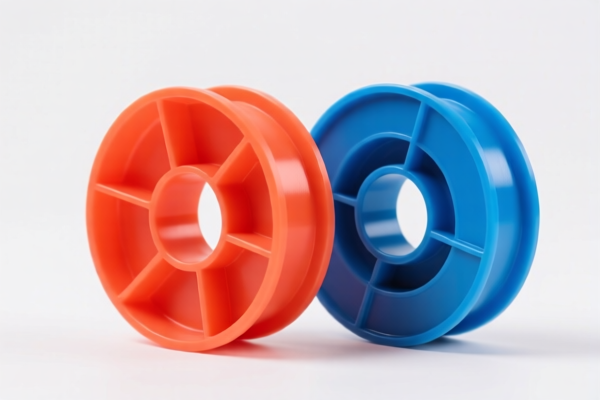
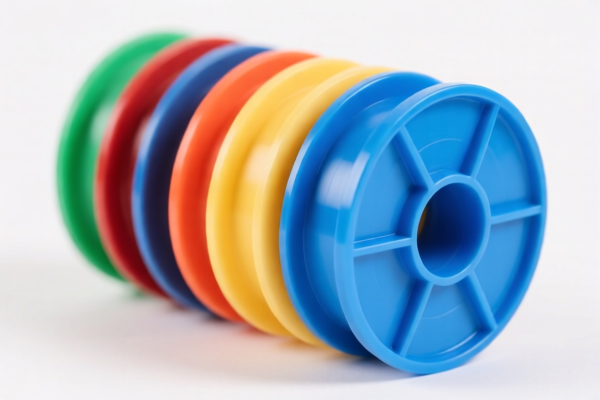

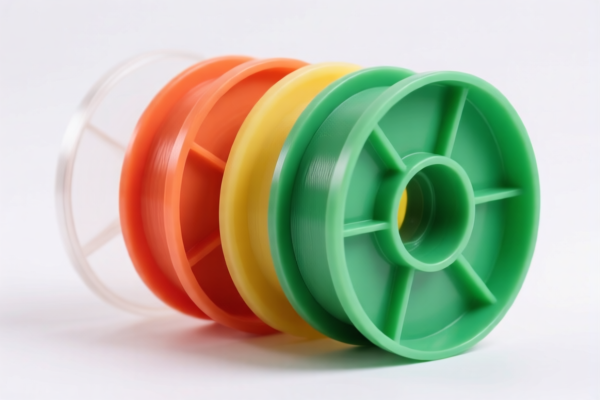
AI Analysis
🧵 Plastic Winding Disks (Coils Bobbins/Spool)
🌐 HS Code Reference & Customs Clearance Guide | 2026 Latest Tariff Analysis | Professional Classification Strategy
📌 I. Product Definition & Classification: Are You Classifying "Plastic Winding Disks" Correctly?
Plastic Winding Disks (also known as bobbins, spools, or reels) are essential components used to wind copper wire, fiber optics, or other conductive/non-conductive materials for transformers, motors, relays, and inductors. In international trade, their classification depends heavily on material composition, specific function, and associated machinery/equipment.
⚠️ Key Distinction Point:
- If it is a generic plastic component not specifically designed for a single machine → Chapter 39 (Plastics)
- If it is a specialized part for a machine (e.g., metal processing machinery) → Chapter 84 (Machinery)
- If it is a specialized part for electrical apparatus (e.g., transformers) → Chapter 85 (Electrical Machinery)
📦 II. HS Code Classification Details (2026 Latest Tariff Authority Comparison)
| HS Code | Product Description | Application Scenario | Material/Function Match |
|---|---|---|---|
3926.90.99.89 |
Other articles of plastics and articles of other materials of heading 3901 to 3914 | Generic plastic winding disk, no specific machinery conflict | ✅ Plastic, General Purpose |
3926.90.83.00 |
Other articles of plastics, for specific sub-heading 83 | Plastic winding disk falling under "other" categories | ✅ Plastic, Specific Sub-category |
8479.81.00.00 |
Parts of machinery and mechanical appliances for handling metal | Winding disk as a part of machine tools for metal processing | ✅ Part of Machinery (Metal Processing) |
8479.90.95.96 |
Parts of machinery and mechanical appliances, other | Winding disk as a generic part of mechanical equipment | ✅ Part of Machinery (General) |
8504.90.96.42 |
Parts of transformers | Winding disk as a component of a transformer | ✅ Part of Transformer |
8504.90.96.46 |
Other parts of transformers | Winding disk as a structural component of a transformer | ✅ Structural Part of Transformer |
🔍 Critical Reminder:
- Plastic Classification (3926): If the disk is a generic plastic item without strong linkage to a specific machine or electrical function, it falls here. Lowest Tax Risk.
- Machinery Parts (8479): If used in automated metal processing or general mechanical handling systems, it may be classified under Chapter 84. High Tax Risk due to Section 301.
- Transformer Parts (8504): If specifically designed for transformers, it falls under Chapter 85. Moderate to High Tax Risk depending on sub-heading.
💰 III. 2026 Latest Tariff Rate Details (Including Additional Taxes & Policy Add-ons)
✅ Applicable Country: United States (US)
✅ Origin: China (CN)
✅ Effective Date: From November 10, 2025 (including subsequent imports)
🎯 1. 3926.90.99.89 —— Plastic Articles (General Plastic Winding Disk)
| Item | Content |
|---|---|
| Base Tariff | 5.3% |
| Section 301 Additional Tariff | 7.5% |
| Section 122 Tariff | 10% |
| Total Tariff | 22.8% |
| Tax Calculation | CIF Value × 22.8% |
| De Minimis Eligibility | ❌ No (Standard de minimis rules apply, but additional tariffs usually negate benefits for certain shipments) |
| Legal Basis Path | USITC:3926.90.99.89 → Section 122: 10% → Section 301: 7.5% |
📌 Explanation:
- This is the most favorable classification for generic plastic winding disks.
- Section 122 (if applicable) and Section 301 are the main drivers of cost.
- Total 22.8% is significantly lower than machinery or electrical parts.
🎯 2. 3926.90.83.00 —— Other Plastic Articles (Specific Category)
| Item | Content |
|---|---|
| Base Tariff | 5.3% |
| Section 301 Additional Tariff | 25.0% |
| Section 122 Tariff | 10% |
| Total Tariff | 40.3% |
| Tax Calculation | CIF Value × 40.3% |
| De Minimis Eligibility | ❌ No |
| Legal Basis Path | USITC:3926.90.83.00 → Section 301: 25% → Section 122: 10% |
📌 Note:
- If the plastic winding disk is classified under a more specific "other" category, the Section 301 tariff jumps to 25% (standard for many Chinese goods).
- Total 40.3% is high, so verify if3926.90.99.89is more appropriate based on product specifics.
🎯 3. 8479.81.00.00 —— Parts of Machinery for Metal Processing
| Item | Content |
|---|---|
| Base Tariff | 0.0% |
| Section 301 Additional Tariff | 25.0% |
| Section 122 Tariff | 10% |
| Total Tariff | 35.0% |
| Tax Calculation | CIF Value × 35.0% |
| De Minimis Eligibility | ❌ No |
| Legal Basis Path | USITC:8479.81.00.00 → Section 301: 25% → Section 122: 10% |
📌 Explanation:
- Even with a 0% base tariff, the 25% Section 301 and 10% Section 122 make the total cost high.
- Only classify here if the disk is explicitly a part of metal processing machinery.
🎯 4. 8479.90.95.96 —— Other Machinery Parts (Steel/Aluminum/Copper Add-on)
| Item | Content |
|---|---|
| Base Tariff | 0.0% |
| Section 301 Additional Tariff | 25.0% |
| Section 122 Tariff | 10% |
| Steel/Aluminum/Copper Additional Tariff | 50% |
| Total Tariff | 85.0% |
| Tax Calculation | CIF Value × 85.0% |
| De Minimis Eligibility | ❌ No |
| Legal Basis Path | USITC:8479.90.95.96 → Section 301: 25% → Section 122: 10% → Section 232: 50% |
📌 Warning:
- If the winding disk contains steel, aluminum, or copper components and is classified as a machinery part, the 50% additional tariff applies.
- Total 85.0% is extremely high. Avoid this classification if possible by emphasizing plastic material and generic use.
🎯 5. 8504.90.96.42 & 8504.90.96.46 —— Parts of Transformers
| Item | Content |
|---|---|
| Base Tariff | 0.0% |
| Section 301 Additional Tariff | 25.0% |
| Section 122 Tariff | 10% |
| Total Tariff | 35.0% |
| Tax Calculation | CIF Value × 35.0% |
| De Minimis Eligibility | ❌ No |
| Legal Basis Path | USITC:8504.90.96.42/46 → Section 301: 25% → Section 122: 10% |
📌 Note:
- If the winding disk is specifically designed for transformers, it falls under Chapter 85.
- Total 35.0% is moderate but higher than the best plastic classification (22.8%).
- Ensure the product is exclusively for transformers to justify this classification.
🛠️ IV. Customs Clearance Practical Advice (Avoiding Pitfalls)
✅ 1. Preparation Checklist (Must-Have Documents)
| Document | Required | Description |
|---|---|---|
| ✅ Product Specification Sheet | ✔️ | Material (Plastic type), dimensions, intended use (generic vs. transformer/machine part) |
| ✅ Product Photos | ✔️ | Clear images showing no metal core (if claiming plastic classification) |
| ✅ Commercial Invoice | ✔️ | Clearly state "Plastic Winding Disk for General Use" or "Transformer Component" |
| ✅ Packing List | ✔️ | Detail quantities and weights |
| ✅ Certificate of Origin | ✔️ | If applicable for preferential treatment |
✅ 2. Declaration Tips (Key Rules)
🔥 "Material First, Function Second, Name Precise, Tax Minimized!"
| Scenario | Correct Declaration | Wrong Practice |
|---|---|---|
| Generic Plastic Winding Disk | 3926.90.99.89 |
Misdeclare as machinery part → 35-85% |
| Transformer Component | 8504.90.96.42 |
Misdeclare as general plastic → 22.8% (may be audited) |
| Metal-Integrated Disk | 8479.90.95.96 |
Hide metal content → 85% + penalties |
| Plastic-only, No Specific Use | 3926.90.99.89 |
Over-complicate with machinery code → Higher tax |
✅ 3. Special Cases Handling
| Situation | Handling Advice |
|---|---|
| OEM Custom Winding Disks | Provide customer design specs to prove specific use (e.g., transformer) |
| Mixed Material (Plastic + Metal Insert) | Declare as machinery part if metal is structural → High tax risk |
| Export to US from China | Pre-consult customs broker for Section 122 applicability |
| Small Quantity Samples | Check if de minimis applies, but note that additional tariffs may still apply |
🌍 V. Global Market Customs Comparison (2026 Latest)
| Country/Region | Recommended HS Code | Tariff | Certification Required | Remarks |
|---|---|---|---|---|
| 🇺🇸 United States | 3926.90.99.89 |
22.8% (Plastic) | No specific | High tax if classified under machinery |
| 🇨🇳 China | 3926.90.99.89 |
5-6% | CCC (if applicable) | Lower tax for plastics |
| 🇪🇺 European Union | 3926.90.99 |
0-6% | CE + RoHS | No additional Section 301/122 |
| 🇦🇺 Australia | 3926.90.99 |
5% | RCM | No additional tariffs |
| 🇯🇵 Japan | 3926.90.99 |
0-5% | PSE | No additional tariffs |
📌 Conclusion:
- The US is the only major market with high additional tariffs (Section 301/122/232).
- Plastic classification (3926) is the most cost-effective for winding disks.
- Avoid machinery parts classification (8479) unless absolutely necessary, as it triggers higher taxes and potential metal-related surcharges.
📌 VI. Common Errors & Pitfalls (Lessons Learned)
❌ Error 1: Classifying generic plastic winding disks as "Parts of Machinery"
👉 Consequence: Tax rate jumps from 22.8% to 35-85% → Unnecessary Cost
❌ Error 2: Hiding metal components in plastic disks
👉 Consequence: If detected, 50% steel/aluminum surcharge applies → 85% Total Tax + Penalties
❌ Error 3: Using vague terms like "Spool" without material specification
👉 Consequence: Customs may reclassify as machinery part → Audit & Delay
❌ Error 4: Assuming de minimis applies to all small shipments
👉 Consequence: Additional tariffs (Section 301/122) often override de minimis → Tax Still Due
✅ Correct Practice:
"Plastic Winding Disk, General Purpose, No Metal Core, For Wire Spooling, Model XYZ, Plastic Material"
🎯 VII. Conclusion: Precise Classification, Save Costs, Ensure Compliance!
🎯 Remember the Golden Rule:
🔹 "Plastic First, Function Second, Avoid Machinery, Minimize Tax!"
🔹 "HS Code Determines Tax, 22.8% vs 85% is a Huge Difference, Declare Accurately!"
📌 Pro Tip:
- If your winding disks are exclusively for transformers, consider Chapter 85 but ensure documentation proves exclusive use.
- For generic plastic disks, stick to 3926.90.99.89 to minimize tax risk.
- Pre-apply for an Advance Ruling from US Customs to confirm classification and avoid post-clearance adjustments.
📣 Immediate Action:
📞 Contact a professional customs broker + Provide product photos + Apply for HS Code Advance Ruling
🚀 Ensure your plastic winding disks clear customs smoothly, reduce costs, and maximize profit!
✨ Professional Customs Clearance Starts with Accurate Classification!
💼 Every cent of your cost deserves precise calculation!
Customer Reviews
About HS Code Classification
The Harmonized System (HS) is an internationally standardized nomenclature developed by the World Customs Organization (WCO) to classify traded products. Over 200 countries use the HS system as the basis for customs tariffs, trade statistics, and import/export regulations.
Each HS code follows a hierarchical structure:
- Chapter (2 digits) — Broad category of goods (e.g., Chapter 84: Machinery and Mechanical Appliances)
- Heading (4 digits) — More specific grouping within the chapter
- Subheading (6 digits) — Internationally standardized breakdown, used by all WCO member countries
- National subdivisions (8-10 digits) — Country-specific extensions for further classification, such as US HTSUS 10-digit codes
Correct HS code classification is essential for smooth customs clearance, accurate duty payment, and compliance with trade regulations. Misclassification can lead to customs delays, overpayment of duties, or penalties.
When importing from CN to US, the applicable tariff rates may include:
- Most-Favored-Nation (MFN) rate — The standard duty rate applied to WTO members
- General rate — Applied to countries without trade agreements
- Trade remedy duties — Additional tariffs such as Section 301 (anti-dumping), Section 232 (national security), or countervailing duties
The information provided on this page is for reference purposes only. For official classification, please consult with your local customs authority or a licensed customs broker.