Plastic Wire Spool
CN → US| HS Code | Tariff Rate | Origin | Destination | Doc |
|---|---|---|---|---|
| 3926909989 | 22.8% | CN | US | Official Doc |
| 8534000040 | 35.0% | CN | US | Official Doc |
| 3925900000 | 40.3% | CN | US | Official Doc |
| 3925100000 | 41.3% | CN | US | Official Doc |
| 3917290090 | 38.1% | CN | US | Official Doc |
Product Images
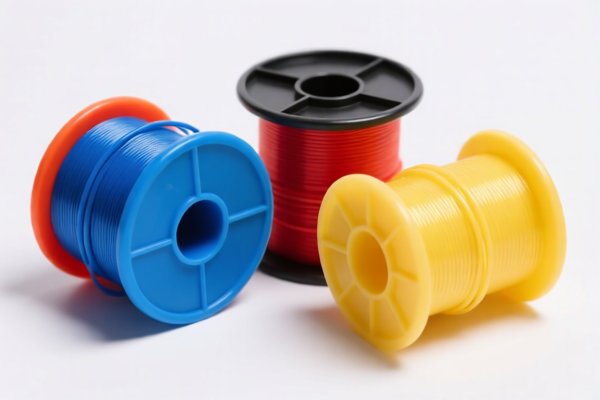
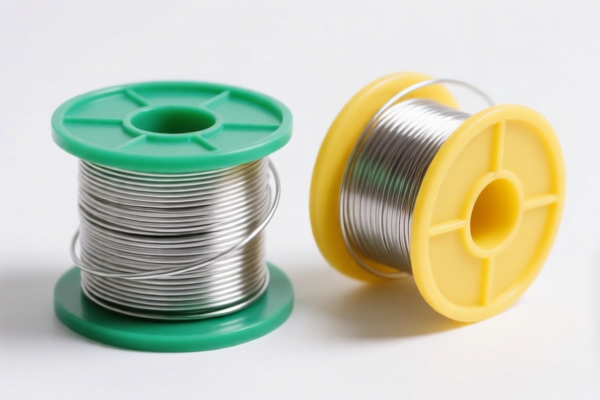
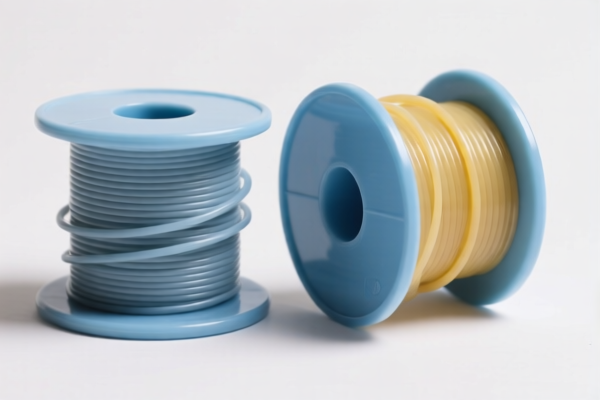
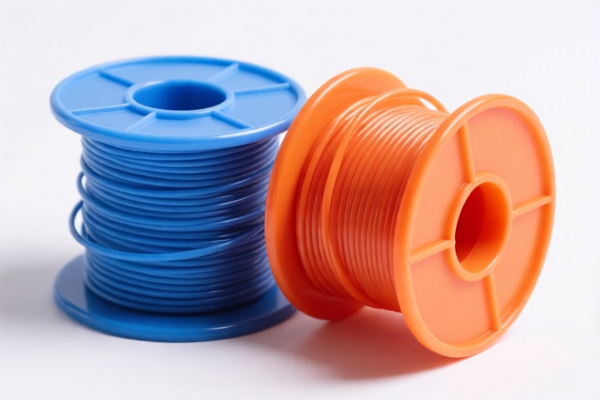
AI Analysis
🧵 Plastic Wire Spool (Plastic Reels/Cores)
🌐 HS Code Reference & Customs Clearance Guide | 2026 Latest Tariff Analysis | Professional Clearance Strategy
📌 I. Product Definition & Classification: What Exactly is a "Plastic Wire Spool"?
A Plastic Wire Spool (also known as a plastic reel, bobbin, or core) is a cylindrical component used for winding, storing, and transporting wire, cable, or thread. In international trade, its classification depends heavily on its specific application and structural characteristics.
Based on the provided data, these spools are primarily categorized into three distinct groups: 1. Electronics/PCB Substrates: If the spool is part of a printed circuit board assembly or insulating substrate. 2. Construction/Electrical Conduits: If the spool is used for housing electrical wiring in buildings (e.g., cable trays or conduits). 3. General Piping/Accessories: If it is a generic plastic tube or accessory used for wiring protection.
⚠️ Key Distinction Point:
- If the spool is a rigid structural component for building wiring (cable tray/conduit) → It falls under Construction Plastic Goods (HS 3925).
- If the spool is a flexible tube/pipe for wire protection → It falls under Plastic Pipes/Accessories (HS 3917).
- If the spool is an insulating substrate for PCBs → It falls under Electrical Insulating Parts (HS 8534).
📦 II. HS Code Classification Details (2026 Latest Tariff Authority Comparison)
| HS Code | Product Description | Application Scenario | Key Feature |
|---|---|---|---|
3926.90.99.89 |
Other plastic articles | Plastic PCBs, general plastic components | General plastic制品, suitable for PCB substrates |
8534.00.00.40 |
Non-flexible plastic-impregnated materials | Printed circuit board (PCB) substrates | Rigid insulating substrate, not flexible |
3925.90.00.00 |
Plastic building components | Plastic cable trays, electrical mounting boxes | Structural building/electrical infrastructure |
3925.10.00.00 |
Plastic building/electrical components | Plastic cable trays, conduit systems | Specific building/electrical structural parts |
3917.29.00.90 |
Plastic tubes, pipes & hoses | Plastic cable conduits, wire protection tubes | Tubular form, used for wire routing/protection |
🔍 Critical Reminder:
- "Spool" is not a standalone HS code. You must define its function.
- If it's a standalone reel for storing loose wire, it might fall under3926.
- If it's a cable tray/conduit system (often confused with spools in loose translation), it falls under3925.
- If it's a flexible tube holding wires, it falls under3917.
- Do not misclassify a structural building component (3925) as a general plastic part (3926) to avoid penalties.
💰 III. 2026 Latest Tariff Rate Breakdown (Including Additional Taxes & Policy Surcharge)
✅ Applicable Country: United States (US)
✅ Origin: China (CN)
✅ Effective Date: Includes surcharges from Nov 10, 2025 onwards
🎯 1. 3926.90.99.89 —— Plastic Articles (General/PCB Related)
| Item | Detail |
|---|---|
| Base Duty | 5.3% (Ad Valorem) |
| Section 301 Surcharge | +7.5% |
| Section 122 Surcharge | +10% |
| Total Duty Rate | 22.8% |
| Tax Calculation | CIF Value × 22.8% |
| De Minimis Eligibility | ❌ No (High tariff threshold) |
| Legal Basis Path | USITC:3926.90.99.89 → Section 301: 7.5% → Section 122: 10% |
📌 Explanation:
- This code is for general plastic items, including some PCB substrates.
- The 22.8% total includes the base rate plus two significant surcharges.
- Section 122 often applies to specific national security-related plastic imports.
🎯 2. 8534.00.00.40 —— Non-Flexible PCB Substrates
| Item | Detail |
|---|---|
| Base Duty | 0.0% (Free) |
| Section 301 Surcharge | +25.0% |
| Section 122 Surcharge | +10% |
| Total Duty Rate | 35.0% |
| Tax Calculation | CIF Value × 35.0% |
| De Minimis Eligibility | ❌ No |
| Legal Basis Path | USITC:8534.00.00.40 → Section 301: 25% → Section 122: 10% |
📌 Note:
- Even though the base duty is 0%, the surcharges push the total to 35%.
- This code is strict: it must be a non-flexible, plastic-impregnated circuit board substrate.
- If the product is flexible, it may be classified differently.
🎯 3. 3925.90.00.00 & 3925.10.00.00 —— Plastic Building/Electrical Components
| HS Code | Base Duty | Section 301 | Section 122 | Total Rate |
|---|---|---|---|---|
3925.90.00.00 |
5.3% | +25.0% | +10% | 40.3% |
3925.10.00.00 |
6.3% | +25.0% | +10% | 41.3% |
| Item | Detail |
|---|---|
| Product Type | Plastic Cable Trays, Conduits, Building Wiring Components |
| Tax Calculation | CIF Value × Rate |
| De Minimis Eligibility | ❌ No |
| Legal Basis | Building materials subject to heavy Section 301 and 122 surcharges |
📌 Warning:
- These are high-cost classifications.
- If you are shipping "wire spools" that are actually cable trays or conduit systems, expect ~40-41% total duty.
- Misdeclaring a3925product as3926(22.8%) to save tax is a major compliance risk.
🎯 4. 3917.29.00.90 —— Plastic Tubes & Accessories
| Item | Detail |
|---|---|
| Base Duty | 3.1% |
| Section 301 Surcharge | +25.0% |
| Section 122 Surcharge | +10% |
| Total Duty Rate | 38.1% |
| Tax Calculation | CIF Value × 38.1% |
| De Minimis Eligibility | ❌ No |
| Legal Basis | Plastic pipes/tubes for construction or industrial use |
📌 Note:
- If your "spool" is a flexible plastic tube used to protect wires, it falls here.
- The 38.1% rate is significant.
- Ensure the product is indeed a "tube/pipe" and not a "box" or "panel" to avoid wrong classification.
🛠️ IV. Customs Clearance Practical Advice (Real-World Pitfall Avoidance)
✅ 1. Essential Documentation Checklist
| Document | Required? | Description |
|---|---|---|
| ✅ Product Specification Sheet | ✔️ | Must specify material (e.g., PVC, ABS), dimensions, and intended use (e.g., "for winding copper wire," "for building cable trays"). |
| ✅ Product Photos | ✔️ | Clear images showing the shape, structure, and any labeling. Distinguish between a "reel" and a "conduit." |
| ✅ Commercial Invoice | ✔️ | Must accurately describe the item. Use terms like "Plastic Cable Tray" or "Plastic Wire Conduit" if applicable, not just "Plastic Spool." |
| ✅ Bill of Lading | ✔️ | Consistent with invoice description. |
| ✅ Packing List | ✔️ | Weight and dimensions must match. |
✅ 2. Classification Strategy (Key Mantra)
🔥 “Don’t just say ‘Spool’; Define its Function!”
| Scenario | Correct HS Code | Risk if Misclassified |
|---|---|---|
| Generic Plastic Reel for storing wire | 3926.90.99.89 (22.8%) |
Low risk, but verify if it’s actually a component. |
| PCB Substrate (Rigid, Insulating) | 8534.00.00.40 (35.0%) |
Misclassifying as 3926 saves tax but risks severe penalties if found rigid PCB. |
| Cable Tray/Conduit System (Building Use) | 3925.90.00.00 (40.3%) or 3925.10.00.00 (41.3%) |
Misclassifying as 3926 (22.8%) is a major red flag. High audit risk. |
| Flexible Plastic Tube for Wire Protection | 3917.29.00.90 (38.1%) |
Misclassifying as 3926 leads to underpayment. |
✅ 3. Special Cases & Handling
| Situation | Advice |
|---|---|
| OEM Custom Spools | Provide drawings and specifications. If it’s a custom PCB substrate, ensure it meets 8534 criteria. |
| Mixed Shipments | If a shipment contains both 3926 (reels) and 3925 (trays), declare separately. Do not blend codes. |
| "Spool" vs. "Reel" | In US Customs, "Spool" and "Reel" are often used interchangeably for 3926. However, if it’s a building fixture, it’s 3925. |
| Section 122 Applicability | Verify if your product falls under Section 122 (national security). Most plastic electrical goods are subject to this 10% surcharge. |
🌍 V. Global Market Comparison (2026 Latest)
| Country/Region | Recommended HS Code | Total Duty (China Origin) | Certification | Notes |
|---|---|---|---|---|
| 🇺🇸 USA | 3925 or 8534 or 3917 |
22.8% - 41.3% | None Specific | High Surcharges (301 + 122). 3925 is most expensive. |
| 🇨🇳 China | 3926 / 3925 / 8534 |
~5-10% | CCC (if electrical) | No Section 301/122. Lower cost. |
| 🇪🇺 EU | 3926 / 3925 |
~6.5% - 12% | CE, RoHS | No Section 301. Base duty applies. |
| 🇬🇧 UK | 3926 / 3925 |
~6.5% - 12% | UKCA, RoHS | Similar to EU. |
| 🇦🇺 Australia | 3926 / 3925 |
~5% | RCM | Low duty, no surcharges. |
📌 Conclusion:
- The US market is the most expensive due to Section 301 and Section 122 surcharges.
- For building components (3925), the duty is >40%.
- For general plastic spools (3926), the duty is 22.8%, which is still high but better than3925.
📌 VI. Common Errors & Pitfalls (Blood & Tears Lessons)
❌ Error 1: Classifying Cable Trays as General Plastic Spools (3926)
👉 Consequence: Underpayment by ~17-18%. Audit risk: High. Penalties + Back Taxes.
❌ Error 2: Classifying Flexible Plastic Tubes (3917) as General Plastic Articles (3926)
👉 Consequence: Underpayment by ~15%. Audit risk: Medium.
❌ Error 3: Assuming "No Base Duty" means "No Tax" for PCB Substrates (8534)
👉 Consequence: Ignoring the 35% total rate. Budget failure: Unexpected high costs.
✅ Correct Approach:
"Plastic Cable Tray, PVC, for Building Electrical Wiring, 2m Length" →
3925.90.00.00
"Plastic Reel, ABS, for Winding Copper Wire, 100mm Diameter" →3926.90.99.89
🎯 VII. Conclusion: Professional Declaration, Cost Optimization!
🎯 Remember the Mantra:
🔹 "Function Determines Code.
3925is for Buildings,3926for General,8534for PCBs."
🔹 "US Tariff is High: 22% to 41%. Declare Accurately to Avoid Penalties."
📌 Pro Tip:
If your product is a generic plastic reel with no specific electrical or building function,
3926.90.99.89(22.8%) is likely your best and safest option.
For PCB substrates, even though base duty is 0%, the total is 35%.
For Cable Trays/Conduits, expect ~40%.
📣 Immediate Action:
📞 Consult a Customs Broker: Provide product photos and specs.
📝 Apply for Advance Ruling: If unsure, get a binding ruling from US CBP.
🚀 Accurate Classification Saves Thousands!
✨ Professional Clearance Starts with Precise Classification!
💼 Every Percentage Point of Duty Counts!
Customer Reviews
About HS Code Classification
The Harmonized System (HS) is an internationally standardized nomenclature developed by the World Customs Organization (WCO) to classify traded products. Over 200 countries use the HS system as the basis for customs tariffs, trade statistics, and import/export regulations.
Each HS code follows a hierarchical structure:
- Chapter (2 digits) — Broad category of goods (e.g., Chapter 84: Machinery and Mechanical Appliances)
- Heading (4 digits) — More specific grouping within the chapter
- Subheading (6 digits) — Internationally standardized breakdown, used by all WCO member countries
- National subdivisions (8-10 digits) — Country-specific extensions for further classification, such as US HTSUS 10-digit codes
Correct HS code classification is essential for smooth customs clearance, accurate duty payment, and compliance with trade regulations. Misclassification can lead to customs delays, overpayment of duties, or penalties.
When importing from CN to US, the applicable tariff rates may include:
- Most-Favored-Nation (MFN) rate — The standard duty rate applied to WTO members
- General rate — Applied to countries without trade agreements
- Trade remedy duties — Additional tariffs such as Section 301 (anti-dumping), Section 232 (national security), or countervailing duties
The information provided on this page is for reference purposes only. For official classification, please consult with your local customs authority or a licensed customs broker.