Plastic advertising boards
CN → US| HS Code | Tariff Rate | Origin | Destination | Doc |
|---|---|---|---|---|
| 3920690000 | 39.2% | CN | US | Official Doc |
| 3921905050 | 39.8% | CN | US | Official Doc |
| 3921190090 | 41.5% | CN | US | Official Doc |
| 3920620090 | 39.2% | CN | US | Official Doc |
| 3921121950 | 40.3% | CN | US | Official Doc |
Product Images

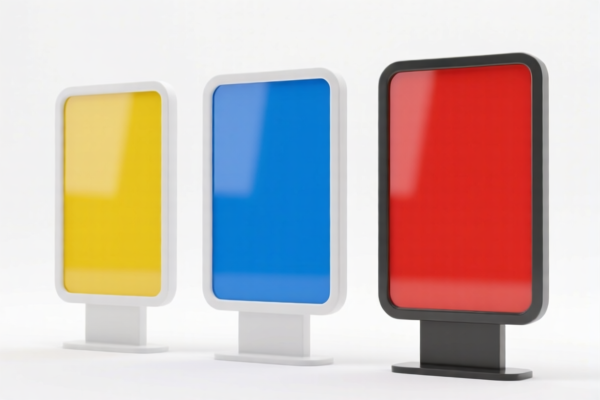


AI Analysis
🛡️ Plastic Advertising Boards (聚酯/PVC Ad Board)
🌐 HS Code Reference & Customs Clearance Guide | 2026 Latest Tariff Analysis | Strategic Classification for Polymer Boards
📌 I. Product Definition & Classification: What Exactly Are "Plastic Advertising Boards"?
Plastic advertising boards are rigid or semi-rigid signage materials primarily used for indoor/outdoor displays, point-of-sale (POS) graphics, and exhibition graphics. In international trade, they are classified based on material composition (Polyester vs. PVC) and physical form (Sheet, Plate, Film, Strip).
The critical distinction lies in the chemical structure and physical properties: 1. Polyester Boards (PET/PE): Often transparent or translucent, high strength, heat resistant. Classified under Chapter 39, Heading 3920 (non-cellular) or 3921 (cellular/foam or other). 2. PVC Boards (Polyvinyl Chloride): Opaque, flexible or rigid, often used for low-cost signage. Classified under 3921 (other plastic plates/sheets). 3. Strips vs. Sheets: The form factor drastically changes the HS Code. A "board" is a sheet/plate, while a "strip" is a narrow linear form.
⚠️ Key Classification Trap:
- If it is a Polyester sheet with no foam/core → Likely 3920.
- If it is a Polyester sheet that is cellular/foamed OR a different type of plastic plate → Likely 3921.
- If it is PVC, it is almost exclusively 3921 (unless it’s a specific film, but boards are plates).
- If it is a Strip (long, narrow), it falls under specific sub-headings for "strands, rods, sticks," not general sheets.
📦 II. HS Code Classification Detail (2026 Latest Tariff对照)
Based on the provided data, here are the 5 specific classifications for Plastic Advertising Boards. Note the significant tariff variations due to Section 301 (25%) and Section 122 (10%) tariffs applied to Chinese goods entering the US.
| HS Code | Product Description | Material & Form Key Features | Total Tax Rate |
|---|---|---|---|
3920.69.00.00 |
Polyester Plastic Ad Board | Material: Polyester (Non-cellular). Form: Plate, Sheet, Film. Feature: Laminated or combined structure. | 39.2% |
3921.90.50.50 |
Polyester Plastic Ad Board | Material: Polyester (Plastic). Form: Plate, Sheet, Film. Classification: Other plastic plates/sheets (catch-all for polyester not elsewhere specified). | 39.8% |
3920.62.00.90 |
Polyester Plastic Ad Board (PET) | Material: Polyester (Specifically PET). Form: Plate, Sheet, Film. Conflict: No material/form conflict; precise fit for PET plates. | 39.2% |
3921.12.19.50 |
PVC Plastic Ad Strip | Material: PVC (Polyvinyl Chloride). Form: Strip/Strip-like. Feature: Made of chlorinated polymers, formed as strips. | 40.3% |
3921.19.00.90 |
Polyester Plastic Ad Board (Foam/Other) | Material: Polyester Plastic. Form: Plate. Classification: Other plastic foam plates (Bottom-line classification for specific foam types). | 41.5% |
🔍 Critical Insight:
- 3920 vs. 3921:3920is for non-cellular plates, sheets, films, and foil.3921is for other plastic plates, sheets, films, and foil (often including cellular/foam or mixed materials). - Why is PVC in "Strip"? If your "board" is actually a narrow PVC strip used for edge lighting or sign letters, it falls under3921.12.19.50, not the general sheet codes. - Highest Tax: The foam/other polyester plate (3921.19.00.90) carries the highest base tariff (6.5%) + surcharges, totaling 41.5%.
💰 III. 2026 Latest Tariff Rate Breakdown (Detailed Policy Analysis)
✅ Applicable Country: United States (US)
✅ Origin: China (CN)
✅ Effective Date: From 2025/2026 (Includes subsequent imports)
All listed HS Codes attract a combination of Basic Duty, Section 301 Additional Duty (25%), and Section 122 Duty (10%).
🎯 1. 3920.69.00.00 & 3920.62.00.90 — Polyester Sheets (Laminated & PET)
| Item | Detail |
|---|---|
| Basic Duty | 4.2% (Ad Valorem) |
| Section 301 Duty | +25.0% (Trade Remedy) |
| Section 122 Duty | +10.0% (Special Provision) |
| Total Tax Rate | 39.2% |
| Tax Calculation | CIF Value × 39.2% |
| De Minimis Exemption | ❌ Denied (High-value commercial goods) |
| Legal Path | HTSUS:3920 → USITC:3920.69/62 → Footnotes:301,122 |
📌 Explanation:
- These codes are for non-cellular polyester plates. -3920.62is for specific PET (Polyethylene Terephthalate) which is a subset of Polyester. - If your board is a simple, rigid, transparent PET sheet, this is the most accurate and cost-effective code (39.2%).
🎯 2. 3921.90.50.50 — Other Polyester Plates (Catch-All)
| Item | Detail |
|---|---|
| Basic Duty | 4.8% (Ad Valorem) |
| Section 301 Duty | +25.0% |
| Section 122 Duty | +10.0% |
| Total Tax Rate | 39.8% |
| Tax Calculation | CIF Value × 39.8% |
| De Minimis Exemption | ❌ Denied |
| Legal Path | HTSUS:3921 → USITC:3921.90 → Footnotes:301,122 |
📌 Explanation:
- Use this if the polyester board does not fit the specific "PET" description of 3920.62 or the "Laminated" description of 3920.69. - Slightly higher cost (0.6% more) due to a higher basic duty (4.8% vs 4.2%).
🎯 3. 3921.12.19.50 — PVC Strips (Specific Form)
| Item | Detail |
|---|---|
| Basic Duty | 5.3% (Ad Valorem) |
| Section 301 Duty | +25.0% |
| Section 122 Duty | +10.0% |
| Total Tax Rate | 40.3% |
| Tax Calculation | CIF Value × 40.3% |
| De Minimis Exemption | ❌ Denied |
| Legal Path | HTSUS:3921.12 → USITC:19 → Footnotes:301,122 |
📌 Explanation:
- CRITICAL: This code is for STRIPS (长条状), not large boards. - If you declare a large PVC board as a "Strip," customs will reclassify it, leading to penalties. - Only use if the product is literally a narrow PVC strip used for signage accents.
🎯 4. 3921.19.00.90 — Polyester Foam/Other Plates
| Item | Detail |
|---|---|
| Basic Duty | 6.5% (Ad Valorem) |
| Section 301 Duty | +25.0% |
| Section 122 Duty | +10.0% |
| Total Tax Rate | 41.5% |
| Tax Calculation | CIF Value × 41.5% |
| De Minimis Exemption | ❌ Denied |
| Legal Path | HTSUS:3921.19 → USITC:90 → Footnotes:301,122 |
📌 Explanation:
- This is the most expensive option (41.5%). - Typically used for foamed polyester boards (e.g., foam core boards) or other plastic plates that don't fit the non-cellular definition. - If your board is a lightweight foam board (like Sintra/PVC foam), it might fit here, but check if PVC foam has a better code.
🛠️ IV. Customs Clearance Practical Advice (Avoid Pitfalls)
✅ 1. Essential Documentation Checklist
| Document | Required? | Purpose |
|---|---|---|
| ✅ Product Specification Sheet | ✔️ | Must clearly state: Material (PET/PVC), Thickness, Dimensions, Weight. |
| ✅ Photos (Clear & Detailed) | ✔️ | Show the full sheet, edge profile (foam vs. solid), and any lamination layers. |
| ✅ Certificate of Origin (CO) | ✔️ | To confirm Chinese origin and apply correct Section 301/122 tariffs. |
| ✅ Invoice & Packing List | ✔️ | Must match HS Code description exactly (e.g., "Polyester Sheet, 2mm Thick"). |
| ✅ Material Safety Data Sheet (MSDS) | ✔️ | Required for polymer products to confirm no hazardous chemicals. |
✅ 2. Classification Strategy (Key Mnemonics)
🔥 “Material First, Form Second, Tax Third!”
| Scenario | Recommended HS Code | Reason |
|---|---|---|
| Solid PET Sheet (Transparent, rigid) | 3920.62.00.90 |
Lowest tax (39.2%), precise fit for PET. |
| Laminated Polyester Board (Coated/Printed) | 3920.69.00.00 |
Laminated feature fits 3920.69. Tax 39.2%. |
| General Polyester Plate (Not PET, Not Laminated) | 3921.90.50.50 |
Catch-all. Slightly higher tax (39.8%). |
| PVC Strip/Edge (Narrow, linear) | 3921.12.19.50 |
Form is "Strip," not "Sheet." Tax 40.3%. |
| Foam Polyester Board (Lightweight, core) | 3921.19.00.90 |
Foamed/Other. Highest tax (41.5%). |
✅ 3. Common Mistakes & Penalties
❌ Mistake 1: Declaring a PET Sheet as "Other Plastic Sheet" (3921)
👉 Result: Incorrect classification. Customs may force 3921 if you can't prove it's PET, but 3920 is more accurate for non-foamed polyester. Avoid misclassification penalties.
❌ Mistake 2: Declaring a PVC Board as 3920
👉 Result: Rejected. PVC is not Polyester. 3920 is specifically for Polyester. PVC must go to 3921. Using 3920 for PVC is a clear error.
❌ Mistake 3: Declaring a Large Board as 3921.12 (Strip)
👉 Result: Severe Penalty. The description "Strip" implies narrow linear forms. A 1m x 2m board is a "Plate/Sheet." This will lead to audit and fines.
🌍 V. Global Market Comparison (2026)
| Country/Region | Recommended HS Code | Base Tariff | Additional US Tariffs | Notes |
|---|---|---|---|---|
| 🇺🇸 USA | 3920.62.00.90 (Best) |
4.2% | +35% (301+122) | Total 39.2%. High barrier. |
| 🇨🇳 China | 3920.62.00.90 |
4.2% | None | Domestic trade or export to non-US. |
| 🇪🇺 EU | 3920.62.00.00 |
0-6.5% | None (usually) | Check EU duty rates; often lower than US. |
| 🇬🇧 UK | 3920.62.00.00 |
0-6.5% | None (post-Brexit) | Similar to EU. |
📌 Conclusion:
- The US market is the most expensive due to Section 301 and 122 tariffs. - Minimize cost by correctly identifying PET (3920.62) vs. other polyester (3921.90). - If you are exporting to the US, ensure your product is clearly labeled as "Polyester (PET)" to qualify for3920.62.00.90(39.2% vs 41.5%).
📌 VI. Final Checklist for Smooth Customs Clearance
- Confirm Material: Is it PET (Polyester) or PVC?
- PET → Look at
3920codes. - PVC → Look at
3921.12(if strip) or other3921codes.
- PET → Look at
- Confirm Form: Is it a Sheet/Plate or a Strip?
- Sheet/Plate →
3920or3921.90. - Strip →
3921.12.
- Sheet/Plate →
- Confirm Structure: Is it Laminated or Foam?
- Laminated →
3920.69. - Foam →
3921.19(Higher tax). - Solid →
3920.62(Lowest tax for Polyester).
- Laminated →
🎯 Pro Tip:
"If it's PET, it's 3920. If it's PVC, it's 3921. If it's foam, it's 3921.19. Choose wisely, or pay 2.3% more in taxes!"
📣 Immediate Action:
📞 Consult your customs broker with product photos and material MSDS.
🚀 Apply for an Advance Ruling if your shipment volume is large.
💼 Optimize your HS Code to save up to 2.3% on total tax liability.
✨ Precision in Classification, Savings in Tariffs!
💼 Your profit margin depends on the right HS Code.
Customer Reviews
About HS Code Classification
The Harmonized System (HS) is an internationally standardized nomenclature developed by the World Customs Organization (WCO) to classify traded products. Over 200 countries use the HS system as the basis for customs tariffs, trade statistics, and import/export regulations.
Each HS code follows a hierarchical structure:
- Chapter (2 digits) — Broad category of goods (e.g., Chapter 84: Machinery and Mechanical Appliances)
- Heading (4 digits) — More specific grouping within the chapter
- Subheading (6 digits) — Internationally standardized breakdown, used by all WCO member countries
- National subdivisions (8-10 digits) — Country-specific extensions for further classification, such as US HTSUS 10-digit codes
Correct HS code classification is essential for smooth customs clearance, accurate duty payment, and compliance with trade regulations. Misclassification can lead to customs delays, overpayment of duties, or penalties.
When importing from CN to US, the applicable tariff rates may include:
- Most-Favored-Nation (MFN) rate — The standard duty rate applied to WTO members
- General rate — Applied to countries without trade agreements
- Trade remedy duties — Additional tariffs such as Section 301 (anti-dumping), Section 232 (national security), or countervailing duties
The information provided on this page is for reference purposes only. For official classification, please consult with your local customs authority or a licensed customs broker.