Plastic bathroom pipe fittings
CN → US| HS Code | Tariff Rate | Origin | Destination | Doc |
|---|---|---|---|---|
| 8481805090 | 38.0% | CN | US | Official Doc |
| 8481805040 | 38.0% | CN | US | Official Doc |
| 3926909987 | 22.8% | CN | US | Official Doc |
| 3926305000 | 22.8% | CN | US | Official Doc |
| 3917400050 | 40.3% | CN | US | Official Doc |
Product Images
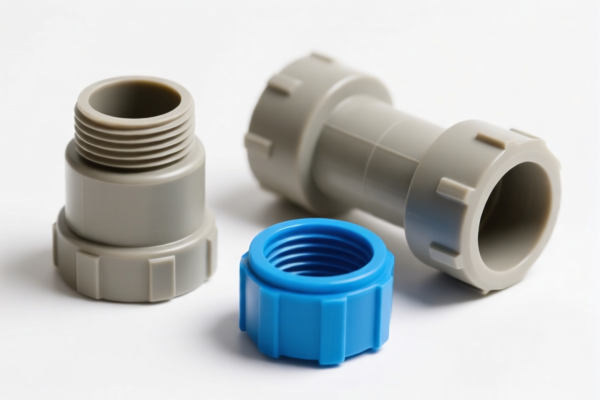


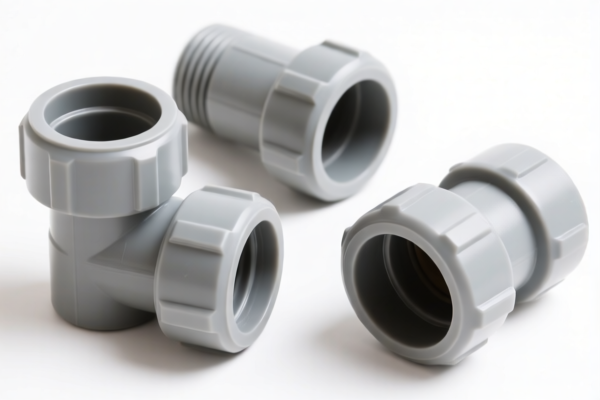
AI Analysis
🚿 Plastic Bathroom Pipe Fittings: The Ultimate Customs Classification Guide (2026)
🌐 HS Code Reference & Customs Clearance Strategy | 2026 Latest Tariff Analysis | Professional Compliance Guide
📌 I. Product Definition & Core Attributes: What Exactly Are "Plastic Pipe Fittings"?
Plastic bathroom pipe fittings are essential components in residential and commercial plumbing systems. They are designed to connect, terminate, change the direction of, or regulate the flow of water and waste within a pipeline.
Key Characteristics: * Material: Primarily PVC, CPVC, PEX, or ABS. * Function: Connection, jointing, or valve operation. * Shape: Elbows, tees, couplings, reducers, adapters, and plastic valves.
⚠️ Critical Classification Distinction:
The biggest risk lies in distinguishing between "Valves" (Chapter 84) and "General Plastic Articles" (Chapter 39). - If the item is a valve (even if plastic) with a mechanism to control flow → Chapter 84. - If the item is a simple connector/joint (passive, no moving parts) → Chapter 39.
📦 II. HS Code Classification Details (2026 Tariff Schedule)
Based on the specific attributes of "Plastic Bathroom Pipe Fittings," here are the five most relevant HS Codes from the provided data, ranked by classification logic.
| HS Code | Product Description | Classification Logic |
|---|---|---|
3917.40.00.50 |
Plastic Pipe Valves | Mechanism-Based: Contains a valve mechanism (e.g., ball valves, stop valves) made of plastic. Classified under "Valves" for pipes. |
8481.80.50.90 |
Plastic Pipe Fittings (General) | Functional Basis: Classified under "Parts of tap, cock, valve..." in Chapter 84. Fits the "pipeline device" category broadly. |
8481.80.50.40 |
Plastic Fittings (Connectors) | Component Basis: Specifically identified as "connectors" within the plumbing valve/tap parts category. Tends to match "parts" classification. |
3926.30.50.00 |
Plastic Fittings (Material Focus) | Material-Based: Classified as "Other articles of plastics." Fits perfectly if considered a generic plastic article or connector not strictly defined as a valve part. |
3926.90.99.87 |
Other Plastic Articles | Residual Basis: A broader category for plastic articles that don't fit other specific plastic subheadings. Used for extensions of plastic piping applications. |
🔍 Key Insight:
- Valves vs. Connectors: If your product has a moving part to stop/start flow (like a faucet handle or ball valve core), use3917.40.00.50.
- Passive Joints: If it’s just an elbow, tee, or coupling, you can choose between Chapter 84 (as a pipe part) or Chapter 39 (as a plastic article). The tax rates differ significantly!
💰 III. 2026 Latest Tariff Rate Breakdown (Including Surtaxes & Policy Add-ons)
✅ Applicable Country: United States (US)
✅ Country of Origin: China (CN)
✅ Effective Date: 2025/2026 Import Period
🎯 1. High-Tariff Group: Chapter 84 & Valves (3917.40.00.50)
These codes attract the highest surcharges due to their classification as industrial/mechanical parts or specific valve categories.
| Item | Details |
|---|---|
| Base Tariff | 3.0% – 5.3% (Ad Valorem) |
| Section 301 Surtax | +25.0% (U.S. Trade Act) |
| Section 122 Tariff | +10.0% (Specific Policy Add-on) |
| Total Tax Rate | 38.0% - 40.3% |
| Calculation | CIF Value × Total Rate |
| De Minimis Eligibility | ❌ No (High-value industrial components are excluded) |
| Legal Path | USITC:8481.80.50 / 3917.40 → FOOTNOTE:301 → FOOTNOTE:122 |
📌 Explanation:
-8481.80.50.x0(38.0%): Applies to plastic fittings classified as "parts of taps, cocks, and valves." The base duty is 3%, plus 25% Section 301, plus 10% Section 122.
-3917.40.00.50(40.3%): Applies to plastic valves. Higher base duty (5.3%) results in a 40.3% total rate.
- Why so high? The U.S. imposes heavy tariffs on Chinese mechanical/plumbing parts to protect domestic manufacturing.
🎯 2. Low-Tariff Group: General Plastic Articles (3926.30.50.00 & 3926.90.99.87)
If you can classify your passive fittings (elbows, tees) under Chapter 39 as "Articles of Plastic" rather than "Parts of Valves," you save significantly.
| Item | Details |
|---|---|
| Base Tariff | 5.3% |
| Section 301 Surtax | +7.5% (Reduced Surtax for Plastic Articles) |
| Section 122 Tariff | +10.0% |
| Total Tax Rate | 22.8% |
| Calculation | CIF Value × 22.8% |
| De Minimis Eligibility | ❌ No |
| Legal Path | USITC:3926 → FOOTNOTE:301 → FOOTNOTE:122 |
📌 Explanation:
-3926.30.50.00&3926.90.99.87(22.8%): These are classified as "Other articles of plastics." The Section 301 surtax is lower (7.5% vs 25%), resulting in a 15.2% savings compared to the Chapter 84 classification.
- Strategy: Use this classification only if the item is a simple connector with no valve mechanism.
🛠️ IV. Customs Clearance Practical Advice (Pitfall Avoidance Guide)
✅ 1. Documentation Checklist (Mandatory)
| Document | Required? | Note |
|---|---|---|
| ✅ Product Specification Sheet | ✔️ | Must clearly state material (e.g., PVC, ABS) and whether it contains a valve mechanism. |
| ✅ Technical Diagram | ✔️ | Crucial to prove if it’s a "passive connector" or an "active valve." |
| ✅ Product Photos | ✔️ | Show the entire fitting, including any handles or moving parts. |
| ✅ Commercial Invoice | ✔️ | Describe items accurately: e.g., "Plastic PVC Pipe Elbow Connector" vs. "Plastic Ball Valve." |
| ✅ Packing List | ✔️ | Ensure quantities match the invoice. |
| ✅ Country of Origin Certificate | ✔️ | Essential for calculating the correct Section 301 rate. |
✅ 2. Classification Strategy (Key Mnemonic)
🔥 "Valve Moves, Connector Stays; Chapter 84 High, Chapter 39 Pays Less!"
| Scenario | Recommended HS Code | Tax Rate | Risk |
|---|---|---|---|
| Plastic Ball Valve / Stop Valve | 3917.40.00.50 |
40.3% | Low Risk (Clear Definition) |
| Plastic Elbow, Tee, Coupling (Simple Joint) | 8481.80.50.90 / .40 |
38.0% | Medium Risk (May be audited as Plastic Article) |
| Plastic Elbow, Tee, Coupling (Simple Joint) | 3926.30.50.00 / .87 |
22.8% | High Risk (If audited as Valve Part, Backtax + Penalty) |
⚠️ Critical Warning:
- Do NOT misclassify a valve as a simple plastic article to save tax. U.S. Customs (CBP) actively audits plumbing imports.
- If you claim 22.8% for a simple connector, be prepared to provide diagrams proving no moving parts.
- If you claim 38-40% for a valve, ensure the description explicitly mentions "Valve" to avoid classification disputes.
✅ 3. Special Cases
| Situation | Advice |
|---|---|
| Mixed Containers | Separate shipments if possible. Valves (40.3%) and Connectors (22.8% or 38%) have different rates. Mixed bins can lead to blanket high rates. |
| OEM Private Label | Provide authorization letters. CBP may check for "origin laundering." |
| Plastic + Metal Threads | If metal threads are integral, it may still be considered "Plastic" if plastic is the primary material. Check material composition reports. |
🌍 V. Global Market Comparison (2026)
| Market | Recommended HS Code | Est. Total Tax (China Origin) | Notes |
|---|---|---|---|
| 🇺🇸 USA | 3917.40.00.50 / 8481.80.50.x0 |
38.0% - 40.3% | High Section 301 + 122 tariffs. |
| 🇺🇸 USA | 3926.30.50.00 / .87 |
22.8% | Only for non-valve plastic fittings. |
| 🇪🇺 EU | 3917.40.00 / 8481.80 |
~3.0% - 5.0% | No Section 301/122 equivalents. Lower tax. |
| 🇨🇳 China | 3917.40.00 / 8481.80 |
~3.0% - 5.0% | Standard MFN rate. |
📌 Conclusion:
- The U.S. market is the most expensive for plastic plumbing fittings due to punitive tariffs.
- Chapter 39 classification (22.8%) offers significant savings if legally defensible.
- Chapter 84/Valve classification (38-40%) is unavoidable for active valves.
📌 VI. Common Errors & Pitfalls (Lessons Learned)
❌ Error 1: Calling a "Plastic Valve" a "Pipe Connector" to get 22.8%
👉 Consequence: CBP audit → Backtaxes + Penalties + Possible seizure.
❌ Error 2: Using 3926 for a product with a valve stem or handle
👉 Consequence: Classification error. Must use 3917.40.00.50 (40.3%).
❌ Error 3: Ignoring Section 122 Tariff (10%)
👉 Consequence: Underpayment by 10%. This is a separate add-on tariff on top of Section 301.
✅ Correct Declaration Example:
"Plastic PVC 90-Degree Elbow Connector, No Moving Parts, For Water Supply System, Model XYZ" →
3926.30.50.00(22.8%)
"Plastic Ball Valve, 1/2 Inch, PVC Body, With Lever Handle, For Bathroom Plumbing, Model ABC" →3917.40.00.50(40.3%)
🎯 VII. Conclusion: Professional Classification Saves Money!
🎯 Remember the Golden Rule:
🔹 "Valves Move = 40.3%; Simple Connectors = 22.8% OR 38.0%."
🔹 "Don't Force Chapter 39 for Valves!"
📌 Pro Tip:
If your product is a simple connector (elbow, tee, coupling), 3926.30.50.00 (22.8%) is the best-case scenario for cost-saving. However, ensure your product description and images clearly show no valve mechanism. If there is any ambiguity, 8481.80.50.x0 (38.0%) is the safer, standard classification for pipe parts.
📣 Immediate Action:
📞 Review product specs: Does it have a moving part?
📄 Prepare diagrams for CBP scrutiny.
🚀 Optimize your HS Code to balance cost and compliance.
✨ Professional Compliance Starts with Precise Classification!
💼 Your Profit Margin Depends on Accurate Tariff Codes!
Customer Reviews
About HS Code Classification
The Harmonized System (HS) is an internationally standardized nomenclature developed by the World Customs Organization (WCO) to classify traded products. Over 200 countries use the HS system as the basis for customs tariffs, trade statistics, and import/export regulations.
Each HS code follows a hierarchical structure:
- Chapter (2 digits) — Broad category of goods (e.g., Chapter 84: Machinery and Mechanical Appliances)
- Heading (4 digits) — More specific grouping within the chapter
- Subheading (6 digits) — Internationally standardized breakdown, used by all WCO member countries
- National subdivisions (8-10 digits) — Country-specific extensions for further classification, such as US HTSUS 10-digit codes
Correct HS code classification is essential for smooth customs clearance, accurate duty payment, and compliance with trade regulations. Misclassification can lead to customs delays, overpayment of duties, or penalties.
When importing from CN to US, the applicable tariff rates may include:
- Most-Favored-Nation (MFN) rate — The standard duty rate applied to WTO members
- General rate — Applied to countries without trade agreements
- Trade remedy duties — Additional tariffs such as Section 301 (anti-dumping), Section 232 (national security), or countervailing duties
The information provided on this page is for reference purposes only. For official classification, please consult with your local customs authority or a licensed customs broker.