Plastic coated Knitted/Crocheted T shirt
CN → US| HS Code | Tariff Rate | Origin | Destination | Doc |
|---|---|---|---|---|
| 6110301060 | 23.5% | CN | US | Official Doc |
| 6113001012 | 21.3% | CN | US | Official Doc |
| 6110301050 | 23.5% | CN | US | Official Doc |
| 6113009084 | 24.6% | CN | US | Official Doc |
| 6110301060 | 23.5% | CN | US | Official Doc |
Product Images
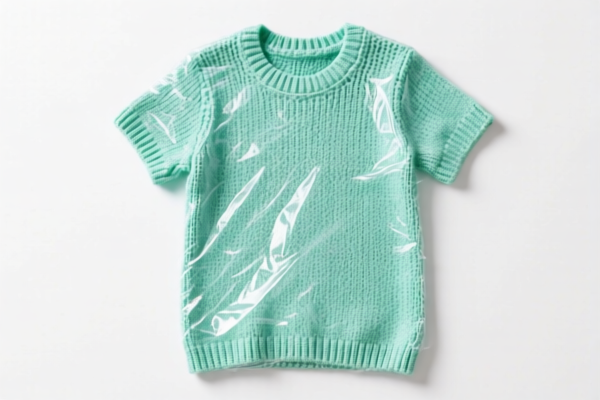
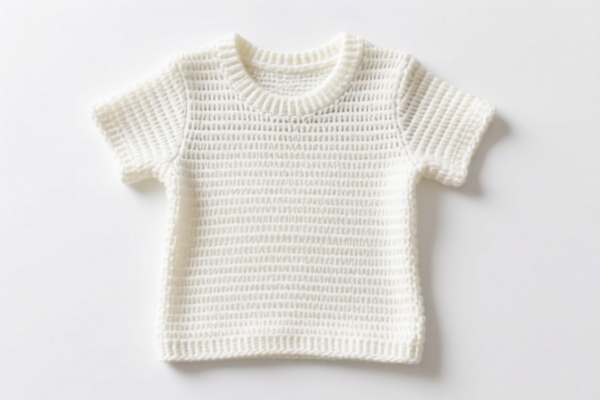
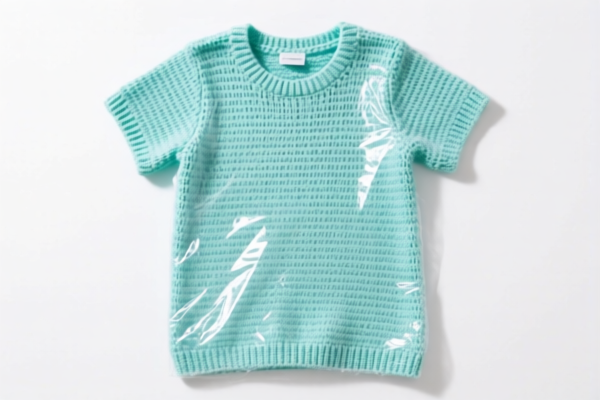
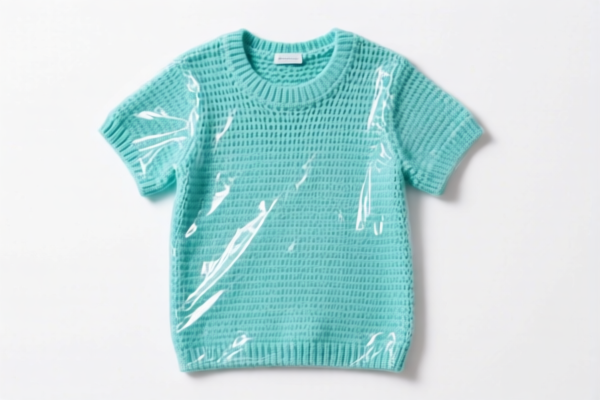
AI Analysis
👕 Plastic-Coated Knitted/Crocheted T-Shirts (Shirts)
🌐 HS Code Reference & Customs Clearance Guide | 2026 Latest Tariff Breakdown | Professional Clearance Strategy
📌 I. Product Definition & Classification: Do You Really Understand "Plastic-Coated T-Shirts"?
A "Plastic-Coated Knitted/Crocheted T-Shirt" is a garment made from knitted or crocheted fabric (synthetic or artificial fibers) that has been impregnated, coated, covered, or laminated with plastic or rubber. In international trade, this specific processing pushes the product out of standard clothing categories (like 6109) and into specialized technical apparel or textile categories (6110 or 6113), depending on the exact composition and coating type.
Key Distinction: - Standard T-Shirt (Knitted): Goes to 6109.10 (Cotton) or 6109.90 (Other fibers). - Plastic-Coated/Rubber-Impregnated Shirt: Goes to 6110.30 (Synthetic/Artificial Fiber) or 6113.00 (Textile Impregnated/Coated). - Crucial Factor: The presence of plastic coating often triggers specific USITC footnotes and Section 301/IEEPA additional tariffs.
⚠️ Key Classification Point:
- If the base fabric is Synthetic/Acrylic and coated with plastic → Often 6110.30.xx or 6113.00.xx.
- If the coating is significant enough to change the essential character to a "technical textile" → 6113.00.
- Gender: The provided data distinguishes between "Other" (General) and "Men's/Boys' Other".
📦 II. HS Code Classification Details (2026 Latest Tariff Authority Cross-Reference)
| HS Code | Product Description | Application Scenario | Tax Rate (Total) |
|---|---|---|---|
6110.30.10.60 |
Knitted/Crocheted Shirts, Plastic Coated, Synthetic/Artificial Fiber, Other | General use, fashion items, rain-ready casual wear | 23.5% |
6110.30.10.50 |
Knitted/Crocheted Shirts, Plastic Coated, Base Material: Artificial Fiber | Similar to above, specific to artificial fiber composition | 23.5% |
6113.00.10.12 |
Knitted/Crocheted Shirts, Impregnated/Coated/Laminated with Rubber/Plastic | Technical apparel, high-coating durability items | 21.3% |
6113.00.90.84 |
Knitted/Crocheted Shirts, Plastic Coated, Non-Cotton, Men's/Boys' Other | Male-specific apparel, non-cotton base | 24.6% |
6110.30.10.60 |
Duplicate Entry | See first row | 23.5% |
🔍 Critical Reminder:
- 6110 vs. 6113: Both fall under Chapter 61, but 6113 is specifically for textiles impregnated/coated. The distinction depends on the manufacturing process and whether the fabric retains its textile character.
- "Other" Category: Most entries fall under "Other" because they are not specific athletic or uniform items.
- Tariff Structure: All these codes are subject to the same US trade policy surcharges.
💰 III. 2026 Latest Tariff Rate Breakdown (Including Surcharges & Policy Add-ons)
✅ Applicable Country: United States (US)
✅ Origin: China (CN)
✅ Effective Date: Current rates apply (Section 301 + IEEPA)
🎯 1. 6110.30.10.60 & 6110.30.10.50 —— Plastic-Coated Knitted Shirts (Synthetic/Artificial)
| Item | Content |
|---|---|
| Base Tariff | 6.0% (Standard MFN rate for knit shirts) |
| Section 301 Surcharge | +7.5% (Standard 301 tariff on Chinese textiles/apparel) |
| Section 122 Tariff | +10% (Specific to certain textile/apparel items under current directives) |
| Total Tariff Rate | 23.5% |
| Tax Calculation | CIF Value × 23.5% |
| De Minimis Eligibility | ❌ Not Eligible (High tariff rate exceeds threshold for exemption) |
| Legal Basis Path | HTSUS:6110.30.10 → USITC:Section301 → DOF:Section122 |
📌 Explanation:
- The 6.0% is the standard duty for knit shirts made of synthetic fibers.
- The 7.5% is the ongoing Section 301 tariff on Chinese textiles.
- The 10% is a specific "Section 122" tariff (often related to national security or trade remedy measures on specific textile imports).
- Total Cost Impact: Importers must budget for a 23.5% duty load, significantly higher than standard cotton t-shirts (which may be lower or exempt depending on origin).
🎯 2. 6113.00.10.12 —— Rubber/Plastic Impregnated Shirts
| Item | Content |
|---|---|
| Base Tariff | 3.8% (Lower base rate for impregnated textiles) |
| Section 301 Surcharge | +7.5% |
| Section 122 Tariff | +10% |
| Total Tariff Rate | 21.3% |
| Tax Calculation | CIF Value × 21.3% |
| De Minimis Eligibility | ❌ Not Eligible |
| Legal Basis Path | HTSUS:6113.00.10 → USITC:Section301 → DOF:Section122 |
📌 Note:
- This code has a lower base rate (3.8%) compared to 6110 (6.0%), making it 2.2% cheaper in total duty.
- Suitable for products where the plastic coating is integral to the textile structure (e.g., waterproof knitwear).
🎯 3. 6113.00.90.84 —— Men's/Boys' Plastic-Coated Shirts (Non-Cotton)
| Item | Content |
|---|---|
| Base Tariff | 7.1% (Higher base rate for specific men's/boys' subcategory) |
| Section 301 Surcharge | +7.5% |
| Section 122 Tariff | +10% |
| Total Tariff Rate | 24.6% |
| Tax Calculation | CIF Value × 24.6% |
| De Minimis Eligibility | ❌ Not Eligible |
| Legal Basis Path | HTSUS:6113.00.90 → USITC:Section301 → DOF:Section122 |
📌 Note:
- This is the most expensive option at 24.6%.
- The higher base rate (7.1%) reflects specific duties on men's/boys' garments in this technical category.
- Use only if the product is strictly classified as men's/boys' and fits the "other" non-cotton description.
🛠️ IV. Customs Clearance Practical Advice (Real-World Pitfall Guide)
✅ 1. Required Documentation Checklist (Non-Negotiable)
| Document | Required | Description |
|---|---|---|
| ✅ Product Specifications | ✔️ | Must explicitly state: "Knitted/Crocheted," "Plastic-Coated/Impregnated," and Fiber Composition (e.g., 100% Polyester). |
| ✅ Coating Description | ✔️ | Detail the plastic type (e.g., PVC, PU, Rubber) and application method (laminated, coated, impregnated). This determines 6110 vs. 6113. |
| ✅ Photos (Clear & Detailed) | ✔️ | Show the texture, coating surface, and interior fabric. Crucial for customs to verify "technical textile" status. |
| ✅ Commercial Invoice | ✔️ | Must use precise HTSUS descriptions matching the code. Avoid vague terms like "T-Shirt" without qualification. |
| ✅ Certificate of Origin | ✔️ | Essential for verifying China origin (triggers 301 + 122 tariffs). |
| ✅ Packing List | ✔️ | Include weight and dimensions; ensure no mixed shipments with non-coated items. |
✅ 2. Declaration Tips (Key Mantra)
🔥 "Coating Defined, Fiber Specified, Gender Clarified, Code Selected!"
| Scenario | Correct Declaration | Wrong Practice |
|---|---|---|
| Plastic-Coated Shirt (Synthetic) | 6110.30.10.60 - "Knitted Shirt, Plastic Coated, Synthetic Fiber" |
Declaring as 6109.10.00.00 (Cotton T-Shirt) → Misclassification Penalty |
| Waterproof Knit Jacket | 6113.00.10.12 - "Textile Impregnated with Rubber" |
Declaring as 6110 → Audit Risk |
| Men's Coated Shirt | 6113.00.90.84 - Specify "Men's/Boys'" |
Declaring as "Unisex" when male-specific → Potential Rate Mismatch |
| Mixed Shipment (Coated + Uncoated) | Split Declaration | Mixed申报 → Delayed Clearance + Potential Confiscation |
✅ 3. Special Circumstances Handling
| Scenario | Handling Advice |
|---|---|
| OEM Custom Plastic Coating | Provide sample + coating specification sheet. Customs may require lab tests to verify coating composition. |
| Small Quantities (De Minimis) | ❌ Do NOT attempt to use de minimis (Section 321). These items have high tariffs and are explicitly excluded from low-value exemptions in many cases. |
| Origin Marking | Ensure each garment is marked "Made in China" or equivalent. Failure leads to seizure. |
| Environmental Compliance | Some plastic coatings (PVC) may require additional environmental declarations (e.g., REACH for EU, but for US, ensure no banned phthalates). |
🌍 V. Global Market Comparison (2026 Latest)
| Country/Region | Recommended HS Code | Tariff (China Origin) | Certification Requirements | Notes |
|---|---|---|---|---|
| 🇺🇸 USA | 6110.30.10.60 / 6113.00.10.12 |
21.3% - 24.6% | None specific, but origin marking critical | High tariff burden; 301 + 122 apply |
| 🇨🇳 China | 6110.30.10.60 |
9.0% - 12.0% | GB Standards | Lower duty than US; domestic market friendly |
| 🇪🇺 EU | 6110.30 / 6113.00 |
12.0% - 16.0% | REACH (Plastic Chemicals) | No Section 301, but chemical compliance is strict |
| 🇬🇧 UK | 6110.30 |
12.0% | UKCA | Post-Brexit rules apply |
| 🇯🇵 Japan | 6110.30 |
19.0% | FSC (Safety) | High base tariff, no special surcharges |
📌 Conclusion:
- USA is the most costly market for these goods due to the layered tariff structure (Base + 301 + 122).
- EU and Japan have simpler but moderately high base tariffs.
- Cost Optimization: Consider shifting production to Vietnam/Mexico if possible to avoid Section 301 and Section 122 surcharges, reducing total duty to ~12-15%.
📌 VI. Common Errors & Pitfall Guide (Lessons Learned)
❌ Error 1: Declaring as "100% Cotton T-Shirt" (6109.10.00.00) when it is plastic-coated polyester.
👉 Consequence: Customs detects coating via X-ray or physical inspection → Misclassification, fines, retroactive duties + interest.
❌ Error 2: Omitting "Plastic Coated" from the commercial invoice.
👉 Consequence: Customs assumes standard fiber content → Underpayment of duty → Post-clearance audit.
❌ Error 3: Using generic "Textile" description without HS Code specificity.
👉 Consequence: Delayed release, manual review by CBP, potential detention.
❌ Error 4: Assuming de minimis applies because the item value is low.
👉 Consequence: Rejection at border. High-duty items from China are often excluded from Section 321.
✅ Correct Approach:
"Plastic-Coated Knitted Shirt, 100% Polyester, PVC Coating, Model XYZ, Made in China, HS Code 6110.30.10.60"
🎯 VII. Conclusion: Professional Declaration, Cost Control!
🎯 Remember the Mantra:
🔹 "Coat Matters, Fiber Counts, Gender Defines, Tax Adds Up!"
🔹 "23.5% is the baseline, don't gamble on misclassification!"
📌 Pro Tip:
If your plastic-coated shirts are originating from Vietnam, Thailand, or Mexico, you may qualify for 0% Section 301 duties. However, Section 122 may still apply depending on current executive orders.
Recommendation:
📞 Consult a licensed customs broker to verify if your specific product qualifies for any recent exclusions or if reclassifying to
6113.00.10.12(21.3%) is more advantageous than6110.30.10.60(23.5%).
📣 Immediate Action:
📦 Verify Material Composition + Coating Type → Select Correct HS Code → Prepare Full Documentation → Declare Accurately.
🚀 Ensure Smooth Clearance, Minimize Duties, Maximize Profit!
✨ Professional Customs Clearance Starts with Accurate Classification!
💼 Every Percent of Duty Saved is Profit Earned!
Customer Reviews
About HS Code Classification
The Harmonized System (HS) is an internationally standardized nomenclature developed by the World Customs Organization (WCO) to classify traded products. Over 200 countries use the HS system as the basis for customs tariffs, trade statistics, and import/export regulations.
Each HS code follows a hierarchical structure:
- Chapter (2 digits) — Broad category of goods (e.g., Chapter 84: Machinery and Mechanical Appliances)
- Heading (4 digits) — More specific grouping within the chapter
- Subheading (6 digits) — Internationally standardized breakdown, used by all WCO member countries
- National subdivisions (8-10 digits) — Country-specific extensions for further classification, such as US HTSUS 10-digit codes
Correct HS code classification is essential for smooth customs clearance, accurate duty payment, and compliance with trade regulations. Misclassification can lead to customs delays, overpayment of duties, or penalties.
When importing from CN to US, the applicable tariff rates may include:
- Most-Favored-Nation (MFN) rate — The standard duty rate applied to WTO members
- General rate — Applied to countries without trade agreements
- Trade remedy duties — Additional tariffs such as Section 301 (anti-dumping), Section 232 (national security), or countervailing duties
The information provided on this page is for reference purposes only. For official classification, please consult with your local customs authority or a licensed customs broker.