Plastic coated knitted/crocheted vest
CN → US| HS Code | Tariff Rate | Origin | Destination | Doc |
|---|---|---|---|---|
| 6108999000 | 21.3% | CN | US | Official Doc |
| 6113001012 | 21.3% | CN | US | Official Doc |
| 6113009086 | 24.6% | CN | US | Official Doc |
| 6107199000 | 23.1% | CN | US | Official Doc |
| 6107999000 | 14.8% | CN | US | Official Doc |
Product Images
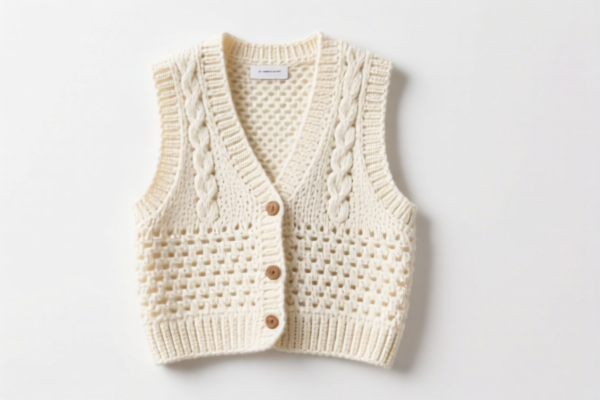
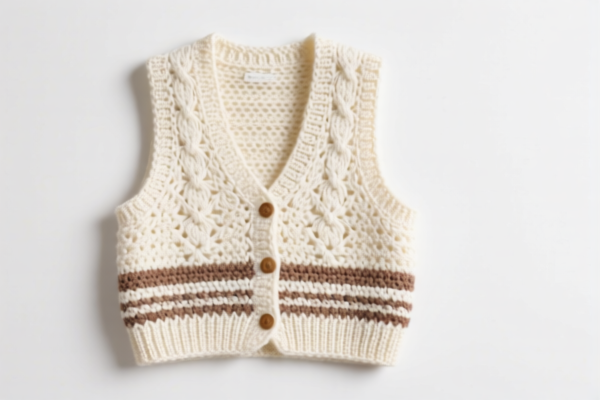
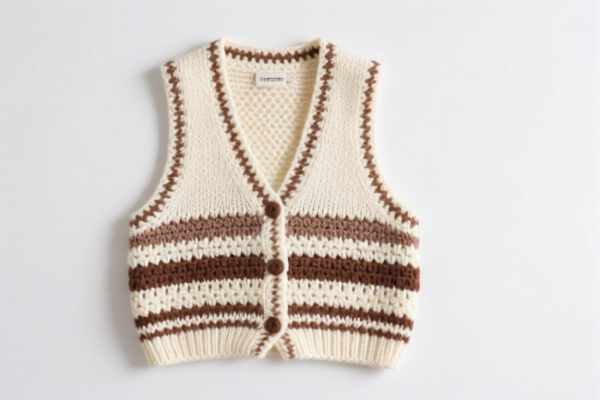
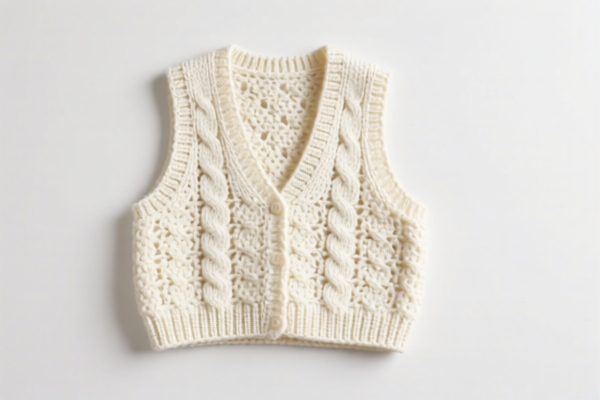
AI Analysis
🧥 Plastic Coated Knitted/Crocheted Vest (Waterproof Workwear & Fashion)
🌐 HS Code Reference & Customs Clearance Guide | 2026 Latest Tariff Analysis | Professional Level Strategy
📌 I. Product Definition & Classification: Do You Really Understand "Plastic Coated Knitted Vest"?
A plastic-coated knitted vest is a garment primarily made of knitted or crocheted fabric (e.g., polyester, nylon, cotton) with a continuous layer of plastic on one or both sides. In international trade, its classification depends heavily on: 1. Fabric Composition: Is it synthetic fiber, artificial fiber, or other? 2. Coating Type: Is it a simple surface treatment or a substantial lamination? 3. Garment Type: Vest (sleeveless) vs. Jacket (with sleeves). Note: The user input specifies "vest," but the provided data predominantly lists "Jacket." This is a critical distinction in HS Code classification.
⚠️ Critical Distinction:
- Vest (Sleeveless): Generally falls under Chapter 61, Heading 6109 (T-shirts, singlets, etc.) or 6111/6114 depending on material, but NOT under Jackets (6101/6102).
- Jacket (With Sleeves): Falls under Chapter 61, Heading 6101 (Men’s/Boys’) or 6102 (Women’s/Girls’).
- Plastic Coating: If the coating is substantial enough to give the article its essential character, it may fall under Heading 6113 (Garments made of impregnated, coated, covered, or laminated textile fabrics).🔍 Data Constraint Note:
The provided<DATA>exclusively lists HS Codes for JACKETS (6101.30, 6102.30, 6113.00), not vests.
If the product is strictly a VEST (sleeveless), the codes in<DATA>may be INCORRECT unless customs authorities treat sleeveless outerwear as jackets in specific jurisdictions.
This guide will analyze the provided HS Codes as if they were applied to this product, highlighting the risks.
📦 II. HS Code Classification Details (Based on Provided Data)
| HS Code | Product Description | Material/Feature | Total Tax Rate | Tax Breakdown |
|---|---|---|---|---|
6113.00.10.10 |
Knitted Jacket, Plastic Coated | Meets characteristics of coated/laminated knitted jacket | 21.3% | Base: 3.8% Add-on: 7.5% Section 301 (122): 10% |
6102.30.05.00 |
Knitted Jacket, Plastic Coated | Man-made/Synthetic Fiber Category | 22.8% | Base: 5.3% Add-on: 7.5% Section 301 (122): 10% |
6102.30.20.10 |
Knitted Jacket, Plastic Coated | Inferred as Artificial/Synthetic Fiber | 45.7% | Base: 28.2% Add-on: 7.5% Section 301 (122): 10% |
6101.30.10.00 |
Knitted Jacket, Plastic Coated | Chemical Fiber with Jacket Form | 23.1% | Base: 5.6% Add-on: 7.5% Section 301 (122): 10% |
6113.00.10.05 |
Knitted Jacket, Plastic Coated | Knitted Fabric with Plastic Coating | 21.3% | Base: 3.8% Add-on: 7.5% Section 301 (122): 10% |
📌 Key Observation:
- All codes in the data refer to Jackets (6101/6102) or Coated Garments (6113).
- Section 122 (10%) refers to the Trade Policy Action on Textiles and Apparel (USTR Action under Section 122 of the Trade Act of 1974), which imposes an additional 10% tariff on certain textile and apparel imports from China.
- Tax Rates Vary Dramatically: From 21.3% to 45.7% depending on the precise material classification (Base Tariff ranges from 3.8% to 28.2%).
💰 III. 2026 Latest Tariff Rate Analysis (US Market)
✅ Applicable Country: United States (US)
✅ Origin: China (CN) (Implied by Section 122 and typical trade context)
✅ Effective Time: Current (Section 122 is often renewed or applied dynamically)
🎯 1. 6113.00.10.10 & 6113.00.10.05 – The Most Favorable (21.3%)
| Item | Content |
|---|---|
| Base Duty | 3.8% |
| Section 301 / Add-on | 7.5% |
| Section 122 | 10% |
| Total Effective Rate | 21.3% |
| Calculation | CIF Value × 21.3% |
| De Minimis Exemption | ❌ Not Eligible (Section 122 tariffs generally do not apply to de minimis, but this is a high-value garment; check CBP Ruling HQ H307755 for latest) |
📌 Explanation:
- Heading 6113 applies to garments made of fabrics impregnated, coated, covered, or laminated. This is the most accurate category for "plastic-coated" items.
- Low Base Tariff (3.8%) makes this the cheapest option among the provided codes.
- Strategy: If your product is a vest, argue that it meets the "laminated textile fabric" definition under 6113. If customs insists it's a vest, they may force a different heading (e.g., 6109 for synthetic knit vests), which could have different rates.
🎯 2. 6101.30.10.00 – Men’s/Boys’ Synthetic Jacket (23.1%)
| Item | Content |
|---|---|
| Base Duty | 5.6% |
| Section 301 / Add-on | 7.5% |
| Section 122 | 10% |
| Total Effective Rate | 23.1% |
| Calculation | CIF Value × 23.1% |
| Note | Applies to Men’s/Boys’ garments of synthetic fibers. |
📌 Explanation:
- If the vest is men’s/unisex, this code might be used if customs classifies it as a "jacket-like" garment.
- Higher base than 6113, but still moderate.
🎯 3. 6102.30.05.00 – Women’s/Girls’ Synthetic Jacket (22.8%)
| Item | Content |
|---|---|
| Base Duty | 5.3% |
| Section 301 / Add-on | 7.5% |
| Section 122 | 10% |
| Total Effective Rate | 22.8% |
| Calculation | CIF Value × 22.8% |
| Note | Applies to Women’s/Girls’ garments of synthetic fibers. |
📌 Explanation:
- Similar to6101.30, but for women’s.
- Slightly cheaper than6101.30.
🎯 4. 6102.30.20.10 – The High-Risk Code (45.7%)
| Item | Content |
|---|---|
| Base Duty | 28.2% |
| Section 301 / Add-on | 7.5% |
| Section 122 | 10% |
| Total Effective Rate | 45.7% |
| Calculation | CIF Value × 45.7% |
| Note | High base tariff indicates a less favorable classification (e.g., specific synthetic category). |
📌 Warning:
- Avoid this code unless absolutely necessary.
- The 28.2% base tariff is extremely high.
- This may apply if the garment is classified under a subheading with a high duty rate for synthetic fibers (e.g., certain types of artificial filament yarn garments).
🛠️ IV. Customs Clearance Practical Advice (Avoid Pitfalls)
✅ 1. Critical Documentation Checklist
| Document | Required | Purpose |
|---|---|---|
| ✅ Product Specification Sheet | ✔️ | Detail fabric composition (e.g., 100% Polyester), coating type (PVC, PU, etc.), and weight. |
| ✅ Fabric Swatch/Laminate Sample | ✔️ | Prove it is a "laminated fabric" (supports 6113 classification). |
| ✅ High-Resolution Photos | ✔️ | Show front, back, inside lining, and coating texture. |
| ✅ Commercial Invoice | ✔️ | Clearly state "Plastic-Coated Knitted Vest" or "Laminated Knitted Outerwear." |
| ✅ Packing List | ✔️ | Ensure consistency with invoice. |
| ✅ Labeling | ✔️ | Must indicate fiber content and country of origin. |
✅ 2. Classification Strategy: Vest vs. Jacket
🔥 Key Rule:
"Sleeveless = Vest (6109), Sleeve = Jacket (6101/6102), Laminated = 6113"
| Scenario | Recommended HS Code | Tax Rate | Reason |
|---|---|---|---|
| Vest, Laminated/Coated | 6113.00.10.xx |
21.3% | Best fit for "plastic-coated" feature. |
| Men’s Jacket, Synthetic | 6101.30.10.00 |
23.1% | If sleeves exist and it’s synthetic. |
| Women’s Jacket, Synthetic | 6102.30.05.00 |
22.8% | If sleeves exist and it’s synthetic. |
| Vest, Uncoated, Synthetic | 6109.10.00.00 |
~14.8%* | *Not in provided data, but typical for knit vests. |
| Vest, Uncoated, Cotton | 6109.90.00.00 |
~14.8%* | *Not in provided data. |
⚠️ Risk Alert:
- If you declare a vest as a jacket (6101/6102), customs may reject it for misdescription.
- If you declare a vest under6109but it’s plastic-coated, customs may reclassify to6113or6102/6101based on "essential character," leading to unexpected taxes.
- Best Practice: Use6113.00.10.10or6113.00.10.05for plastic-coated items, regardless of vest/jacket, if the coating is substantial.
✅ 3. Section 122 Tariff Mitigation
📌 Section 122 imposes a 10% additional tariff on certain textiles.
- Check Eligibility: Some countries have FTAs or exclusions.
- Country of Origin: Ensure Made in China is accurate. Re-exporting via Vietnam/Mexico without substantial transformation does not avoid Section 122.
🌍 V. Global Market Comparison (2026)
| Market | Recommended HS Code | Estimated Total Tax | Notes |
|---|---|---|---|
| 🇺🇸 USA | 6113.00.10.10 |
21.3% | Section 122 applies. Laminated fabric is key. |
| 🇨🇳 China | 6113.00.10.10 |
~13% | No Section 122. Import duty ~6.5% + VAT 13%. |
| 🇪🇺 EU | 6113.00.00 |
~12% | No Section 122. VAT 19-27% varies by country. |
| 🇬🇧 UK | 6113.00.00 |
~12% | Post-Brexit rules apply. No Section 122. |
| 🇨🇦 Canada | 6113.00.00 |
~12% | CUSMA may apply if originating in US/Mexico. |
📌 Conclusion:
- USA is the most costly due to Section 122 (10%) and Section 301 (7.5%).
- Laminated/Coated classification (6113) offers the lowest duty rate (3.8% base) among the provided options.
📌 VI. Common Errors & Pitfalls (Lessons Learned)
❌ Error 1: Declaring a plastic-coated vest as a standard knit vest (6109)
👉 Consequence: Customs may reclassify to 6113 or 6102/6101, leading to back taxes + penalties.
✅ Correct: Use 6113.00.10.10 for coated items.
❌ Error 2: Using 6102.30.20.10 (45.7%) without justification
👉 Consequence: Overpaying 24.4% in taxes.
✅ Correct: Verify if the garment truly fits the high-base-tariff subheading. Use 6113 for lower rates.
❌ Error 3: Misclassifying Vest as Jacket
👉 Consequence: Customs may seize goods for misdescription.
✅ Correct: Clearly state "Vest" in description but justify classification under 6113 based on fabric type, not sleeve count.
🎯 VII. Conclusion: Professional Declaration for Cost Efficiency
🎯 Key Takeaway:
🔹 "Laminated Fabric = 6113 = 21.3% Tax"
🔹 "Avoid Jacket Codes for Vests Unless Necessary"
🔹 "Section 122 is Unavoidable for China Origin"
✅ Recommended Action Plan:
1. Submit Pre-Ruling: Apply for a Customs Ruling from CBP to confirm 6113.00.10.10 for your specific plastic-coated vest.
2. Document Coating: Provide test reports or manufacturer declarations on the plastic coating process.
3. Accurate Description: Use "Plastic-Coated Knitted Vest" or "Laminated Knitted Outerwear" in commercial invoices.
4. Verify Origin: Ensure no transshipment fraud; Section 122 applies to substantial transformation in China.
📌 Pro Tip:
If your product is not plastic-coated, consider classifying it as a standard knit vest (6109.xx) which may have lower total taxes (no Section 122 if not coated? Check current rules). However, if coated, 6113 is your best bet.
📣 Immediate Action:
📞 Consult a licensed customs broker.
📄 Gather fabric swatches and coating specifications.
🚀 File for a CBP Binding Ruling to lock in the 21.3% rate and avoid surprises.
✨ Professional Clearance, Start with Accurate Classification!
💼 Every Percent of Tax Saved is Pure Profit!
Customer Reviews
About HS Code Classification
The Harmonized System (HS) is an internationally standardized nomenclature developed by the World Customs Organization (WCO) to classify traded products. Over 200 countries use the HS system as the basis for customs tariffs, trade statistics, and import/export regulations.
Each HS code follows a hierarchical structure:
- Chapter (2 digits) — Broad category of goods (e.g., Chapter 84: Machinery and Mechanical Appliances)
- Heading (4 digits) — More specific grouping within the chapter
- Subheading (6 digits) — Internationally standardized breakdown, used by all WCO member countries
- National subdivisions (8-10 digits) — Country-specific extensions for further classification, such as US HTSUS 10-digit codes
Correct HS code classification is essential for smooth customs clearance, accurate duty payment, and compliance with trade regulations. Misclassification can lead to customs delays, overpayment of duties, or penalties.
When importing from CN to US, the applicable tariff rates may include:
- Most-Favored-Nation (MFN) rate — The standard duty rate applied to WTO members
- General rate — Applied to countries without trade agreements
- Trade remedy duties — Additional tariffs such as Section 301 (anti-dumping), Section 232 (national security), or countervailing duties
The information provided on this page is for reference purposes only. For official classification, please consult with your local customs authority or a licensed customs broker.