Plastic drainage pipes
CN → US| HS Code | Tariff Rate | Origin | Destination | Doc |
|---|---|---|---|---|
| 3917290090 | 38.1% | CN | US | Official Doc |
| 3926909987 | 22.8% | CN | US | Official Doc |
| 3917210000 | 38.1% | CN | US | Official Doc |
| 3926909989 | 22.8% | CN | US | Official Doc |
| 3917400020 | 40.3% | CN | US | Official Doc |
Product Images
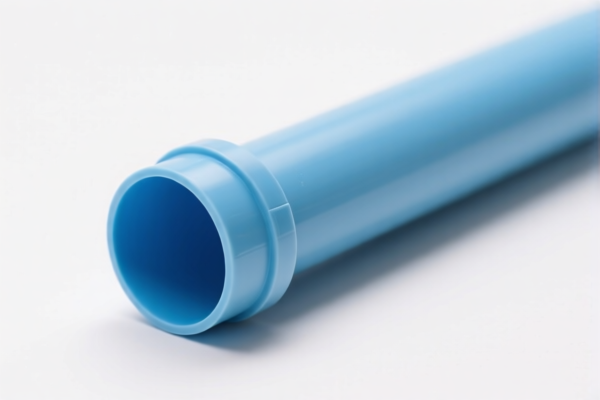
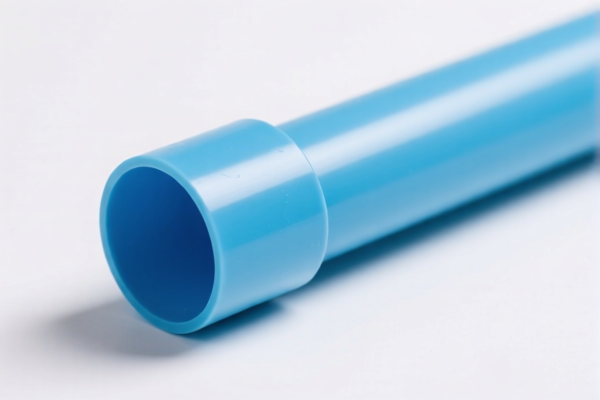
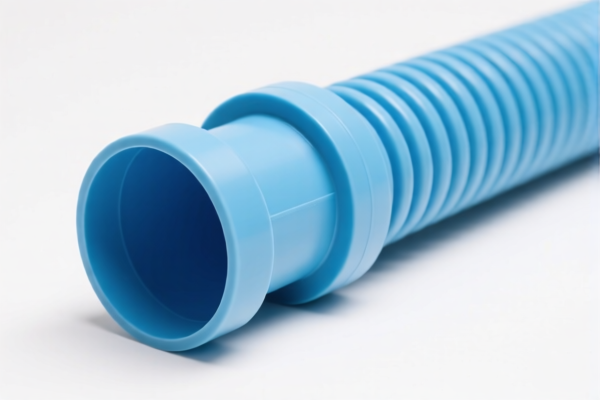
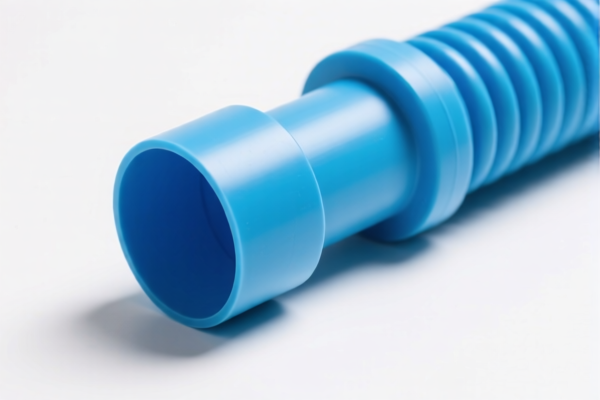
AI Analysis
🚰 Plastic Drainage Pipes (Plastic Pipes & Tubing)
🌐 HS Code Reference & Customs Clearance Guide | 2026 Latest Tariff Analysis | Professional Strategy for US Import
📌 I. Product Definition & Classification: Understanding "Plastic Pipes"
Plastic drainage pipes are essential components in plumbing, construction, and industrial fluid transfer systems. In international trade, they are primarily classified under Chapter 39 (Plastics and Articles Thereof). However, precise classification depends on the material composition, structural form, and specific application.
Two Main Categories: 1. Rigid Plastic Pipes & Tubes (Headings 3917): Pipes that are rigid, used for conveying liquids or gases, and meet specific structural criteria. 2. Other Plastic Articles (Heading 3926): "Catch-all" category for plastic products that do not fit more specific headings, including some flexible tubes or specialized fittings.
⚠️ Key Distinction Point:
- If the pipe is rigid, used for drainage/conveyance, and made of plastic → Typically falls under 3917 (e.g., 3917.21, 3917.29, 3917.40).
- If the pipe is flexible, or does not fit the strict definition of "pipes" in Chapter 39, or is a general plastic article → May fall under 3926 (e.g., 3926.90).
- Note: "Drainage sinks" (3917.40) are specific fittings/accessories, distinct from plain pipes.
📦 II. HS Code Classification Details (2026 Latest Tariff Authority)
| HS Code | Product Description | Application Scenario | Material/Form |
|---|---|---|---|
3917.21.00.00 |
Plastic pipes & tubes, rigid, non-reinforced, non-combined with other materials | Standard rigid PVC/PE drainage pipes, matching specific material/form criteria | ✅ Rigid Plastic |
3917.29.00.90 |
Other plastic pipes & tubes, matching material & form, length unrestricted | Generic rigid plastic pipes where specific sub-heading 21 doesn't apply exactly | ✅ Rigid Plastic |
3917.40.00.20 |
Plastic washing basin drainages, plastic material, drainage use, pipe fittings | Sink drains, bathroom drainage accessories, pipe fittings | ✅ Plastic Fittings |
3926.90.99.87 |
Plastic pipes, plastic material, tubular form, catch-all category | Flexible tubes or pipes not fitting 3917 definitions | ✅ Plastic Article |
3926.90.99.89 |
Other plastic articles, inferred as plastic products, no conflict | General plastic pipes without specific conflict, generic classification | ✅ Plastic Article |
🔍 Critical Reminder:
- Rigid pipes for drainage are predominantly classified under 3917.
- Fittings (like sink drains) have separate sub-headings (3917.40).
- Flexible or non-conforming pipes may fall under 3926, but these often have lower base tariffs yet high additional tariffs.
💰 III. 2026 Latest Tariff Rate Breakdown (Including Additional Taxes & Policy Surcharges)
✅ Applicable Country: United States (US)
✅ Country of Origin: China (CN)
✅ Effective Date: From November 10, 2025 (and subsequent imports)
🎯 1. 3917.21.00.00 & 3917.29.00.90 —— Rigid Plastic Pipes (High Tariff Zone)
| Item | Details |
|---|---|
| Base Tariff Rate | 3.1% (Ad Valorem) |
| Section 301 Additional Tariff | +25% (From USITC Footnote 9903.88.01) |
| Section 122 Tariff | +10% (Specific provision for certain Chinese goods) |
| Total Tariff Rate | 38.1% |
| Tax Calculation | CIF Value × 38.1% |
| De Minimis Eligibility | ❌ NOT ELIGIBLE (deny_de_minimis) |
| Legal Basis Path | Base: 3.1% → 301: +25% → 122: +10% → Total: 38.1% |
📌 Explanation:
- These HS codes are for rigid plastic pipes, a key infrastructure material.
- The 38.1% total rate is extremely high due to cumulative additional tariffs (301 + 122).
- No de minimis exemption applies, meaning even small shipments are fully taxed.
🎯 2. 3917.40.00.20 —— Plastic Sink Drains & Fittings (Highest Tariff Zone)
| Item | Details |
|---|---|
| Base Tariff Rate | 5.3% (Ad Valorem) |
| Section 301 Additional Tariff | +25% (From USITC Footnote 9903.88.01) |
| Section 122 Tariff | +10% (Specific provision for certain Chinese goods) |
| Total Tariff Rate | 40.3% |
| Tax Calculation | CIF Value × 40.3% |
| De Minimis Eligibility | ❌ NOT ELIGIBLE (deny_de_minimis) |
| Legal Basis Path | Base: 5.3% → 301: +25% → 122: +10% → Total: 40.3% |
📌 Explanation:
- This code is for drainage accessories (e.g., sink drains), not plain pipes.
- Higher base tariff (5.3%) leads to the highest total rate (40.3%).
- Treat as high-value classification; accurate product description is crucial.
🎯 3. 3926.90.99.87 & 3926.90.99.89 —— Other Plastic Pipes/Articles (Lower Base, Same Surcharges)
| Item | Details |
|---|---|
| Base Tariff Rate | 5.3% (Ad Valorem) |
| Section 301 Additional Tariff | +7.5% (Reduced 301 rate for some plastic articles) |
| Section 122 Tariff | +10% (Specific provision for certain Chinese goods) |
| Total Tariff Rate | 22.8% |
| Tax Calculation | CIF Value × 22.8% |
| De Minimis Eligibility | ❌ NOT ELIGIBLE (deny_de_minimis) |
| Legal Basis Path | Base: 5.3% → 301: +7.5% → 122: +10% → Total: 22.8% |
📌 Explanation:
- These codes are "catch-all" for plastic pipes that do not fit rigid pipe definitions (3917).
- While the base tariff is the same as 3917.40 (5.3%), the 301 additional tariff is lower (7.5% vs 25%).
- Total rate is significantly lower (22.8% vs 38.1%/40.3%).
- Strategy: If your product allows, classifying under 3926 (if technically compliant) can save ~15-17% in tariffs.
🛠️ IV. Customs Clearance Practical Advice (Battle-Tested Pitfall Avoidance)
✅ 1. Required Documentation Checklist (Non-Negotiable)
| Document | Mandatory? | Description |
|---|---|---|
| ✅ Product Specification Sheet | ✔️ | Material type (PVC, PE, PP), diameter, wall thickness, pressure rating |
| ✅ Technical Drawings | ✔️ | Confirm rigid vs. flexible structure |
| ✅ Product Photos (with Labels) | ✔️ | Show shape, fittings, markings, model numbers |
| ✅ Third-Party Test Reports | ✔️ | NSF/ANSI 61, ASTM, ISO certifications for drainage |
| ✅ Commercial Invoice | ✔️ | Must state "Plastic Drainage Pipe" or "Plastic Pipe Fitting" accurately |
| ✅ Certificate of Origin (CO) | ✔️ | Required for tariff calculation; verify country of origin |
| ✅ Packing List | ✔️ | Detail quantity, weight, and packaging to avoid volume disputes |
✅ 2. Declaration Tips (Key Mantra)
🔥 "Rigid = 3917 (High Tax), Flexible/Catch-all = 3926 (Lower Tax), Fittings = 3917.40 (Highest Tax)!"
| Scenario | Correct Declaration | Incorrect Practice |
|---|---|---|
| Standard Rigid PVC Drain Pipe | 3917.21.00.00 or 3917.29.00.90 |
Misdeclare as 3926 to save tax → Audit Risk |
| Sink Drain Fitting | 3917.40.00.20 |
Declare as pipe → 40.3% vs 38.1% (minor diff, but accuracy matters) |
| Flexible Plastic Hose | 3926.90.99.87 |
Declare as rigid pipe → Classification Error |
| Generic Plastic Tube | 3926.90.99.89 |
Vague description "Plastic Item" → Delays |
📌 Important:
- If you misdeclare a rigid pipe as a flexible/catch-all item to reduce tariffs, US Customs may reclassify, impose penalties, and demand back taxes.
- Accurate technical descriptions are vital to support your chosen HS code.
✅ 3. Special Cases Handling
| Situation | Handling Advice |
|---|---|
| OEM Custom Pipes | Provide client specs + design drawings to justify specific sub-heading |
| Pipe + Fittings Mixed Shipment | Declare separately; pipes under 3917/3926, fittings under 3917.40 |
| Recycled Plastic Pipes | May require additional environmental compliance docs; tax rate same but certification stricter |
| Industrial vs. Residential Use | Use does not change HS code, but affects required certifications (e.g., NSF for potable water) |
🌍 V. Global Market Comparison (2026 Latest)
| Country/Region | Recommended HS Code | Tariff Rate (CN Origin) | Certification | Notes |
|---|---|---|---|---|
| 🇺🇸 USA | 3917.21.00.00 / 3917.29.00.90 |
38.1% | ASTM, NSF, UL | Highest surcharge (301 + 122) |
| 🇨🇳 China | 3917.21.00.00 |
5% | CCC, GB Standards | No additional tariffs |
| 🇪🇺 EU | 3917.21.00.00 |
0% (if under quota) | CE, REACH | No 301/122 equivalents |
| 🇦🇺 Australia | 3917.21.00.00 |
5% | SAA | No additional surcharges |
| 🇯🇵 Japan | 3917.21.00.00 |
0% | JIS | No additional surcharges |
📌 Conclusion:
- USA is the ONLY major market imposing severe additional tariffs (301 + 122) on Chinese plastic pipes.
- Tariff difference between 3917 (38.1%) and 3926 (22.8%) is significant. Careful product evaluation is needed.
- China, EU, AU, JP have much lower or zero tariffs, making US the most expensive export destination.
📌 VI. Common Mistakes & Pitfall Avoidance (Blood & Tears Lessons)
❌ Mistake 1: Declaring rigid pipes as "plastic articles" (3926) to save tax
👉 Consequence: Customs reclassification → Pay difference + penalties + delay
❌ Mistake 2: Not separating pipes from fittings in mixed shipments
👉 Consequence: Incorrect tax application → Overpayment or underpayment risks
❌ Mistake 3: Vague product description ("Plastic Tube") without material/shape details
👉 Consequence: Customs detention → Additional inspection costs + delays
❌ Mistake 4: Ignoring Section 122 tariffs
👉 Consequence: Underestimating landed cost → Profit margin erosion
✅ Correct Approach:
"Rigid PVC Drainage Pipe, 4-inch Diameter, ASTM D3034, NSF/ANSI 61 Certified, Made in China"
🎯 VII. Conclusion: Precise Classification Saves Money and Time
🎯 Remember the Mantra:
🔹 "Rigid Pipes = 38.1%, Sink Drains = 40.3%, Catch-all = 22.8%."
🔹 "HS Code Determines Tax, Accuracy Prevents Penalties, Description Saves Time."
📌 Pro Tip:
If your plastic pipes can technically be classified under 3926 (e.g., flexible or non-rigid), do so to save ~15%.
However, do not misdeclare rigid pipes. Get Advance Rulings from US Customs if unsure.
Consult professional customs brokers for complex mixed shipments.
📣 Immediate Action:
📞 Contact a licensed customs broker + Provide product specs + Request HS Code Advance Ruling
🚀 Ensure compliant clearance, minimize tariffs, maximize profit for your plastic drainage pipes!
✨ Professional Customs Clearance Starts with Accurate Classification!
💼 Every Percent Saved is Pure Profit!
Customer Reviews
About HS Code Classification
The Harmonized System (HS) is an internationally standardized nomenclature developed by the World Customs Organization (WCO) to classify traded products. Over 200 countries use the HS system as the basis for customs tariffs, trade statistics, and import/export regulations.
Each HS code follows a hierarchical structure:
- Chapter (2 digits) — Broad category of goods (e.g., Chapter 84: Machinery and Mechanical Appliances)
- Heading (4 digits) — More specific grouping within the chapter
- Subheading (6 digits) — Internationally standardized breakdown, used by all WCO member countries
- National subdivisions (8-10 digits) — Country-specific extensions for further classification, such as US HTSUS 10-digit codes
Correct HS code classification is essential for smooth customs clearance, accurate duty payment, and compliance with trade regulations. Misclassification can lead to customs delays, overpayment of duties, or penalties.
When importing from CN to US, the applicable tariff rates may include:
- Most-Favored-Nation (MFN) rate — The standard duty rate applied to WTO members
- General rate — Applied to countries without trade agreements
- Trade remedy duties — Additional tariffs such as Section 301 (anti-dumping), Section 232 (national security), or countervailing duties
The information provided on this page is for reference purposes only. For official classification, please consult with your local customs authority or a licensed customs broker.