Plastic gloves (cleaning use)
CN → US| HS Code | Tariff Rate | Origin | Destination | Doc |
|---|---|---|---|---|
| 6216000800 | 18.3% | CN | US | Official Doc |
| 3926201020 | 10.0% | CN | US | Official Doc |
| 3926204010 | 16.5% | CN | US | Official Doc |
| 6216000500 | 17.5% | CN | US | Official Doc |
Product Images

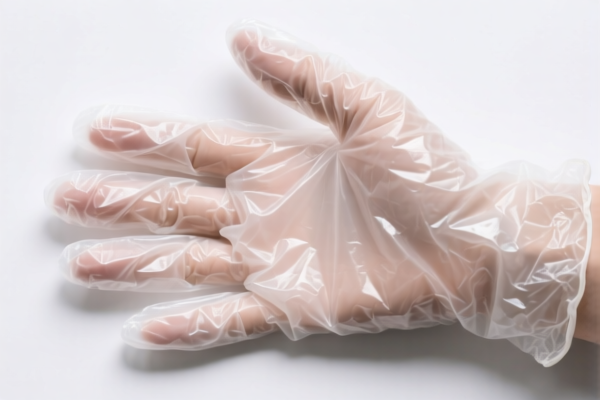


AI Analysis
🧤 Plastic Gloves for Cleaning Use
🌐 HS Code Reference & Customs Clearance Guide | 2026 Latest Tariff Analysis | Professional Clearance Strategy
📌 1. Product Definition and Classification: Do You Really Understand "Plastic Cleaning Gloves"?
Plastic cleaning gloves are essential personal protective equipment (PPE) and household aids used for domestic cleaning, industrial washing, and food processing. In international trade, their classification depends heavily on material composition, manufacturing method (immersion/coating vs. molded), and specific usage claims.
The data provided highlights four distinct HS Code possibilities, reflecting subtle differences in material definition and tariff treatment under US trade policies (specifically Section 301 and IEEPA orders).
⚠️ Key Distinction Points:
- Textile-Based with Plastic Coating: If the glove has a fabric backing (like cotton or knit) dipped or coated in plastic → Likely falls under Chapter 62 (Articles of apparel and clothing accessories, knitted or crocheted).
- Pure Plastic/Molded: If the glove is made entirely of plastic (e.g., PVC, PE) via molding or casting → Falls under Chapter 39 (Articles of plastics).
- Tariff Impact: Chapter 62 items generally face higher "Section 301" additional duties (7.5%) compared to some Chapter 39 items (0% additional duty), though both face the 10% IEEPA surcharge.
📦 2. HS Code Classification Details (2026 Latest Tariff Authority Mapping)
| HS Code | Product Description | Applicable Scenario | Tariff Profile |
|---|---|---|---|
6216.00.08.00 |
Plastic gloves, outdoor use, meeting requirements for immersion, coating, or covering with plastic material | Gloves with fabric backing coated in plastic; often used for heavy-duty outdoor cleaning | Total: 18.3% (Base: 0.8% + Sec 301: 7.5% + IEEPA: 10%) |
3926.20.10.20 |
Plastic gloves, outdoor use, meeting requirements for plastic products and glove material/shape | Pure plastic molded gloves (e.g., PVC/PE); likely lower base duty but strict material definition | Total: 10.0% (Base: 0.0% + Sec 301: 0.0% + IEEPA: 10%) |
3926.20.40.10 |
Plastic gloves, explicitly including material and shape, meeting glove and plastic product characteristics | Other plastic gloves not specified elsewhere; higher base duty | Total: 16.5% (Base: 6.5% + Sec 301: 0.0% + IEEPA: 10%) |
6216.00.05.00 |
Plastic gloves, outdoor use, meeting requirements for immersion, coating, or covering with plastic | Alternative fabric-backed plastic coating classification | Total: 17.5% (Base: 0.0% + Sec 301: 7.5% + IEEPA: 10%) |
🔍 Critical Reminder:
-3926.20.10.20offers the lowest total duty (10%) because it has 0% Additional Duty under Section 301, plus 0% Base Duty. This is only applicable if the product strictly meets the "plastic product" definition and not a "textile article coated with plastic." -6216.00.08.00and6216.00.05.00are subject to a 7.5% Section 301 Additional Duty, making them more expensive despite low base duties. - All codes include a 10% IEEPA Surcharge (Targeting China-origin goods).
💰 3. 2026 Latest Tariff Rate Breakdown (Including Additional Taxes & Policy Surcharges)
✅ Applicable Country: United States (US)
✅ Origin: China (CN)
✅ Effective Time: Ongoing (as per current trade restrictions)
🎯 1. 6216.00.08.00 & 6216.00.05.00 —— Textile-Based Plastic Coated Gloves
| Item | Content |
|---|---|
| Base Duty Rate | 0.0% - 0.8% (ad valorem) |
| Section 301 Additional Duty | +7.5% (Applied to textile-based plastic coated gloves) |
| IEEPA Surcharge | +10% (Applied to all China-origin plastic/textile goods under EO 14014/IEEPA) |
| Total Effective Duty | 17.5% - 18.3% |
| Tax Calculation | CIF Value × (Base + 7.5% + 10%) |
| De Minimis Exemption | ❌ Not Eligible (Deny de minimis for Section 301 goods) |
| Legal Basis Path | HTSUS:6216 → USITC Footnote: Sec 301 (7.5%) → IEEPA: 10% Surcharge |
📌 Explanation:
- These codes fall under Chapter 62, which covers "Articles of apparel and clothing accessories, knitted or crocheted."
- The 7.5% additional duty is a significant cost driver.
- If your gloves have a fabric lining/backing, they cannot be classified under Chapter 39 (Plastics) unless the plastic coating is the essential character (which is rare for cleaning gloves).
🎯 2. 3926.20.10.20 —— Pure Plastic Molded Gloves (Best Case Scenario)
| Item | Content |
|---|---|
| Base Duty Rate | 0.0% |
| Section 301 Additional Duty | 0.0% (Exempt from additional duty in this specific subheading) |
| IEEPA Surcharge | +10% |
| Total Effective Duty | 10.0% |
| Tax Calculation | CIF Value × 10% |
| De Minimis Exemption | ❌ Not Eligible (IEEPA surcharge still applies, and de minimis is blocked for IEEPA goods) |
| Legal Basis Path | HTSUS:3926.20 → IEEPA: 10% Surcharge |
📌 Strategic Advantage:
- This is the most cost-effective classification if the product is purely plastic (e.g., PVC or Nitrile gloves without fabric backing).
- Condition: Must prove it is a "plastic article" and not a "textile article coated with plastic."
🎯 3. 3926.20.40.10 —— Other Plastic Gloves
| Item | Content |
|---|---|
| Base Duty Rate | 6.5% |
| Section 301 Additional Duty | 0.0% |
| IEEPA Surcharge | +10% |
| Total Effective Duty | 16.5% |
| Tax Calculation | CIF Value × 16.5% |
| De Minimis Exemption | ❌ Not Eligible |
| Legal Basis Path | HTSUS:3926.20 → IEEPA: 10% Surcharge |
📌 Note:
- Higher base duty makes this less competitive than3926.20.10.20.
- Use this only if the product doesn't fit the specific description of3926.20.10.20.
🛠️ 4. Customs Clearance Practical Advice (Real-World Pitfall Guide)
✅ 1. Preparation Checklist (Mandatory Documents)
| Document | Required? | Explanation |
|---|---|---|
| ✅ Product Specification Sheet | ✔️ | Must clearly state: "100% PVC," "Nitrile," or "Polyethylene." Avoid vague terms like "synthetic material." |
| ✅ Material Composition Breakdown | ✔️ | Crucial for distinguishing between Chapter 62 (Textile+Plastic) and Chapter 39 (Pure Plastic). |
| ✅ Product Photos (Inside/Outside) | ✔️ | Show if there is a fabric lining. If fabric is present, Chapter 62 is likely. |
| ✅ Commercial Invoice | ✔️ | Clearly describe as "Plastic Cleaning Gloves" or "Immersed Plastic Gloves." |
| ✅ Origin Certificate | ✔️ | To confirm China origin and apply correct IEEPA surcharge. |
| ✅ Packaging List | ✔️ | Ensure quantity and weight match invoice. |
✅ 2. Classification Strategy (Key Mantra)
🔥 "Pure Plastic = Ch39, Fabric Backing = Ch62. Choose Ch39.10.20 for 10% Duty!"
| Scenario | Correct HS Code | Duty Rate | Risk |
|---|---|---|---|
| 100% PVC/PE Molded Glove (No fabric) | 3926.20.10.20 |
10.0% | ✅ Low Cost |
| Fabric-Lined Glove (Cotton knit dipped in plastic) | 6216.00.08.00 |
18.3% | ⚠️ Higher Cost due to 7.5% Sec 301 |
| Nitrile Coated Fabric Glove | 6216.00.08.00 or 6216.00.05.00 |
17.5-18.3% | ⚠️ Higher Cost |
| Other Plastic Glove (Not molded/dipped standard) | 3926.20.40.10 |
16.5% | ⚠️ Higher Base Duty |
📌 Critical Warning:
- Do NOT misclassify a fabric-lined glove as3926.20.10.20to save tax. Customs audits will require material tests. If found guilty, you will face penalties, back taxes, and potential seizure.
- IEEPA 10% Surcharge is unavoidable for China-origin goods in all these categories. Focus on minimizing Base + Sec 301 duties.
✅ 3. Special Case Handling
| Situation | Handling Advice |
|---|---|
| OEM Custom Colors | Provide design specs to prove material consistency. |
| Packaged in Retail Boxes | Declare as retail-ready; ensure invoice matches retail description. |
| Mixed Shipments (Plastic + Fabric) | Separate shipments or clearly distinguish HS codes per item. Do not mix. |
| Proof of "Plastic" Character | If using 3926.20.10.20, be ready to provide lab reports confirming >100% plastic content. |
🌍 5. Global Market Comparison (2026 Latest)
| Country/Region | Recommended HS Code | Duty Rate | Certification Requirements | Notes |
|---|---|---|---|---|
| 🇺🇸 USA | 3926.20.10.20 |
10.0% | None specific | Lowest duty if pure plastic. Chapter 62 faces higher duties. |
| 🇨🇳 China | 3926.20.10.20 |
~5-10% | CCC (if applicable) | Standard import duties apply. |
| 🇪🇺 EU | 3926.20.90 |
0-6.5% | REACH, CE | No Section 301 or IEEPA. |
| 🇬🇧 UK | 3926.20.90 |
0-6.5% | UKCA | Post-Brexit rules apply. |
📌 Conclusion:
- USA is the most tax-sensitive market due to IEEPA and Section 301.
-3926.20.10.20is the optimal classification for pure plastic cleaning gloves, saving 7.5-8.3% in duties compared to textile-coated alternatives.
📌 6. Common Mistakes & Pitfall Guide (Blood and Tears Lessons)
❌ Mistake 1: Classifying fabric-lined gloves as 3926.20.10.20 to avoid 7.5% duty.
👉 Consequence: Customs audit reveals fabric lining → Back taxes + 10% Penalty + Legal Fees.
❌ Mistake 2: Ignoring the 10% IEEPA Surcharge.
👉 Consequence: Budget miscalculation. Even with 0% base duty, 10% is still owed.
❌ Mistake 3: Vague description on Invoice ("Gloves").
👉 Consequence: Customs cannot verify material → Detention, Delay, and Rejection.
❌ Mistake 4: Assuming "De Minimis" ($800) applies.
👉 Consequence: IEEPA and Section 301 goods are EXCLUDED from de minimis entry. All shipments are subject to full duty assessment.
✅ Correct Approach:
"PVC Plastic Cleaning Gloves, 100% Polyvinyl Chloride, No Fabric Lining, Molded, For Household Cleaning"
HS Code:3926.20.10.20
Total Duty: 10%
🎯 7. Conclusion: Professional Classification Saves Money!
🎯 Remember the Mantra:
🔹 "Pure Plastic = 10% Duty (Ch39.10.20). Fabric Backing = 18.3% Duty (Ch62.08.00)."
🔹 "IEEPA 10% is Always On. Avoid De Minimis Traps."
🔹 "Material Proof is Key. Do Not Misclassify!"
📌 Pro Tip:
If your cleaning gloves contain a fabric lining, they will likely fall under Chapter 62 and face 17.5-18.3% duty.
To optimize costs, consider switching to 100% plastic (PVC/Nitrile) molded gloves to qualify for 3926.20.10.20 (10% total duty).
📣 Immediate Action:
📞 Contact Your Customs Broker with material specifications.
📄 Request a Pre-Ruling if unsure about the fabric vs. plastic distinction.
🚀 Optimize Product Design to qualify for the lower 10% duty bracket!
✨ Professional Clearance Starts with Accurate Classification!
💼 Every Percentage Point of Duty Counts!
Customer Reviews
About HS Code Classification
The Harmonized System (HS) is an internationally standardized nomenclature developed by the World Customs Organization (WCO) to classify traded products. Over 200 countries use the HS system as the basis for customs tariffs, trade statistics, and import/export regulations.
Each HS code follows a hierarchical structure:
- Chapter (2 digits) — Broad category of goods (e.g., Chapter 84: Machinery and Mechanical Appliances)
- Heading (4 digits) — More specific grouping within the chapter
- Subheading (6 digits) — Internationally standardized breakdown, used by all WCO member countries
- National subdivisions (8-10 digits) — Country-specific extensions for further classification, such as US HTSUS 10-digit codes
Correct HS code classification is essential for smooth customs clearance, accurate duty payment, and compliance with trade regulations. Misclassification can lead to customs delays, overpayment of duties, or penalties.
When importing from CN to US, the applicable tariff rates may include:
- Most-Favored-Nation (MFN) rate — The standard duty rate applied to WTO members
- General rate — Applied to countries without trade agreements
- Trade remedy duties — Additional tariffs such as Section 301 (anti-dumping), Section 232 (national security), or countervailing duties
The information provided on this page is for reference purposes only. For official classification, please consult with your local customs authority or a licensed customs broker.