Plastic new type pipe fittings
CN → US| HS Code | Tariff Rate | Origin | Destination | Doc |
|---|---|---|---|---|
| 8481805090 | 38.0% | CN | US | Official Doc |
| 3926909987 | 22.8% | CN | US | Official Doc |
| 3926305000 | 22.8% | CN | US | Official Doc |
| 8481805040 | 38.0% | CN | US | Official Doc |
| 3917400050 | 40.3% | CN | US | Official Doc |
Product Images
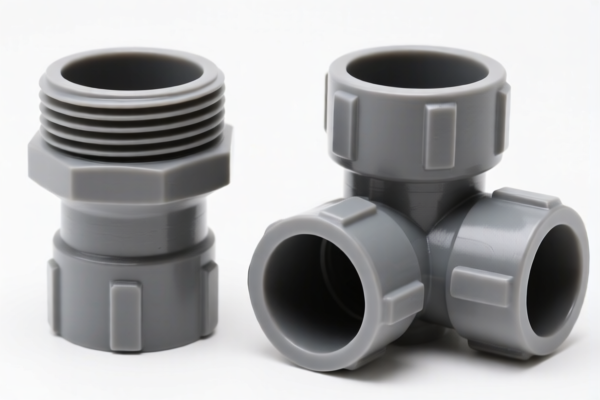
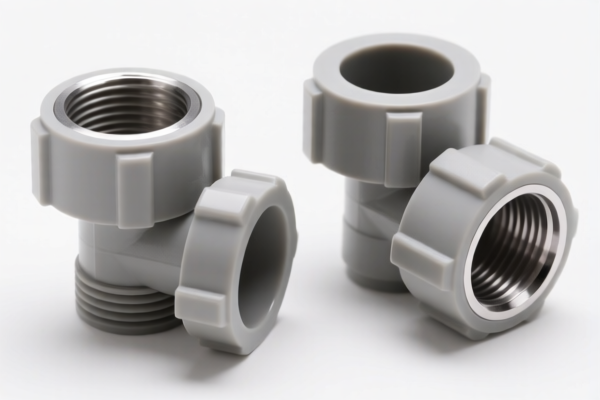
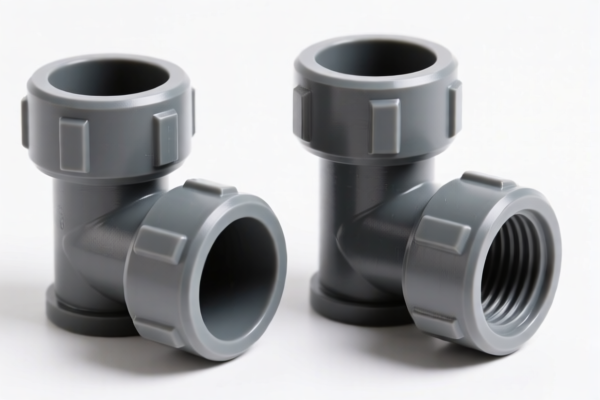
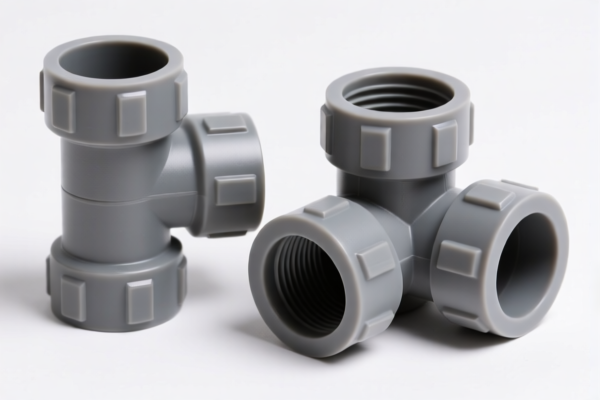
AI Analysis
🔧 Plastic New Type Pipe Fittings (Plastic Pipe Connectors)
🌐 HS Code Reference & Customs Clearance Guide | 2026 Latest Tariff Analysis | Professional Compliance Strategy
📌 I. Product Definition & Classification: What Are "New Type Plastic Pipe Fittings"?
"Plastic new type pipe fittings" refer to connection components used in piping systems made entirely of plastic materials (such as PP-R, PE, PVC, PEX, etc.). In international trade, their classification is complex because they can be viewed either as part of a mechanical device (valves/pipes, Chapter 84) or as general plastic articles (Chapter 39). The correct HS Code depends heavily on the specific structure, function, and how the customs authority interprets the "primary character" of the item.
⚠️ Key Distinction:
- If the fitting acts as a valve or flow-control device (even if made of plastic) → Likely Chapter 84.
- If the fitting is a simple connector, elbow, or tee without complex mechanical control → Likely Chapter 39.
- Warning: Many plastic pipe fittings face high additional tariffs due to trade restrictions (Section 301, IEEPA, and Section 122). Misclassification can lead to significant cost differences or compliance risks.
📦 II. HS Code Classification Details (2026 Latest Tariff Authority Comparison)
Based on the provided data, here are the five possible HS Codes and their corresponding tax implications:
| HS Code | Product Description | Key Characteristics | Total Tax Rate |
|---|---|---|---|
8481.80.50.90 |
Plastic pipe connector; fits the category of pipe fittings; material is plastic. | Treated as a mechanical pipe fitting/component under Chapter 84. | 38.0% |
8481.80.50.40 |
Plastic pipe connector; shape is a connector; material is plastic; leans towards parts classification. | Also treated as a mechanical part under Chapter 84. High duty burden. | 38.0% |
3926.90.99.87 |
Plastic pipe connector; material is plastic; form belongs to extended applications of plastic products. | Treated as a general plastic article (miscellaneous). Lower base duty. | 22.8% |
3926.30.50.00 |
Plastic pipe connector; material is plastic; form and usage consistent with plastic products and connectors. | Treated as plastic fittings/accessories under Chapter 39. Lower base duty. | 22.8% |
3917.40.00.50 |
Plastic pipe valve; material is plastic; form is a pipe accessory; usage consistent with pipe fittings. | Classified as a plastic valve/piping part under Chapter 39. Highest tax rate. | 40.3% |
🔍 Critical Insight:
- The difference between Chapter 84 (e.g.,8481.80.50.90) and Chapter 39 (e.g.,3926.90.99.87) is significant. Chapter 84 codes often attract higher base tariffs (3.0%) compared to Chapter 39 (5.3%), but the key driver is the add-on tariffs.
- Section 122 Tariff: All listed codes include a 10% tariff under Section 122 (likely referring to specific bilateral or retaliatory measures).
- Section 301 (Added Duty): Varies from 7.5% to 25%. This is the most volatile component.
💰 III. Detailed Breakdown of Tariff Rates (Including Surcharges & Policy Add-ons)
✅ Applicable Country: USA (US)
✅ Origin: China (CN)
✅ Effective Time: Based on current trade policies (2025-2026 context)
🎯 1. Chapter 84 Classification: Mechanical Pipe Fittings
Codes: 8481.80.50.90 & 8481.80.50.40
| Item | Content |
|---|---|
| Base Tariff | 3.0% |
| Section 301 Added Duty | +25.0% |
| Section 122 Tariff | +10.0% |
| Total Tariff | 38.0% |
| Tax Calculation | CIF Value × 38% |
| Legal Basis Path | HTSUS:8481.80.50.xx → IEEPA/USITC Footnotes → Section 122 Rules |
📌 Explanation:
- These codes treat the plastic fitting as a part of a valve or pipe system.
- The 25% Section 301 duty is a standard punitive tariff on many Chinese industrial goods.
- Total 38% is a high barrier. Importers must ensure the product truly qualifies as a "mechanical fitting" and not just a generic plastic part to avoid being downgraded (which might seem cheaper but carries other risks).
🎯 2. Chapter 39 Classification: General Plastic Articles
Codes: 3926.90.99.87, 3926.30.50.00
| Item | Content |
|---|---|
| Base Tariff | 5.3% |
| Section 301 Added Duty | +7.5% |
| Section 122 Tariff | +10.0% |
| Total Tariff | 22.8% |
| Tax Calculation | CIF Value × 22.8% |
| Legal Basis Path | HTSUS:3926.xx → Section 301 List 3/4 (Lower bracket) → Section 122 |
📌 Explanation:
- These codes classify the item as a plastic article rather than a mechanical device.
- The Section 301 duty is only 7.5%, significantly lower than the 25% for Chapter 84.
- Total 22.8% is the most cost-effective option for simple connectors, elbows, and tees.
- Strategy: If your product is a simple plastic connector (no moving parts, no complex sealing mechanism acting as a valve), argue for Chapter 39 to save 15.2% in tariffs.
🎯 3. Chapter 39 Classification: Plastic Valves/High-Risk Category
Code: 3917.40.00.50
| Item | Content |
|---|---|
| Base Tariff | 5.3% |
| Section 301 Added Duty | +25.0% |
| Section 122 Tariff | +10.0% |
| Total Tariff | 40.3% |
| Tax Calculation | CIF Value × 40.3% |
| Legal Basis Path | HTSUS:3917.40.00.50 → Section 301 List 4 (High bracket) → Section 122 |
📌 Explanation:
- This code is for plastic valves. Even though it's in Chapter 39, it attracts the highest Section 301 duty (25%) plus the 10% Section 122 tariff.
- Total 40.3% is the most expensive option.
- Risk: If you declare a complex plastic connector as a "valve," you may face this highest rate. Conversely, if you declare a simple connector as a "valve" to avoid Chapter 84, you might still hit this high rate. Avoid this code unless the product is explicitly a control valve.
🛠️ IV. Customs Clearance Practical Advice (Pitfall Avoidance Guide)
✅ 1. Documentation Checklist (Non-negotiable)
| Document | Required? | Explanation |
|---|---|---|
| ✅ Product Specification Sheet | ✔️ | Must clearly state: Material (e.g., PP-R, PE100), Type (Elbow/Tee/Union), Pressure Rating, Dimensions. |
| ✅ Technical Drawings | ✔️ | Show if the item has any moving parts or complex internal mechanisms. If none, support Chapter 39 classification. |
| ✅ Product Photos | ✔️ | Clear images of the fitting, including any markings (e.g., "PP-R," "DN50," "PN16"). |
| ✅ Commercial Invoice | ✔️ | Accurate description: e.g., "PP-R Plastic Pipe Elbow, 90 Degree, No Moving Parts." Avoid vague terms like "Accessory." |
| ✅ Bill of Lading | ✔️ | Ensure HS Codes are consistent across all documents. |
| ✅ Certificate of Origin | ✔️ | Required for proving Chinese origin and applying correct Section 301/122 rates. |
✅ 2. Declaration Strategy (Key Tips)
🔥 Golden Rule:
"Simple Connectors go to Chapter 39 (22.8%); Complex/Valve-like items go to Chapter 84 (38%) or 3917 (40.3%). Do not over-complicate simple parts."
| Scenario | Recommended HS Code | Rationale |
|---|---|---|
| Standard Elbow, Tee, Coupling | 3926.90.99.87 or 3926.30.50.00 |
Simple plastic geometry, no mechanical function. Lowest tax (22.8%). |
| Plastic Flange Adapter | 3926.90.99.87 |
Still a plastic article, not a mechanical device. |
| Plastic Ball Valve / Gate Valve | 3917.40.00.50 or 8481.80.50.90 |
Has moving parts/sealing mechanism. High tax (38-40.3%). |
| Complex Multi-port Manifold | 8481.80.50.90 |
If it acts as a distribution unit with flow control, Chapter 84 may be more accurate despite higher tax. |
⚠️ Warning:
- Do not use3917.40.00.50for simple connectors. It triggers the highest duty.
- Do not use8481codes for simple plastic elbows. It’s over-classification and may raise audit flags.
✅ 3. Special Handling for Section 122 & 301
- Section 122 (10%): This applies to all listed codes. Ensure your importer of record is aware of this additional cost. It is not always obvious on standard tariff sheets.
- Section 301 (7.5% or 25%):
- If you claim 22.8%, you are accepting the 7.5% added duty.
- If you claim 38.0%, you are accepting the 25% added duty.
- Action: Verify the latest USITC exclusions. Some plastic products may have been excluded from Section 301, but Section 122 often remains. Check if your specific HS Code is currently eligible for any exclusions.
🌍 V. Global Market Comparison (2026 Context)
| Country/Region | Recommended HS Code | Estimated Total Duty | Notes |
|---|---|---|---|
| 🇺🇸 USA | 3926.90.99.87 |
22.8% | Best for simple fittings. 8481 is 38%. |
| 🇨🇳 China (Import) | 3926.90.99.87 |
~5-8% | Lower base rates, no Section 301. |
| 🇪🇺 EU | 3926.90.99 |
~6.5% | No major retaliatory tariffs on plastic fittings. |
| 🇬🇧 UK | 3926.90.99 |
~6.5% | Post-Brexit, similar to EU for plastics. |
| 🇨🇦 Canada | 3926.90.99 |
~5-6% | USMCA may offer 0% if originating in NA. |
📌 Conclusion:
- USA is the most challenging market due to Section 301 and 122 tariffs.
- Cost Optimization: Use Chapter 39 (3926.xx) for simple plastic connectors to minimize the Section 301 burden (7.5% vs 25%).
- Compliance: Ensure the product description explicitly states "Plastic Pipe Connector/Fitting" and avoids "Valve" unless it is one.
📌 VI. Common Mistakes & Pitfalls (Blood Lessons)
❌ Mistake 1: Declaring a simple plastic elbow as 8481.80.50.90
👉 Consequence: You pay 38.0% instead of 22.8%. Overpayment of 15.2%.
👉 Why: Over-classification into mechanical devices.
❌ Mistake 2: Declaring a plastic ball valve as 3926.90.99.87
👉 Consequence: Customs may reclassify it to 3917.40.00.50 (40.3%) or 8481.80.50.90 (38%) and impose penalties for misdeclaration.
👉 Why: Under-classification of a mechanical device.
❌ Mistake 3: Ignoring Section 122 Tariff (10%)
👉 Consequence: Unexpected cost at customs. Many importers only look at base + Section 301.
👉 Why: Section 122 is a separate statutory requirement.
✅ Correct Approach:
"PP-R Plastic Pipe Fitting, Elbow 90°, DN20, Pressure PN16, No Moving Parts" → Declared under
3926.90.99.87.
🎯 VII. Conclusion: Professional Declaration, Save Money, Avoid Risks!
🎯 Remember the Golden Rules:
🔹 "Simple Plastic Fittings = Chapter 39 (22.8%).
🔹 "Mechanical/Valve-like = Chapter 84 (38%) or 3917 (40.3%).
🔹 "Always include Section 122 (10%) in your cost model."
🔹 "HS Code determines your destiny. A 15% difference changes your profit margin completely!"
📌 Pro Tip:
If you are importing high-volume plastic pipe fittings, consider applying for an Advance Ruling from US Customs and Border Protection (CBP) to confirm whether your specific fitting should be classified under 3926 or 8481. This provides legal certainty and prevents future audits.
📣 Immediate Action:
📞 Consult with a licensed customs broker.
📄 Provide detailed product specs and photos.
🚀 Ensure your HS Code is correct to save thousands in tariffs!
✨ Professional Clearance Starts with Precise Classification!
💼 Every cent of duty is a cent of profit. Protect it!
Customer Reviews
About HS Code Classification
The Harmonized System (HS) is an internationally standardized nomenclature developed by the World Customs Organization (WCO) to classify traded products. Over 200 countries use the HS system as the basis for customs tariffs, trade statistics, and import/export regulations.
Each HS code follows a hierarchical structure:
- Chapter (2 digits) — Broad category of goods (e.g., Chapter 84: Machinery and Mechanical Appliances)
- Heading (4 digits) — More specific grouping within the chapter
- Subheading (6 digits) — Internationally standardized breakdown, used by all WCO member countries
- National subdivisions (8-10 digits) — Country-specific extensions for further classification, such as US HTSUS 10-digit codes
Correct HS code classification is essential for smooth customs clearance, accurate duty payment, and compliance with trade regulations. Misclassification can lead to customs delays, overpayment of duties, or penalties.
When importing from CN to US, the applicable tariff rates may include:
- Most-Favored-Nation (MFN) rate — The standard duty rate applied to WTO members
- General rate — Applied to countries without trade agreements
- Trade remedy duties — Additional tariffs such as Section 301 (anti-dumping), Section 232 (national security), or countervailing duties
The information provided on this page is for reference purposes only. For official classification, please consult with your local customs authority or a licensed customs broker.