Plastic or Fabric Briefcase
CN → US| HS Code | Tariff Rate | Origin | Destination | Doc |
|---|---|---|---|---|
| 3926909989 | 22.8% | CN | US | Official Doc |
| 4202122910 | 55.0% | CN | US | Official Doc |
| 4202122120 | 55.0% | CN | US | Official Doc |
| 4202923900 | 52.6% | CN | US | Official Doc |
| 3923210095 | 38.0% | CN | US | Official Doc |
Product Images
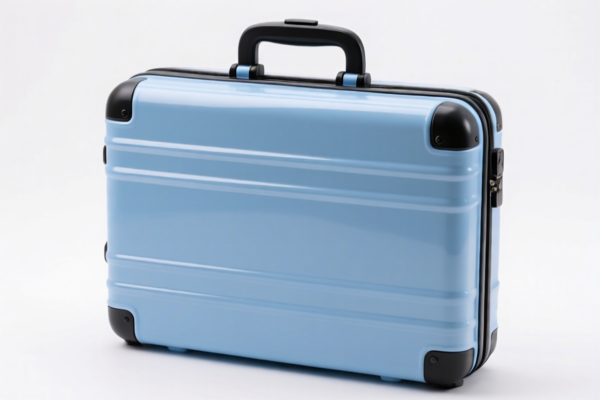
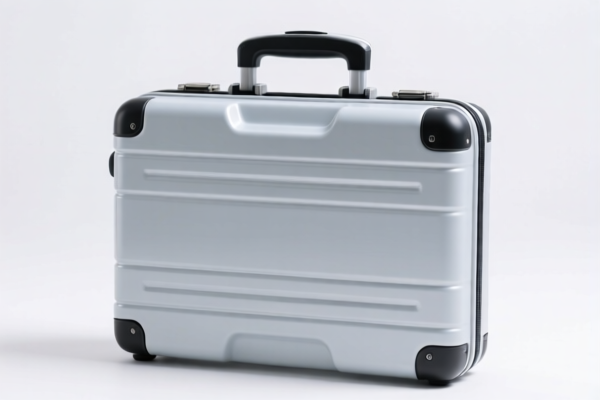
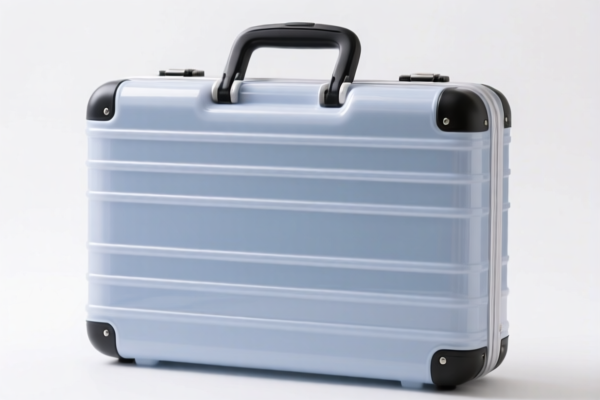
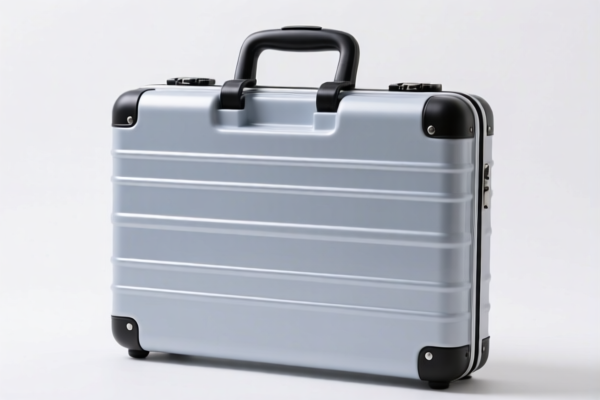
AI Analysis
💼 Hard Plastic & Fabric Briefcases (Plastic/Fabric Briefcases)
🌐 HS Code Reference & Customs Clearance Guide | 2026 Latest Tariff Analysis | Professional Clearance Strategy
📌 I. Product Definition & Classification: What Exactly Is a "Briefcase"?
A briefcase, whether made of hard plastic or fabric, is defined by its function: carrying documents, laptops, and business essentials. In international trade, classification depends heavily on material composition, structure (rigid vs. flexible), and specific use case.
Key Distinctions: * Hard Plastic Briefcases: Often classified under Chapter 39 (Plastics) if considered general plastic articles, OR Chapter 42 (Articles of Leather/Travel Goods) if deemed "bags" with rigid structure. * Fabric/Plastic Messenger Bags: If the outer surface is plastic sheets or textile material, it may fall under Chapter 42. * Satchel/Bag Type: If it functions as a "satchel" made of vinyl polymers, it may fall under Chapter 39 as other plastic articles.
⚠️ Critical Classification Point:
- If the item is a rigid, shaped container primarily for documents → Often 4202 (if considered a bag/article of travel goods).
- If it is a general plastic article (e.g., a hard plastic box with a handle) → Often 3926 (Other articles of plastics).
- If it is a satchel/bag made of plastic sheets/textile → 4202 or 3923.
📦 II. HS Code Classification Details (2026 Latest Tariff Authority Cross-Reference)
| HS Code | Product Description | Applicable Scenario | Rigid/Flexible? |
|---|---|---|---|
3926.90.99.89 |
Hard Plastic Briefcase (General Plastic Article) | Rigid plastic briefcase, categorized as "Other articles of plastics" | ✅ Rigid |
4202.12.29.10 |
Hard Plastic Briefcase (Travel Goods/Bag) | Hard shape, plastic material, used as a briefcase. Fully meets classification for "bags with outer surface of plastic sheets/textile." | ✅ Rigid |
4202.12.21.20 |
Hard Plastic Briefcase (Structured) | Meets the definition of "four-sided rigid, molded structure" | ✅ Rigid |
4202.92.39.00 |
Plastic Messenger Bag | Bag-type usage, plastic outer surface. Fits "outer surface of plastic sheets or textile materials" | ✅ Flexible/Rigid Hybrid |
3923.21.00.95 |
Plastic Satchel/Messenger Bag | Bag/Satchel shape, plastic material. Fits "Other articles of vinyl polymers/plastic bags." | ✅ Flexible |
🔍 Key Takeaway:
- HS 3926.90.99.89 is the "catch-all" for plastic items not specifically defined as bags. Lowest Tax.
- HS 4202.12.29.10 / 4202.12.21.20 are for briefcases specifically. Highest Tax.
- HS 4202.92.39.00 is for messenger bags with plastic/TEXTILE exteriors. High Tax.
- HS 3923.21.00.95 is for plastic satchels/bags. Medium Tax.
💰 III. 2026 Latest Tariff Rate Breakdown (Including Additional Duties & Policy Surcharges)
✅ Applicable Country: United States (US)
✅ Origin: China (CN)
✅ Effective Date: Post-2025 (Includes subsequent imports)
🎯 1. 3926.90.99.89 — Other Articles of Plastic (General Briefcase)
| Item | Content |
|---|---|
| Base Tariff | 5.3% |
| Section 301 Surcharge | 7.5% |
| Section 122 Surcharge | 10.0% |
| Total Tariff | 22.8% |
| Tax Calculation | CIF Value × 22.8% |
| De Minimis Exemption? | ❌ No (Subject to full duty assessment) |
| Legal Basis Path | Section 301:7.5% → Section 122:10% → USITC:3926.90.99.89 |
📌 Explanation:
- This is the most cost-effective classification for hard plastic briefcases that are not strictly defined as "bags" or "articles of travel goods."
- Total Duty: 22.8% (Lowest among all options).
- Ideal for pure plastic cases that resemble boxes with handles.
🎯 2. 4202.12.29.10 — Hard Plastic Briefcase (Bag Classification)
| Item | Content |
|---|---|
| Base Tariff | 20.0% |
| Section 301 Surcharge | 25.0% |
| Section 122 Surcharge | 10.0% |
| Total Tariff | 55.0% |
| Tax Calculation | CIF Value × 55.0% |
| De Minimis Exemption? | ❌ No |
| Legal Basis Path | Section 301:25% → Section 122:10% → USITC:4202.12.29.10 |
📌 Explanation:
- This classification applies when the item is strictly defined as a briefcase (a type of bag) with a plastic exterior.
- Total Duty: 55.0% (Highest Tax).
- Warning: Misclassifying a general plastic case as a "briefcase" can lead to a 32.2% tax increase.
🎯 3. 4202.12.21.20 — Hard Plastic Briefcase (Structured/Rigid)
| Item | Content |
|---|---|
| Base Tariff | 20.0% |
| Section 301 Surcharge | 25.0% |
| Section 122 Surcharge | 10.0% |
| Total Tariff | 55.0% |
| Tax Calculation | CIF Value × 55.0% |
| De Minimis Exemption? | ❌ No |
| Legal Basis Path | Section 301:25% → Section 122:10% → USITC:4202.12.21.20 |
📌 Explanation:
- Similar to above, but emphasizes the rigid, molded structure ("four-sided rigid, formed").
- Total Duty: 55.0%. No tax advantage over 4202.12.29.10.
🎯 4. 4202.92.39.00 — Plastic Messenger Bag (Bag with Plastic/Textile Exterior)
| Item | Content |
|---|---|
| Base Tariff | 17.6% |
| Section 301 Surcharge | 25.0% |
| Section 122 Surcharge | 10.0% |
| Total Tariff | 52.6% |
| Tax Calculation | CIF Value × 52.6% |
| De Minimis Exemption? | ❌ No |
| Legal Basis Path | Section 301:25% → Section 122:10% → USITC:4202.92.39.00 |
📌 Explanation:
- Applies to messenger bags with outer surfaces of plastic sheets or textiles.
- Total Duty: 52.6% (Slightly lower than hard briefcases, but still high).
🎯 5. 3923.21.00.95 — Plastic Satchel/Messenger Bag (Vinyl Polymer Bag)
| Item | Content |
|---|---|
| Base Tariff | 3.0% |
| Section 301 Surcharge | 25.0% |
| Section 122 Surcharge | 10.0% |
| Total Tariff | 38.0% |
| Tax Calculation | CIF Value × 38.0% |
| De Minimis Exemption? | ❌ No |
| Legal Basis Path | Section 301:25% → Section 122:10% → USITC:3923.21.00.95 |
📌 Explanation:
- Applies to satchels or bags made of plastic (vinyl polymers).
- Total Duty: 38.0% (Medium-High Tax).
- Strategy: If your product is a soft-sided plastic bag/satchel, this is a viable middle-ground option, but ensure it is not considered a "briefcase" (which would push it to 55%).
🛠️ IV. Customs Clearance Practical Advice (Battle-Tested Pitfall Guide)
✅ 1. Material Declaration Checklist (Non-negotiable)
| Document | Required? | Notes |
|---|---|---|
| ✅ Product Specification Sheet | ✔️ | Must specify material: "Hard Plastic (ABS/PC)" vs. "Fabric with Plastic Coating." |
| ✅ Product Photos (Including Lining/Interior) | ✔️ | Show if it has rigid structure or is flexible. |
| ✅ Commercial Invoice | ✔️ | Use precise descriptions. Avoid generic "Bag" if it's a "Hard Case." |
| ✅ Packaging List | ✔️ | Indicate if accessories (straps, locks) are included. |
✅ 2. Classification Strategy (Key Mnemonic)
🔥 “Rigid Plastic = 3926 (22.8%)! Soft/Bag = 4202/3923 (38-55%)! Check Structure!”
| Scenario | Recommended HS Code | Total Tax | Reason |
|---|---|---|---|
| Hard Plastic Briefcase (Rigid, Box-like) | 3926.90.99.89 |
22.8% | Classified as "Other Plastic Article," not a "Bag." |
| Hard Briefcase (Strictly Defined as Bag) | 4202.12.29.10 / 4202.12.21.20 |
55.0% | Classified as "Bag/Travel Good." High Tax. |
| Messenger Bag (Plastic/Textile Surface) | 4202.92.39.00 |
52.6% | Classified as "Bag" with plastic exterior. |
| Plastic Satchel (Flexible/Soft) | 3923.21.00.95 |
38.0% | Classified as "Plastic Satchel/Bag." |
📌 Critical Warning:
- Do not classify a hard, rigid briefcase as4202.12.29.10if it can be argued as a general plastic article (3926). The 32.2% tax difference is significant.
- If the item is soft-sided (like a messenger bag),3923.21.00.95(38%) is cheaper than4202.92.39.00(52.6%) if it is primarily considered a "plastic satchel" rather than a "bag with textile/plastic exterior." However,4202is often preferred for "bags." Consult a customs broker for3923vs4202debate.
✅ 3. Special Cases & Handling
| Scenario | Handling Advice |
|---|---|
| Hybrid Material (Plastic + Fabric) | If the main characteristic is plastic (rigid), argue for 3926. If it's a "bag" with mixed materials, 4202 may apply. |
| Laptop Sleeve (Soft Plastic) | Consider 3923.21.00.95 (Plastic Satchel) at 38% vs. 4202 (Bag) at 52.6%. |
| Hard Case with Wheels | May be classified as a "Travel Good" (4202) or "Plastic Article" (3926). Structure is key. |
| Custom/OEM Briefcase | Provide design drawings to prove "Rigid Structure" vs. "Flexible Bag." |
🌍 V. Global Market Comparison (2026 Latest)
| Country/Region | Recommended HS Code | Tariff | Notes |
|---|---|---|---|
| 🇺🇸 USA | 3926.90.99.89 |
22.8% | Best Option for hard plastic briefcases. |
| 🇺🇸 USA | 4202.12.29.10 |
55.0% | Avoid if possible for hard plastic items. |
| 🇪🇺 EU | 4202.12.29.10 |
~0-6% | Lower tariffs in EU, but VAT applies. |
| 🇨🇳 China | 4202.12.29.10 |
~5-10% | Import duty for foreign goods. |
| 🇯🇵 Japan | 4202.12.29.10 |
~0-6% | Lower tariffs in Japan. |
📌 Conclusion:
- USA has the highest duty burden on plastic goods due to Section 301 and Section 122 surcharges.
- Classification as3926(Plastic Article) vs.4202(Bag) is the single biggest tax optimization opportunity for hard plastic briefcases in the US.
📌 VI. Common Mistakes & Pitfalls (Lessons Learned)
❌ Mistake 1: Classifying a Hard Plastic Briefcase as 4202.12.29.10
👉 Result: Pay 55% instead of 22.8%. Overpay by 32.2%!
❌ Mistake 2: Classifying a Soft Plastic Satchel as 3926.90.99.89
👉 Result: Customs may reclassify as 4202 or 3923, leading to back taxes + penalties.
❌ Mistake 3: Ignoring Section 122 (10%) in tax calculations
👉 Result: Underestimating total landed cost by 10%.
❌ Mistake 4: Using vague descriptions like "Plastic Bag"
👉 Result: Customs ambiguity, potential delay, and reclassification.
✅ Correct Approach:
"Hard Plastic Briefcase, Rigid Structure, ABS Material, No Lining, Model XYZ" → Argue for
3926.90.99.89(22.8%).
"Plastic Messenger Bag, Flexible, PVC Material, Model ABC" → Consider3923.21.00.95(38%) or4202.92.39.00(52.6%).
🎯 VII. Conclusion: Professional Classification, Cost Savings, Risk Mitigation
🎯 Remember the Golden Rule:
🔹 “Rigid Plastic = 3926 (22.8%)! Bag Structure = 4202 (55%)! Save 32% by Correct Classification!”
🔹 “Hard Case ≠ Bag! Check Structure, Not Just Function!”
📌 Pro Tip:
- For US imports, always consult a customs broker to confirm if your Hard Plastic Briefcase qualifies as 3926.90.99.89.
- Submit Product Photos and Structure Diagrams with your declaration to support the "Plastic Article" classification.
- Pre-ruling is highly recommended for high-volume shipments.
📣 Immediate Action:
📞 Contact Your Customs Broker + Provide Product Specs + Request HS Code Pre-Ruling
🚀 Avoid the 55% Tax Trap! Save Money, Clear Customs Faster!
✨ Professional Clearance Starts with Accurate Classification!
💼 Every Percent of Duty Saved Is Pure Profit!
Customer Reviews
About HS Code Classification
The Harmonized System (HS) is an internationally standardized nomenclature developed by the World Customs Organization (WCO) to classify traded products. Over 200 countries use the HS system as the basis for customs tariffs, trade statistics, and import/export regulations.
Each HS code follows a hierarchical structure:
- Chapter (2 digits) — Broad category of goods (e.g., Chapter 84: Machinery and Mechanical Appliances)
- Heading (4 digits) — More specific grouping within the chapter
- Subheading (6 digits) — Internationally standardized breakdown, used by all WCO member countries
- National subdivisions (8-10 digits) — Country-specific extensions for further classification, such as US HTSUS 10-digit codes
Correct HS code classification is essential for smooth customs clearance, accurate duty payment, and compliance with trade regulations. Misclassification can lead to customs delays, overpayment of duties, or penalties.
When importing from CN to US, the applicable tariff rates may include:
- Most-Favored-Nation (MFN) rate — The standard duty rate applied to WTO members
- General rate — Applied to countries without trade agreements
- Trade remedy duties — Additional tariffs such as Section 301 (anti-dumping), Section 232 (national security), or countervailing duties
The information provided on this page is for reference purposes only. For official classification, please consult with your local customs authority or a licensed customs broker.