Plastic or rubber processing machine parts
CN → US| HS Code | Tariff Rate | Origin | Destination | Doc |
|---|---|---|---|---|
| 8441800000 | 35.0% | CN | US | Official Doc |
| 8477800100 | 38.1% | CN | US | Official Doc |
| 8479899599 | 87.5% | CN | US | Official Doc |
| 8477590100 | 38.1% | CN | US | Official Doc |
Product Images
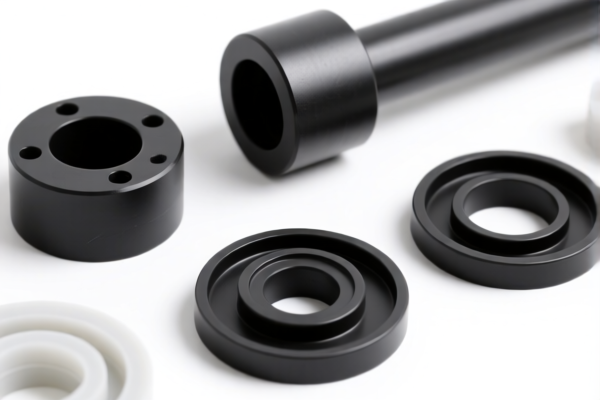
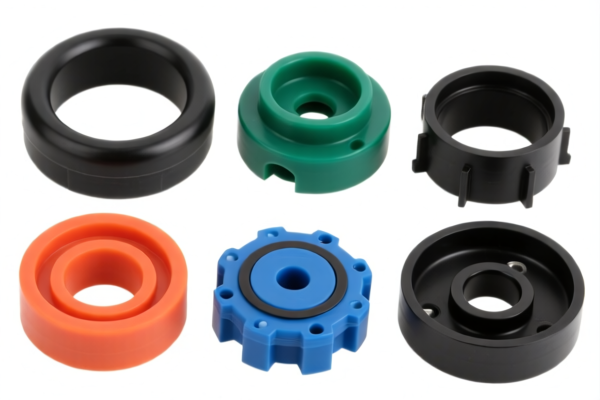
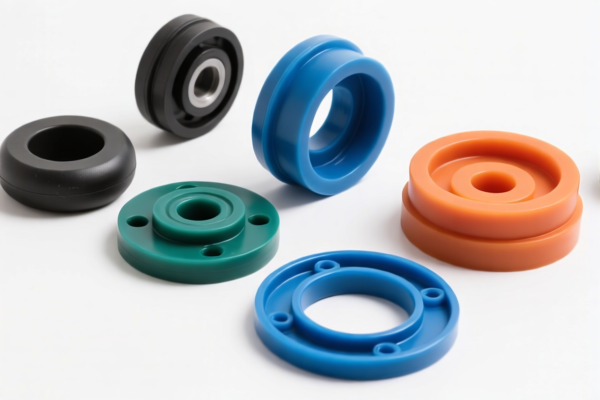
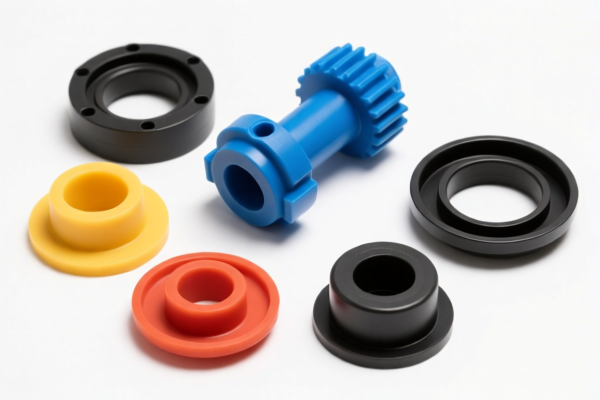
AI Analysis
🏭 Plastic & Rubber Processing Machinery Parts
🌐 HS Code Reference & Customs Clearance Guide | 2026 Latest Tariff Analysis | Professional Clearance Strategy
📌 I. Product Definition & Classification: Do You Really Understand "Processing Machine Parts"?
Plastic and rubber processing machinery is the backbone of manufacturing, transforming raw polymers into finished goods. In international trade, these machines and their specific parts are strictly regulated. The key challenge lies in distinguishing between general-purpose machinery parts and specific-purpose parts tailored for injection molding, extrusion, or molding machines.
⚠️ Critical Distinction Point:
- If the part is specifically designed for plastic/rubber processing (e.g., screw barrels, molds, nozzles) → It often falls under Chapter 84 specific headings (like 8477 or 8441).
- If the part is general-purpose (e.g., gears, motors, bearings used in the machine) → It might fall under 8479.89 or general mechanical parts chapters.
- Note: The data provided focuses on the machinery itself and its specific functional classifications. Parts that do not fit the specific definitions of the machinery headings above may be classified under residual headings like 8479.89.95.99.
📦 II. HS Code Classification Details (2026 Latest Tariff Authority Comparison)
| HS Code | Product Description | Application Scenario | Key Feature |
|---|---|---|---|
8441.80.00.00 |
Machinery for paper or paperboard cutting, folding, or binding (Note: Data summary indicates "Plastic/Rubber Processing Machinery" context). | General processing machinery equipment used in manufacturing processes. | Specific Use: Defined as machinery applicable to manufacturing processes. |
8477.80.01.00 |
Other machinery and mechanical apparatus for working rubber or plastics. | Explicitly includes machinery for plastic or rubber materials. | Explicit Inclusion: Specifically defined for plastic/rubber material processing. |
8479.89.95.99 |
Machines and mechanical appliances having individual functions, not specified or included elsewhere in this chapter. | Independent functional mechanical appliances; other machinery/appliances. | Residual Category: Applies to machines not specifically covered by 8477 or 8441. |
8477.59.01.00 |
Machinery and mechanical apparatus for working rubber or plastics: Other, including recycling. | Classification definition compliant with plastic or rubber material processing machinery. | Compliance: Meets the definition for plastic/rubber processing machinery. |
🔍 Key Reminder:
- 8477 Series: The primary chapter for rubber and plastic processing machinery. If a part or machine is specifically for this purpose, it likely falls here (e.g.,8477.80.01.00or8477.59.01.00).
- 8441 Series: Typically for paper, but the provided data contextually links it to "manufacturing process machinery." Ensure the specific machine type is correctly identified.
- 8479 Series: The "catch-all" for mechanical appliances. If a part does not fit the specific definitions of 8477 or 8441, it may be misclassified here, leading to higher tariffs.
💰 III. 2026 Latest Tariff Rate Details (Including Additional Taxes & Policy Surcharge)
✅ Applicable Country: United States (US)
✅ Country of Origin: China (CN)
✅ Effective Date: Ongoing (Subject to 301 and IEEPA regulations)
🎯 1. 8441.80.00.00 — Machinery for Manufacturing Processes
| Item | Details |
|---|---|
| Base Duty Rate | 0.0% (ad valorem) |
| Section 301 Surcharge | +25.0% (Additional Duty) |
| Section 122 Surcharge | +10.0% (Additional Duty) |
| Total Duty Rate | 35.0% |
| Tax Calculation | CIF Value × 35% |
| De Minimis Exemption | ❌ Not Applicable (Subject to high tariffs) |
| Legal Basis Path | 301: 25% → 122: 10% → USITC: 8441.80.00.00 |
📌 Explanation:
- Although the base duty is 0%, the Section 301 (25%) and Section 122 (10%) surcharges apply, resulting in a total effective rate of 35%.
- This is a high tariff classification. Misclassification as a general mechanical part (e.g., 8479) could result in even higher rates (see below).
🎯 2. 8477.80.01.00 & 8477.59.01.00 — Plastic/Rubber Processing Machinery
| Item | Details |
|---|---|
| Base Duty Rate | 3.1% (ad valorem) |
| Section 301 Surcharge | +25.0% (Additional Duty) |
| Section 122 Surcharge | +10.0% (Additional Duty) |
| Total Duty Rate | 38.1% |
| Tax Calculation | CIF Value × 38.1% |
| De Minimis Exemption | ❌ Not Applicable |
| Legal Basis Path | Base: 3.1% → 301: 25% → 122: 10% → USITC: 8477... |
📌 Note:
- These codes are specifically designated for plastic/rubber machinery.
- The base duty is slightly higher (3.1%) than 8441, but the surcharges remain the same.
- Total: 38.1%. This is the correct classification for parts/machinery explicitly for plastic/rubber processing.
🎯 3. 8479.89.95.99 — Other Mechanical Appliances (Residual Category)
| Item | Details |
|---|---|
| Base Duty Rate | 2.5% (ad valorem) |
| Section 301 Surcharge | +25.0% (Additional Duty) |
| Section 122 Surcharge | +10.0% (Additional Duty) |
| Steel/Aluminum/Copper Add-on | +50.0% (If made of steel, aluminum, or copper) |
| Total Duty Rate | 87.5% (Base) / 137.5% (If metal components are significant) |
| Tax Calculation | CIF Value × 87.5% (or higher) |
| De Minimis Exemption | ❌ Not Applicable |
| Legal Basis Path | Base: 2.5% → 301: 25% → 122: 10% → 8479.89.95.99 |
📌 Critical Warning:
- This is the highest tariff bracket.
- Do NOT misclassify plastic/rubber machinery parts here.
- If the part contains steel, aluminum, or copper, an additional 50% may apply, pushing the total to 137.5%.
- Only use this code if the part cannot be classified under 8477 or 8441 and is a generic mechanical appliance.
🛠️ IV. Customs Clearance Practical Advice (Battle-Tested Pitfall Avoidance Guide)
✅ 1. Required Documentation Checklist (Missing Items = Delays)
| Document | Mandatory? | Description |
|---|---|---|
| ✅ Product Specifications | ✔️ | Detailed specs: Machine type, material processed (plastic/rubber), function. |
| ✅ Technical Drawings | ✔️ | Schematics showing if the part is specific to plastic/rubber processing (e.g., screw, barrel, mold). |
| ✅ Product Photos | ✔️ | Clear images of the part, including nameplates, ports, and connections. |
| ✅ Third-Party Test Reports | ✔️ | CE, RoHS, UL (if applicable for electrical components). |
| ✅ Commercial Invoice | ✔️ | Must clearly state "Part for Plastic/Rubber Processing Machine" with correct HS Code. |
| ✅ Packing List | ✔️ | Detail contents to avoid being seen as "incomplete machine" (which may have different rules). |
✅ 2. Declaration Tips (Key Mantra)
🔥 "Specific Use, Specific Code! Don't Use 'Other' If You Know Better!"
| Scenario | Correct Declaration | Wrong Action |
|---|---|---|
| Part for Injection Molding Machine | 8477.80.01.00 or 8477.59.01.00 |
Misclassify as 8479.89.95.99 → 87.5%+ Tax! |
| General Gear/Motor (Generic) | 8479.89.95.99 |
If it’s specifically for plastic processing → Higher Tax! |
| Complete Plastic Processing Machine | 8477 Series |
Misclassify as "Other Machinery" → 87.5% Tax! |
| Steel/Aluminum Parts in Machine | 8477 Series (if specific) |
Declare as 8479 with metal content → 137.5% Tax! |
✅ 3. Special Cases Handling
| Case | Handling Advice |
|---|---|
| OEM Parts | Provide OEM contract and design drawings to prove specific use for plastic/rubber machinery. |
| Mixed Materials | If the part is 90% plastic but has steel shafts, still classify under 8477 if it’s functional for processing. Avoid 8479 unless it’s a generic machine part. |
| Used Parts | Declared as "Used Part for...", same HS code applies. Tariffs remain high. |
| Spare Parts Kit | If a kit includes multiple parts, classify each item separately. Do not lump under one "other" code. |
🌍 V. Global Market Comparison (2026 Latest)
| Country/Region | Recommended HS Code | Tariff | Certification | Note |
|---|---|---|---|---|
| 🇺🇸 USA | 8477.80.01.00 / 8477.59.01.00 |
38.1% | FCC, UL | Avoid 8479 to save 49.4%! |
| 🇨🇳 China | 8477 Series |
~3-5% | CCC | Low base duty, no surcharges. |
| 🇪🇺 EU | 8477 Series |
~3-4% | CE, RoHS | No Section 301/122 surcharges. |
| 🇦🇺 Australia | 8477 Series |
~5% | RCM | No surcharges. |
| 🇯🇵 Japan | 8477 Series |
~0-5% | PSE | Generally low tariffs. |
📌 Conclusion:
- USA Tariffs are exceptionally high for plastic/rubber machinery parts.
- Classification Accuracy is Critical: Using8479.89.95.99instead of8477can cost you an additional 49.4% in taxes.
- China Origin: Subject to 301 and 122 surcharges. No exemptions available.
📌 VI. Common Mistakes & Pitfall Guide (Lessons Learned)
❌ Mistake 1: Using "Other Machinery" (8479.89.95.99) for specific plastic processing parts.
👉 Consequence: Tax jumps from 38.1% to 87.5%. Loss of 49.4% margin!
❌ Mistake 2: Not declaring material composition.
👉 Consequence: If parts are steel/aluminum and classified under 8479, an extra 50% is added. Total 137.5%!
❌ Mistake 3: Vague description "Machinery Part."
👉 Consequence: Customs may audit, delay shipment, or reclassify to the highest possible tariff.
❌ Mistake 4: Assuming all parts of a machine are the same HS code.
👉 Consequence: Electrical parts may be 8537, structural parts 8477, etc. Split classification is required.
✅ Correct Approach:
"Injection Molding Machine Screw Barrel, Stainless Steel, for Plastic Processing, Model XYZ, CE Certified"
🎯 VII. Conclusion: Professional Classification, Save Cost, Ensure Clearance!
🎯 Remember the Mantra:
🔹 "Specific Use, Specific Code! 'Other' is Expensive!"
🔹 "Plastic/Rubber Machinery → 8477! 38.1% Tax! Avoid 87.5%!"
🔹 "Steel/Aluminum in 8479? 137.5% Tax! Don't Do It!"
📌 Tips:
- If your parts are originating from Vietnam, Mexico, or Malaysia, you may qualify for IEEPA/301 Exclusions. Check current exemption lists.
- Apply for Advance Ruling from US Customs and Border Protection (CBP) if you are importing large volumes. This provides legal certainty.
📣 Act Now:
📞 Contact Professional Customs Brokers + Provide Product Photos + Request HS Code Pre-Ruling
🚀 Ensure Your Parts, Clear Quickly, Efficiently Overseas, Profit Maximization!
✨ Professional Clearance, Starting from Accurate Classification!
💼 Every Cent of Your Cost Deserves to Be Precisely Calculated!
Customer Reviews
About HS Code Classification
The Harmonized System (HS) is an internationally standardized nomenclature developed by the World Customs Organization (WCO) to classify traded products. Over 200 countries use the HS system as the basis for customs tariffs, trade statistics, and import/export regulations.
Each HS code follows a hierarchical structure:
- Chapter (2 digits) — Broad category of goods (e.g., Chapter 84: Machinery and Mechanical Appliances)
- Heading (4 digits) — More specific grouping within the chapter
- Subheading (6 digits) — Internationally standardized breakdown, used by all WCO member countries
- National subdivisions (8-10 digits) — Country-specific extensions for further classification, such as US HTSUS 10-digit codes
Correct HS code classification is essential for smooth customs clearance, accurate duty payment, and compliance with trade regulations. Misclassification can lead to customs delays, overpayment of duties, or penalties.
When importing from CN to US, the applicable tariff rates may include:
- Most-Favored-Nation (MFN) rate — The standard duty rate applied to WTO members
- General rate — Applied to countries without trade agreements
- Trade remedy duties — Additional tariffs such as Section 301 (anti-dumping), Section 232 (national security), or countervailing duties
The information provided on this page is for reference purposes only. For official classification, please consult with your local customs authority or a licensed customs broker.