Plastic pipes for construction
CN → US| HS Code | Tariff Rate | Origin | Destination | Doc |
|---|---|---|---|---|
| 3917290090 | 38.1% | CN | US | Official Doc |
| 3917230000 | 38.1% | CN | US | Official Doc |
| 3916200020 | 40.8% | CN | US | Official Doc |
| 3916200010 | 40.8% | CN | US | Official Doc |
| 3926909987 | 22.8% | CN | US | Official Doc |
Product Images



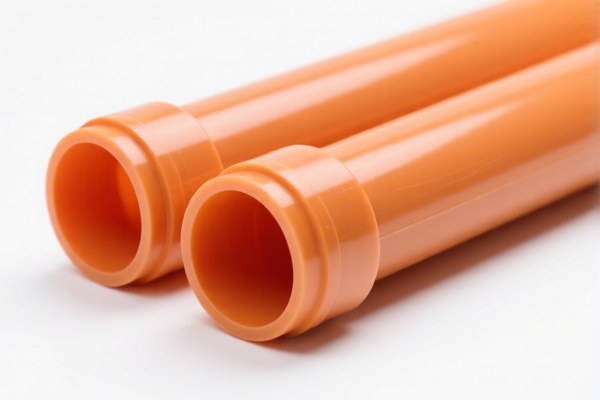
AI Analysis
🏗️ Plastic Pipes for Construction
🌐 HS Code Reference & Customs Clearance Guide | 2026 Latest Tariff Analysis | Professional Entry Strategy
📌 I. Product Definition & Classification: Are You Classifying "Plastic Pipes" Correctly?
"Plastic Pipes for Construction" is a broad category. In international trade, the specific HS Code depends heavily on the exact material composition, structural form (solid vs. hollow), and specific application within construction (e.g., structural profiles vs. fluid transport). Misclassification can lead to significant duty discrepancies, especially with current US trade policies.
⚠️ Key Distinction Point:
- If the pipe is hollow and used for conveying fluids/air → Generally falls under Chapter 39.17 (Plastic Pipes and Fittings).
- If the pipe is solid profile or rod-like, used for structural purposes (like window frames, railings) → May fall under Chapter 39.16 (Plastic Plates, Sheets, Rods, Tubes, and Profiles).
- If it’s a generic plastic article not specifically named → Falls under Chapter 39.26 (Other Plastic Articles).
📦 II. HS Code Classification Details (Based on Provided Data)
| HS Code | Product Description | Application/Logic | Estimated Total Tax Rate |
|---|---|---|---|
3917.29.00.90 |
Plastic pipes for construction, non-specific length limits, matches plastic material & pipe form. | General purpose plastic pipes where specific sub-category doesn't apply. | 38.1% |
3917.23.00.00 |
Plastic pipes for construction, plastic and pipe form fully correspond; usage matches construction attributes. | Specific classification for plastic pipes where material/form are explicitly defined for construction. | 38.1% |
3916.20.00.20 |
Plastic pipes for construction, material is plastic, form is pipe, usage matches construction profiles (windows, doors, railings). | Classified as Plastic Profiles because they are used as structural components (e.g., window frames) rather than just for conveying fluid. | 40.8% |
3916.20.00.10 |
Plastic pipes for construction, material is plastic, usage is construction, form inferred as tubular structure matching profile characteristics. | Another variant of Plastic Profiles for construction, emphasizing the structural profile nature. | 40.8% |
3926.90.99.87 |
Plastic pipes for construction, material is plastic, form is pipe, matched to other general "catch-all" category with no conflict. | Used as a fallback if the pipe doesn't fit specific "pipe" or "profile" definitions strictly, often for complex or non-standard plastic construction parts. | 22.8% |
🔍 Critical Insight:
-3917vs3916: The biggest risk is misclassifying a hollow pipe (3917) as a solid profile (3916) or vice versa. While both are "plastic for construction,"3916often attracts a higher base duty (5.8% vs 3.1%) in this dataset, leading to a higher total tax.
-3926Advantage: The "catch-all" code3926.90.99.87has the lowest total tax (22.8%) in this specific dataset. However, using this code requires justification that the item does not fit more specific definitions.
💰 III. Detailed Tariff Rate Breakdown (US Market Analysis)
✅ Applicable Country: United States (US)
✅ Origin: China (CN)
✅ Effective Time: Current Rates (Subject to 301 & IEEPA)
🎯 1. Lower Tax Group: 3917.29.00.90 & 3917.23.00.00
Total Rate: 38.1%**
| Item | Content |
|---|---|
| Base Duty Rate | 3.1% (General Ad Valorem) |
| Section 301 Duty | +25.0% (USITC Footnote 9903.88.01) |
| 122 Clause / IEEPA | +10.0% (Targeted surcharge on Chinese goods) |
| Total Effective Rate | 38.1% |
| Calculation Basis | CIF Value × 38.1% |
| De Minimis Exemption | ❌ Not Eligible |
📌 Explanation:
- These codes fall under Chapter 39.17 (Plastic Pipes, Tubes, and Hoses).
- The 38.1% rate is driven by the combination of the low base duty (3.1%) and the heavy additive tariffs (35% total).
🎯 2. Higher Tax Group: 3916.20.00.20 & 3916.20.00.10
Total Rate: 40.8%**
| Item | Content |
|---|---|
| Base Duty Rate | 5.8% (Higher base for plastic profiles) |
| Section 301 Duty | +25.0% (USITC Footnote 9903.88.01) |
| 122 Clause / IEEPA | +10.0% (Targeted surcharge on Chinese goods) |
| Total Effective Rate | 40.8% |
| Calculation Basis | CIF Value × 40.8% |
| De Minimis Exemption | ❌ Not Eligible |
📌 Explanation:
- These codes fall under Chapter 39.16 (Plastic Plates, Sheets, Rods, Tubes, and Profiles).
- The higher base duty (5.8% vs 3.1%) results in a total rate that is 2.7% higher than the3917codes.
🎯 3. Lowest Tax Group: 3926.90.99.87
Total Rate: 22.8%**
| Item | Content |
|---|---|
| Base Duty Rate | 5.3% |
| Section 301 Duty | +7.5% (Note: Lower Section 301 rate for this specific sub-category in this dataset) |
| 122 Clause / IEEPA | +10.0% (Targeted surcharge) |
| Total Effective Rate | 22.8% |
| Calculation Basis | CIF Value × 22.8% |
| De Minimis Exemption | ❌ Not Eligible |
📌 Explanation:
- This code is in Chapter 39.26 (Other Plastic Articles).
- It offers the lowest total tax rate (22.8%). However, Customs may scrutinize this classification more heavily if the item is clearly a "pipe." You must ensure the product definition aligns with "other plastic articles" to avoid penalties.
🛠️ IV. Customs Clearance Practical Advice
✅ 1. Documentation Checklist (Essential)
| Document | Required? | Notes |
|---|---|---|
| Product Specification Sheet | ✔️ | Must specify material (e.g., PVC, PE, PP), dimensions, and intended use. |
| Technical Data Sheet | ✔️ | Confirm if it is a hollow pipe (fluid transfer) or solid profile (structural). |
| Product Photos | ✔️ | Clear images showing cross-section (hollow vs. solid) and end-use. |
| Commercial Invoice | ✔️ | Clearly state "Plastic Pipes/Profiles for Construction." Avoid vague terms like "Plastic Items." |
| Certificate of Origin | ✔️ | Required for tariff calculations. |
| Packing List | ✔️ | List each component if shipped as a kit (pipes + fittings). |
✅ 2. Classification Strategy & Pitfalls
| Scenario | Recommended HS Code | Risk/Note |
|---|---|---|
| Standard Hollow Pipes (PVC/PE for water/gas) | 3917.23.00.00 or 3917.29.00.90 |
Lowest risk. Ensure description matches "Pipes." |
| Window Frames / Door Profiles | 3916.20.00.10 or 3916.20.00.20 |
Higher duty (40.8%). These are legally "Profiles," not just "Pipes." |
| Complex/Non-Standard Plastic Parts | 3926.90.99.87 |
Lowest duty (22.8%), but high scrutiny. Only use if the item doesn't fit Chapter 39.16 or 39.17 precisely. |
🔥 "Profile vs. Pipe" Rule:
If your product is a hollow tube used for flow →3917.
If your product is a solid shape (or hollow shape) used for structural support (like a window frame) →3916.
Mislabeling a window frame as a "pipe" to save 2.7% can lead to customs delays and penalties.
✅ 3. Special Considerations
| Situation | Advice |
|---|---|
| Mixed Shipment | If shipping both pipes (3917) and profiles (3916), declare separately. Mixing them can confuse customs brokers. |
| Fittings Included | If pipes and fittings are shipped together, ensure they are classified under the same chapter or declared as a set if appropriate. Fittings often follow the pipe classification. |
| Origin Declaration | Clearly mark "Made in China" to ensure the correct 122 Clause (10%) and Section 301 rates are applied. Incorrect origin declaration can double the penalty. |
🌍 V. Global Market Comparison (2026 Overview)
| Market | Recommended HS Code | Est. Total Duty | Key Requirements |
|---|---|---|---|
| 🇺🇸 USA | 3917.23.00.00 / 3917.29.00.90 |
38.1% | IEEPA 10% + 301 25% + Base 3.1% |
| 🇺🇸 USA | 3916.20.00.10/20 |
40.8% | Higher base duty (5.8%) |
| 🇺🇸 USA | 3926.90.99.87 |
22.8% | Lower 301 rate (7.5%) |
| 🇪🇺 EU | 3917.23.00 / 3917.29.00 |
Varies (0-5%) | No US-style 301 tariffs. Standard EU duty. |
| 🇨🇳 China | 3917.23.00 / 3917.29.00 |
6.5% | Import duty 6.5% (No 301/IEEPA) |
📌 Conclusion:
- For US Imports,3926.90.99.87offers the lowest cost (22.8%), but carries classification risk.
-3917codes are the safest and most common for standard plastic pipes.
-3916codes are for structural profiles and are more expensive.
📌 VI. Common Mistakes & How to Avoid Them
❌ Mistake 1: Calling a window frame a "plastic pipe."
👉 Result: Incorrect classification under 3917. While it might save 2.7% temporarily, customs may reclassify it as 3916 (40.8%) plus penalties during audit.
👉 Fix: Declare accurately as "Plastic Profile for Construction."
❌ Mistake 2: Using 3926 for standard PVC pipes to save tax.
👉 Result: Customs will reject the classification because PVC pipes are specifically covered in Chapter 39.17.
👉 Fix: Only use 3926 for items that truly don't fit "pipes" or "profiles."
❌ Mistake 3: Ignoring the 122 Clause (10%).
👉 Result: Underpayment of duties.
👉 Fix: Ensure all HS Codes from the dataset include the 10% surcharge in your cost calculations.
🎯 VII. Conclusion: Choose Wisely for Maximum Profit
🎯 Key Takeaway:
- Standard Pipes: Use 3917 (38.1%). Safe, accurate, widely accepted.
- Structural Profiles: Use 3916 (40.8%). Higher duty, but legally correct for windows/railings.
- Non-Standard/Complex Items: Consider 3926 (22.8%) if the item is truly unique and doesn't fit pipes/profiles.
💡 Pro Tip:
Always provide cross-sectional drawings to Customs brokers. A clear image of a hollow tube vs. a solid profile is the single best way to avoid classification disputes.
📣 Immediate Action:
📞 Consult a licensed customs broker before shipping.
📄 Prepare technical data sheets showing material and structure.
🚀 Get an Advance Ruling if you are importing large volumes to lock in the HS Code and duty rate.
✨ Precision in Classification = Savings in Cost!
💼 Every percentage point matters in international trade.
Customer Reviews
About HS Code Classification
The Harmonized System (HS) is an internationally standardized nomenclature developed by the World Customs Organization (WCO) to classify traded products. Over 200 countries use the HS system as the basis for customs tariffs, trade statistics, and import/export regulations.
Each HS code follows a hierarchical structure:
- Chapter (2 digits) — Broad category of goods (e.g., Chapter 84: Machinery and Mechanical Appliances)
- Heading (4 digits) — More specific grouping within the chapter
- Subheading (6 digits) — Internationally standardized breakdown, used by all WCO member countries
- National subdivisions (8-10 digits) — Country-specific extensions for further classification, such as US HTSUS 10-digit codes
Correct HS code classification is essential for smooth customs clearance, accurate duty payment, and compliance with trade regulations. Misclassification can lead to customs delays, overpayment of duties, or penalties.
When importing from CN to US, the applicable tariff rates may include:
- Most-Favored-Nation (MFN) rate — The standard duty rate applied to WTO members
- General rate — Applied to countries without trade agreements
- Trade remedy duties — Additional tariffs such as Section 301 (anti-dumping), Section 232 (national security), or countervailing duties
The information provided on this page is for reference purposes only. For official classification, please consult with your local customs authority or a licensed customs broker.