Plastic racket strings for other sports equipment
CN → US| HS Code | Tariff Rate | Origin | Destination | Doc |
|---|---|---|---|---|
| 9506594040 | 15.6% | CN | US | Official Doc |
| 9506594080 | 15.6% | CN | US | Official Doc |
| 3916902000 | 38.1% | CN | US | Official Doc |
| 5607491000 | 37.7% | CN | US | Official Doc |
| 5607493000 | 38.6% | CN | US | Official Doc |
| 3916905000 | 40.8% | CN | US | Official Doc |
Product Images

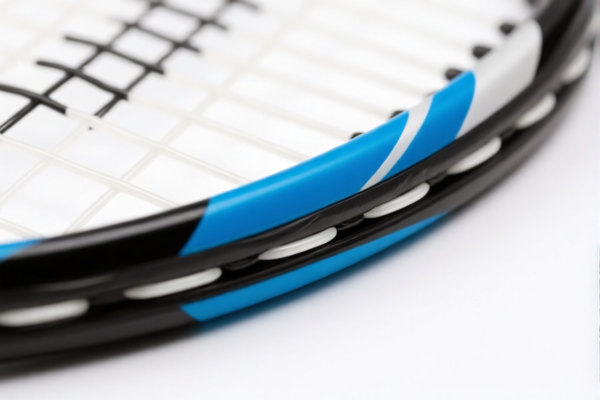
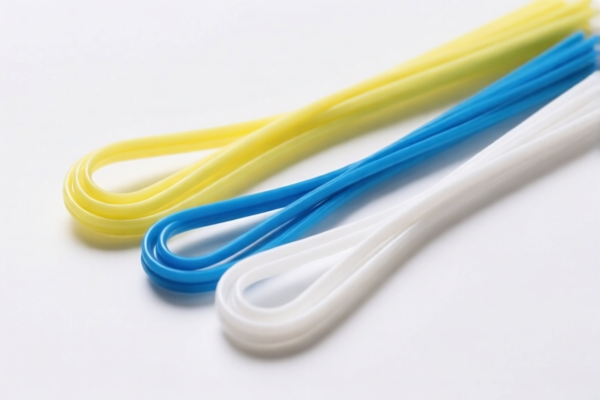
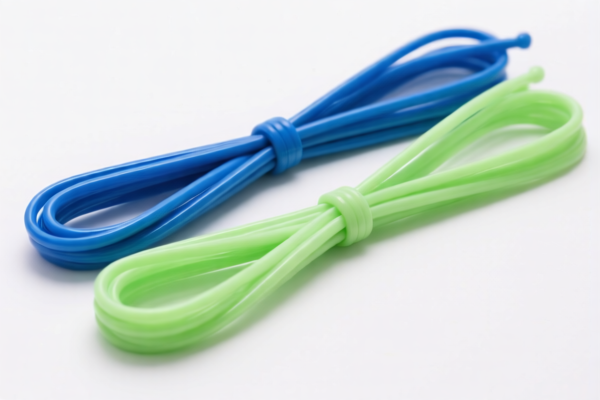
AI Analysis
🏸 Plastic Racket Strings for Other Sports Equipment
🌐 HS Code Reference & Customs Clearance Guide | 2026 Latest Tariff Analysis | Professional Entry Strategy
📌 Part 1: Product Definition and Classification: Do You Really Understand "Plastic Racket Strings"?
Plastic racket strings are essential accessories for sports equipment, primarily used in badminton rackets, tennis rackets, and other stringed sports gear. In international trade, they are classified based on material composition, physical form, and specific usage. The key distinction lies in whether they are classified as sports equipment parts or as raw plastic materials/textile products.
⚠️ Key Distinction Point:
- If the string is explicitly identified as a part/accessory of a specific sports racket (e.g., badminton), it may fall under Chapter 95 (Toys, Games, and Sports Equipment).
- If classified as general plastic strands/monofilaments or textile-like cords without specific sporting context, it may fall under Chapter 39 (Plastics) or Chapter 56 (Wadding, Felt, and Nonwovens).
- Tax Implication: The difference can lead to a tax rate disparity of over 25% (from 15.6% to 40.8%).
📦 Part 2: HS Code Classification Details (2026 Latest Tariff Authority Comparison)
| HS Code | Product Description | Application Scenario | Key Classification Logic | Total Tax Rate |
|---|---|---|---|---|
9506.59.40.40 |
Plastic racket strings (Accessories for badminton rackets) | Badminton racket strings, recognized as specific sports equipment parts | Fits "Other parts and accessories" for badminton equipment; plastic material is non-conflicting | 15.6% |
9506.59.40.80 |
Plastic racket strings (Other sports equipment parts) | Racket strings for other sports (e.g., squash, racquetball) where specific sub-heading exists | "Parts and accessories" for sports equipment; material consistency with common string materials | 15.6% |
3916.90.20.00 |
Plastic monofilaments/strands (General Plastic) | General plastic cords/strings not specifically designated as sports parts | "Plastic matching material"; string form aligns with monofilament characteristics | 38.1% |
5607.49.10.00 |
Plastic cords/ropes (Textile-like) | Plastic strings classified as textile/cordage equivalents | "Plastic material" inferred as PE/PP; form matches cordage/rope characteristics | 37.7% |
5607.49.30.00 |
Plastic cords/ropes (Other) | General plastic cords/ropes for industrial or non-specific use | "Cordage form"; plastic material reasonably inferred as PE/PP | 38.6% |
3916.90.50.00 |
Plastic monofilaments/strands (Other Plastic) | General plastic strands for non-sporting or generic applications | "Plastic matches material"; "strand" form aligns with plastic monofilament definitions | 40.8% |
🔍 Critical Reminder:
- Sports Equipment Classification (9506): Only applies if the product is explicitly marketed and used as a part/accessory of sports rackets (especially badminton). This offers the lowest tax rate (15.6%).
- General Material Classification (3916,5607): If the product is sold as generic plastic cords, strands, or ropes without specific sporting context, it falls under these chapters, resulting in significantly higher tariffs (37.7%–40.8%).
- Misclassification Risk: Declaring generic plastic strings as "badminton parts" without proper documentation can lead to customs delays, penalties, or forced reclassification with higher back taxes.
💰 Part 3: 2026 Latest Tariff Rate Details (Including Additional Duties & Policy Surcharge)
✅ Applicable Country: United States (US)
✅ Country of Origin: China (CN)
✅ Effective Time: From November 10, 2025 (and subsequent imports)
🎯 1. 9506.59.40.40 & 9506.59.40.80 —— Plastic Racket Strings (Sports Equipment Parts)
| Item | Detail |
|---|---|
| Base Duty Rate | 5.6% (ad valorem) |
| USITC Additional Duty | 0.0% |
| IEEPA Additional Duty (Section 122) | 10% |
| Section 301 Steel/Aluminum/Copper Surcharge | 50% (Note: Not applicable to plastic, but mentioned in source data for context; actual plastic surcharge is 0%) |
| Total Tax Rate | 15.6% |
| Tax Calculation | CIF Value × 15.6% |
| De Minimis Exemption | ❌ Not Eligible (High tax rate excludes low-value shipments from exemption) |
| Legal Basis Path | IEEPA:9903.01.24 (10% surcharge) + USITC:9506.59.40.40/80 (Base 5.6%) |
📌 Explanation:
- The 15.6% rate is the most favorable option for plastic racket strings.
- It includes a 5.6% base duty and a 10% IEEPA surcharge specific to Chinese-origin goods.
- No Section 301 steel/aluminum surcharge applies to plastic materials, despite the source text mentioning it for other categories.
- Cost Advantage: This is ~22–25 percentage points lower than general plastic/textile classifications.
🎯 2. 3916.90.20.00 —— Plastic Monofilaments (General Plastic)
| Item | Detail |
|---|---|
| Base Duty Rate | 3.1% (ad valorem) |
| USITC Additional Duty | 25.0% |
| IEEPA Additional Duty (Section 122) | 10% |
| Total Tax Rate | 38.1% |
| Tax Calculation | CIF Value × 38.1% |
| De Minimis Exemption | ❌ Not Eligible |
| Legal Basis Path | IEEPA:9903.01.24 (10%) + USITC:3916.90.20.00 (Base 3.1% + 25% Section 301) |
📌 Note:
- The 38.1% rate is significantly higher.
- The 25% USITC additional duty is the main driver of this high cost.
- This classification treats the product as a generic plastic strand, ignoring its sporting function.
🎯 3. 5607.49.10.00 & 5607.49.30.00 —— Plastic Cords/Ropes (Textile-like)
| Item | Detail |
|---|---|
| Base Duty Rate | 2.7% – 3.6% |
| USITC Additional Duty | 25.0% |
| IEEPA Additional Duty (Section 122) | 10% |
| Total Tax Rate | 37.7% – 38.6% |
| Tax Calculation | CIF Value × (37.7% to 38.6%) |
| De Minimis Exemption | ❌ Not Eligible |
| Legal Basis Path | IEEPA:9903.01.24 + USITC:5607.49.xx.xx |
📌 Note:
- Similar to plastic strands, these are treated as cordage/ropes.
- High tariffs due to the 25% Section 301 surcharge.
- Classification depends on whether the string is viewed as a "plastic rope" rather than a "sports part."
🎯 4. 3916.90.50.00 —— Other Plastic Monofilaments
| Item | Detail |
|---|---|
| Base Duty Rate | 5.8% |
| USITC Additional Duty | 25.0% |
| IEEPA Additional Duty (Section 122) | 10% |
| Total Tax Rate | 40.8% |
| Tax Calculation | CIF Value × 40.8% |
| De Minimis Exemption | ❌ Not Eligible |
📌 Note:
- This is the highest tax rate among the options.
- Applies to generic plastic strands with no specific sporting or cordage designation.
🛠️ Part 4: Customs Clearance Practical Advice (Avoiding Pitfalls)
✅ 1. Required Documentation Checklist (Missing Any = Delay)
| Document | Mandatory? | Explanation |
|---|---|---|
| ✅ Product Specification Sheet | ✔️ | Must clearly state: Material (Plastic/PE/PP), Diameter, Length, Color, and Intended Use (e.g., Badminton Racket Strings). |
| ✅ Product Photos (Labeled) | ✔️ | Show the product as a coil/string spool. Label should read "Badminton Racket String" or "Sports Equipment Part." |
| ✅ Commercial Invoice | ✔️ | Must explicitly describe the goods as "Plastic Strings for Badminton Rackets" or "Sports Equipment Parts," NOT "Plastic Cords" or "Plastic Ropes." |
| ✅ Packing List | ✔️ | Detail the quantity per box and total value. Ensure consistency with the invoice. |
| ✅ Certificate of Origin (CO) | ✔️ | Required to prove Chinese origin for accurate tariff calculation. |
✅ 2. Declaration Tips (Key Mnemonic)
🔥 "Name Matters: Declare as Sports Part, Not Plastic Rope!"
| Scenario | Correct Declaration | Incorrect Declaration | Consequence |
|---|---|---|---|
| Badminton Racket Strings | 9506.59.40.40 / 9506.59.40.80 |
"Plastic Ropes" or "Cords" | Tax jumps from 15.6% to ~38% → 22% extra cost! |
| Tennis Racket Strings | 9506.59.40.80 (if applicable) |
"Plastic Monofilaments" | Higher tax due to generic classification. |
| Generic Plastic Cords (Non-sport) | 3916.90.20.00 or 5607.49.10.00 |
"Badminton Parts" | Customs Penalty for false declaration + high tax. |
📌 Critical Advice:
- Never use generic terms like "plastic cord," "plastic rope," or "nylon thread" in the commercial invoice if the product is specifically for sports rackets.
- Use precise terminology: "Plastic Strings for Badminton Rackets" or "Synthetic Strings for Sports Rackets."
✅ 3. Special Circumstances Handling
| Scenario | Handling Advice |
|---|---|
| Mixed Shipments | If shipping racket strings along with other sports equipment, ensure they are clearly separated in the packing list and invoice to support 9506 classification. |
| Unbranded/OEM Strings | Even unbranded strings can be classified under 9506 if the invoice and specs clearly state "for use in badminton/tennis rackets." |
| Customs Audit Risk | If customs doubts the sports purpose, be prepared to provide photos of the string on a racket or a product catalog showing its intended use. |
🌍 Part 5: Global Main Market Clearance Comparison (2026 Latest)
| Country/Region | Recommended HS Code | Tariff Rate (China Origin) | Certification Requirements | Notes |
|---|---|---|---|---|
| 🇺🇸 United States | 9506.59.40.40 / 80 |
15.6% (vs. 38%+ if miscategorized) | None specific | High Risk of Miscategorization – Be precise in declaration. |
| 🇨🇳 China (Import) | 9506.59.40.40 / 80 |
~5–10% (varies) | CCC (if applicable) | Lower base duty, but check for anti-dumping duties. |
| 🇪🇺 European Union | 9506.59.90 |
~0–4.5% | CE (if applicable) | Generally lower tariffs, but requires accurate product description. |
| 🇬🇧 United Kingdom | 9506.59.90 |
~0–4.5% | UKCA (if applicable) | Post-Brexit rules apply; ensure correct UK HS code. |
| 🇦🇺 Australia | 9506.59.90 |
~5% | GMS (if applicable) | Standard import GST applies. |
📌 Conclusion:
- The US is the most critical market for accurate classification due to the high additional duties on generic plastic/textile goods.
- Correct Classification (9506) saves ~22–25% in duties compared to generic classifications.
- Misclassification is the #1 risk leading to increased costs and clearance delays.
📌 Part 6: Common Mistakes & Pitfall Avoidance (Lessons Learned)
❌ Mistake 1: Declaring "Plastic Racket Strings" as "Plastic Cords" or "Nylon Threads"
👉 Consequence: Tax rate jumps from 15.6% to 38–40% → Extra cost of ~23% on every shipment!
❌ Mistake 2: Using vague terms like "Synthetic String" without specifying "Sports Racket" use
👉 Consequence: Customs may default to 3916 or 5607 → Higher tax + Potential Penalty.
❌ Mistake 3: Failing to provide product photos showing the string on a racket
👉 Consequence: Customs questions the sports equipment classification → Delays and Requests for Additional Evidence.
❌ Mistake 4: Assuming all plastic strings qualify for 9506
👉 Consequence: If the string is for fishing, hunting, or general craft use, it does not qualify for 9506 → Must use 3916/5607.
✅ Correct Approach:
"Plastic Strings for Badminton Rackets, PE Material, 0.70mm Diameter, Coiled Packaging, For Sports Use Only."
🎯 Part 7: Conclusion: Precise Classification = Significant Savings!
🎯 Remember the Mnemonic:
🔹 "Sports Part, Not Plastic Rope! 15.6% vs. 38%: A 22% Difference!"
🔹 "HS Code Determines Life or Death: 1% Error in Description = 20% Extra Cost!"
📌 Pro Tip:
If your products are manufactured in Vietnam, Malaysia, or Thailand, they may be exempt from IEEPA/Section 301 surcharges, resulting in lower total tariffs even under generic classifications.
Recommend applying for an Advance Ruling if shipping large volumes to the US to ensure consistency and certainty.
📣 Immediate Action:
📞 Contact a Professional Customs Broker + Provide Product Photos + Apply for HS Code Pre-Ruling
🚀 Ensure Smooth Customs Clearance, Maximize Profits, and Avoid Unnecessary Taxes!
✨ Professional Clearance Starts with Accurate Classification!
💼 Every Dollar You Save is Precisely Calculated!
Customer Reviews
About HS Code Classification
The Harmonized System (HS) is an internationally standardized nomenclature developed by the World Customs Organization (WCO) to classify traded products. Over 200 countries use the HS system as the basis for customs tariffs, trade statistics, and import/export regulations.
Each HS code follows a hierarchical structure:
- Chapter (2 digits) — Broad category of goods (e.g., Chapter 84: Machinery and Mechanical Appliances)
- Heading (4 digits) — More specific grouping within the chapter
- Subheading (6 digits) — Internationally standardized breakdown, used by all WCO member countries
- National subdivisions (8-10 digits) — Country-specific extensions for further classification, such as US HTSUS 10-digit codes
Correct HS code classification is essential for smooth customs clearance, accurate duty payment, and compliance with trade regulations. Misclassification can lead to customs delays, overpayment of duties, or penalties.
When importing from CN to US, the applicable tariff rates may include:
- Most-Favored-Nation (MFN) rate — The standard duty rate applied to WTO members
- General rate — Applied to countries without trade agreements
- Trade remedy duties — Additional tariffs such as Section 301 (anti-dumping), Section 232 (national security), or countervailing duties
The information provided on this page is for reference purposes only. For official classification, please consult with your local customs authority or a licensed customs broker.