Plastic rods for model making
CN → US| HS Code | Tariff Rate | Origin | Destination | Doc |
|---|---|---|---|---|
| 3916903000 | 41.5% | CN | US | Official Doc |
| 3916905000 | 40.8% | CN | US | Official Doc |
Product Images
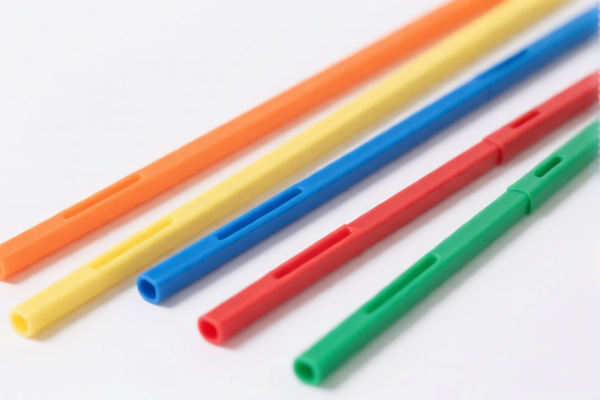
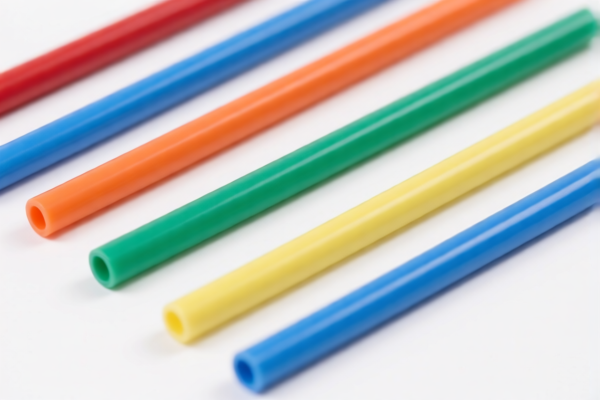
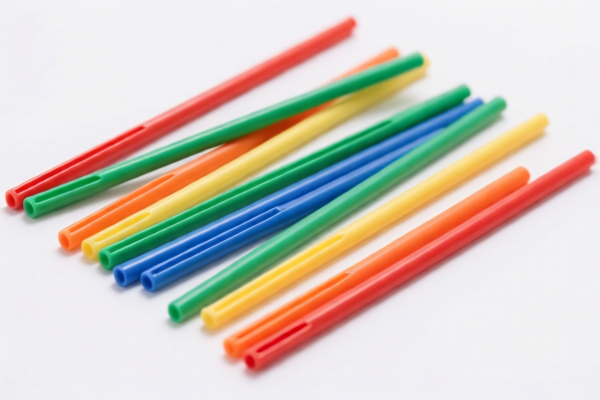
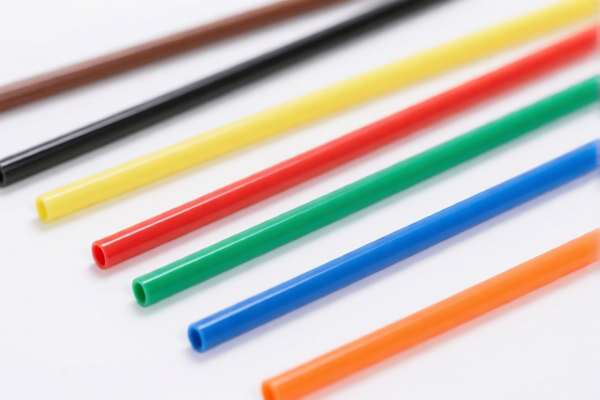
AI Analysis
🧵 Plastic Rods for Model Making (Plastic Extruded Shapes)
🌐 HS Code Reference & Customs Clearance Guide | 2026 Latest Tariff Analysis | Professional Clearance Strategy
📌 I. Product Definition & Classification: What Exactly Are "Plastic Rods"?
Plastic rods for model making are typically extruded polymers used for crafting, prototyping, or educational purposes. In international trade, the critical factor for classification is the cross-sectional dimension and the state of processing.
Monofilament vs. Profile Shapes: - Monofilament: A single strand where any cross-sectional dimension exceeds 1 mm. - Rods/Sticks/Profile Shapes: Solid or hollow extruded forms, whether surface-worked (polished, colored) but not further worked (e.g., not threaded, not drilled for specific assembly).
⚠️ Key Distinction:
- If the plastic rod has a cross-sectional dimension exceeding 1 mm in any direction → It is classified as Monofilament/Profile under Chapter 39.
- If the dimension is 1 mm or less → It may fall under different subheadings (not covered in this specific dataset).
- Material Matters: This guide covers "Other Plastics" (not PVC, PE, PP, etc., which have their own specific codes).
📦 II. HS Code Classification Details (2026 Latest Tariff Authority)
Based on the provided data, plastic rods/profiles of "other plastics" are split into two categories based on specificity.
| HS Code | Product Description | Application Scenario | Cross-Sectional Dim. |
|---|---|---|---|
3916.90.30.00 |
Monofilament of other plastics | High-strength model rods, fishing line-like plastic strands, specific monofilament profiles | ✅ > 1 mm |
3916.90.50.00 |
Other profile shapes/rods of other plastics | Standard rectangular, square, or irregular plastic rods for modeling, craft sticks | ✅ > 1 mm |
🔍 Critical Note:
- Both codes apply to rods/profiles with any cross-sectional dimension > 1 mm.
- The distinction lies in whether the product is specifically defined as "Monofilament" (3916.90.30.00) or "Other" (3916.90.50.00).
- "Monofilament" typically implies a single, continuous filament (often circular cross-section), while "Other" covers rods, sticks, and complex profiles.
💰 III. 2026 Tariff Rate Breakdown (Detailed Tax Analysis)
✅ Applicable Country: United States (US)
✅ Origin: China (CN)
✅ Effective Date: Current 2026 Tariff Schedule
🎯 1. 3916.90.30.00 — Monofilament of Other Plastics
| Item | Details |
|---|---|
| Base Tariff | 6.5% |
| Section 301 Surcharge | 25.0% |
| Total Tax Rate | 31.5% |
| Tax Calculation | CIF Value × 31.5% |
| De Minimis Exemption | ❌ Not Eligible |
| Legal Basis | HTSUS 3916.90.30.00 + Section 301 Footnote |
📌 Explanation:
- Base Rate (6.5%): Standard MFN rate for monofilament of other plastics.
- Surcharge (25.0%): Applies to Chinese-origin goods under US Trade Law Section 301.
- Total (31.5%): This is a high-duty category. Importers must account for this in cost modeling.
- No Exemption: This code is not eligible for de minimis (de minimis threshold is $800, but Section 301 items are excluded).
🎯 2. 3916.90.50.00 — Other Plastic Profile Shapes/Rods
| Item | Details |
|---|---|
| Base Tariff | 0.0% |
| Section 301 Surcharge | 0.0% |
| Total Tax Rate | 0.0% |
| Tax Calculation | $0 |
| De Minimis Exemption | ✅ Eligible (if value ≤ $800) |
| Legal Basis | HTSUS 3916.90.50.00 |
📌 Explanation:
- Zero Duty: This is a duty-free classification for most plastics under "Other" profile shapes.
- Strategic Advantage: If your model-making rods can be classified as "Other" (non-monofilament), you save 31.5% in tariffs.
- Clarification: "Other" often includes square, rectangular, or irregular rods, whereas "Monofilament" is strictly single-strand/thread-like.
🛠️ IV. Customs Clearance Practical Advice (Avoiding Pitfalls)
✅ 1. Documentation Checklist (Mandatory)
| Document | Required? | Notes |
|---|---|---|
| ✅ Product Specification Sheet | ✔️ | Must specify: Material (e.g., ABS, PVC-free "Other Plastic"), Dimensions, Cross-Sectional Shape (Round vs. Square). |
| ✅ Commercial Invoice | ✔️ | Clearly state: "Plastic Rods for Model Making" + HS Code. Avoid vague terms like "Plastic Stuff." |
| ✅ Packing List | ✔️ | List net/gross weight, quantity, and dimensions per box. |
| ✅ Material Safety Data Sheet (MSDS) | ✔️ | Required for chemical compliance (especially if imported in bulk). |
| ✅ Proof of Origin (if applicable) | ✔️ | For potential free trade agreements (though US-China is not FTA-free). |
✅ 2. Classification Strategy (Key Decision Tree)
🔥 Rule of Thumb:
"Round & Thin = Monofilament (31.5% Tax)"
"Square/Flat/Irregular = Other (0% Tax)"
| Scenario | Recommended HS Code | Tax Rate | Why? |
|---|---|---|---|
| Round plastic rod, >1mm diameter | 3916.90.30.00 |
31.5% | Classified as "Monofilament" due to single-strand circular cross-section. |
| Square/Rectangular plastic rod, >1mm | 3916.90.50.00 |
0.0% | Classified as "Other Profile Shape." |
| Irregular shape plastic stick, >1mm | 3916.90.50.00 |
0.0% | Classified as "Other Profile Shape." |
| Plastic filament <1mm | Not in Dataset | Check Other Codes | Below threshold for these codes. |
⚠️ Warning:
- Do not assume all plastic rods are duty-free.
- Circular cross-section >1mm is almost always classified as Monofilament (3916.90.30.00) in many jurisdictions, leading to the 31.5% duty.
- To qualify for 0%, ensure the product is not a single continuous filament (e.g., use square/rectangular rods for model making).
✅ 3. Special Cases & Workarounds
| Situation | Advice |
|---|---|
| Mixed Shapes (Round + Square) | Separate shipments! Round rods incur 31.5%, Square rods are 0%. Mixing them may trigger higher scrutiny or incorrect classification. |
| Surface Worked (Colored/Polished) | Still eligible for these codes. "Surface-worked" is explicitly allowed in the description. |
| Model Kits (Pre-cut pieces) | If pre-cut and packaged as a kit, may fall under 9503.00 (Toys) or 3926 (Other plastic articles). Consult HS Code 9503.00 for potential lower duties if classified as "Toys." |
| De Minimis (Shipment < $800) | Only applies to 3916.90.50.00 (0% duty). 3916.90.30.00 (31.5% duty) is not eligible for de minimis exemption in the US. |
🌍 V. Global Market Comparison (2026)
| Country | Recommended HS Code | Tariff Rate | Notes |
|---|---|---|---|
| 🇺🇸 USA | 3916.90.30.00 |
31.5% | High duty due to Section 301. |
| 🇺🇸 USA | 3916.90.50.00 |
0.0% | Duty-Free! Optimize product shape to qualify. |
| 🇨🇳 China | 3916.90.30.00 |
~5-6% | Lower base rates, but import restrictions apply. |
| 🇪🇺 EU | 3916.90.30.00 |
~6.5% | No Section 301 surcharge, but VAT applies. |
| 🇬🇧 UK | 3916.90.30.00 |
~6.5% | Post-Brexit tariff structure similar to EU. |
📌 Conclusion:
- USA is the most expensive market for plastic monofilaments due to 31.5% total duty.
- EU and UK have moderate base rates (6.5%) but no additional political surcharges.
- Optimization Tip: For the US market, redesign model rods from circular to square/rectangular to qualify for 0% duty under3916.90.50.00.
📌 VI. Common Mistakes & Pitfalls (Learn from Others’ Errors)
❌ Mistake 1: Classifying circular plastic rods as "Other Plastic Articles"
👉 Result: Customs reclassifies as 3916.90.30.00 → 31.5% duty + penalties.
✅ Fix: Use correct HS Code 3916.90.30.00 from the start.
❌ Mistake 2: Assuming all plastic rods are duty-free
👉 Result: Unexpected $31.5k duty on a $100k shipment.
✅ Fix: Check cross-sectional shape. Circular >1mm = Monofilament = 31.5%.
❌ Mistake 3: Using vague descriptions like "Plastic Sticks"
👉 Result: Customs holds shipment for clarification → Delays + Storage Fees.
✅ Fix: Use precise description: "Square cross-section ABS plastic rods, 5mm x 5mm, for model making."
❌ Mistake 4: Ignoring De Minimis Eligibility
👉 Result: Small shipments ( <$800) of monofilament still incur duties.
✅ Fix: For shipments < $800, only ship 3916.90.50.00 (Other) products.
🎯 VII. Conclusion: Smart Classification Saves Money!
🎯 Key Takeaway:
🔹 "Round = 31.5% Duty"
🔹 "Square/Flat = 0% Duty"
🔹 "Don’t Guess, Measure!"
📌 Pro Tip:
If you are importing plastic rods for model making into the USA, consider redesigning the product from circular monofilament to square or rectangular profile. This simple change can save you 31.5% in tariffs, significantly boosting your profit margin.
📞 Action Step:
1. Measure your product’s cross-section.
2. Confirm material is "Other Plastic" (not PE/PP/PVC).
3. Select the correct HS Code:
- Circular >1mm →3916.90.30.00(31.5%)
- Non-Circular >1mm →3916.90.50.00(0.0%)
4. Document accurately to avoid customs delays.
✨ Professional clearance starts with precise classification!
💼 Don’t let tariff surprises eat your profits!
Customer Reviews
About HS Code Classification
The Harmonized System (HS) is an internationally standardized nomenclature developed by the World Customs Organization (WCO) to classify traded products. Over 200 countries use the HS system as the basis for customs tariffs, trade statistics, and import/export regulations.
Each HS code follows a hierarchical structure:
- Chapter (2 digits) — Broad category of goods (e.g., Chapter 84: Machinery and Mechanical Appliances)
- Heading (4 digits) — More specific grouping within the chapter
- Subheading (6 digits) — Internationally standardized breakdown, used by all WCO member countries
- National subdivisions (8-10 digits) — Country-specific extensions for further classification, such as US HTSUS 10-digit codes
Correct HS code classification is essential for smooth customs clearance, accurate duty payment, and compliance with trade regulations. Misclassification can lead to customs delays, overpayment of duties, or penalties.
When importing from CN to US, the applicable tariff rates may include:
- Most-Favored-Nation (MFN) rate — The standard duty rate applied to WTO members
- General rate — Applied to countries without trade agreements
- Trade remedy duties — Additional tariffs such as Section 301 (anti-dumping), Section 232 (national security), or countervailing duties
The information provided on this page is for reference purposes only. For official classification, please consult with your local customs authority or a licensed customs broker.