Plastic sewage pipe fittings
CN → US| HS Code | Tariff Rate | Origin | Destination | Doc |
|---|---|---|---|---|
| 3922100000 | 23.8% | CN | US | Official Doc |
| 3917400020 | 40.3% | CN | US | Official Doc |
| 3926909989 | 22.8% | CN | US | Official Doc |
| 3926909940 | 22.8% | CN | US | Official Doc |
| 3922900000 | 41.3% | CN | US | Official Doc |
Product Images
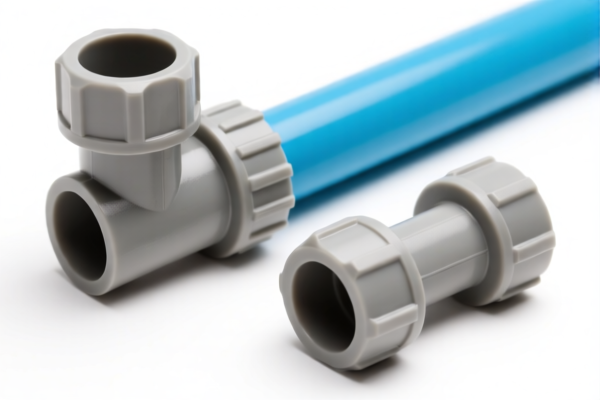
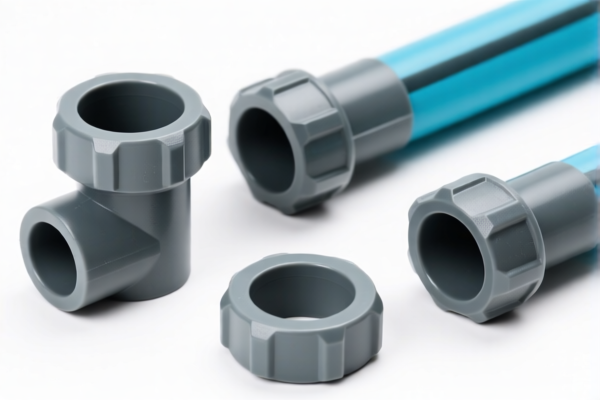
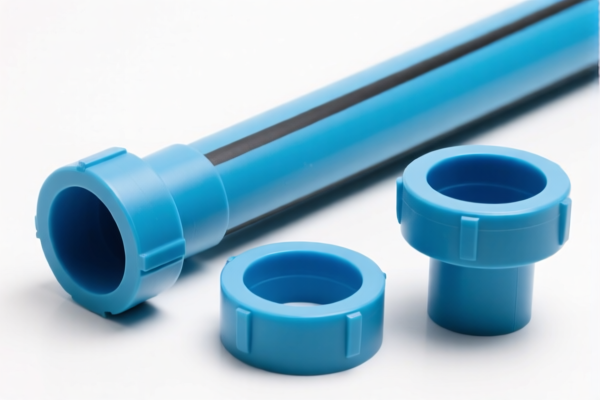
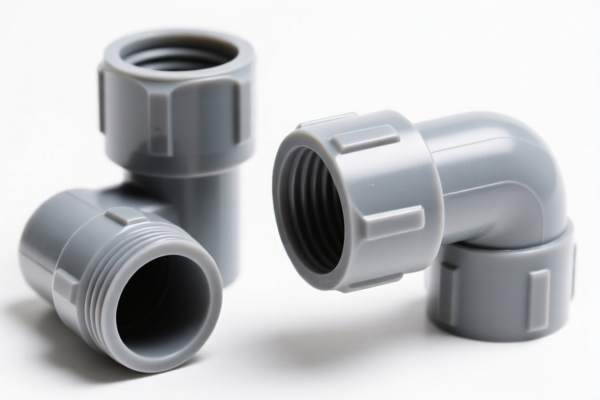
AI Analysis
🚰 Plastic Sewage Pipe Fittings
HS Code Classification & Customs Clearance Strategy (2026)
🌐 HS Code Reference & Customs Guide | 2026 Latest Tariff Analysis | Professional Clearance Strategy
📌 One. Product Definition & Classification: What Exactly Are "Plastic Sewage Pipe Fittings"?
Plastic sewage pipe fittings are essential components of drainage, wastewater, and non-pressure piping systems (DWV – Drain, Waste, Vent). Unlike pressurized water pipes, these fittings handle gravity-fed waste.
In international trade, they are categorized differently based on their specific function and structural design: * Sanitary Ware Accessories: Items designed to connect or support bathroom fixtures (toilets, sinks, bathtubs). * General Plastic Pipe Fittings: Generic connectors, elbows, tees, and adapters for standard PVC/ABS drainage systems. * Unspecified Plastic Components: Complex assemblies or specific valves/gates used in drainage that do not fit standard "pipe" definitions.
⚠️ Key Distinction Point: * If the item is a standard elbow, tee, or coupling for drainage pipes → It often falls under 3917 (Pipe/Tube/Hose/Fitting parts). * If the item is a valve, gate, or specialized assembly for drainage → It may fall under 3926 (Other plastic articles). * If the item is specifically a connection piece for a toilet or bidet → It may fall under 3922 (Sanitary ware).
📦 Two. HS Code Classification Details (2026 Latest Tariff Authority Comparison)
Based on the provided data, here are the exact HS Codes and their corresponding tax structures. Note that while the Base Tariff and 122 Clause Tariff are relatively stable, the Section 301 (Additional) Tariff is the critical variable for Chinese exports to the US.
| HS Code | Product Summary | Primary Application | Key Tax Components |
|---|---|---|---|
3922.10.00.00 |
Plastic material, sanitary ware accessories | Toilets, bidets, bathroom fixture connectors | 23.8% Total |
3917.40.00.20 |
Plastic material, DWV pipe fittings (non-pressure) | Standard drainage elbows, tees, couplings | 40.3% Total |
3926.90.99.89 |
Plastic material, unspecified plastic parts | Miscellaneous plastic components, general fittings | 22.8% Total |
3926.90.99.40 |
Plastic material, drainage system components (gates, valve boxes) | Drainage gates, valve boxes, specific assemblies | 22.8% Total |
3922.90.00.00 |
Plastic material, sanitary洁具 supporting parts | Backup/secondary sanitary components | 41.3% Total |
🔍 Critical Note: *
3917.40.00.20has the Highest Surcharge (25%), leading to a 40.3% total rate. This is the standard code for most common plastic DWV (Drain, Waste, Vent) pipe fittings. *3922.10.00.00has a Lower Surcharge (7.5%), resulting in a lower 23.8% total rate, but is strictly for sanitary ware accessories. *3926.90.99.xxxxcodes have a 7.5% Surcharge, resulting in 22.8% total, but apply only to specific "unspecified" or "drainage component" items, not generic pipes.
💰 Three. 2026 Latest Tariff Rate Breakdown (Including Surcharges)
✅ Applicable Country: United States (US) ✅ Origin: China (CN) ✅ Effective Date: 2025/2026 (Subject to current trade policies)
🎯 1. 3917.40.00.20 – Plastic Pipe Fittings (DWV)
The most common classification for standard plastic sewage pipe fittings.
| Item | Content |
|---|---|
| Base Tariff | 5.3% |
| Section 301 Surcharge | +25.0% (High Impact) |
| Section 122 Tariff | +10.0% (Additional Measure) |
| Total Tax Rate | 40.3% |
| Tax Calculation | CIF Value × 40.3% |
| De Minimis Eligibility | ❌ Not Eligible (High tariff items are generally excluded from $800 de minimis exemptions if strictly controlled, or subject to heavy scrutiny). |
| Legal Basis | USITC:3917.40.00.20 → Section 301: Footnote 9903.88.01 → Section 122 |
📌 Explanation: * The 25% Section 301 tariff is the primary driver of cost. This applies to most plastic pipe fittings from China. * The 10% Section 122 tariff adds further cost, bringing the total to 40.3%. * Risk: High classification risk. If misclassified as
3926(22.8%) when it should be3917(40.3%), customs may penalize for misdeclaration.
🎯 2. 3922.10.00.00 – Sanitary Ware Accessories
| Item | Content |
|---|---|
| Base Tariff | 6.3% |
| Section 301 Surcharge | +7.5% (Lower Surcharge) |
| Section 122 Tariff | +10.0% |
| Total Tax Rate | 23.8% |
| Tax Calculation | CIF Value × 23.8% |
| De Minimis Eligibility | ❌ Not Eligible (Likely restricted due to Section 301 status). |
| Legal Basis | USITC:3922.10.00.00 → Section 301: Footnote 9903.88.01 |
📌 Explanation: * This code has a lower Section 301 surcharge (7.5%) compared to
3917(25%). * Condition: The item must be clearly a "sanitary ware accessory" (e.g., a connector specifically for a toilet or bidet). If it's a generic pipe elbow, it cannot be classified here.
🎯 3. 3926.90.99.89 & 3926.90.99.40 – Other Plastic Articles
| Item | Content |
|---|---|
| Base Tariff | 5.3% |
| Section 301 Surcharge | +7.5% |
| Section 122 Tariff | +10.0% |
| Total Tax Rate | 22.8% |
| Tax Calculation | CIF Value × 22.8% |
| Legal Basis | USITC:3926.90.99.xxxx → Section 301: Footnote 9903.88.01 |
📌 Explanation: *
3926.90.99.40: Specifically for drainage system components like drainage gates or valve boxes. If your product is a specialized valve/gate for sewage, this is a good candidate. *3926.90.99.89: A "catch-all" for other unspecified plastic parts. Use only if the item doesn't fit3917(pipe fittings) or3922(sanitary).
🎯 4. 3922.90.00.00 – Sanitary Supporting Parts
| Item | Content |
|---|---|
| Base Tariff | 6.3% |
| Section 301 Surcharge | +25.0% (High Impact) |
| Section 122 Tariff | +10.0% |
| Total Tax Rate | 41.3% |
| Legal Basis | USITC:3922.90.00.00 → Section 301: Footnote 9903.88.01 |
📌 Explanation: * Highest total rate at 41.3%. Avoid this classification if possible, unless the product is strictly a secondary sanitary part with no other classification fit.
🛠️ Four. Customs Clearance Practical Advice (Real-World Pitfall Guide)
✅ 1. Preparation Checklist (Essential Documents)
| Document | Required | Explanation |
|---|---|---|
| ✅ Product Specification Sheet | ✔️ | Must detail material (PVC/ABS/PP), dimensions, pressure rating (must state NON-PRESSURE/DWV). |
| ✅ Technical Drawing | ✔️ | Show cross-sections to prove it's a pipe fitting or sanitary accessory. |
| ✅ Product Photos | ✔️ | Clear images of the item, labeling, and packaging. |
| ✅ Commercial Invoice | ✔️ | Description must be precise. Avoid vague terms like "Plastic Part." Use "PVC DWV Pipe Fitting" or "Toilet Connector." |
| ✅ Certificate of Origin (CO) | ✔️ | Crucial for verifying country of origin (China) to apply correct Section 301 rates. |
| ✅ HS Code Ruling (Optional but Recommended) | ✔️ | Pre-clearance ruling from CBP can lock in a lower, defensible HS Code. |
✅ 2. Declaration Tips (Key Mnemonics)
🔥 "Function Defines Code, Not Material!"
| Scenario | Correct HS Code | Incorrect Action |
|---|---|---|
| Standard elbow/tee for drain pipe | 3917.40.00.20 (40.3%) |
Misclassifying as 3926 → 22.8% → Penalty for Misdeclaration |
| Connector for a toilet | 3922.10.00.00 (23.8%) |
Misclassifying as 3917 → 40.3% → Overpayment |
| Drainage valve/gate box | 3926.90.99.40 (22.8%) |
Misclassifying as 3917 → 40.3% → Overpayment |
| Generic plastic plug/cap | 3926.90.99.89 (22.8%) |
Misclassifying as 3917 → 40.3% → Overpayment |
📌 Critical Warning: * Do NOT declare generic "plastic fittings" as
3926if they are clearly pipe fittings (3917). Customs may audit and impose penalties. * Do argue for3922or3926only if the product's function clearly aligns (e.g., it's not a pipe connector but a valve or a sanitary accessory).
✅ 3. Special Cases
| Case | Handling Advice |
|---|---|
| Mixed Containers | Separate declarations are required. Do not lump 3917 and 3922 items together to avoid confusion. |
| OEM Custom Fittings | Provide the client's design specs to prove intended use (e.g., "Designed for Brand X Toilet"). |
| Packaging | Ensure the invoice states "Packing Included" to avoid separate duty on packaging materials. |
🌍 Five. Global Market Comparison (2026)
| Country/Region | Recommended HS Code | Estimated Duty (China Origin) | Notes |
|---|---|---|---|
| 🇺🇸 USA | 3917.40.00.20 |
40.3% (High) | Section 301 + 122 apply. High scrutiny. |
| 🇺🇸 USA | 3922.10.00.00 |
23.8% (Medium) | Only if strictly sanitary accessory. |
| 🇪🇺 EU | 3917.40.00.00 |
~6-8% | No Section 301. Lower barriers. |
| 🇨🇳 China | 3917.40.00.00 |
~5-6% | Domestic trade or re-export. |
📌 Conclusion: * The US market is the most expensive due to the 25% Section 301 and 10% Section 122 tariffs. * Optimization Strategy: If your product can be classified as a sanitary accessory (
3922) or unspecified component (3926) rather than a pipe fitting (3917), you can save ~17.5% in tariffs. * Verification: Ensure the product's design and marketing clearly support the lower-tax classification.
📌 Six. Common Errors & Pitfall Guide (Lessons Learned)
❌ Error 1: Declaring all plastic drainage parts as 3926.90.99.89 (22.8%)
👉 Consequence: If the item is a standard pipe elbow, CBP will reclassify as 3917.40.00.20 (40.3%) and issue a Supplemental Assessment + Penalties.
❌ Error 2: Using "Plastic Pipe Fitting" as the description for a toilet connector
👉 Consequence: Missed opportunity to use 3922.10.00.00 (23.8%). You overpaid 16.5% in tariffs.
❌ Error 3: Ignoring the "122 Clause Tariff" 👉 Consequence: Forgetting to include the 10% Section 122 in cost calculations leads to unexpected cash flow issues at clearance.
❌ Error 4: Declaring "Drainage System" without details 👉 Consequence: CBP requires specific product function. Vague descriptions lead to Delays and Inspections.
✅ Correct Practice:
"PVC DWV Pipe Elbow, 4-inch, Non-Pressure, for Residential Drainage, HS 3917.40.00.20" "Toilet Flange Connector, Plastic, Sanitary Ware Accessory, HS 3922.10.00.00"
🎯 Seven. Conclusion: Precise Classification Saves Money
🎯 Remember the Mnemonic:
🔹 "Pipe Fitting? 40% Tax. Sanitary Accessory? 24% Tax. Valve/Component? 23% Tax. Misclassify? Penalties!" 🔹 "Check the Function, Not Just the Material. Section 301 is the Cost Driver."
📌 Pro Tip:
If you are exporting large volumes to the US, consider applying for a Customs Ruling (Customs Ruling Opinion) before shipment. This provides legal certainty on whether your specific plastic sewage fitting qualifies for the lower 3922 or 3926 rate.
📣 Immediate Action:
📞 Contact your Customs Broker with product photos and technical specs. 🚀 Confirm the HS Code based on Function (Pipe Fitting vs. Sanitary Accessory vs. Component). 💰 Calculate Total Landed Cost using the correct 40.3%, 23.8%, or 22.8% rate.
✨ Professional Clearance Starts with Accurate Classification! 💼 Every Percent of Tariff Saved is Pure Profit!
Customer Reviews
About HS Code Classification
The Harmonized System (HS) is an internationally standardized nomenclature developed by the World Customs Organization (WCO) to classify traded products. Over 200 countries use the HS system as the basis for customs tariffs, trade statistics, and import/export regulations.
Each HS code follows a hierarchical structure:
- Chapter (2 digits) — Broad category of goods (e.g., Chapter 84: Machinery and Mechanical Appliances)
- Heading (4 digits) — More specific grouping within the chapter
- Subheading (6 digits) — Internationally standardized breakdown, used by all WCO member countries
- National subdivisions (8-10 digits) — Country-specific extensions for further classification, such as US HTSUS 10-digit codes
Correct HS code classification is essential for smooth customs clearance, accurate duty payment, and compliance with trade regulations. Misclassification can lead to customs delays, overpayment of duties, or penalties.
When importing from CN to US, the applicable tariff rates may include:
- Most-Favored-Nation (MFN) rate — The standard duty rate applied to WTO members
- General rate — Applied to countries without trade agreements
- Trade remedy duties — Additional tariffs such as Section 301 (anti-dumping), Section 232 (national security), or countervailing duties
The information provided on this page is for reference purposes only. For official classification, please consult with your local customs authority or a licensed customs broker.