Plastic strips for other electronic industries
CN → US| HS Code | Tariff Rate | Origin | Destination | Doc |
|---|---|---|---|---|
| 3921905050 | 39.8% | CN | US | Official Doc |
| 3921190090 | 41.5% | CN | US | Official Doc |
| 3919905030 | 40.8% | CN | US | Official Doc |
| 3919905060 | 40.8% | CN | US | Official Doc |
| 3920995000 | 40.8% | CN | US | Official Doc |
Product Images
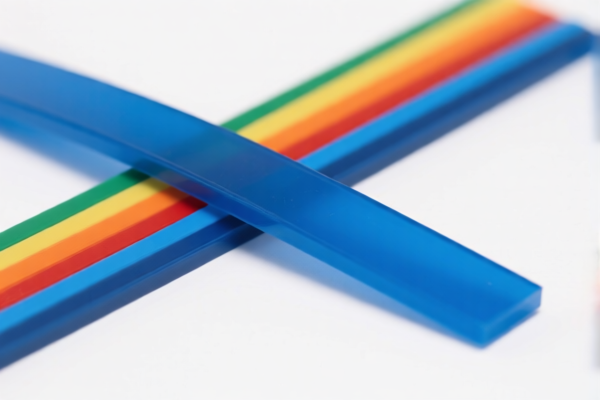
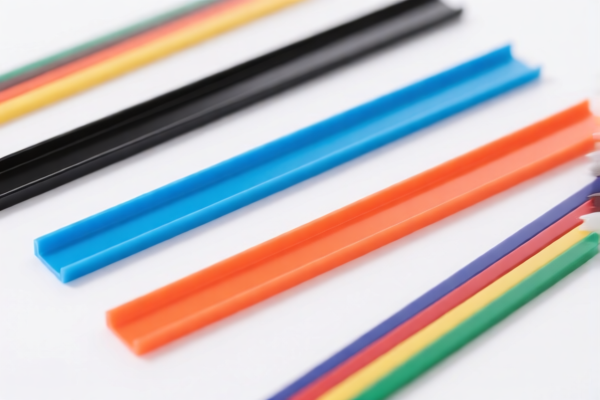
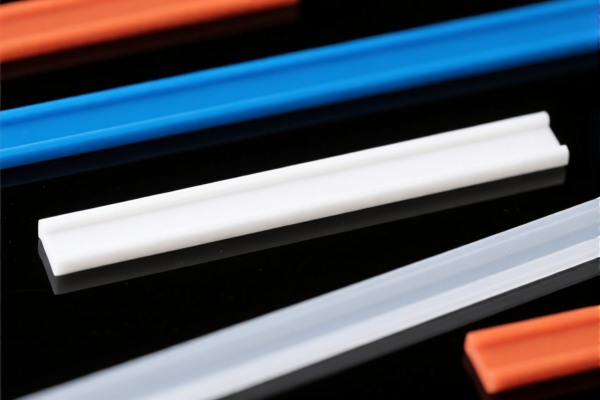
AI Analysis
🏭 Plastic Strips/Panels for Other Electronic Industries
🌐 HS Code Reference & Clearance Guide | 2026 Latest Tariff Analysis | Professional Customs Strategy
📌 I. Product Definition and Classification: Do You Really Understand "Plastic Strips for Electronics"?
"Plastic strips for other electronic industries" (often referred to as plastic plates, sheets, films, foils, or strips in customs terminology) are essential insulating, structural, or protective components in the electronics sector. In international trade, these products are primarily classified under Chapter 39 (Plastics and Articles Thereof).
The key distinction lies in the form factor and specific application: * Plastic Plates/Sheets (3920/3921): Rigid or semi-rigid boards used for insulation, substrates, or structural support. * Self-Adhesive Plates/Films (3919): Often used for protective masking during PCB manufacturing or as insulating tapes.
⚠️ Key Distinction Point:
- If the product is a rigid plate/sheet used for insulation or structure → Likely 3920 or 3921.
- If the product is a self-adhesive roll/film → Likely 3919.
- "Electronics" alone is not a valid HS description; you must describe the material and form.
📦 II. HS Code Classification Details (2026 Latest Tariff Authoritative Comparison)
Based on the provided data for "Plastic plates/strips for electronic industries," here are the four potential HS Codes:
| HS Code | Product Description | Application Logic | Total Tax Rate |
|---|---|---|---|
3921.90.50.50 |
Plastic plates, sheets, films, foils, and strips, other | Specific to electronic industry use; material is plastic. | 39.8% |
3921.19.00.90 |
Plastic plates, sheets, films, foils, and strips, other | Categorized under "Other categories"; attributes do not conflict with plastic plate properties. | 41.5% |
3919.90.50.30 |
Self-adhesive plates, sheets, film, foil, tape, and other flat shapes | Logical consistency with electrical insulation properties. | 40.8% |
3919.90.50.60 |
Self-adhesive plates, sheets, film, foil, tape, and other flat shapes | Categorized under other categories (fallback attribute). | 40.8% |
🔍 Important Note:
- 3921 vs. 3919: The core difference is whether the product is self-adhesive. If it has an adhesive backing (e.g., for masking or bonding), it falls under 3919. If it is a rigid/non-adhesive board, it falls under 3921. - 3920 vs. 3921: 3920 is for non-cellular plastics, while 3921 is for cellular plastics or specifically listed "plates/sheets." However, in this specific dataset, both 3920.99.50.00 (40.8%) and 3921.90.50.50 (39.8%) are relevant. The choice depends on the specific manufacturing process (cellular vs. non-cellular).
💰 III. 2026 Latest Tariff Rate Details (Including Surcharges and Policy Add-ons)
✅ Applicable Country: United States (US)
✅ Origin: China (CN)
✅ Effective Time: 2025/2026 (Subject to ongoing trade policies)
🎯 1. 3921.90.50.50 —— Plastic Plates/Sheets for Electronic Use
| Item | Content |
|---|---|
| Base Tariff | 4.8% (ad valorem) |
| Section 301 Surcharge | +25.0% |
| Section 122 Tariff | +10.0% |
| Total Tax Rate | 39.8% |
| Tax Calculation | CIF Value × 39.8% |
| De Minimis Eligibility | ❌ Not Eligible (Denied) |
| Legal Basis Path | Section 301: 9903.01.25 → Section 122 → USITC:3921.90.50.50 |
📌 Explanation:
- The 4.8% base tariff is for "Other plates, sheets, films, etc." of plastic. - The +25% is the standard Section 301 tariff on Chinese plastics. - The +10% is the Section 122 tariff (national security) on industrial materials. - Total: 39.8%. This is one of the most competitive rates in the provided list, specifically tailored for electronic use.
🎯 2. 3921.19.00.90 —— Other Plastic Plates/Sheets (General Category)
| Item | Content |
|---|---|
| Base Tariff | 6.5% |
| Section 301 Surcharge | +25.0% |
| Section 122 Tariff | +10.0% |
| Total Tax Rate | 41.5% |
| Tax Calculation | CIF Value × 41.5% |
| De Minimis Eligibility | ❌ Not Eligible |
| Legal Basis Path | Section 301 → Section 122 → USITC:3921.19.00.90 |
📌 Note:
- This code is a "catch-all" for plastic plates that don't fit other specific sub-categories. - Higher base rate (6.5%) compared to3921.90.50.50(4.8%) makes it less attractive if3921.90.50.50is applicable.
🎯 3. 3919.90.50.30 & 3919.90.50.60 —— Self-Adhesive Plastic Products
| Item | Content |
|---|---|
| Base Tariff | 5.8% |
| Section 301 Surcharge | +25.0% |
| Section 122 Tariff | +10.0% |
| Total Tax Rate | 40.8% |
| Tax Calculation | CIF Value × 40.8% |
| De Minimis Eligibility | ❌ Not Eligible |
| Legal Basis Path | Section 301 → Section 122 → USITC:3919.90.50.x0 |
📌 Note:
- These codes apply if the plastic strip is self-adhesive. - 3919.90.50.30 is preferred if the product has electrical insulation properties (logical consistency). - 3919.90.50.60 is a fallback for other self-adhesive plastics. - Total: 40.8%, which is slightly higher than3921.90.50.50(39.8%).
🎯 4. 3920.99.50.00 —— Other Plastic Plates/Sheets (Non-Cellular)
| Item | Content |
|---|---|
| Base Tariff | 5.8% |
| Section 301 Surcharge | +25.0% |
| Section 122 Tariff | +10.0% |
| Total Tax Rate | 40.8% |
| Tax Calculation | CIF Value × 40.8% |
| De Minimis Eligibility | ❌ Not Eligible |
| Legal Basis Path | Section 301 → Section 122 → USITC:3920.99.50.00 |
📌 Note:
- This code is for non-cellular plastic plates/sheets. - If your product is a rigid, non-porous plastic board used in electronics, this may be the correct classification. - Total: 40.8%.
🛠️ IV. Customs Clearance Practical Advice (Battle-Tested Pitfall Guide)
✅ 1. Required Documentation List (All are Mandatory)
| Document | Must Provide | Description |
|---|---|---|
| ✅ Product Specification | ✔️ | Must clearly state: Material (e.g., PP, PE, PVC), Form (Plate/Strip/Film), Thickness, Width, Length. |
| ✅ Application Statement | ✔️ | Explicitly state: "Used for electronic industry insulation/structuring." Avoid vague terms like "for general use." |
| ✅ Product Photos | ✔️ | Show the entire roll/sheet, close-ups of the edge, and any adhesive backing (if applicable). |
| ✅ Commercial Invoice | ✔️ | Accurate description matching the HS Code. Example: "Plastic Insulation Plate for Electronics, PP Material, No Adhesive." |
| ✅ Packing List | ✔️ | Detail net/gross weight and dimensions. |
| ✅ Certificate of Origin (CO) | ✔️ | Required for Section 301 exemption claims (if applicable via alternative country). |
✅ 2. Declaration Tips (Key Mantras)
🔥 “Form Determines Code, Adhesive Changes Category!”
| Situation | Correct Declaration | Wrong Approach |
|---|---|---|
| Rigid, non-adhesive board for electronics | 3921.90.50.50 (39.8%) |
Misdeclare as 3921.19.00.90 (41.5%) → Higher tax |
| Self-adhesive tape/film for insulation | 3919.90.50.30 (40.8%) |
Misdeclare as rigid plate → Classification error |
| Non-cellular rigid plastic sheet | 3920.99.50.00 (40.8%) |
Misdeclare as 3921 (cellular) → Inspection delay |
| Mixed shipments (Adhesive + Non-adhesive) | Split Declaration | Combine into one HS Code → Risk of penalty |
✅ 3. Special Scenarios Handling
| Scenario | Handling Advice |
|---|---|
| OEM Custom Plastic Strips | Provide customer PO and design specs to prove "electronic industry" use for 3921.90.50.50. |
| Product with Adhesive Backing | Must declare as 3919. Do not use 3920 or 3921 codes. |
| Multilayer Laminates | If layers are different materials, the classification may depend on the principal material. Provide structure diagram. |
| High-Purity Insulation Film | Ensure material spec highlights "electrical insulation" to support 3919.90.50.30 logic. |
🌍 V. Global Market Comparison (2026 Latest)
| Country/Region | Recommended HS Code | Tariff Rate | Certification | Remarks |
|---|---|---|---|---|
| 🇺🇸 USA | 3921.90.50.50 |
39.8% | No specific | Highest cost due to 301+122 tariffs |
| 🇨🇳 China | 3921.90.50.50 |
~6-10% | CCC (if applicable) | No additional surcharges |
| 🇪🇺 EU | 3921.90.00.00 |
0-4% | REACH/RoHS | Lower tariff base |
| 🇻🇳 Vietnam | 3921.90.00.00 |
Varies | Local Standards | Potential origin benefit |
📌 Conclusion:
- USA has the highest entry barrier for Chinese plastic electronic components. - Cost Saving Tip: If possible, source from Vietnam, Malaysia, or Thailand to avoid Section 301 and Section 122 tariffs.
📌 VI. Common Mistakes & Pitfall Guide (Lessons Learned)
❌ Mistake 1: Using "Plastic Strip" without specifying form (Plate vs. Tape)
👉 Consequence: Customs may default to the higher tax rate or demand more documentation.
❌ Mistake 2: Misidentifying Adhesive Products as Non-Adhesive
👉 Consequence: Wrong HS Code (3921 vs 3919) → Penalty + Back Taxes.
❌ Mistake 3: Not Specifying "Electronic Industry" Use
👉 Consequence: May be forced into 3921.19.00.90 (41.5%) instead of 3921.90.50.50 (39.8%).
❌ Mistake 4: Ignoring Section 122 Tariffs
👉 Consequence: Underestimating total landed cost. The 10% Section 122 tariff is often overlooked but critical.
✅ Correct Practice:
"Plastic Insulation Plate, PP Material, 1mm Thickness, Non-Adhesive, For PCB Manufacturing, Made in China"
🎯 VII. Conclusion: Precise Classification, Cost Efficiency!
🎯 Remember the Mantra:
🔹 "Adhesive? Go to 3919. Non-Adhesive? Go to 3921. Electronics Use? Target 3921.90.50.50 for Lowest Tax (39.8%)."
🔹 "301+122 is Real. Plan for 40%+ Landed Cost in USA."
📌 Pro Tip:
If your plastic strips are essential for national security or critical electronics, consult a customs broker about Section 301 Exclusions. While rare, some electronic components may qualify.
📣 Immediate Action:
📞 Contact a professional customs broker + Provide detailed product specs + Apply for Advance Ruling if importing large volumes.
🚀 Ensure smooth clearance, avoid delays, and maximize profit margins!
✨ Professional Customs Clearance Starts with Accurate Classification!
💼 Every Percent of Tariff Matters!
Customer Reviews
About HS Code Classification
The Harmonized System (HS) is an internationally standardized nomenclature developed by the World Customs Organization (WCO) to classify traded products. Over 200 countries use the HS system as the basis for customs tariffs, trade statistics, and import/export regulations.
Each HS code follows a hierarchical structure:
- Chapter (2 digits) — Broad category of goods (e.g., Chapter 84: Machinery and Mechanical Appliances)
- Heading (4 digits) — More specific grouping within the chapter
- Subheading (6 digits) — Internationally standardized breakdown, used by all WCO member countries
- National subdivisions (8-10 digits) — Country-specific extensions for further classification, such as US HTSUS 10-digit codes
Correct HS code classification is essential for smooth customs clearance, accurate duty payment, and compliance with trade regulations. Misclassification can lead to customs delays, overpayment of duties, or penalties.
When importing from CN to US, the applicable tariff rates may include:
- Most-Favored-Nation (MFN) rate — The standard duty rate applied to WTO members
- General rate — Applied to countries without trade agreements
- Trade remedy duties — Additional tariffs such as Section 301 (anti-dumping), Section 232 (national security), or countervailing duties
The information provided on this page is for reference purposes only. For official classification, please consult with your local customs authority or a licensed customs broker.