Plastic sunglass hinge assembly
CN → US| HS Code | Tariff Rate | Origin | Destination | Doc |
|---|---|---|---|---|
| 9004100000 | 19.5% | CN | US | Official Doc |
| 9004900090 | 20.0% | CN | US | Official Doc |
| 3926902500 | 24.0% | CN | US | Official Doc |
| 3926909989 | 22.8% | CN | US | Official Doc |
| 9001500000 | 19.5% | CN | US | Official Doc |
Product Images

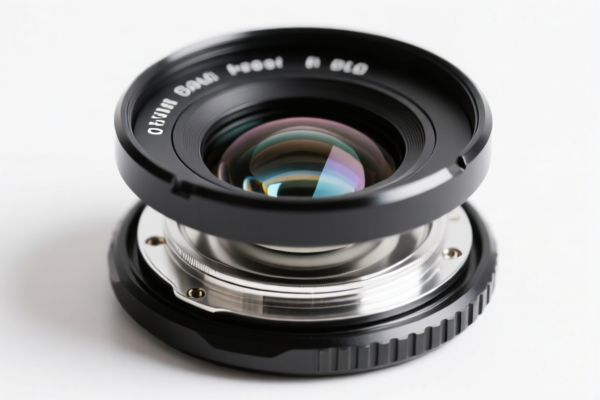
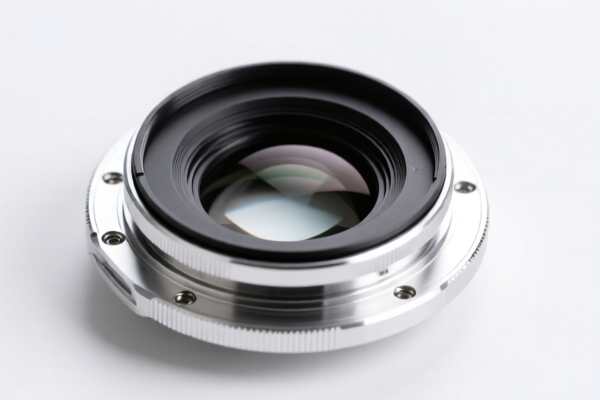

AI Analysis
🕶️ Plastic Sunglass Hinge Assembly (Plastic Spectacle Hinges)
🌐 HS Code Reference & Customs Clearance Guide | 2026 Latest Tariff Analysis | Professional Customs Strategy
📌 I. Product Definition & Classification: What is a "Plastic Sunglass Hinge Assembly"?
A plastic sunglass hinge assembly is the mechanical pivot component connecting the front frame to the temple (arm) of sunglasses. In international trade, it is classified as a part/accessory rather than a complete sunglass. Its classification depends on whether it is viewed primarily as an eyewear component or a plastic component.
⚠️ Key Classification Logic:
- If treated as an eyewear part: It falls under Chapter 90 (Optical Instruments).
- If treated as a plastic part: It falls under Chapter 39 (Plastics and Articles Thereof).
- Critical Note: The total tax burden varies significantly (19.5% vs. 24.0%) based on the chosen HS Code due to differences in base tariffs and additional duties.
📦 II. HS Code Classification Details (2026 Latest Tariff Authority Comparison)
Based on the provided data, here are the five most relevant HS Codes for "Plastic Sunglass Hinge Assembly":
| HS Code | Product Description & Logic | Applicable Scenario | Tax Rate |
|---|---|---|---|
9004.10.00.00 |
Parts of Sunglasses: Defined as components of sunglasses, fitting the accessory attribute under the sunglasses category. | Standard plastic sunglass hinge; treated as an optical accessory. | 19.5% |
9004.90.00.90 |
Other Eyewear Parts: Falls under "other" categories in eyewear, following default matching principles for spare parts. | Hinges not specifically listed under "sunglasses" but generally for eyewear. | 20.0% |
3926.90.25.00 |
Other Plastic Articles (Parts): Material is plastic, categorized as parts of other plastic articles. | Focuses on material (plastic) rather than function (eyewear). | 24.0% |
3926.90.99.89 |
Other Plastic Products (Parts): Categorized under "other products" as parts/assemblies made of plastic. | General plastic component classification when eyewear logic is not prioritized. | 22.8% |
9001.50.00.00 |
Parts of Optical Instruments: Extended logic for eyewear accessories, categorized under "other materials." | Broad optical accessory classification; often used if hinge is integrated with other optical parts. | 19.5% |
🔍 Key Insight:
- Chapter 90 (9004/9001) is generally preferred for functional eyewear parts, resulting in lower total tax rates (19.5% - 20.0%).
- Chapter 39 (3926) is based on material, resulting in higher total tax rates (22.8% - 24.0%).
- Recommendation: Aim for 9004.10.00.00 or 9001.50.00.00 for cost efficiency.
💰 III. 2026 Latest Tariff Rate Breakdown (Including Additional Duties)
✅ Applicable Country: USA (US)
✅ Origin: China (CN)
✅ Effective Date: Current regulations (including Section 301/122 duties)
🎯 1. 9004.10.00.00 & 9001.50.00.00 – Recommended for Sunglass Parts
| Item | Details |
|---|---|
| Base Tariff | 2.0% (Ad valorem) |
| Section 301/Additional Duty | 7.5% (Standard additional tariff for Chinese goods) |
| Section 122 Duty | 10% (Specific additional duty) |
| Total Tax Rate | 19.5% |
| Tax Calculation | CIF Value × 19.5% |
| De Minimis Exemption? | ❌ No (Cannot be shipped under $800 de minimis with these codes due to high duty rates) |
📌 Explanation:
- This classification treats the hinge as an eyewear accessory.
- The 19.5% rate is significantly lower than the plastic-based classifications.
- Legal Path:HTSUS:9004.10.00.00→Section 301: 7.5%→Section 122: 10%.
🎯 2. 9004.90.00.90 – Other Eyewear Parts
| Item | Details |
|---|---|
| Base Tariff | 2.5% |
| Section 301/Additional Duty | 7.5% |
| Section 122 Duty | 10% |
| Total Tax Rate | 20.0% |
| Tax Calculation | CIF Value × 20.0% |
| De Minimis Exemption? | ❌ No |
📌 Explanation:
- Slightly higher base tariff (2.5% vs. 2.0%) than9004.10.
- Still cheaper than plastic-based codes.
🎯 3. 3926.90.25.00 – Plastic Parts (Highest Tax)
| Item | Details |
|---|---|
| Base Tariff | 6.5% |
| Section 301/Additional Duty | 7.5% |
| Section 122 Duty | 10% |
| Total Tax Rate | 24.0% |
| Tax Calculation | CIF Value × 24.0% |
| De Minimis Exemption? | ❌ No |
📌 Explanation:
- Higher base tariff (6.5%) due to plastic material classification.
- Not recommended unless specific customs rulings require it.
🎯 4. 3926.90.99.89 – Other Plastic Products
| Item | Details |
|---|---|
| Base Tariff | 5.3% |
| Section 301/Additional Duty | 7.5% |
| Section 122 Duty | 10% |
| Total Tax Rate | 22.8% |
| Tax Calculation | CIF Value × 22.8% |
| De Minimis Exemption? | ❌ No |
📌 Explanation:
- Middle-ground plastic classification.
- Still more expensive than eyewear-specific codes.
🛠️ IV. Customs Clearance Practical Advice (Avoiding Pitfalls)
✅ 1. Document Checklist (Essential for Smooth Clearance)
| Document | Required | Notes |
|---|---|---|
| ✅ Product Specification Sheet | ✔️ | Must clearly state "Plastic Sunglass Hinge Assembly" and material composition. |
| ✅ Part Number & SKU | ✔️ | Matches commercial invoice and packing list. |
| ✅ Photos of Hinge | ✔️ | Show connection points, material (plastic), and any metal inserts (if any). |
| ✅ Commercial Invoice | ✔️ | Declare value clearly; note "Part of Sunglasses" to support Chapter 90 classification. |
| ✅ Packing List | ✔️ | List quantity, weight, and HS Code. |
| ✅ Pre-Ruling Letter (Optional) | ✔️ | If uncertain, request CBP Pre-Ruling to confirm 9004.10.00.00. |
✅ 2. Declaration Tips (Key Strategy)
🔥 Golden Rule:
"Declare as Eyewear Part, Not Plastic Part! Save 4.5% Tax!"
| Scenario | Correct Declaration | Incorrect Declaration |
|---|---|---|
| Hinge for Sunglasses | 9004.10.00.00 (19.5%) |
3926.90.25.00 (24.0%) |
| Hinge for Eyeglasses | 9004.90.00.90 (20.0%) |
3926.90.99.89 (22.8%) |
| Bare Plastic Hinge (No Function) | May still be 9004 if intended for eyewear |
3926 → Higher tax |
⚠️ Warning:
- Do not declare as "Plastic Hinges" without context. Customs may default to Chapter 39.
- Always specify "For Sunglasses" or "Eyewear Parts" in the description.
✅ 3. Special Situations
| Situation | Advice |
|---|---|
| Hinge with Metal Pins | If >50% metal by weight/value, consider Chapter 73/79. But if plastic is primary, stick to 9004 or 3926. |
| Bulk vs. Retail | Bulk shipments (wholesale) are easier to classify as parts. Retail-ready items may be scrutinized. |
| Section 301 Exclusions | Check if your specific HS Code was excluded from Section 301 duties in recent rounds. Most plastic/eyewear parts are not excluded. |
🌍 V. Global Market Comparison (2026 Latest)
| Country/Region | Recommended HS Code | Total Tax (China Origin) | Notes |
|---|---|---|---|
| 🇺🇸 USA | 9004.10.00.00 |
19.5% | Includes 7.5% Sec 301 + 10% Sec 122. |
| 🇨🇳 China | 9004.10.00.00 |
~5-10% | Import tax varies; no additional duties. |
| 🇪🇺 EU | 9004.10.00.00 |
~4.5% | No additional duties like US Sec 301. |
| 🇬🇧 UK | 9004.10.00.00 |
~4.5% | Post-Brexit tariff; no US-style additional duties. |
📌 Conclusion:
- The US market is the most expensive due to Section 301 (7.5%) and Section 122 (10%) duties.
- EU and UK are more favorable, with lower total tariffs.
- For US imports, accurate classification under9004is critical to avoid overpaying.
📌 VI. Common Mistakes & Pitfalls (Lessons Learned)
❌ Mistake 1: Declaring as "Plastic Hardware" (7318 or 3926)
👉 Consequence: Higher tax rate (22.8%–24.0%) + potential misclassification penalties.
👉 Fix: Emphasize functional use for eyewear.
❌ Mistake 2: Ignoring Section 122 Duties
👉 Consequence: Unexpected 10% additional tax at customs.
👉 Fix: Include 122 Duty in cost calculations.
❌ Mistake 3: Using "Other Plastic Parts" (3926.99.99)
👉 Consequence: Highest tax rate (24.0%) for sunglasses components.
👉 Fix: Use 9004.10.00.00 for sunglasses parts.
✅ Best Practice:
"Plastic Sunglass Hinge Assembly, Part of Eyewear, HS Code 9004.10.00.00, Country of Origin: China"
🎯 VII. Conclusion: Professional Classification, Cost Optimization!
🎯 Remember:
🔹 "Eyewear First, Plastic Second!" → Use
9004.10.00.00for 19.5% total tax.
🔹 "Sec 301 + Sec 122 = 17.5% Extra!" → Total tax reaches 19.5%–24.0% depending on HS Code.
🔹 "Clear Description = Lower Risk!" → Avoid generic "plastic parts" descriptions.
📌 Pro Tip:
If you are importing large volumes, consider applying for a CBP Advance Ruling to lock in the 19.5% rate under
9004.10.00.00.
This prevents arbitrary reclassification by customs officers and ensures predictable costs.
📣 Take Action Now:
📞 Consult a Customs Broker
📄 Prepare Product Specs & Photos
🚀 Declare Accurately
💡 Save Up to 4.5% in Taxes!
✨ Professional Clearance Starts with Accurate Classification!
💼 Every Dollar Saved is Profit Earned!
Customer Reviews
About HS Code Classification
The Harmonized System (HS) is an internationally standardized nomenclature developed by the World Customs Organization (WCO) to classify traded products. Over 200 countries use the HS system as the basis for customs tariffs, trade statistics, and import/export regulations.
Each HS code follows a hierarchical structure:
- Chapter (2 digits) — Broad category of goods (e.g., Chapter 84: Machinery and Mechanical Appliances)
- Heading (4 digits) — More specific grouping within the chapter
- Subheading (6 digits) — Internationally standardized breakdown, used by all WCO member countries
- National subdivisions (8-10 digits) — Country-specific extensions for further classification, such as US HTSUS 10-digit codes
Correct HS code classification is essential for smooth customs clearance, accurate duty payment, and compliance with trade regulations. Misclassification can lead to customs delays, overpayment of duties, or penalties.
When importing from CN to US, the applicable tariff rates may include:
- Most-Favored-Nation (MFN) rate — The standard duty rate applied to WTO members
- General rate — Applied to countries without trade agreements
- Trade remedy duties — Additional tariffs such as Section 301 (anti-dumping), Section 232 (national security), or countervailing duties
The information provided on this page is for reference purposes only. For official classification, please consult with your local customs authority or a licensed customs broker.