Platinum Fox Fur
CN → US| HS Code | Tariff Rate | Origin | Destination | Doc |
|---|---|---|---|---|
| 4301603000 | 22.6% | CN | US | Official Doc |
| 4301606000 | 17.5% | CN | US | Official Doc |
Product Images
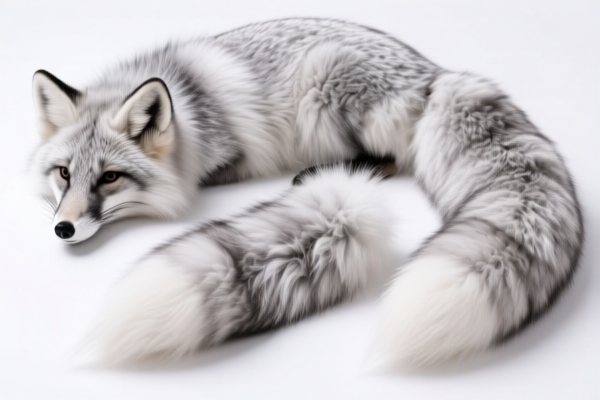
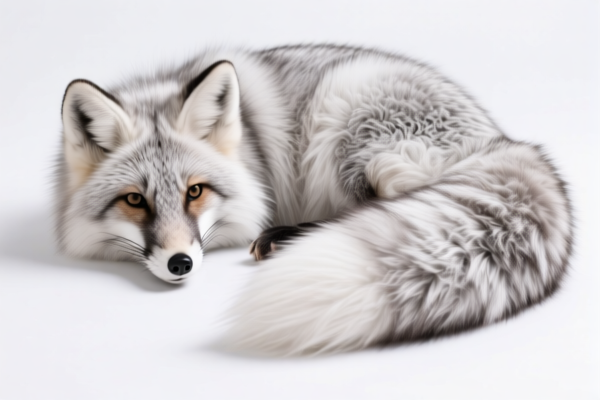
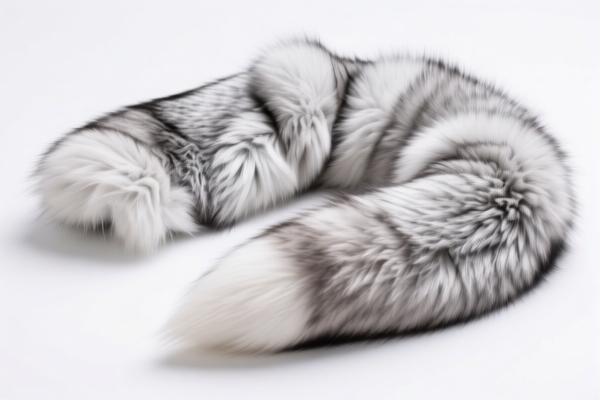

AI Analysis
🦊 Platinum Fox Fur (Silver, Black, Platinum Mutations)
🌐 HS Code Reference & Customs Clearance Guide | 2026 Latest Tariff Analysis | Professional Entry Strategies for Raw Fur Skins
📌 I. Product Definition & Classification: What Exactly Is "Platinum Fox Fur"?
Platinum Fox Fur falls under the category of Raw Furskins, specifically those of foxes suitable for furriers' use. It is crucial to distinguish these from general raw hides or skins of bovine or equine animals (which fall under Chapter 41).
In international trade, raw fox furskins are classified based on their specific mutation or type: * Special Variants (Silver, Black, Platinum): These are high-value mutations. They include skins that are whole, with or without heads, tails, or paws. * Other Fox Furs: Any fox furskin that does not fall into the specific Silver/Black/Platinum categories.
⚠️ Key Distinction Point:
- If the skin is a Silver, Black, or Platinum fox (including any mutation or type developed from these specific foxes) → It falls under 4301.60.30.00.
- If the skin is a regular fox (e.g., Arctic, Red, or other non-platinum variants) → It falls under 4301.60.60.00.
📦 II. HS Code Classification Details (2026 Latest Tariff Authority Comparison)
| HS Code | Product Description | Applicable Scenario | Specific Fur Type |
|---|---|---|---|
4301.60.30.00 |
Raw fox furskins: Of silver, black or platinum fox (including mutations/types developed from them) | High-end fashion furriers, luxury garment manufacturing | ✅ Silver/Black/Platinum Fox |
4301.60.60.00 |
Raw fox furskins: Other | General furrier use, standard fox pelts | ✅ Other Fox (Non-Platinum) |
🔍 Important Note:
- Both codes apply to raw skins, including heads, tails, paws, and cuttings.
- The critical factor is the biological classification/mutation of the fox. If the seller labels it "Platinum" or "Silver Black," it must be declared under4301.60.30.00to avoid misclassification penalties.
- Heading 4301 explicitly excludes raw hides and skins of heading 4101, 4102, or 4103 (e.g., cow, horse).
💰 III. 2026 Latest Tariff Rate Details (Detailed Tax Breakdown)
✅ Applicable Country: United States (US)
✅ Origin: China (CN) (Based on the provided data context for tax rates)
✅ Effective Time: Current 2026 Tariff Schedule
🎯 1. 4301.60.30.00 —— Platinum/Silver/Black Fox Furskins
| Item | Content |
|---|---|
| Base Tariff Rate | 0.0% (ad valorem) |
| Additional Tariffs (Section 301/Other) | 0.0% |
| Total Tax Rate | 0.0% |
| Tax Calculation | CIF Value × 0% = $0 Duty |
| Legal Basis Path | HS: 4301.60.30.00 → USITC |
📌 Explanation:
- Raw fox furskins of the specific Silver, Black, or Platinum varieties enjoy a duty-free entry into the US market.
- There are no additional punitive tariffs (such as Section 301 tariffs) applied to this specific HS code in the provided data.
- Cost Advantage: This is a zero-duty import category, making it highly competitive for raw material importers.
🎯 2. 4301.60.60.00 —— Other Raw Fox Furskins
| Item | Content |
|---|---|
| Base Tariff Rate | 0.0% (ad valorem) |
| Additional Tariffs (Section 301/Other) | +7.5% |
| Total Tax Rate | 7.5% |
| Tax Calculation | CIF Value × 7.5% |
| Legal Basis Path | HS: 4301.60.60.00 → USITC |
📌 Explanation:
- For fox furs that do not qualify as Silver/Black/Platinum mutations (i.e., "Other" foxes), a 7.5% additional tariff is applied.
- While the base rate is 0%, the 7.5% surcharge significantly impacts the landed cost.
- Risk: Misdeclaring a "Silver Fox" as a generic "Fox" could lead to underpayment, but declaring a "Generic Fox" as "Platinum" is a serious fraud risk.
🛠️ IV. Customs Clearance Practical Advice (Real-World Pitfall Avoidance Guide)
✅ 1. Required Documentation Checklist (All Must Be Provided)
| Document | Mandatory? | Description |
|---|---|---|
| ✅ Commercial Invoice | ✔️ | Must clearly state "Raw Fox Fur Skin," specify mutation (Silver/Black/Platinum vs. Other), and describe pieces (whole, with head/tail/paws). |
| ✅ Packing List | ✔️ | Detail weight, count, and packaging material (critical for hygiene inspections). |
| ✅ Origin Certificate | ✔️ | To prove country of origin for tariff determination. |
| ✅ Scientific Name/Species ID | ✔️ | Essential for CITES compliance. Vulpes vulpes (Red Fox) is common, but mutations must be documented. |
| ✅ CITES Permit (If Applicable) | ✔️ | While Platinum is a color mutation, the underlying species (Vulpes vulpes) may require CITES documentation depending on the country of export and specific regulations. Check local wildlife laws. |
| ✅ Sanitary/Phytosanitary Certificate | ✔️ | Proves skins are treated/cleaned and free of pests/diseases. |
✅ 2. Declaration Tips (Critical Rules of Thumb)
🔥 “Be Specific: Platinum = 0%, Other = 7.5%. Mislabeling is Fraud!”
| Situation | Correct Declaration Strategy | Wrong Practice |
|---|---|---|
| Silver/Black/Platinum Fox | Declare as "Silver Fox Fur" or "Platinum Fox Fur" under 4301.60.30.00 |
Labeling simply as "Fox Fur" without specifying mutation → Risk of being reclassified to 4301.60.60.00 (7.5% tax) or flagged for fraud. |
| General Arctic/Red Fox | Declare as "Other Fox Fur" under 4301.60.60.00 |
Attempting to declare as "Platinum" to save tax → Severe Penalty/Seizure. |
| Cuttings/Paws/Heads | Include in the same HS code if part of the raw skin lot | Separating paws/heads into different HS codes → Complex, higher administrative cost, potential errors. |
✅ 3. Special Cases & Compliance
| Situation | Handling Advice |
|---|---|
| CITES Compliance | Even though Platinum is a color morph, the species is still regulated. Ensure the Country of Export allows legal export. Many countries restrict wild-caught foxes. |
| Hygiene Standards | Raw furs are susceptible to pests. Ensure skins are properly tanned/cured and certified clean. US Customs may inspect for bugs. |
| Misclassification Risk | If the line "Platinum" is used loosely for marketing but the skin is a standard silver-fox variant, Customs may reject it. Biological proof may be required. |
🌍 V. Global Market Comparison (2026 Overview)
| Country/Region | Recommended HS Code | Tariff (China Origin) | Notes |
|---|---|---|---|
| 🇺🇸 USA | 4301.60.30.00 |
0.0% | Best market for Platinum/Silver/Black. |
| 🇺🇸 USA | 4301.60.60.00 |
7.5% | Higher cost for non-Platinum foxes. |
| 🇪🇺 EU | 4301.60 (General) |
Varies (Often 0-5%) | Check specific EU TARIC codes; stricter CITES enforcement. |
| 🇨🇳 China | 4301.60 |
Varies | Import duties may apply; focus on CITES import permits. |
📌 Conclusion:
- The US market offers a clear tax advantage for Platinum/Silver/Black fox furs (0% duty).
- Importers should focus on sourcing high-quality mutations to maximize this duty-free benefit.
- For other fox furs, the 7.5% tax is manageable but reduces margins compared to Platinum variants.
📌 VI. Common Errors & Pitfalls (Lessons Learned)
❌ Error 1: Declaring all fox furs as "Platinum" to get 0% duty.
👉 Consequence: Customs audit reveals 7.5% tax owed + fines + potential seizure for fraud.
❌ Error 2: Ignoring CITES requirements for "Platinum" mutations.
👉 Consequence: Shipment held at border due to lack of species export permits. Platinum is not a different species.
❌ Error 3: Not specifying "Raw" status.
👉 Consequence: If declared as "Processed Fur," it may fall under a different chapter (4302), changing the duty structure entirely. Ensure the invoice says "Raw Furskins."
✅ Correct Practice:
"Raw Silver Fox Fur Skins, Whole with Head & Tail, Mutation Type: Silver, HS Code: 4301.60.30.00, Origin: Canada/CN (Specify)"
🎯 VII. Conclusion: Professional Declaration Saves Money!
🎯 Remember the Golden Rule:
🔹 "Platinum/Silver/Black = 0% Duty. Other Fox = 7.5% Duty. Be Honest, Be Specific!"
🔹 "HS Code 4301.60.30 is your gold mine if you have Platinum. Don't pay 7.5% by mistake!"
📌 Pro Tip:
If you are importing large quantities, consider pre-clearing the classification with a customs broker. Provide photos of the fur skins to prove the "Silver/Platinum" mutation status to avoid post-entry audits.
📣 Immediate Action:
📞 Contact a licensed customs broker.
📄 Prepare CITES documents.
📝 Label invoices accurately as "Raw Silver/Black/Platinum Fox Fur".
✨ Professional Customs Clearance Starts with Accurate Classification!
💼 Every percentage point of duty saved is profit earned!
Customer Reviews
About HS Code Classification
The Harmonized System (HS) is an internationally standardized nomenclature developed by the World Customs Organization (WCO) to classify traded products. Over 200 countries use the HS system as the basis for customs tariffs, trade statistics, and import/export regulations.
Each HS code follows a hierarchical structure:
- Chapter (2 digits) — Broad category of goods (e.g., Chapter 84: Machinery and Mechanical Appliances)
- Heading (4 digits) — More specific grouping within the chapter
- Subheading (6 digits) — Internationally standardized breakdown, used by all WCO member countries
- National subdivisions (8-10 digits) — Country-specific extensions for further classification, such as US HTSUS 10-digit codes
Correct HS code classification is essential for smooth customs clearance, accurate duty payment, and compliance with trade regulations. Misclassification can lead to customs delays, overpayment of duties, or penalties.
When importing from CN to US, the applicable tariff rates may include:
- Most-Favored-Nation (MFN) rate — The standard duty rate applied to WTO members
- General rate — Applied to countries without trade agreements
- Trade remedy duties — Additional tariffs such as Section 301 (anti-dumping), Section 232 (national security), or countervailing duties
The information provided on this page is for reference purposes only. For official classification, please consult with your local customs authority or a licensed customs broker.