Plaything
CN → US| HS Code | Tariff Rate | Origin | Destination | Doc |
|---|---|---|---|---|
| 9505906000 | 10.0% | CN | US | Official Doc |
| 9503000071 | 10.0% | CN | US | Official Doc |
| 3926909989 | 22.8% | CN | US | Official Doc |
| 9503000073 | 10.0% | CN | US | Official Doc |
| 9503000071 | 10.0% | CN | US | Official Doc |
Product Images
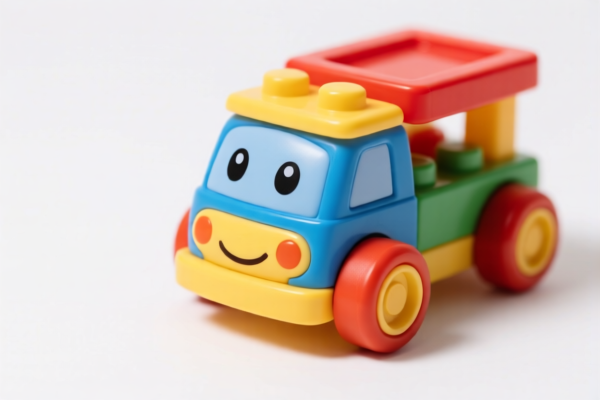
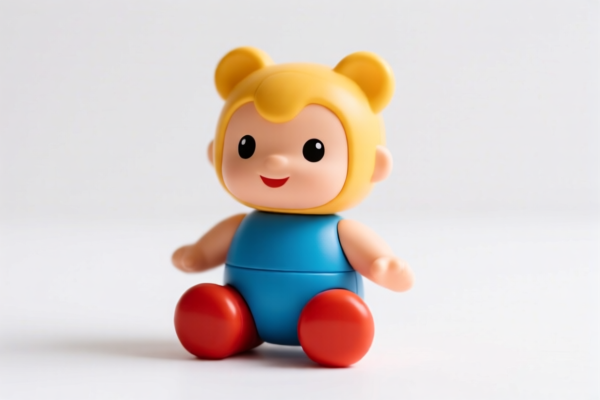
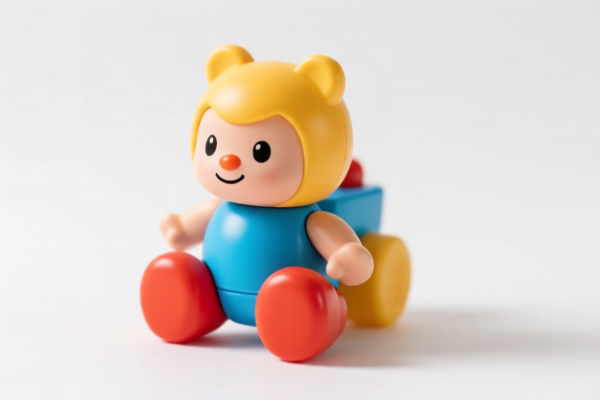
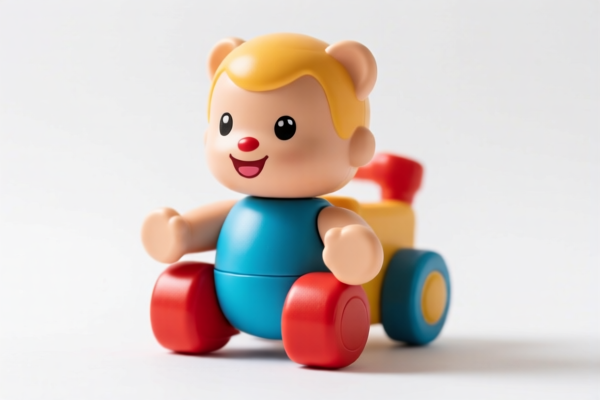
AI Analysis
🧸 Plaything (Toys)
🌐 HS Code Reference & Customs Clearance Guide | 2026 Latest Tariff Analysis | Professional Clearance Strategy
📌 I. Product Definition & Classification: Do You Really Understand “Toys”?
Plaything (Toys) is a broad category of products designed primarily for play, amusement, or entertainment, especially for children. In international trade, they are strictly regulated under Chapter 95 of the Harmonized System.
Key Distinction:
- Traditional Toys (9503): Dolls, action figures, building blocks, puzzles, and model kits.
- Entertainment Accessories (9505): Party supplies, carnival goods, and seasonal decorations.
- Plastic Parts (3926): Plastic components that are not recognized as toys themselves (e.g., generic plastic figurines without specific toy characteristics).
⚠️ Critical Classification Point:
- If the item is clearly a toy (intended for child’s play), it generally falls under 9503.00.
- If it is a decorative or party item (e.g., Christmas ornaments, carnival masks), it may fall under 9505.90.
- If it is a generic plastic product (e.g., simple plastic shapes without play value), it may be misclassified under 3926.90.
📦 II. HS Code Classification Details (2026 Latest Tariff Authority Comparison)
Based on the provided data, the following HS Codes are relevant for "Plaything" imports, likely into the United States (given the mention of "Section 122" and specific tax details).
| HS Code | Product Description | Application Scenario | Tax Rate | Notes |
|---|---|---|---|---|
9503.00.00.71 |
Children's products (Toys) | Action figures, dolls, plush toys, general toys | 10.0% | Matches "Children's products"; no material conflict. |
9503.00.00.73 |
Toys, models, puzzles (Other) | Building sets, puzzles, non-balloon toys | 10.0% | "Other toys" category; safe for most non-specific toys. |
9505.90.60.00 |
Festival, carnival, or entertainment articles | Party supplies, seasonal decorations, carnival toys | 10.0% | Based on use: "Entertainment/Party" items. |
3926.90.99.89 |
Other articles of plastic | Generic plastic parts, non-toy plastic items | 22.8% | High tax; only if item is not recognized as a toy but as a general plastic good. |
🔍 Important Reminder:
- 9503.00 is the primary classification for genuine toys. It offers a lower tax rate (10%) compared to the plastic general category (22.8%).
- Misclassifying a toy as a "plastic article" (3926.90) can lead to higher taxes and potential customs audits for incorrect declaration.
- 9505.90 is reserved for party/festival items, not standard playthings.
💰 III. 2026 Latest Tariff Rate Details (Including Surcharges & Policy Add-ons)
✅ Applicable Country: United States (US)
✅ Origin: China (CN)
✅ Effective Time: Ongoing (Subject to current trade policies)
🎯 1. 9503.00.00.71 & 9503.00.00.73 —— Children's Toys
| Item | Content |
|---|---|
| Base Tariff | 0% (ad valorem) |
| Section 301 Surcharge | 0% (Note: Some toy categories may be exempt or have different rates, but based on data, no additional 25% is listed here) |
| Section 122 Tariff | +10% (Specific to certain Chinese imports) |
| Total Tax Rate | 10.0% |
| Tax Calculation | CIF Value × 10% |
| De Minimis Eligibility | ❌ Not Eligible (Section 122 items usually excluded from $800 de minimis exemption) |
| Legal Basis Path | USITC:9503.00.00.71/73 → Section 122: 10% |
📌 Explanation:
- The 10% total tax comes solely from the Section 122 surcharge.
- No Base Tariff (0%) and No Section 301 Tariff (0%) are applied in this specific data set, which is favorable for toy importers.
- Section 122 is a U.S. trade law provision allowing the president to impose tariffs on specific imports to address trade deficits or unfair practices.
🎯 2. 9505.90.60.00 —— Festival/Entertainment Articles
| Item | Content |
|---|---|
| Base Tariff | 0% |
| Section 301 Surcharge | 0% |
| Section 122 Tariff | +10% |
| Total Tax Rate | 10.0% |
| Tax Calculation | CIF Value × 10% |
| De Minimis Eligibility | ❌ Not Eligible |
| Legal Basis Path | USITC:9505.90.60.00 → Section 122: 10% |
📌 Note:
- Same tax structure as 9503 items.
- Use this code only if the item is clearly a party/carnival good, not a standard toy.
🎯 3. 3926.90.99.89 —— Other Plastic Articles
| Item | Content |
|---|---|
| Base Tariff | 5.3% |
| Section 301 Surcharge | +7.5% |
| Section 122 Tariff | +10% |
| Total Tax Rate | 22.8% |
| Tax Calculation | CIF Value × 22.8% |
| De Minimis Eligibility | ❌ Not Eligible |
| Legal Basis Path | USITC:3926.90.99.89 → Section 301: 7.5% → Section 122: 10% |
📌 Warning:
- This is a high-tax classification.
- Only apply if the product is not considered a toy (e.g., generic plastic parts, figurines without play intent).
- Misclassification here can result in double taxation if customs determines it should be a toy (10%) but you declared it as plastic (22.8%).
🛠️ IV. Customs Clearance Practical Advice (Battle-Tested Pitfall Guide)
✅ 1. Required Documentation Checklist (No Exceptions)
| Document | Required | Explanation |
|---|---|---|
| ✅ Product Description | ✔️ | Must clearly state "Toys for Children," "Action Figure," "Doll," etc. Avoid vague terms like "Plastic Toy." |
| ✅ Material Declaration | ✔️ | Specify material (Plastic, Wood, Fabric, etc.). |
| ✅ Intended Use | ✔️ | State "For Children's Play" to support 9503 classification. |
| ✅ Age Range | ✔️ | Helps distinguish between toys and collectibles/parts. |
| ✅ Safety Certifications | ✔️ | ASTM F963 (US), CPSIA Compliance, CPC (Children’s Product Certificate) for US import. |
| ✅ Commercial Invoice | ✔️ | Must match HS Code and description. |
| ✅ Packing List | ✔️ | Detail contents to avoid confusion with parts/accessories. |
✅ 2. Declaration Tips (Key Mantra)
🔥 “Declare as Toy, Not Plastic; Safety Certs are Key, Tax Savings are Real!”
| Scenario | Correct Declaration | Wrong Approach |
|---|---|---|
| Standard Toy (Doll, Car, Block) | 9503.00.00.71 or 73 |
Declare as 3926 → 22.8% Tax |
| Party Item (Mask, Streamer) | 9505.90.60.00 |
Declare as 9503 → Possible Rejection |
| Plastic Part (Gear, Connector) | 3926.90.99.89 |
Declare as 9503 → Audit Risk |
| Mixed Package (Toy + Accessory) | Declare Main Item as Toy | Split declaration → Higher admin cost & risk |
📌 Key Tip:
- Always provide a CPC (Children’s Product Certificate) for US imports. Without it, goods will be held at customs.
- Use precise terms like “Plastic Action Figure” instead of just “Toy” to support classification under 9503.00.00.71.
✅ 3. Special Situations
| Situation | Handling Advice |
|---|---|
| OEM Custom Toys | Provide design drawings and brand authorization to avoid IP issues. |
| Collectibles | If intended for adults (>14 years), may be classified under 9503.00.99 (Adult Collectibles) with different tax treatment. |
| Electronic Toys | Ensure FCC certification is provided for any electronic components. |
| Small Packages (< $800) | ❌ No De Minimis: Section 122 items are excluded from the $800 de minimis exemption. Full duties apply. |
🌍 V. Global Market Customs Comparison (2026 Latest)
| Country/Region | Recommended HS Code | Tariff | Certification Requirements | Notes |
|---|---|---|---|---|
| 🇺🇸 United States | 9503.00.00.71 |
10% (Section 122) | CPC, ASTM F963, CPSIA | High scrutiny; no de minimis for Section 122. |
| 🇨🇳 China | 9503.00.00 |
0% | CCC (if applicable) | No additional surcharges for toys. |
| 🇪🇺 European Union | 9503.00.00 |
0% | CE Mark, EN71 | Strict safety standards. |
| 🇬🇧 United Kingdom | 9503.00.00 |
0% | UKCA, EN71 | Post-Brexit rules apply. |
| 🇯🇵 Japan | 9503.00.00 |
0% | PSE (if electronic) | Low tariff, high safety standards. |
📌 Conclusion:
- US is the most challenging market for toy imports due to Section 122 tariffs and strict safety certification (CPC).
- EU and Japan offer 0% tariffs but have high compliance costs for safety testing.
- China has 0% tariffs and minimal surcharges, making it cost-effective for domestic or regional exports.
📌 VI. Common Mistakes & Pitfall Guide (Lessons Learned)
❌ Mistake 1: Declaring toys as “Plastic Parts” (3926) to avoid “Toy” regulations
👉 Consequence: Customs may reclassify as toys, leading to underpayment penalties or overpayment if you paid 22.8% instead of 10%. Also, missing CPC can cause seizure.
❌ Mistake 2: Assuming de minimis ($800) applies
👉 Consequence: Section 122 items are excluded. Even small packages are subject to 10% tax. Failure to declare duties results in back taxes + fines.
❌ Mistake 3: Vague description (“Toy”)
👉 Consequence: Customs may request additional information, causing delays. Use specific terms like “Plastic Building Blocks” or “Action Figure.”
❌ Mistake 4: No Safety Certification
👉 Consequence: US Customs and Border Protection (CBP) will detain goods without a CPC. Return or destruction may be required.
✅ Correct Approach:
“Plastic Action Figure, 6-inch, for Children 3+, CPSIA Compliant, CPC Provided, Model XYZ”
🎯 VII. Conclusion: Professional Declaration, Save Time, Cut Costs!
🎯 Remember the Mantra:
🔹 “Toys are 9503, Plastic is 3926; 10% vs 22.8%, Choose Wisely!”
🔹 “CPC is Mandatory for US, No De Minimis, Pay Your 10%!”
📌 Pro Tip:
If your toys are originating from Vietnam, Mexico, or Thailand, check for IEEPA Exemptions or Free Trade Agreements (FTAs) that may reduce or eliminate Section 122 tariffs.
Apply for Advance Rulings with CBP to ensure correct classification before shipping.
📣 Act Now:
📞 Contact a Licensed Customs Broker + Provide Product Photos + Apply for HS Code Pre-Ruling
🚀 Ensure Your Toys Clear Customs Smoothly, Reach Shelves Faster, and Maximize Profits!
✨ Professional Customs Clearance Starts with Accurate Classification!
💼 Every Dollar Saved on Duties is Pure Profit!
Customer Reviews
About HS Code Classification
The Harmonized System (HS) is an internationally standardized nomenclature developed by the World Customs Organization (WCO) to classify traded products. Over 200 countries use the HS system as the basis for customs tariffs, trade statistics, and import/export regulations.
Each HS code follows a hierarchical structure:
- Chapter (2 digits) — Broad category of goods (e.g., Chapter 84: Machinery and Mechanical Appliances)
- Heading (4 digits) — More specific grouping within the chapter
- Subheading (6 digits) — Internationally standardized breakdown, used by all WCO member countries
- National subdivisions (8-10 digits) — Country-specific extensions for further classification, such as US HTSUS 10-digit codes
Correct HS code classification is essential for smooth customs clearance, accurate duty payment, and compliance with trade regulations. Misclassification can lead to customs delays, overpayment of duties, or penalties.
When importing from CN to US, the applicable tariff rates may include:
- Most-Favored-Nation (MFN) rate — The standard duty rate applied to WTO members
- General rate — Applied to countries without trade agreements
- Trade remedy duties — Additional tariffs such as Section 301 (anti-dumping), Section 232 (national security), or countervailing duties
The information provided on this page is for reference purposes only. For official classification, please consult with your local customs authority or a licensed customs broker.