Pliers, Scissors, Cutting Knives and Similar Hand Tools
CN → US| HS Code | Tariff Rate | Origin | Destination | Doc |
|---|---|---|---|---|
| 8205513060 | 38.7% | CN | US | Official Doc |
| 8205595560 | 40.3% | CN | US | Official Doc |
| 8203206030 | 0.0% | CN | US | Official Doc |
| 8203202000 | 39.0% | CN | US | Official Doc |
Product Images
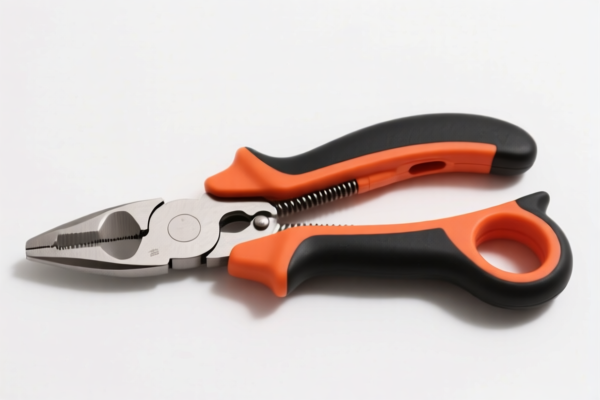
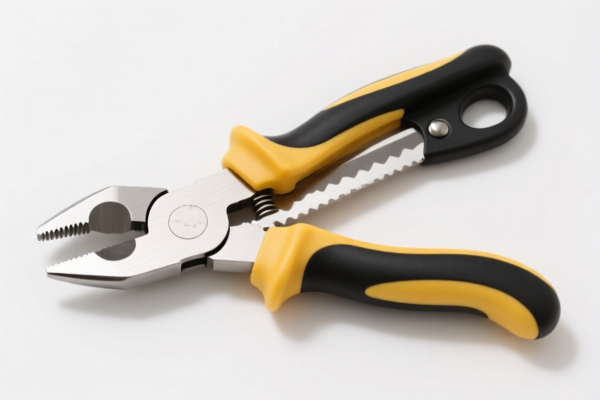

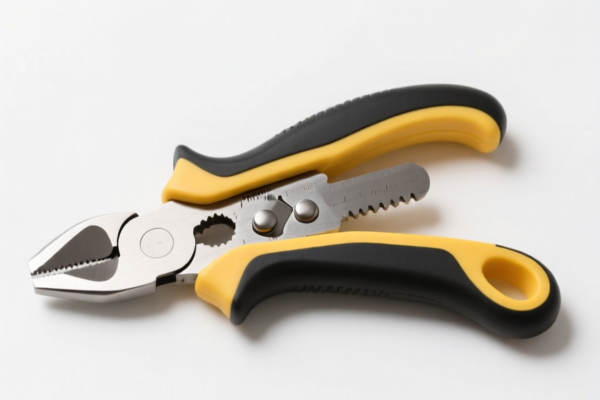
AI Analysis
🛠️ Pliers, Scissors, Cutting Knives & Similar Hand Tools
🌐 HS Code Reference & Customs Clearance Guide | 2026 Latest Tariff Analysis | Professional Clearance Strategy
📌 Part 1: Product Definition & Classification: What Exactly Are "Hand Tools"?
Pliers, scissors, cutting knives, and similar hand tools fall under Chapter 82 of the Harmonized System, specifically heading 82.03 (Pliers, pincers, etc.) and 82.05 (Hand or pedal-operated tools). These are generally defined as manually operated tools made of metal (iron or steel), used for gripping, cutting, bending, or shaping materials.
In international trade, they are often categorized based on: * Function: Pliers (gripping), Scissors/Knives (cutting), or Multi-purpose. * Usage: Household, Industrial, or Professional. * Material: Typically forged or stamped steel/iron.
⚠️ Key Distinction:
- If the tool is a general-purpose plier (e.g., needle-nose, slip-joint), it usually falls under 8203.20.
- If the tool is a household item (e.g., kitchen shears, small nail clippers) or a specific "other" tool, it may fall under 8205.51 or 8205.59.
- Crucial Note: All these items currently face significant additional tariffs due to US trade policies (Section 301 and Section 122).
📦 Part 2: HS Code Classification Details (2026 Latest Tariff Authority Comparison)
Based on the provided data, here are the four most relevant HS Codes for Pliers, Scissors, and Similar Hand Tools, along with their specific tax implications.
| HS Code | Product Description & Summary | Applicable Scenario | Material/Type |
|---|---|---|---|
8205.51.30.60 |
Household Hand Tools: Pliers classified as "other" household tools, inferred to be iron/steel. | Kitchen shears, small household pliers, nail clippers. | Iron/Steel (Household) |
8205.59.55.60 |
Other Hand Tools: Pliers classified as "other" hand tools, metal (iron/steel), not specified elsewhere. | General hardware store pliers, industrial gripping tools. | Iron/Steel (General) |
8203.20.60.30 |
Specific Pliers: Pliers matching the definition of "Pliers" (e.g., diagonal, locking), metal material. | Standard diagonal cutters, locking pliers, long-nose pliers. | Iron/Steel (Specific Pliers) |
8203.20.20.00 |
General Pliers & Similars: Pliers and similar tools meeting the general usage and form definition. | General-purpose pliers not fitting other specific sub-categories. | Iron/Steel (General Pliers) |
🔍 Important Reminder:
- All four codes involve additional tariffs on top of the base duty.
- The total tax rate varies significantly based on the specific sub-heading, especially due to the 25% Section 301 tariff and 10% Section 122 tariff (if applicable).
- Misclassification can lead to severe penalties or delays, as customs officers carefully check if a tool is "household" (8205) or "industrial/general" (8203).
💰 Part 3: 2026 Latest Tariff Rate Details (Including Surcharges & Policy Add-ons)
✅ Applicable Country: United States (US)
✅ Origin: China (CN)
✅ Effective Date: Ongoing (As per current 301 and 122 provisions)
🎯 1. 8205.51.30.60 —— Household Pliers/Tools
| Item | Details |
|---|---|
| Base Duty Rate | 3.7% (Ad Valorem) |
| Section 301 Surtax | +25.0% (From USITC Footnote 9903.88.01) |
| Section 122 Surtax | +10.0% (Specific to certain Chinese goods) |
| Total Tax Rate | 38.7% |
| Tax Calculation | CIF Value × 38.7% |
| De Minimis Exemption | ❌ Not Eligible (Due to Section 301/122 rules) |
| Legal Basis Path | IEEPA:9903.01.25 → IEEPA:9903.01.24 → USITC:8205.51.30.60 → FOOTNOTE:9903.88.01 |
📌 Explanation:
- This code is for household-use pliers.
- The 25% surcharge is standard for many tools under Section 301.
- The 10% additional tax (Section 122) further increases the cost.
- Total 38.7% is a high barrier for low-margin household goods.
🎯 2. 8205.59.55.60 —— Other Hand Tools (Non-Specific)
| Item | Details |
|---|---|
| Base Duty Rate | 5.3% (Ad Valorem) |
| Section 301 Surtax | +25.0% |
| Section 122 Surtax | +10.0% |
| Total Tax Rate | 40.3% |
| Tax Calculation | CIF Value × 40.3% |
| De Minimis Exemption | ❌ Not Eligible |
| Legal Basis Path | IEEPA:9903.01.25 → IEEPA:9903.01.24 → USITC:8205.59.55.60 → FOOTNOTE:9903.88.01 |
📌 Note:
- This code applies to hand tools that are not specifically listed elsewhere.
- The base duty is higher (5.3%) than household tools.
- Total 40.3% makes this one of the most expensive categories for general hand tools.
🎯 3. 8203.20.60.30 —— Specific Pliers (e.g., Diagonal, Locking)
| Item | Details |
|---|---|
| Base Duty Rate | 12¢/doz. + 5.5% (Mixed Rate) |
| Section 301 Surtax | +25.0% |
| Section 122 Surtax | +10.0% |
| Total Tax Rate | 12¢/doz. + 5.5% + 35.0% (Effective total ~40.5%+ depending on unit value) |
| Tax Calculation | (12¢ per dozen) + (CIF Value × 5.5%) + (CIF Value × 25% + 10%) |
| De Minimis Exemption | ❌ Not Eligible |
| Legal Basis Path | IEEPA:9903.01.25 → IEEPA:9903.01.24 → USITC:8203.20.60.30 → FOOTNOTE:9903.88.01 |
📌 Explanation:
- This code is for specific types of pliers.
- The base duty has a per-unit component (12¢/doz), which can be significant for low-cost items.
- The 35% additional tax (25% + 10%) is applied to the ad valorem portion.
- High risk for low-value items due to the per-unit tax.
🎯 4. 8203.20.20.00 —— General Pliers & Similars
| Item | Details |
|---|---|
| Base Duty Rate | 4.0% (Ad Valorem) |
| Section 301 Surtax | +25.0% |
| Section 122 Surtax | +10.0% |
| Total Tax Rate | 39.0% |
| Tax Calculation | CIF Value × 39.0% |
| De Minimis Exemption | ❌ Not Eligible |
| Legal Basis Path | IEEPA:9903.01.25 → IEEPA:9903.01.24 → USITC:8203.20.20.00 → FOOTNOTE:9903.88.01 |
📌 Note:
- This is a general classification for pliers.
- The base duty is moderate (4.0%).
- Total 39.0% is slightly lower than8205.59.55.60but still very high.
- Often used when the plier type doesn’t fit more specific sub-headings.
🛠️ Part 4: Customs Clearance Practical Advice (Pitfall Avoidance Guide)
✅ 1. Required Documentation (Do Not Miss Any)
| Document | Required | Explanation |
|---|---|---|
| ✅ Product Specification Sheet | ✔️ | Must include material (e.g., "Forged Steel"), type (e.g., "Slip-Joint Pliers"), and usage (Household/Industrial). |
| ✅ Product Photos | ✔️ | Clear images of the tool, including jaws, handles, and any branding. |
| ✅ Commercial Invoice | ✔️ | Must clearly state: "Pliers, Hand Tool, Steel, Made in China." Avoid vague terms like "Hardware." |
| ✅ Packing List | ✔️ | Specify quantity per box, total boxes, and net/gross weight. |
| ✅ Origin Certificate | ✔️ | If applicable, for potential duty drawbacks (though limited for China under 301). |
| ✅ Customs Ruling (Optional) | ✔️ | Highly recommended to pre-classify if unsure between 8203 and 8205. |
✅ 2. Declaration Tips (Key Mantras)
🔥 "Be Specific, Be Accurate, Avoid 'General'!"
| Scenario | Correct Declaration | Incorrect Practice |
|---|---|---|
| Household Scissors/Knives | Use 8205.51.30.60 (if classified as household tools) |
Declare as "Industrial Pliers" → Wrong Code, Higher Tax |
| Standard Needle-Nose Pliers | Use 8203.20.20.00 or 8203.20.60.30 |
Declare as "Other Hand Tools" → May trigger audit |
| Multi-Purpose Tool (Swiss Army Knife style) | Check if it fits 8205.59.55.60 or 8203.20.xxxx |
Declare as "Knife" → May fall under Chapter 8202 (Tools for working stone/metal) → Different Tax |
| Pliers with Plastic Handles | Still classified under 8203/8205 (Iron/Steel core) | Declare as "Plastic Tool" → Wrong Chapter (39) → Penalty |
📌 Critical Point:
- Even if the handle is plastic or rubber, the core material (steel/iron) determines the HS Code under Chapter 82.
- Do not misdeclare as "Plastic Tools" (Chapter 39) to avoid taxes; customs will reclassify and penalize.
✅ 3. Special Circumstances Handling
| Situation | Handling Advice |
|---|---|
| OEM/Custom Pliers | Provide design drawings to prove specific function (e.g., "Automotive Locking Pliers"). |
| Sets of Pliers | If sold as a set (e.g., 3-piece plier set), classify based on the essential character (usually the pliers). |
| Pliers + Case | The case is often considered "accessories." If packed together, the set may be classified under the pliers' HS Code. |
| High-Value Professional Pliers | Ensure accurate valuation. Base duty is applied to CIF value. |
🌍 Part 5: Global Market Comparison (2026 Latest)
| Country/Region | Recommended HS Code | Tariff (China Origin) | Certification Requirements | Notes |
|---|---|---|---|---|
| 🇺🇸 USA | 8203.20.20.00 / 8205.51.30.60 |
38.7% - 40.3% + Per-Unit (if applicable) | None specific (but RoHS may apply for household) | Highest tariffs globally due to Section 301 & 122. |
| 🇨🇳 China | 8203.20.20.00 |
9.0% (Import) | CCC (if applicable) | No additional surcharges. |
| 🇪🇺 EU | 8203.20.20.00 |
2.7% | CE (if electrical, but hand tools usually exempt) | Low base duty, no US-style surcharges. |
| 🇦🇺 Australia | 8203.20.20.00 |
5.0% | RCM (if applicable) | No additional surcharges. |
| 🇯🇵 Japan | 8203.20.20.00 |
6.0% | PSE (if electrical, but hand tools usually exempt) | No additional surcharges. |
📌 Conclusion:
- The US market is exceptionally costly for Chinese-made hand tools due to 35-40% total tariffs.
- For other markets (EU, Australia, Japan), tariffs are significantly lower (2.7%–6.0%).
- Strategy: Consider transshipment (not recommended due to legal risks) or third-country manufacturing (Vietnam, Thailand) for US-bound goods to mitigate 301 tariffs.
📌 Part 6: Common Mistakes & Pitfall Guide (Lessons Learned)
❌ Mistake 1: Declaring "Pliers" as "Hardware Accessories" (Chapter 73)
👉 Consequence: Incorrect chapter, potential 89.5% tariff + penalties.
❌ Mistake 2: Ignoring the 12¢/doz per-unit tax in 8203.20.60.30 for low-value items
👉 Consequence: Effective tax rate exceeds 100% for cheap pliers.
❌ Mistake 3: Using vague descriptions like "Tool" or "Gripper"
👉 Consequence: Customs flags for detailed examination, leading to delays and reclassification.
❌ Mistake 4: Assuming "Household" vs. "Industrial" doesn't matter
👉 Consequence: Different HS Codes (8205 vs. 8203) have different base duties and different additional tax treatments.
✅ Correct Practice:
"Diagonal Cutting Pliers, Steel, Nickel-Plated, 8-inch, for Industrial Use, Model XYZ, Made in China"
🎯 Part 7: Conclusion: Professional Classification Saves Money!
🎯 Key Takeaway:
🔹 "Pliers are not just 'tools' – they are highly scrutinized under US Trade Policy."
🔹 "38.7% to 40.3% Total Tax is the new reality for Chinese hand tools."
🔹 "Accurate HS Code selection is critical – even 1% difference in base duty adds up at scale."
📌 Pro Tip:
If your product is high-volume and low-margin, consider:
1. Pre-Ruling: Apply for a US Customs Ruling to confirm the HS Code.
2. Supply Chain Diversification: Explore manufacturing in Vietnam or Thailand to avoid Section 301 tariffs (though verify "Substantial Transformation" rules).
3. Value-Added Packaging: Ensure packaging clearly states product type to avoid misclassification.
📣 Immediate Action:
📞 Consult a licensed customs broker.
📄 Provide detailed product specs.
🚀 Optimize your supply chain for the new tariff reality!
✨ Precision in Classification, Profitability in Global Trade!
💼 Your Bottom Line Depends on Every Digit in the HS Code!
Customer Reviews
About HS Code Classification
The Harmonized System (HS) is an internationally standardized nomenclature developed by the World Customs Organization (WCO) to classify traded products. Over 200 countries use the HS system as the basis for customs tariffs, trade statistics, and import/export regulations.
Each HS code follows a hierarchical structure:
- Chapter (2 digits) — Broad category of goods (e.g., Chapter 84: Machinery and Mechanical Appliances)
- Heading (4 digits) — More specific grouping within the chapter
- Subheading (6 digits) — Internationally standardized breakdown, used by all WCO member countries
- National subdivisions (8-10 digits) — Country-specific extensions for further classification, such as US HTSUS 10-digit codes
Correct HS code classification is essential for smooth customs clearance, accurate duty payment, and compliance with trade regulations. Misclassification can lead to customs delays, overpayment of duties, or penalties.
When importing from CN to US, the applicable tariff rates may include:
- Most-Favored-Nation (MFN) rate — The standard duty rate applied to WTO members
- General rate — Applied to countries without trade agreements
- Trade remedy duties — Additional tariffs such as Section 301 (anti-dumping), Section 232 (national security), or countervailing duties
The information provided on this page is for reference purposes only. For official classification, please consult with your local customs authority or a licensed customs broker.