Plunger Valve
CN → USProduct Images
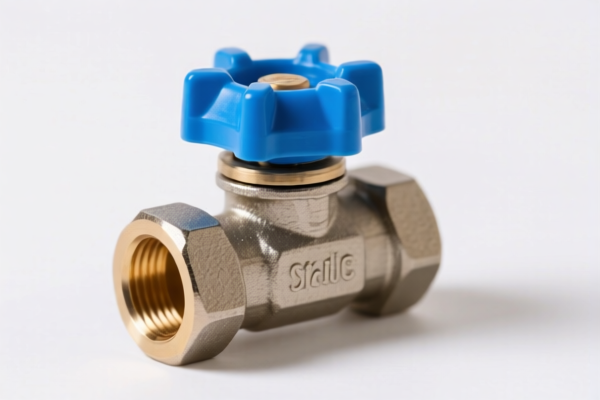
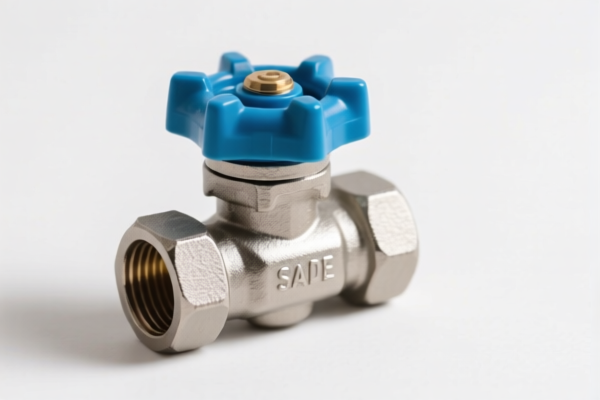
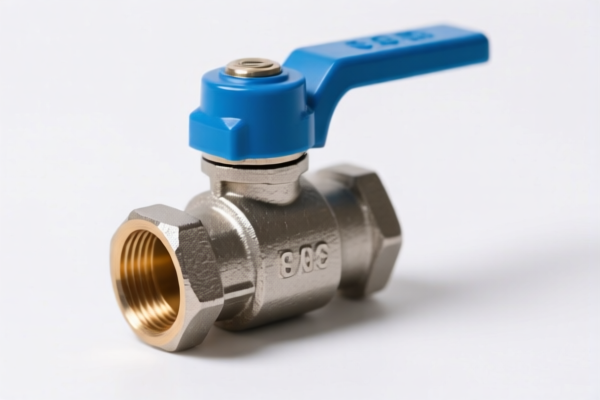
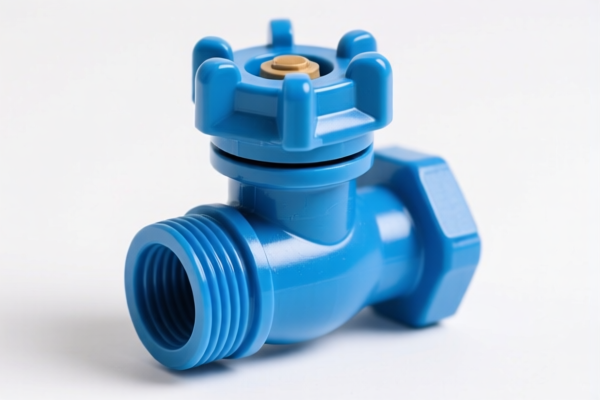
AI Analysis
💉 Plunger Valve (Flow Control Valves for Liquid/Oil/Gas)
🌐 HS Code Reference & Customs Clearance Guide | 2026 Latest Tariff Analysis | Professional-Level Strategy
📌 Part I: Product Definition & Classification: Do You Really Understand “Plunger Valves”?
A Plunger Valve is a specialized type of positive displacement valve, often used in high-pressure pumping systems, oil & gas extraction, chemical processing, and water treatment. Unlike standard ball or gate valves, a plunger valve utilizes a cylindrical plunger (piston) moving linearly within a sleeve or liner to control flow, isolate pressure, or meter fluids.
In international trade, they are generally classified based on their application and material construction:
- Industrial Process Valves: Used in chemical, petroleum, or water treatment plants.
- Pump Components: Specifically designed as integral parts of reciprocating pumps (e.g., triplex pumps).
⚠️ Key Distinction Point:
- If it is a standalone valve unit used for flow control/isolation in a pipeline system → Chapter 84 (Nuclear Reactors, Boilers, Machinery)
- If it is a part/accessory specifically identifiable as a part of a pump (e.g., sold exclusively for a specific pump model) → Chapter 84 (Parts) or Chapter 84 (Pumps) depending on specific design and trade context.
- CRITICAL: Do NOT confuse with “needle valves” or “check valves” unless they share the same mechanical structure. The “plunger” mechanism is key.
📦 Part II: HS Code Classification Details (2026 Latest Official Tariff Alignment)
| HS Code | Product Description | Application Scenario | Key Characteristic |
|---|---|---|---|
8481.20.60.00 |
Pressure-reducing valves or pressure-relief valves | Industrial gas/liquid systems, hydraulic systems | Regulates pressure via plunger mechanism |
8481.30.00.00 |
Check valves (non-return valves) | Pipeline systems, preventing backflow | Plunger-based check mechanism |
8481.40.00.00 |
Safety or relief valves | Boilers, pressure vessels, high-pressure lines | Automatic release via plunger lift |
8481.80.90.00 |
Other taps, cocks, valves and similar appliances | General industrial flow control, chemical dosing, water treatment | Most common for standalone plunger valves |
8413.91.00.00 |
Parts of liquid pumps | Reciprocating pumps, plunger pumps (e.g., high-pressure cleaning pumps) | If sold specifically as a pump part |
9032.80.00.00 |
Automatic regulating or controlling instruments | Automated flow/pressure control systems with electronic/plunger integration | If integrated with sensors/controllers |
🔍 Focus Reminder:
- Most general-purpose plunger valves fall under8481.80.90.00(“Other taps, cocks, valves…”).
- If the valve is a pressure-reducing or relief type, use8481.20.60.00or8481.40.00.00.
- If the item is strictly a spare part for a pump (e.g., the plunger assembly itself, not the valve body), it may be classified under8413.91.00.00(Parts of pumps). Misclassification here leads to significant tariff differences!
💰 Part III: 2026 Latest Tariff Rate Details (Including Additional Duties & Policy Surcharges)
✅ Applicable Country: United States (US)
✅ Country of Origin: China (CN)
✅ Effective Date: From November 10, 2025 (including subsequent imports)
🎯 1. 8481.80.90.00 —— Other Taps, Cocks, Valves (General Plunger Valves)
| Item | Content |
|---|---|
| Base Duty Rate | 0% (ad valorem) |
| USITC Additional Duty | +25% (from USITC Footnote 9903.84.60) |
| IEEPA Additional Duty | +10% (for China/HK products, effective Nov 10, 2025) |
| Total Duty Rate | 35% |
| Tax Calculation | CIF Value × 35% |
| De Minimis Eligibility | ❌ Not Eligible (deny_de_minimis) |
| Legal Path | IEEPA:9903.01.25 → IEEPA:9903.01.24 → USITC:8481.80.90.00 → FOOTNOTE:9903.84.60 |
📌 Explanation:
- The 25% USITC surcharge applies to a wide range of industrial valves under HTSUS 8481.
- The 10% IEEPA surcharge is the additional levy on Chinese-made goods.
- Total 35% is a high cost burden. Must be factored into FOB/CIF pricing.
🎯 2. 8481.20.60.00 —— Pressure-Reducing Valves
| Item | Content |
|---|---|
| Base Duty Rate | 0% |
| USITC Additional Duty | +25% |
| IEEPA Additional Duty | +10% |
| Total Duty Rate | 35% |
| Tax Calculation | CIF × 35% |
| De Minimis Eligibility | ❌ Not Eligible |
| Legal Path | IEEPA:9903.01.25 → IEEPA:9903.01.24 → USITC:8481.20.60.00 |
📌 Note:
- Same tariff structure as general valves.
- Common in hydraulic systems and gas distribution.
🎯 3. 8413.91.00.00 —— Parts of Liquid Pumps (If Classified as Pump Parts)
| Item | Content |
|---|---|
| Base Duty Rate | 0% |
| USITC Additional Duty | +25% |
| IEEPA Additional Duty | +10% |
| Total Duty Rate | 35% |
| Tax Calculation | CIF × 35% |
| De Minimis Eligibility | ❌ Not Eligible |
| Legal Path | IEEPA:9903.01.25 → IEEPA:9903.01.24 → USITC:8413.91.00.00 |
📌 Warning:
- Even if classified as a “part,” the additional duties still apply.
- Misclassifying a valve as a “pump part” to seek lower base rates is risky and subject to customs audit.
🛠️ Part IV: Practical Customs Clearance Advice (Avoid Pitfalls)
✅ 1. Documentation Checklist (Mandatory)
| Document | Required | Explanation |
|---|---|---|
| ✅ Product Specification Sheet | ✔️ | Must specify: Type (Plunger/Check/Relief), Max Pressure, Media Type (Oil/Water/Gas), Material (Stainless/Brass) |
| ✅ Technical Drawing/Blueprint | ✔️ | Shows internal mechanism to prove it’s a “plunger” type, not a simple ball valve |
| ✅ Product Photos (Labeled) | ✔️ | Clear view of ports, body, and any nameplates |
| ✅ Commercial Invoice | ✔️ | Must clearly state “Plunger Valve” or “Industrial Flow Control Valve,” NOT generic “Valve” |
| ✅ Packing List | ✔️ | Detail individual units vs. bulk packages |
| ✅ Certificate of Origin (CO) | ✔️ | If not from China, may qualify for duty-free under FTAs (e.g., USMCA, ASEAN) |
| ✅ FCC/CE/RoHS Reports | ✔️ | If electronically controlled or for export to EU/Australia |
✅ 2. Declaration Tips (Key Mantra)
🔥 “Specify Type, Not Just ‘Valve’; Declare Material & Pressure!”
| Scenario | Correct Declaration | Wrong Approach |
|---|---|---|
| General Industrial Plunger Valve | 8481.80.90.00 “Plunger Valve, Stainless Steel, 150 PSI” |
“Valve, Metal” → Ambiguous, may trigger audit |
| Pressure-Reducing Plunger Valve | 8481.20.60.00 “Pressure Reducing Valve” |
Misdeclare as 8481.80.90.00 → May lead to penalty if function is primarily pressure control |
| Pump Plunger Assembly (No Valve Body) | 8413.91.00.00 “Pump Part, Plunger Assembly” |
Declare as “Valve” → Wrong classification |
| Electronic Control Valve with Plunger | 9032.80.00.00 or 8481.80.90.00 |
Must declare function: If automatic control → Chapter 90; if manual/mechanical → Chapter 84 |
✅ 3. Special Cases Handling
| Situation | Recommendation |
|---|---|
| OEM Custom Valves | Provide customer PO + design specs. Avoid generic names. |
| High-Pressure Valves (>300 PSI) | May require additional safety certifications (ASME, API). Declare explicitly. |
| Valves with Electronic Actuators | Classify as 9032.80.00.00 (Automatic Control Instruments) if the control function is primary. Tariff may differ. |
| Used/Refurbished Valves | Subject to stricter inspection. Provide proof of cleaning and testing. |
| Valves for Nuclear/Military Use | Require special licenses. Do not declare as general industrial valves. |
🌍 Part V: Global Market Clearance Comparison (2026 Latest)
| Country/Region | Recommended HS Code | Tariff (China Origin) | Certification Requirements | Notes |
|---|---|---|---|---|
| 🇺🇸 USA | 8481.80.90.00 |
35% (25% + 10%) | None specific | High duty; strict origin rules |
| 🇨🇳 China | 8481.80.90.00 |
5% | CCC (if applicable) | Low duty, but check FTA benefits |
| 🇪🇺 EU | 8481.80.90 |
0% (with EORI/CE) | CE + PED (Pressure Equipment Directive) | Free trade if compliant |
| 🇬🇧 UK | 8481.80.90 |
0% (with UKCA) | UKCA + PED | Post-Brexit rules apply |
| 🇯🇵 Japan | 8481.80.90 |
0% | PSE (if electrical) | No additional duties |
| 🇦🇺 Australia | 8481.80.90 |
5% | RCM | No surcharges |
📌 Conclusion:
- USA imposes the highest total duty (35%) due to USITC and IEEPA surcharges.
- EU, UK, Japan, Australia offer 0-5% rates if compliant.
- Strategy: For US-bound goods, consider supply chain diversification (Vietnam, Thailand, Mexico) to claim IEEPA exemption and reduce duty to 0-5%.
📌 Part VI: Common Errors & Pitfalls (Lessons Learned)
❌ Error 1: Declaring all valves as “8481.80.90.00” without specifying function.
👉 Consequence: If it’s a pressure-reducing valve, customs may reclassify and adjust duties, causing delays.
❌ Error 2: Misclassifying a pump plunger as a valve.
👉 Consequence: Incorrect HS code (8481 vs 8413) → Potential penalties and back taxes.
❌ Error 3: Omitting pressure rating or media type on invoice.
👉 Consequence: Customs may request additional documentation, leading to 2-4 week delays.
❌ Error 4: Using “Valve” as the only description.
👉 Consequence: Low specificity → High risk of audit or random inspection.
✅ Correct Practice:
“Stainless Steel Plunger Valve, Model XYZ, 1.5” NPT, 150 PSI, for Water Treatment, Made in China”
🎯 Part VII: Conclusion: Precision Classification Saves Costs!
🎯 Remember the Mantra:
🔹 “Plunger Valve = 8481.80.90 (35%)”
🔹 “Pressure Reducing = 8481.20.60 (35%)”
🔹 “Pump Part = 8413.91.00 (35%)”
🔹 “USA Tariff is High; Consider Origin Shift!”
📌 Pro Tip:
If your plunger valves are originating from Vietnam, Thailand, or Mexico, you can apply for IEEPA exemption, reducing the total duty to 0-5%.
Recommendation: Apply for an Advance Ruling (Ruling Letter) from US Customs (CBP) before shipping high-value lots.
📣 Immediate Action:
📞 Contact a professional customs broker + Provide Product Specs + Apply for HS Code Advance Ruling
🚀 Ensure smooth clearance, cost efficiency, and zero surprises!
✨ Professional Customs Clearance Starts with Accurate Classification!
💼 Every Penny of Duty Saved is Pure Profit!
Customer Reviews
About HS Code Classification
The Harmonized System (HS) is an internationally standardized nomenclature developed by the World Customs Organization (WCO) to classify traded products. Over 200 countries use the HS system as the basis for customs tariffs, trade statistics, and import/export regulations.
Each HS code follows a hierarchical structure:
- Chapter (2 digits) — Broad category of goods (e.g., Chapter 84: Machinery and Mechanical Appliances)
- Heading (4 digits) — More specific grouping within the chapter
- Subheading (6 digits) — Internationally standardized breakdown, used by all WCO member countries
- National subdivisions (8-10 digits) — Country-specific extensions for further classification, such as US HTSUS 10-digit codes
Correct HS code classification is essential for smooth customs clearance, accurate duty payment, and compliance with trade regulations. Misclassification can lead to customs delays, overpayment of duties, or penalties.
When importing from CN to US, the applicable tariff rates may include:
- Most-Favored-Nation (MFN) rate — The standard duty rate applied to WTO members
- General rate — Applied to countries without trade agreements
- Trade remedy duties — Additional tariffs such as Section 301 (anti-dumping), Section 232 (national security), or countervailing duties
The information provided on this page is for reference purposes only. For official classification, please consult with your local customs authority or a licensed customs broker.