Plywood
CN → US| HS Code | Tariff Rate | Origin | Destination | Doc |
|---|---|---|---|---|
| 4412315270 | 43.0% | CN | US | Official Doc |
| 4412312610 | 43.0% | CN | US | Official Doc |
| 4412342600 | 40.1% | CN | US | Official Doc |
| 4407190077 | 35.0% | CN | US | Official Doc |
Product Images
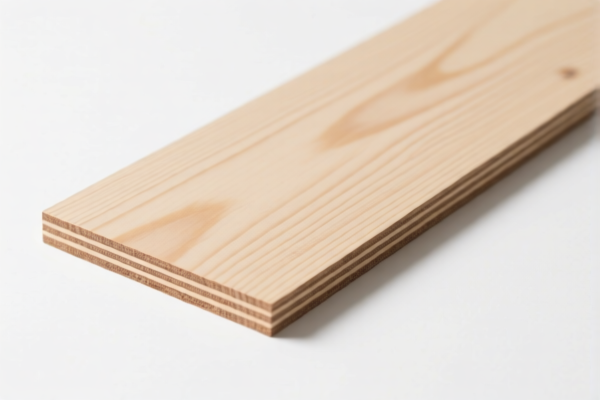
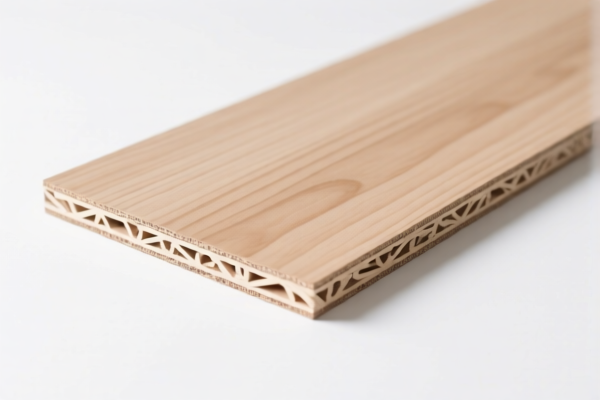
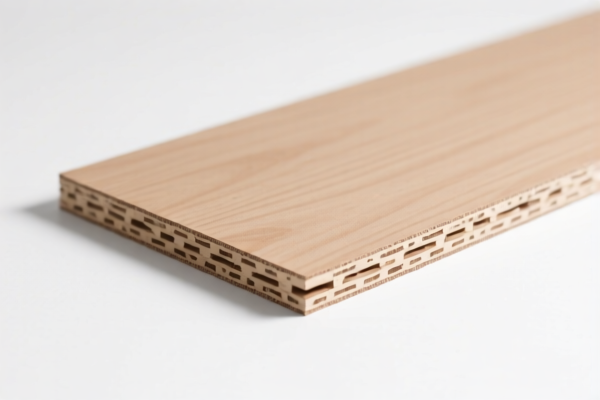
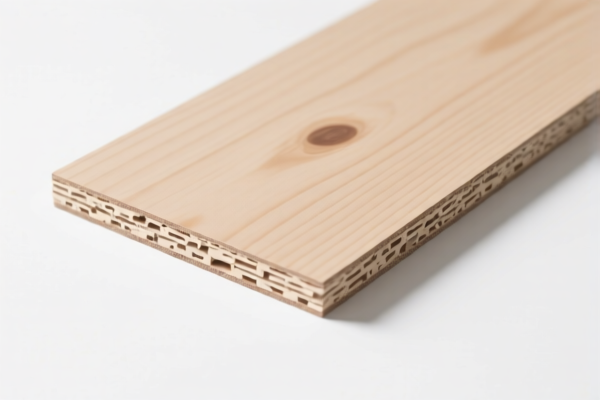
AI Analysis
🪵 Plywood: Strategic HS Code Classification & 2026 US Customs Clearance Guide
🌐 HS Code Reference & Customs Strategy | 2026 Latest Tariff Analysis | Professional Entry Protocols
📌 I. Product Definition & Classification: What Exactly is "Plywood"?
Plywood is a versatile engineered wood product made by gluing together thin layers (plies) of wood veneer. In international trade, specifically for US imports from China, classification is critical because material type and veneer composition directly dictate the tariff burden.
The provided data highlights four distinct classifications under Heading 4412 (Plywood, Veneer Sheets and Similar Laminated Wood) and 4407 (Wood sawn lengthwise, chipped or sliced, dressed, etc.). The key differentiator is whether the product is classified strictly as "Plywood" (4412) or as "Sawn/Dressed Wood" (4407) with a summary label of "cedar plywood," and more importantly, the species of wood (e.g., Spanish Cedar vs. General Wood) and the construction method.
⚠️ Key Distinction Point:
- If the product is strictly Cedar-faced or All-Cedar, it may fall under specific sub-headings for cedar wood products, often attracting higher duties due to trade remedies.
- If the product is General Hardwood/Softwood Plywood (e.g., 4412.31.52.70), it faces a steep tariff stack.
- If the product is misclassified as simple Sawn Wood (4407.19.00.77) despite being plywood, it may attract a lower base rate but still faces significant trade war tariffs.
📦 II. HS Code Classification Details (2026 Authority Cross-Reference)
| HS Code | Product Description (from Data) | Key Characteristics | Base Duty | Trade War Add-Ons |
|---|---|---|---|---|
4412.31.52.70 |
Plywood, Material: Wood Products, Form: Plywood | General wood plywood; likely standard hardwood/softwood mix. | 8.0% | +25% (Sec 301) +10% (Sec 122) |
4412.31.26.10 |
Cedar Plywood, Face Material: Spanish Cedar | Premium cedar face; often used for closets/liners. | 8.0% | +25% (Sec 301) +10% (Sec 122) |
4412.34.26.00 |
Cedar Plywood, Material: Cedar, Form: Plywood | Different sub-category for cedar plywood construction. | 5.1% | +25% (Sec 301) +10% (Sec 122) |
4407.19.00.77 |
Cedar Plywood, Material: Cedar, Form: Wood Processing | Note: Listed as "Wood Processing" rather than strict "Plywood." Likely treated as dressed/sawn cedar lumber or similar. | 0.0% | +25% (Sec 301) +10% (Sec 122) |
🔍 Critical Observation:
- The "Cedar" specific codes (4412.31.26.10,4412.34.26.00,4407.19.00.77) have lower base duties (5.1% or 0.0%) compared to generic plywood (8.0%).
- However, ALL listed codes are subject to the same additional tariffs: 25% (Section 301) and 10% (Section 122).
- The Total Tax ranges from 35.0% to 43.0%.
💰 III. 2026 Tariff Rate Breakdown (Including Add-Ons & Policy Levies)
✅ Applicable Country: United States (US)
✅ Country of Origin: China (CN)
✅ Effective Time: Current (2025-2026 Trade War Era)
🎯 1. General Plywood (4412.31.52.70)
| Item | Detail |
|---|---|
| Base Duty | 8.0% |
| Section 301 Duty (Add-On) | +25.0% (25% of CIF value) |
| Section 122 Duty (Add-On) | +10.0% (10% of CIF value) |
| Total Effective Tax Rate | 43.0% |
| Tax Calculation | CIF Value × 43.0% |
| De Minimis Exemption | ❌ Not Applicable (De minimis under $800 is generally blocked for Chinese goods subject to Section 301/122) |
| Legal Basis Path | HTSUS:4412.31.52.70 → USITC Footnote 9903.88.01 → IEEPA:9903.01.24 (Sec 301) → Sec 122 Authority |
📌 Explanation:
- Base 8%: Standard MFN (Most Favored Nation) duty for plywood.
- 25% Section 301: Retaliatory tariff on Chinese manufacturing.
- 10% Section 122: Additional tariff under Section 122 of the Trade Expansion Act of 1962 (often applied to specific steel/aluminum/wood products).
- Result: A very high cost of entry. Buyers must price accordingly.
🎯 2. Spanish Cedar Plywood (4412.31.26.10)
| Item | Detail |
|---|---|
| Base Duty | 8.0% |
| Section 301 Duty (Add-On) | +25.0% |
| Section 122 Duty (Add-On) | +10.0% |
| Total Effective Tax Rate | 43.0% |
| Tax Calculation | CIF Value × 43.0% |
| De Minimis Exemption | ❌ Not Applicable |
| Legal Basis Path | HTSUS:4412.31.26.10 → USITC Footnote 9903.88.01 → IEEPA:9903.01.24 |
📌 Note: Despite being a premium material, the tariff stack is identical to general plywood. The "Cedar" label does not provide a tariff break for Section 301/122 liabilities.
🎯 3. Cedar Plywood (4412.34.26.00)
| Item | Detail |
|---|---|
| Base Duty | 5.1% |
| Section 301 Duty (Add-On) | +25.0% |
| Section 122 Duty (Add-On) | +10.0% |
| Total Effective Tax Rate | 40.1% |
| Tax Calculation | CIF Value × 40.1% |
| De Minimis Exemption | ❌ Not Applicable |
| Legal Basis Path | HTSUS:4412.34.26.00 → USITC Footnote 9903.88.01 |
📌 Advantage: Slightly lower total tax (40.1% vs 43.0%) due to a lower base duty (5.1%). This makes this specific HS code the most cost-effective option for cedar plywood imports from China.
🎯 4. Cedar Plywood - Wood Processing (4407.19.00.77)
| Item | Detail |
|---|---|
| Base Duty | 0.0% |
| Section 301 Duty (Add-On) | +25.0% |
| Section 122 Duty (Add-On) | +10.0% |
| Total Effective Tax Rate | 35.0% |
| Tax Calculation | CIF Value × 35.0% |
| De Minimis Exemption | ❌ Not Applicable |
| Legal Basis Path | HTSUS:4407.19.00.77 → USITC Footnote 9903.88.01 |
📌 Critical Warning:
- This code has the lowest total tax (35.0%) because the base duty is 0%.
- ⚠️ Risk: This classification describes "Wood sawn... dressed," not "Plywood." If the product is structurally plywood, misclassifying it here is fraud. Customs will likely reclassify it to4412and assess back duties + penalties.
- Use Only If: The product is technically dressed cedar lumber/panels, not laminated plywood, OR if a valid ruling exists.
🛠️ IV. Customs Clearance Practical Advice (Avoiding Pitfalls)
✅ 1. Documentation Checklist (Mandatory)
| Document | Required? | Explanation |
|---|---|---|
| ✅ Commercial Invoice | ✔️ | Must explicitly state "Plywood," "Cedar," and "Chinese Origin." |
| ✅ Packing List | ✔️ | Detail wood species, veneer thickness, and glue type (Formaldehyde levels). |
| ✅ Product Specification Sheet | ✔️ | Confirm if it is "Plywood" (laminated) or "Sawn Wood." |
| ✅ FSC/PEFC Certificate | ✔️ | Recommended for cedar; proves sustainable sourcing. |
| ✅ ISPM 15 Marking | ✔️ | Wood packaging must be heat-treated/fumigated. |
| ✅ ERTS Registration | ✔️ | Ensure importer is registered in the Enforcement and Related Tracking System. |
✅ 2. Declaration Strategy (Key Rules)
🔥 “Correct Classification Saves Money; Misclassification Costs Everything!”
| Scenario | Correct HS Code | Reason |
|---|---|---|
| Standard Hardwood/Softwood Plywood | 4412.31.52.70 |
Fits general plywood definition. |
| Plywood with Spanish Cedar Face | 4412.31.26.10 |
Specific sub-category for cedar face veneer. |
| All-Cedar Plywood (Different Construction) | 4412.34.26.00 |
Specific cedar plywood sub-heading. |
| Cedar Lumber/Planks (NOT Plywood) | 4407.19.00.77 |
Only if not laminated. Do not use for actual plywood. |
📌 Warning:
- Do NOT use4407.19.00.77for actual plywood. The base tax is lower (0% vs 8%), but CBP (Customs and Border Protection) aggressively audits "wood products." If they determine it is plywood, they will reassess at 4412 rates + penalties.
- Declare Accurately: Use the term "Plywood" in the description. If it is cedar, specify "Spanish Cedar Face Plywood."
✅ 3. Special Cases & Mitigation
| Situation | Handling Advice |
|---|---|
| OEM Custom Plywood | Provide customer design specs. Ensure the "core" material is declared. If the core is different from the face, use the "face material" rule for 4412. |
| Formaldehyde Emissions | Ensure compliance with CARB Phase 2 or TSCA Title VI standards. Non-compliance leads to detention regardless of tax. |
| Cedar Origin Verification | If claiming "Spanish Cedar," provide proof of origin. Mislabeling non-cedar wood as cedar to try to fit a different code is high risk. |
| Section 122 Exemptions? | Currently, no exemptions are listed for these codes. Assume 35-43% tax is unavoidable for China-origin goods. |
🌍 V. Global Market Comparison (2026 Overview)
| Country/Region | Recommended HS Code | Base Duty | Trade War Add-Ons | Total Effective Tax (China Origin) | Notes |
|---|---|---|---|---|---|
| 🇺🇸 USA | 4412.31.52.70 or 4412.34.26.00 |
5.1% - 8.0% | +35.0% (25% + 10%) | 40.1% - 43.0% | Highest duty burden. |
| 🇨🇳 China | 4412.31.52.70 |
8.0% | 0% | 8.0% | Domestic import duty. |
| 🇪🇺 EU | 4412.31 |
0% - 5% | 0% | ~0-5% | No Section 301/122 equivalents. |
| 🇬🇧 UK | 4412.31 |
0% - 5% | 0% | ~0-5% | Post-Brexit rates similar to EU for wood. |
| 🇯🇵 Japan | 4412.31 |
2.8% | 0% | 2.8% | No major trade war tariffs on wood. |
📌 Conclusion:
- The US market is significantly more expensive for Chinese plywood due to the 35%+ add-on tariffs.
- Importers must factor this into their landed cost.
- No duty-free exemptions are currently available for these specific HS codes under the provided data.
📌 VI. Common Errors & Pitfalls (Blood Lessons)
❌ Error 1: Misclassifying Plywood as "Sawn Wood" (4407) to save 8% base duty.
👉 Consequence: CBP reclassification → Back taxes + 25% penalty + 10% Section 122 reassessment.
❌ Error 2: Ignoring the 10% Section 122 tariff.
👉 Consequence: Underpayment → Goods held at border until full payment + interest.
❌ Error 3: Not declaring Wood Species (e.g., failing to specify "Spanish Cedar").
👉 Consequence: If declared as "Generic Plywood" but found to be Cedar, potential duty discrepancies or inspection delays.
❌ Error 4: Assuming De Minimis ($800) applies.
👉 Consequence: De Minimis is VOID for Chinese goods under Section 301 and Section 122. All shipments, even small ones, are subject to full duties.
✅ Correct Approach:
“Declare HS Code based on actual construction. Use 4412 for plywood. Accept the 40-43% tax rate. Do not attempt to exploit 4407 for plywood.”
🎯 VII. Conclusion: Professional Entry for Cost Control
🎯 Key Takeaways:
1. Tax Range: 35.0% to 43.0% for all listed China-origin plywood.
2. Best Option: If structurally eligible, 4412.34.26.00 (40.1%) or 4407.19.00.77 (35.0% only if not plywood) offers slight savings.
3. Compliance: Accurate description is non-negotiable. Misclassification is high-risk.
4. Costing: Budget for ~40% total tax on landed costs for US imports.
📌 Pro Tip:
If you are importing large volumes, consider Section 301 Exclusion Requests (if available for your specific product type in 2026) or explore supply chain diversification to non-China origins (e.g., Vietnam, Thailand) to avoid these tariffs entirely.
📣 Immediate Action:
📞 Consult a Licensed Customs Broker to verify if your specific cedar product can legitimately use
4412.34.26.00or if it fits4407.19.00.77.
🚀 Optimize Landed Cost by selecting the most accurate HS Code to avoid penalties and ensure smooth clearance.
✨ Precision in Classification = Profit in Import.
💼 Don’t Let Tariffs Eat Your Margin.
Customer Reviews
About HS Code Classification
The Harmonized System (HS) is an internationally standardized nomenclature developed by the World Customs Organization (WCO) to classify traded products. Over 200 countries use the HS system as the basis for customs tariffs, trade statistics, and import/export regulations.
Each HS code follows a hierarchical structure:
- Chapter (2 digits) — Broad category of goods (e.g., Chapter 84: Machinery and Mechanical Appliances)
- Heading (4 digits) — More specific grouping within the chapter
- Subheading (6 digits) — Internationally standardized breakdown, used by all WCO member countries
- National subdivisions (8-10 digits) — Country-specific extensions for further classification, such as US HTSUS 10-digit codes
Correct HS code classification is essential for smooth customs clearance, accurate duty payment, and compliance with trade regulations. Misclassification can lead to customs delays, overpayment of duties, or penalties.
When importing from CN to US, the applicable tariff rates may include:
- Most-Favored-Nation (MFN) rate — The standard duty rate applied to WTO members
- General rate — Applied to countries without trade agreements
- Trade remedy duties — Additional tariffs such as Section 301 (anti-dumping), Section 232 (national security), or countervailing duties
The information provided on this page is for reference purposes only. For official classification, please consult with your local customs authority or a licensed customs broker.