Plywood Edge Glued with Pine Wood
CN → US| HS Code | Tariff Rate | Origin | Destination | Doc |
|---|---|---|---|---|
| 4418300100 | 38.2% | CN | US | Official Doc |
| 4407110001 | 35.0% | CN | US | Official Doc |
| 4407190001 | 35.0% | CN | US | Official Doc |
Product Images
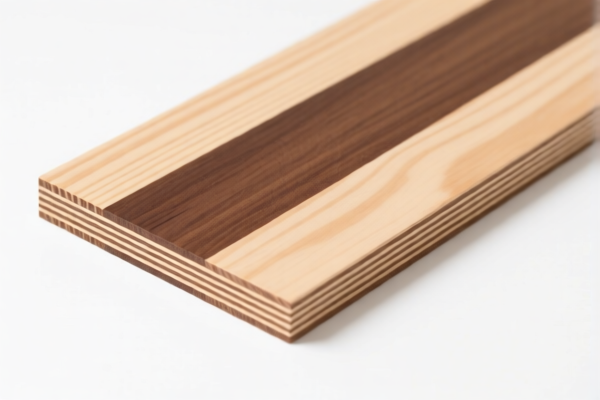
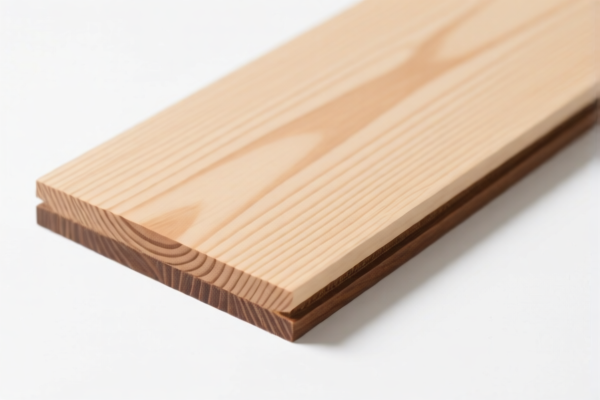
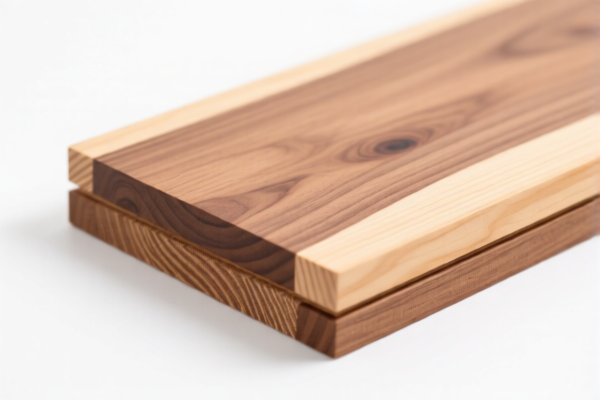
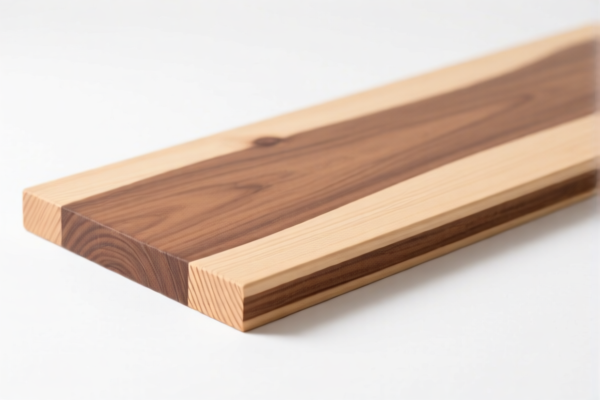
AI Analysis
🪵 Pine Edge-Glued Plywood (Pine Wood Laminated Panels)
🌐 HS Code Reference & Clearance Guide | 2026 Latest Tariff Analysis | Professional Customs Strategy
📌 I. Product Definition & Classification: What Exactly Is "Plywood Edge Glued with Pine Wood"?
Pine Edge-Glued Plywood, often referred to in trade as Solid Wood Finger-Jointed Boards (FJ Boards) or Pine Laminated Boards, is a structural wood product. It is NOT traditional plywood (which consists of thin veneers glued in cross-grain layers).
Key Characteristics: 1. Material: Pine wood (a softwood/conifer). 2. Form: Finger-jointed boards (small pieces of pine end-to-end joined) or edge-glued strips. 3. Processing: Sanded/Planed (Surface treated). 4. Purpose: Typically used for furniture making, cabinetry, interior decoration, or as raw material for further woodworking.
⚠️ Critical Classification Distinction:
- If the product is sanded, planed, and used as a finished building component or furniture part → It falls under Chapter 44 (Articles of Wood), specifically Heading 4418 (Builders' joinery and carpentry) or 4407 (Sawn wood).
- If it is merely raw sawn wood without further shaping → It falls under Heading 4407 (Sawn wood).
- It is NOT "Plywood" in the technical sense (Veneer sheets). However, in common trade parlance, "edge-glued" pine boards are often grouped under "engineered wood products." The HS codes below reflect the finished/sanded nature typical of commercial exports.
📦 II. HS Code Classification Details (2026 Latest Tariff Authority Comparison)
Based on the provided <DATA>, there are three main HS Code paths for Pine Edge-Glued/Sanded Products. The choice depends on the specific physical state and intended use.
| HS Code | Product Description | Key Criteria | Application Scenario |
|---|---|---|---|
| 4418.30.01.00 | Sanded Finger-Jointed Pine Boards | Material: Pine; Form: Finger-jointed; Process: Sanded; Category: Wooden building/woodworking articles. | Furniture parts, door frames, structural beams, pre-finished panels. |
| 4407.11.00.01 | Finger-Jointed Pine Boards (For Furniture) | Material: Pine; Form: Finger-jointed; Usage: Furniture; Depth > 6mm. | Raw or semi-finished boards intended specifically for furniture manufacturing. |
| 4407.19.00.01 | Other Sawn Pine Wood (Coniferous) | Material: Coniferous (Pine); Form: Sawn; Usage: General board characteristics. | General-purpose pine boards, less processed than FJ boards, or non-furniture specific. |
🔍 Key Reminder:
- 4418.30.01.00 is for processed boards (sanded, ready for use in construction or furniture).
- 4407.11.00.01 and 4407.19.00.01 are for sawn wood products, where 4407.11 is more specific for pine/furniture, and 4407.19 is a broader category for other coniferous sawn wood.
- Do not confuse with 4412 (Plywood, Veneered Panels), which requires thin veneer layers. These are solid wood finger-jointed products.
💰 III. 2026 Latest Tariff Rate Breakdown (Including Surcharges, Policy Surcharges)
✅ Applicable Country: United States (US)
✅ Origin: China (CN)
✅ Effective Time: Post-2025 (Based on provided tax details)
🎯 1. 4418.30.01.00 —— Sanded Finger-Jointed Pine Boards (Wooden Building/Workshop Products)
| Item | Content |
|---|---|
| Base Tariff Rate | 3.2% (ad valorem) |
| Section 301 Surcharge | +25.0% (Additional Duty under USITC Footnote 9903.88.01) |
| Section 122 Tariff | +10.0% (Specific tariff for certain Chinese wood products) |
| Total Tariff Rate | 38.2% |
| Tax Calculation | CIF Value × 38.2% |
| De Minimis Eligibility | ❌ No (High tariff products are typically excluded from de minimis benefits) |
| Legal Basis Path | Section 301: 9903.88.01 → Section 122 → USITC: 4418.30.01.00 |
📌 Explanation:
- Base 3.2%: Standard MFN rate for wooden building/carpentry articles.
- 25% Section 301: Broad surcharge on Chinese manufactured goods, including many wood products.
- 10% Section 122: Specific additional tariff targeting Chinese wood products to protect domestic forestry.
- Total 38.2%: This is a high tariff rate. Cost calculation must include all duties.
🎯 2. 4407.11.00.01 —— Finger-Jointed Pine Boards (For Furniture)
| Item | Content |
|---|---|
| Base Tariff Rate | 0.0% (ad valorem) |
| Section 301 Surcharge | +25.0% |
| Section 122 Tariff | +10.0% |
| Total Tariff Rate | 35.0% |
| Tax Calculation | CIF Value × 35.0% |
| De Minimis Eligibility | ❌ No |
| Legal Basis Path | Section 301: 9903.88.01 → Section 122 → USITC: 4407.11.00.01 |
📌 Note:
- Although the base rate is 0%, the surcharges apply equally, resulting in a 35.0% total rate.
- This code is more specific to furniture-grade pine boards. If your product is strictly for furniture, this may be the most accurate classification.
- Even with 0% base, the 35% total is still very high.
🎯 3. 4407.19.00.01 —— Other Sawn Pine Wood (Coniferous)
| Item | Content |
|---|---|
| Base Tariff Rate | 0.0% (ad valorem) |
| Section 301 Surcharge | +25.0% |
| Section 122 Tariff | +10.0% |
| Total Tariff Rate | 35.0% |
| Tax Calculation | CIF Value × 35.0% |
| De Minimis Eligibility | ❌ No |
| Legal Basis Path | Section 301: 9903.88.01 → Section 122 → USITC: 4407.19.00.01 |
📌 Note:
- This is a broader category for pine wood that may not fit the specific "furniture" or "building article" definitions as tightly as the others.
- Same total rate (35.0%) as 4407.11.00.01.
- Use this if the product is not clearly defined as furniture-specific or building joinery.
🛠️ IV. Customs Clearance Practical Advice (Real-World Pitfall Avoidance Guide)
✅ 1. Required Documentation Checklist (Non-Negotiable)
| Document | Must Provide | Notes |
|---|---|---|
| ✅ Product Specification Sheet | ✔️ | Include dimensions, thickness (>6mm?), moisture content, wood species (Pinus sylvestris, etc.) |
| ✅ Photos (Clear & Labeled) | ✔️ | Show finger-joint pattern, sanded surface, end-grain, and any labels/brands |
| ✅ Commercial Invoice | ✔️ | Must clearly state: "Pine Finger-Jointed Board, Sanded, For Furniture/Building" |
| ✅ Packing List | ✔️ | Detail weight, volume, and packaging type (pallets, crates) |
| ✅ Certificate of Origin (CO) | ✔️ | Crucial for proving origin (China). If non-China, apply for preferential rates |
| ✅ Third-Party Test Report | ✔️ | If claiming "Furniture Grade" or "Low Formaldehyde," provide EPA TSCA Title VI or CARB certification |
| ✅ ISPM 15 Phytosanitary Certificate | ✔️ | Required for wood packaging/materials to prevent pest introduction |
✅ 2. Declaration Tips (Key Mnemonics)
🔥 "Specify Material, State Use, Avoid 'Plywood' Mistake!"
| Scenario | Correct Declaration | Wrong Practice |
|---|---|---|
| Sanded FJ Board for Furniture | 4407.11.00.01 - "Sanded Pine Finger-Jointed Board, Furniture Grade" |
Calling it "Plywood" → Misclassification risk |
| Sanded FJ Board for Building | 4418.30.01.00 - "Sanded Pine Finger-Jointed Board, Building Material" |
Calling it "Raw Lumber" → Over-declaring value |
| Raw Sawed Pine (No Sanding) | 4407.19.00.01 or other 4407 codes |
Claiming "Sanded" → False declaration |
| Mixed Pine & Other Wood | Declare only Pine content accurately | Overstating Pine content → Fraud risk |
✅ 3. Special Case Handling
| Situation | Handling Advice |
|---|---|
| OEM Custom Boards | Provide customer design drawings to justify "Furniture Grade" classification under 4407.11.00.01. |
| Thermal Treated Wood | If heat-treated, provide HT Mark on pallets/board to avoid quarantine delays. |
| Low Formaldehyde/Eco-Friendly | Provide EPA TSCA Title VI or CARB Phase 2 certification to avoid additional environmental scrutiny. |
| High-Value Finished Panels | Consider Advance Ruling from US CBP to confirm HS Code before shipment. |
🌍 V. Global Market Clearance Comparison (2026 Latest)
| Country/Region | Recommended HS Code | Tariff (China Origin) | Certification Requirements | Notes |
|---|---|---|---|---|
| 🇺🇸 USA | 4418.30.01.00 / 4407.11.00.01 |
35.0% - 38.2% | EPA TSCA, ISPM 15 | Highest tariffs due to Section 301 + 122. |
| 🇨🇳 China | 4418.30.01.00 / 4407.11.00.01 |
5% - 10% | CCC (if applicable) | No additional surcharges. |
| 🇪🇺 EU | 4407.10.10 / 4418.10 |
0% - 6% | CE (if furniture), FSC/PEFC | No Section 301. Low risk. |
| 🇬🇧 UK | 4407.10.10 / 4418.10 |
0% - 6% | UKCA (if applicable) | Similar to EU post-Brexit. |
| 🇯🇵 Japan | 4407.10.00 / 4418.10 |
3.2% - 6% | FSC/PEFC encouraged | Moderate tariffs. |
📌 Conclusion:
- USA is the most challenging market due to the 35%+ total tariff.
- EU and Japan offer significantly lower tariff burdens.
- Supply Chain Strategy: Consider sourcing from non-China origins (e.g., Russia, Canada, Southeast Asia) to avoid Section 301 tariffs if targeting the US market.
📌 VI. Common Errors & Pitfalls (Lessons Learned)
❌ Error 1: Calling "Finger-Jointed Board" "Plywood"
👉 Consequence: Misclassification under Chapter 4412 (Plywood), which may have different tariffs and stricter phytosanitary rules.
✅ Fix: Use "Pine Finger-Jointed Board" or "Solid Wood Laminated Board."
❌ Error 2: Ignoring "Section 122" tariffs
👉 Consequence: Underpaying by 10%, leading to audits, penalties, and back-taxes.
✅ Fix: Ensure declaration includes all applicable surcharges (301 + 122).
❌ Error 3: Not specifying "Sanded" or "Furniture Grade"
👉 Consequence: Customs may default to a higher-duty or more scrutinized category.
✅ Fix: Be precise: "Sanded," "Un-sanded," "Furniture Use," "Building Use."
❌ Error 4: Missing ISPM 15 for wood packaging
👉 Consequence: Shipment held at port for fumigation or destruction.
✅ Fix: Ensure all pallets/wood crates are ISPM 15 certified and marked.
🎯 VII. Conclusion: Professional Declaration, Time-Saving, Cost-Efficiency!
🎯 Remember Mnemonics:
🔹 "Pine FJ Boards: 38% in US, 35% if Furniture, 0% Base but High Surcharges!"
🔹 "HS Code Defines Cost, Declaration Defines Speed, Accuracy Saves Money!"
📌 Tips:
- If your pine boards are sourced from Vietnam, Malaysia, or Canada, you may qualify for 0% Section 301 tariffs, reducing total duty to 0-6%.
- Always apply for Advance Rulings if unsure about classification.
- Provide clear photos and specs to avoid delays.
📣 Immediate Action:
📞 Contact professional customs brokers + Provide product images + Apply for HS Code Advance Ruling
🚀 Let your pine boards clear customs smoothly, export efficiently, and maximize profits!
✨ Professional clearance starts with accurate classification!
💼 Every cent of cost deserves precise calculation!
Customer Reviews
About HS Code Classification
The Harmonized System (HS) is an internationally standardized nomenclature developed by the World Customs Organization (WCO) to classify traded products. Over 200 countries use the HS system as the basis for customs tariffs, trade statistics, and import/export regulations.
Each HS code follows a hierarchical structure:
- Chapter (2 digits) — Broad category of goods (e.g., Chapter 84: Machinery and Mechanical Appliances)
- Heading (4 digits) — More specific grouping within the chapter
- Subheading (6 digits) — Internationally standardized breakdown, used by all WCO member countries
- National subdivisions (8-10 digits) — Country-specific extensions for further classification, such as US HTSUS 10-digit codes
Correct HS code classification is essential for smooth customs clearance, accurate duty payment, and compliance with trade regulations. Misclassification can lead to customs delays, overpayment of duties, or penalties.
When importing from CN to US, the applicable tariff rates may include:
- Most-Favored-Nation (MFN) rate — The standard duty rate applied to WTO members
- General rate — Applied to countries without trade agreements
- Trade remedy duties — Additional tariffs such as Section 301 (anti-dumping), Section 232 (national security), or countervailing duties
The information provided on this page is for reference purposes only. For official classification, please consult with your local customs authority or a licensed customs broker.