Plywood with Pine Wood Edging
CN → US| HS Code | Tariff Rate | Origin | Destination | Doc |
|---|---|---|---|---|
| 4412394031 | 43.0% | CN | US | Official Doc |
| 4412394032 | 43.0% | CN | US | Official Doc |
Product Images
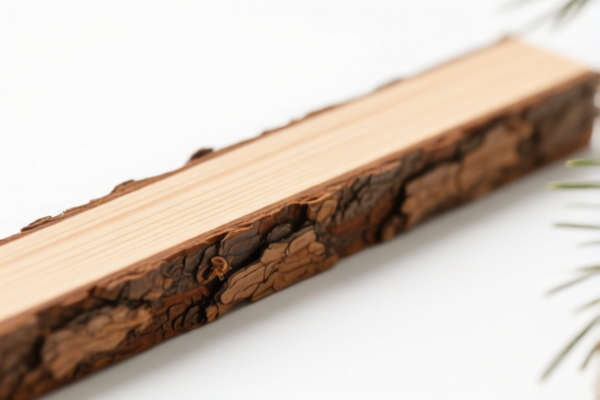
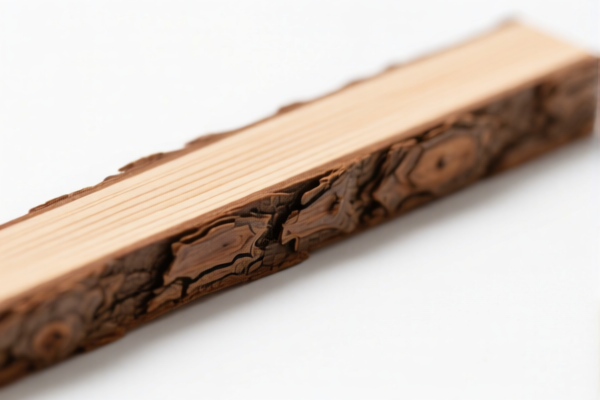
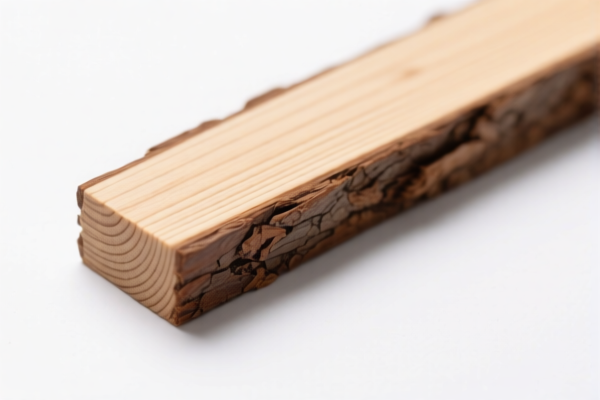
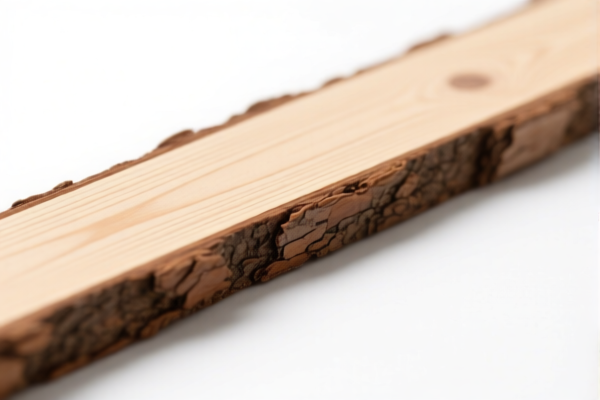
AI Analysis
🪵 Plywood with Pine Wood Edging (Coniferous Outer Plies ≤6mm)
🌐 HS Code Reference & Customs Clearance Guide | 2026 Latest Tariff Analysis | Professional Clearance Strategy
📌 I. Product Definition & Classification: Do You Really Understand "Pine Plywood"?
This product category refers specifically to multilayer laminated wood panels where: 1. Structure: Consists solely of sheets of wood (non-bamboo), with each ply not exceeding 6 mm in thickness. 2. Material: Both outer plies are made of coniferous wood (softwood). 3. Specific Species: At least one outer ply must be one of the following US Pine species: * Long leaf pine (Pinus palustris) * Short leaf pine (Pinus echinata) * Southern yellow pine / Loblolly pine (Pinus taeda) * Slash pine (Pinus elliotti) * Pitch pine (Pinus rigida) * Virginia pine (Pinus virginiana) 4. Surface Treatment: The key differentiator between the two HS Codes below is the sanding level.
⚠️ Critical Distinction:
- "Rough/Touch Sanded" (Unfinished Surface): Designed for further processing (e.g., painting, veneering, machining). → HS Code: 4412.39.40.31
- "Fully Sanded" (Ready-to-Use Surface): Sanded on at least one face for immediate use or final finishing. → HS Code: 4412.39.40.32
📦 II. HS Code Classification Details (2026 Latest Tariff Authority Comparison)
| HS Code | Product Description | Surface Status | Processing Level | Application Scenario |
|---|---|---|---|---|
4412.39.40.31 |
Other plywood, coniferous outer plies ≤6mm, pine species specified, Rough or touch sanded only | ❌ Not surface covered / Clear cover that doesn't obscure grain | Not further processed beyond rough/touch sanding | Substrate for painting, veneering, or custom machining; raw material for furniture parts |
4412.39.40.32 |
Other plywood, coniferous outer plies ≤6mm, pine species specified, Fully sanded on at least one face | ❌ Not surface covered / Clear cover that doesn't obscure grain | Fully sanded, but not further processed (e.g., no staining, laminating, or edge banding) | Ready-to-paint furniture components, cabinetry, interior paneling, high-end DIY projects |
🔍 Key Clarification:
- "Edge Banding" is not a classifier here: The description "Plywood with Pine Wood Edging" in the user query likely refers to the outer plies (faces) being pine, or edge-banded panels where the face material is pine. The HS Code is determined by the face ply composition and sanding status, not by edge-banding alone.
- "Not further processed": Neither code applies if the plywood has been painted, laminated, impregnated, or machined into specific shapes (e.g., cut to size with grooves). If further processed, it may fall under different subheadings (e.g., 4412.39.40.30 general category or other finished goods).
- Species Matter: If the pine is NOT from the listed US species (e.g., European spruce or radiata pine), it does not qualify for these specific subheadings and may fall under a different general "coniferous" code with potentially different tax implications.
💰 III. 2026 Latest Tariff Rate Breakdown (Including Surcharges & Policy Add-ons)
✅ Applicable Country: United States (US)
✅ Country of Origin: China (CN)
✅ Effective Date: Ongoing (Subject to USITC & USTR announcements)
🎯 1. 4412.39.40.31 —— Rough/Touch Sanded Pine Plywood
| Item | Content |
|---|---|
| Basic Tariff Rate | 8.0% (Ad Valorem) |
| Section 301 Surcharge | +25.0% (U.S. Trade Representative List 4) |
| Total Tax Rate | 33.0% |
| Tax Calculation | CIF Value × 33.0% |
| De Minimis Exemption | ❌ Not Eligible (Deny de minimis for Section 301 goods under $800) |
| Legal Basis Path | HTSUS:4412.39.40.31 → USTR Footnote 9903.88.01 (Section 301) |
📌 Explanation:
- The 8% base tariff is the standard MFN (Most Favored Nation) rate for this specific subheading of coniferous plywood.
- The 25% additional tariff is applied due to its classification as Chinese-origin wood products under USTR’s Section 301 enforcement.
- Total Cost Impact: For every $10,000 CIF value, you pay $3,300 in duties alone.
- No Exemptions: These goods are not eligible for de minimis (Section 321) exemptions commonly used for small shipments.
🎯 2. 4412.39.40.32 —— Fully Sanded Pine Plywood
| Item | Content |
|---|---|
| Basic Tariff Rate | 0.0% (Ad Valorem) |
| Section 301 Surcharge | +0.0% |
| Total Tax Rate | 0.0% |
| Tax Calculation | $0 |
| De Minimis Exemption | ✅ Eligible (If shipped under $800 per person per day) |
| Legal Basis Path | HTSUS:4412.39.40.32 |
📌 Explanation:
- This specific subheading enjoys a 0% base tariff and 0% additional tariff under current USTR lists.
- Significant Cost Advantage: This is a major cost-saving opportunity. If your product is fully sanded, it falls into this duty-free category.
- De Minimis Benefit: If importing small quantities (<$800), it may also bypass formal entry requirements entirely.
🛠️ IV. Customs Clearance Practical Advice (Real-World Pitfall Avoidance)
✅ 1. Required Documentation Checklist (Non-Negotiable)
| Document | Must Provide | Description |
|---|---|---|
| ✅ Commercial Invoice | ✔️ | Must explicitly state: "Plywood, Coniferous Outer Plies ≤6mm, Pine Species (e.g., Pinus taeda), Surface: [Rough/Full Sanded]" |
| ✅ Product Specification Sheet | ✔️ | Must detail: Ply thickness (≤6mm each), Number of plies, Outer ply species (scientific name required), Sanding status |
| ✅ Certificate of Origin | ✔️ | Essential for proving Chinese origin and verifying applicability of Section 301 |
| ✅ PHS Declaration | ✔️ | Mandatory for all wood products from China. Must include: "No wood packaging material infested with pests" |
| ✅ Bill of Lading / Air Waybill | ✔️ | Standard shipping documents |
| ✅ Packing List | ✔️ | Itemize quantities, weights, and dimensions |
✅ 2. Classification Strategy (Critical Tips)
🔥 "Sanding Status Determines Duty: Rough Pays 33%, Smooth Pays 0%!"
| Scenario | Correct HS Code | Duty Rate | Risk if Misclassified |
|---|---|---|---|
| Rough/Touch Sanded | 4412.39.40.31 |
33% | If declared as "Fully Sanded" → Penalty + Back Taxes + Potential Fraud Charges |
| Fully Sanded | 4412.39.40.32 |
0% | If declared as "Rough" → Overpayment of 33% unnecessarily |
| Painted/Laminated | N/A (Other HS Code) | Varies | Cannot use these codes if further processed → Misclassification |
| Non-US Pine Species | 4412.39.40.xx (Different Subheading) |
Varies | Must prove species; false claim of US Pine → Denial of Entry |
✅ 3. Special Case Handling
| Situation | Handling Advice |
|---|---|
| Mixed Lots | If shipment contains both rough and fully sanded plywood, must split HS Codes on the entry summary. Do not combine. |
| Edge-Banded Plywood | If edges are banded with plastic or veneer, it may still qualify if the face is pine. If edges are banded with solid wood of different species, review carefully. Primary classifier remains face ply. |
| Bamboo Plywood | ❌ Exclude: This product must be wood-only (no bamboo). Bamboo plywood falls under 4412.31-33 series with different rules. |
| Plastic-Coated Plywood | ❌ Exclude: If surface covered with opaque material (e.g., melamine, HPL), it may fall under 4412.31.40 or similar, not this pine-specific code. |
🌍 V. Global Market Comparison (2026 Latest)
| Country/Region | Recommended HS Code | Tariff Rate | Certification Requirements | Notes |
|---|---|---|---|---|
| 🇺🇸 USA | 4412.39.40.31 |
33% | PHS + FSC (optional but recommended) | High duty for rough; 0% for fully sanded |
| 🇺🇸 USA | 4412.39.40.32 |
0% | PHS | Duty-free opportunity for sanded goods |
| 🇨🇳 China | 4412.39.40.xx |
~8-10% | N/A | Export duties may apply |
| 🇪🇺 EU | 4412.31-39 |
0-5% | FSC/PEFC preferred | No Section 301 equivalent |
| 🇬🇧 UK | 4412.31-39 |
0-5% | FSC/PEFC preferred | Post-Brexit rules align with EU generally |
📌 Conclusion:
- USA is the only major market with significant additional tariffs on this product.
- Tariff Arbitrage Opportunity: If your factory can afford the extra labor, fully sanding the plywood face before export can save 33% in duties when entering the US.
- Documentation is Key: PHS declaration is non-negotiable for wood from China.
📌 VI. Common Mistakes & Pitfalls (Blood-Lesson Guide)
❌ Mistake 1: Claiming "Fully Sanded" for rough plywood to avoid 33% duty
👉 Consequence: Customs inspection reveals rough surface → Confiscation, fines, and entry refusal.
❌ Mistake 2: Using generic "Plywood" description without specifying pine species
👉 Consequence: Customs may classify under general coniferous plywood (higher base duty or less specific subheading) → Audit risk.
❌ Mistake 3: Failing to provide PHS Declaration
👉 Consequence: Hold at border, potential fumigation or destruction → Delivery delays of weeks.
❌ Mistake 4: Including bamboo veneer layers
👉 Consequence: Misclassification under bamboo plywood codes → Additional penalties.
✅ Correct Approach:
"Plywood, Multilayer, Coniferous Outer Plies ≤6mm, Face Ply: Southern Yellow Pine (Pinus taeda), Surface: Fully Sanded on One Face, Untreated, PHS Certified"
🎯 VII. Conclusion: Professional Classification Saves Money!
🎯 Remember the Golden Rule:
🔹 "Rough = 33% Tax, Smooth = 0% Tax – Sanding Can Save 33 Cents on Every Dollar!"
🔹 "HS Code is not just a number – it’s your profit margin defender!"
📌 Pro Tip:
If your product qualifies for 4412.39.40.32 (Fully Sanded), highlight this in your commercial invoice. Consider investing in additional sanding time if the cost is less than 33% of the product value. For rough plywood, ensure your pricing model includes the 33% duty burden.
📣 Immediate Action:
📞 Contact your customs broker with:
1. Product photos (showing surface texture)
2. Species certification
3. PHS declaration readiness
🚀 Maximize clearance speed, minimize duty costs, protect your supply chain!
✨ Professional classification starts with precise description!
💼 Your bottom line depends on accurate HS codes!
Customer Reviews
About HS Code Classification
The Harmonized System (HS) is an internationally standardized nomenclature developed by the World Customs Organization (WCO) to classify traded products. Over 200 countries use the HS system as the basis for customs tariffs, trade statistics, and import/export regulations.
Each HS code follows a hierarchical structure:
- Chapter (2 digits) — Broad category of goods (e.g., Chapter 84: Machinery and Mechanical Appliances)
- Heading (4 digits) — More specific grouping within the chapter
- Subheading (6 digits) — Internationally standardized breakdown, used by all WCO member countries
- National subdivisions (8-10 digits) — Country-specific extensions for further classification, such as US HTSUS 10-digit codes
Correct HS code classification is essential for smooth customs clearance, accurate duty payment, and compliance with trade regulations. Misclassification can lead to customs delays, overpayment of duties, or penalties.
When importing from CN to US, the applicable tariff rates may include:
- Most-Favored-Nation (MFN) rate — The standard duty rate applied to WTO members
- General rate — Applied to countries without trade agreements
- Trade remedy duties — Additional tariffs such as Section 301 (anti-dumping), Section 232 (national security), or countervailing duties
The information provided on this page is for reference purposes only. For official classification, please consult with your local customs authority or a licensed customs broker.