Pneumatic Blade
CN → US| HS Code | Tariff Rate | Origin | Destination | Doc |
|---|---|---|---|---|
| 8208200060 | 35.0% | CN | US | Official Doc |
| 8208100060 | 35.0% | CN | US | Official Doc |
| 8421390160 | 35.0% | CN | US | Official Doc |
| 8421390190 | 35.0% | CN | US | Official Doc |
Product Images
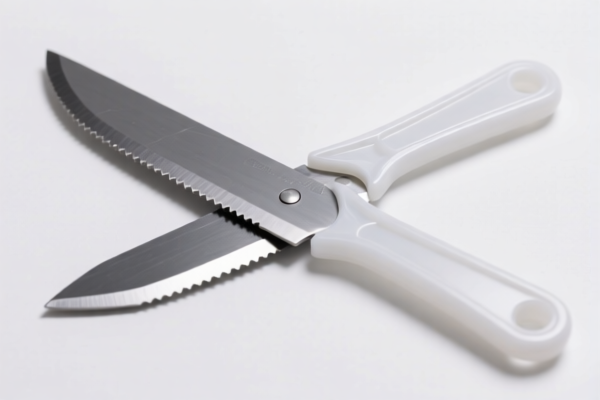

AI Analysis
✂️ Pneumatic Blade (Air-Powered Cutting Tools & Machinery Components)
🌐 HS Code Reference & Customs Clearance Guide | 2026 Latest Tariff Analysis | Professional Level Compliance Strategy
📌 I. Product Definition & Classification: Do You Really Understand "Pneumatic Blade"?
The term "Pneumatic Blade" is a functional description that bridges two distinct categories in international trade: Pneumatic Power Tools and Machinery Parts. It generally refers to blades or cutting elements designed for use with air-powered (pneumatic) machinery, such as wood chippers, industrial cutters, or filtering systems that utilize pneumatic pressure.
To classify them correctly, you must distinguish between the end-product tool and the consumable/replaceable part:
Pneumatic Filtering/Purifying Systems: Devices that use compressed air to filter or purify liquids or gases, often involving specific filter units rated for high pressure. Cutting Blades for Pneumatic/Woodworking Machinery: Replaceable metal blades specifically designed for wood chippers or metal-working machines, regardless of whether the machine itself is pneumatic or electric, provided the blade fits the specific machinery classification.
⚠️ Key Distinction Point:
- If the item is a complete machine or a major component of a gas filtering system (rated ≥ 550 kPa) → It falls under Chapter 84 (Nuclear Reactors, Boilers, Machinery).
- If the item is a replaceable blade for woodworking (specifically wood chippers) or metalworking → It falls under Chapter 82 (Tools, Implements, Cutlery).
📦 II. HS Code Classification Details (2026 Latest Tariff Authority Comparison)
Based on the provided data, here are the precise classifications for related items. Note that "Pneumatic Blade" is not a single HS code but falls into specific sub-categories depending on its exact application.
| HS Code | Product Description | Application Scenario | Key Feature |
|---|---|---|---|
8421.39.01.60 |
Pneumatic fluid power filters, rated at 550 kPa or greater | Industrial gas/liquid purification systems using pneumatic power | High-pressure rating (≥550 kPa) |
8421.39.01.90 |
Other filtering or purifying machinery and apparatus for gases | General gas filtration systems not covered by the specific high-pressure pneumatic category | Other gas filters |
8208.20.00.60 |
Knives and cutting blades for wood-working machines (Over 15.2 cm length) | Blades for wood-chipper machines | Specifically for Wood-Chippers; Length > 15.2 cm |
8208.10.00.60 |
Knives and cutting blades for metal-working machines | Industrial metal cutting, shearing, or planing operations | For Metal-Working; Includes parts |
🔍 Critical Clarification:
- The term "Pneumatic Blade" is ambiguous. If it refers to a filter component in a pneumatic system, look at 8421.39.01.
- If it refers to a cutting blade for a pneumatic wood chipper or metal cutter, look at 8208.
- Do not confuse "Pneumatic Tools" (Chapter 82/84 parts) with "Pneumatic Actuators" (Chapter 84).
💰 III. 2026 Latest Tariff Rate Details (Including Additional Taxes & Policy Surcharges)
✅ Applicable Country: United States (US)
✅ Country of Origin: China (CN)
✅ Effective Date: 2025 November 10 onwards (including subsequent imports)
🎯 1. 8421.39.01.60 & 8421.39.01.90 —— Filtering/Purifying Machinery for Gases
These codes cover machinery and apparatus for filtering or purifying gases. The data indicates a specific focus on Pneumatic Fluid Power Filters rated at high pressure.
| Item | Content |
|---|---|
| Base Tariff | 0.0% (ad valorem) |
| Additional Tariff (Section 301) | +25.0% |
| Total Tariff | 25.0% |
| Tax Calculation | CIF Value × 25% |
| De Minimis Exemption | ❌ Not Applicable (Deny de minimis) |
| Legal Basis Path | USITC:8421.39.01.60/90 → Section 301: 25% |
📌 Explanation:
- Although the base tariff is 0%, the 25% Section 301 additional tariff applies to Chinese-origin goods in this category. - This is a high-cost category for importers. Ensure the equipment is clearly declared as "Gas Filtering Apparatus" and not misclassified as general industrial machinery to avoid scrutiny.
🎯 2. 8208.20.00.60 —— Wood-Working Blades (Wood-Chipper Specific)
| Item | Content |
|---|---|
| Base Tariff | 0.0% |
| Additional Tariff (Section 301) | +25.0% |
| Total Tariff | 25.0% |
| Tax Calculation | CIF Value × 25% |
| De Minimis Exemption | ❌ Not Applicable |
| Legal Basis Path | USITC:8208.20.00.60 → Section 301: 25% |
📌 Key Requirement:
- This code specifically applies to blades for wood-chipper machines.
- The blade must be over 15.2 cm in length.
- If the blade is for a general wood planer (not a chipper), a different sub-code may apply, but the 25% surcharge likely remains for Chinese origin under broader Chapter 82 rules.
🎯 3. 8208.10.00.60 —— Metal-Working Blades
| Item | Content |
|---|---|
| Base Tariff | 0.0% |
| Additional Tariff (Section 301) | +25.0% |
| Total Tariff | 25.0% |
| Tax Calculation | CIF Value × 25% |
| De Minimis Exemption | ❌ Not Applicable |
| Legal Basis Path | USITC:8208.10.00.60 → Section 301: 25% |
📌 Key Requirement:
- Applies to knives and cutting blades for metal-working machines.
- Includes parts thereof.
- Even if the machine is pneumatic, if the blade is used for metal working, it falls here.📌 Summary of Tax Impact:
- All items in the provided data carry a 25% Additional Tariff due to their origin (China) and the current trade policies (Section 301).
- There is no base tariff reduction to offset this.
- De Minimis (Section 321) exemptions are NOT available for these HS codes from China.
🛠️ IV. Customs Clearance Practical Advice (Real-World Pitfall Avoidance)
✅ 1. Documentation Checklist (Non-Negotiable)
| Document | Required | Notes |
|---|---|---|
| ✅ Commercial Invoice | ✔️ | Must specify "Blades for [Wood/Metal] Machinery" or "Gas Filtering Apparatus" |
| ✅ Product Specifications | ✔️ | For Filters: Must state pressure rating (e.g., "≥550 kPa"). For Blades: Must specify length (>15.2 cm for 8208.20) and machine type (Wood-Chipper vs. Metal Work). |
| ✅ Material Certificate | ✔️ | Proof of base metal (e.g., Steel Alloy) to confirm Chapter 82 classification. |
| ✅ Country of Origin Certificate | ✔️ | Critical for applying the 25% tariff correctly. Misdeclaration leads to severe penalties. |
| ✅ Packaging List | ✔️ | Clearly distinguish between main units and spare parts/blades. |
✅ 2. Declaration Tips (Key Mantras)
🔥 "Specs are King, Origin is Law, Tariff is 25%!"
| Scenario | Correct Declaration | Wrong Practice |
|---|---|---|
| Pneumatic Filter | "Pneumatic Fluid Power Filter, Rating 600kPa, for Gas Purification" | "Air Filter" (Vague → Risk of Re-classification) |
| Wood Chipper Blade | "Metal Cutting Blade, Over 15.2cm, for Wood-Chipper Machine" | "Industrial Knife" (Too generic → Delays) |
| Metal Working Blade | "Cutting Blade for Metal-Working Machinery, Steel Alloy" | "Sharp Tool" (Ambiguous → Seizure Risk) |
| Mixed Shipment | Separate HS Codes for Machines and Parts | Bundle under one code → Audit Trigger |
✅ 3. Special Cases Handling
| Situation | Handling Advice |
|---|---|
| Blades for Non-Chipper Wood Tools | Do not use 8208.20.00.60. Check if it fits general woodworking blades (might have different sub-codes, but still likely 25% tariff). |
| Pneumatic vs. Electric Machines | The power source of the machine (pneumatic/electric) does not change the blade classification under Chapter 82. Focus on the material being cut (Wood/Metal). |
| Filter Pressure Rating | If the filter is rated < 550 kPa, it may fall under 8421.39.01.90 ("Other"). The tax rate is still 25%, but the description must be precise. |
| Spare Parts vs. New Blades | Both attract the 25% tariff. Ensure they are clearly listed as "Spare Parts" or "Consumables" on the invoice to aid customs valuation. |
🌍 V. Global Market Comparison (2026 Latest)
| Country/Region | Recommended HS Code | Tariff (China Origin) | Certification | Notes |
|---|---|---|---|---|
| 🇺🇸 USA | 8208.20.00.60 / 8208.10.00.60 / 8421.39.01.xx |
25% (Total) | No special certs for blades; Industrial standards apply | Highest cost market due to Section 301. |
| 🇨🇳 China | Same HS Codes | 0% - 5% (MFN) | CCC (if applicable for machinery) | Low tariff for domestic trade. |
| 🇪🇺 EU | 8208.10 / 8421.39 |
0% - 4.5% | CE Marking (if machinery) | No Section 301 equivalent; Lower barriers. |
| 🇯🇵 Japan | 8208.10 / 8421.39 |
0% - 3% | PSE (if electrical components included) | FTA benefits may apply (JETI/FTA). |
📌 Conclusion:
- The US market is extremely costly for these items from China due to the flat 25% additional tariff.
- EU and Japan offer significantly lower barriers, making them more attractive alternatives for exporters facing US trade barriers.
📌 VI. Common Errors & Pitfall Guide (Blood & Tears Lessons)
❌ Error 1: Classifying "Pneumatic Blade" as a "General Tool" (Chapter 82 without specific sub-code).
👉 Consequence: Customs may classify under a higher duty rate or reject the declaration due to lack of specificity.
❌ Error 2: Ignoring the 15.2 cm length requirement for wood chipper blades.
👉 Consequence: Incorrect HS code 8208.20.00.60 usage for short blades → Audit & Back-Taxes.
❌ Error 3: Failing to declare Pressure Rating for pneumatic filters.
👉 Consequence: Misclassification between 8421.39.01.60 and 8421.39.01.90 → Delay in Release.
❌ Error 4: Assuming De Minimis applies to small blade shipments.
👉 Consequence: Shipment Seizure. These items are explicitly excluded from de minimis relief for Chinese origin.
✅ Correct Practice:
"Stainless Steel Cutting Blade, 18cm length, designed for Wood-Chipper Machine Model XYZ, Made in China"
"Pneumatic Gas Filter, Rated 600kPa, Industrial Grade, Made in China"
🎯 VII. Conclusion: Precision is Profit!
🎯 Remember the Mantra:
🔹 "Blades are 25%, Filters are 25%, No De Minimis, Be Specific!"
🔹 "Wood Chipper >15.2cm? Code .60. Metal Work? Code .60. Pneumatic Filter >550kPa? Code .60."
📌 Pro Tip:
If you are exporting to the US, consider supply chain diversification (e.g., sourcing from Vietnam or Thailand) to potentially avoid the 25% Section 301 tariff.
For US imports, Pre-Ruling (Advance Ruling) is highly recommended to lock in the HS code and tariff rate before shipment.
📣 Immediate Action:
📞 Contact a Licensed Customs Broker
📋 Provide Exact Specifications (Length, Pressure, Machine Type)
🚀 Apply for Advance Ruling if Shipment Value is High
✨ Professional Customs Clearance Starts with Accurate Classification!
💼 Every 25% Tariff Saved is Pure Profit!
Customer Reviews
About HS Code Classification
The Harmonized System (HS) is an internationally standardized nomenclature developed by the World Customs Organization (WCO) to classify traded products. Over 200 countries use the HS system as the basis for customs tariffs, trade statistics, and import/export regulations.
Each HS code follows a hierarchical structure:
- Chapter (2 digits) — Broad category of goods (e.g., Chapter 84: Machinery and Mechanical Appliances)
- Heading (4 digits) — More specific grouping within the chapter
- Subheading (6 digits) — Internationally standardized breakdown, used by all WCO member countries
- National subdivisions (8-10 digits) — Country-specific extensions for further classification, such as US HTSUS 10-digit codes
Correct HS code classification is essential for smooth customs clearance, accurate duty payment, and compliance with trade regulations. Misclassification can lead to customs delays, overpayment of duties, or penalties.
When importing from CN to US, the applicable tariff rates may include:
- Most-Favored-Nation (MFN) rate — The standard duty rate applied to WTO members
- General rate — Applied to countries without trade agreements
- Trade remedy duties — Additional tariffs such as Section 301 (anti-dumping), Section 232 (national security), or countervailing duties
The information provided on this page is for reference purposes only. For official classification, please consult with your local customs authority or a licensed customs broker.